
In autumn, on a mountainside where the branches have shed every leaf, small oblong fruits hang like rubies, glowing red. This is Cornus officinalis, the plant Koreans call sansuyu. Yet something strange happens when the fruit is turned into medicine: the red flesh is carefully stripped off and dried, while the hard seed inside is picked out and thrown away, down to the last one. Within a single fruit, the flesh is prized and the seed is discarded. Why must the seed be removed? And which dangerous look-alikes might you mistake for sansuyu simply because their fruit is red? Let us follow the two faces of this little fruit.
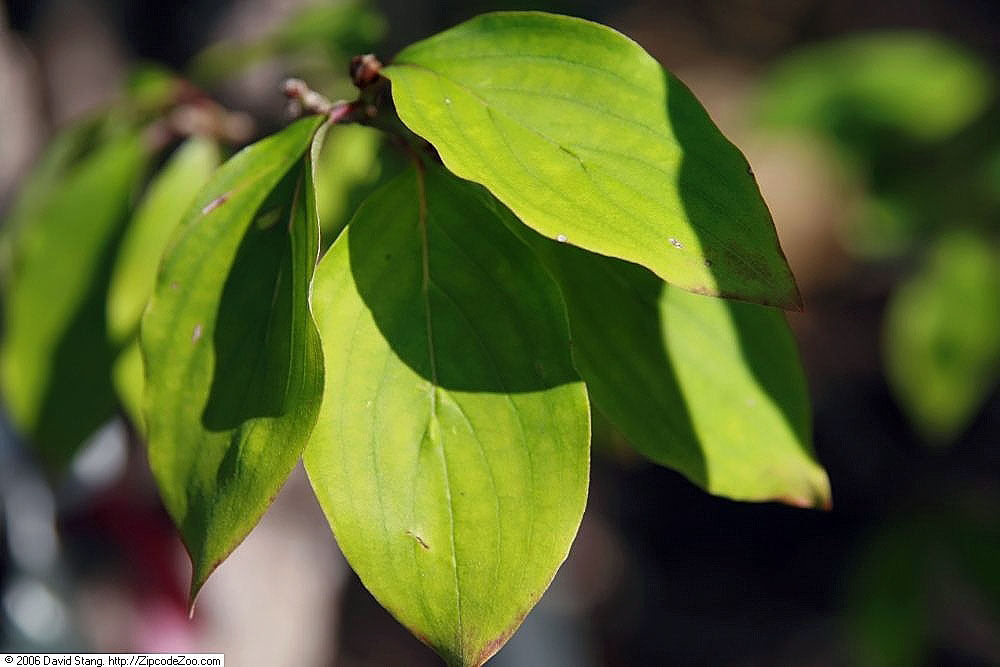
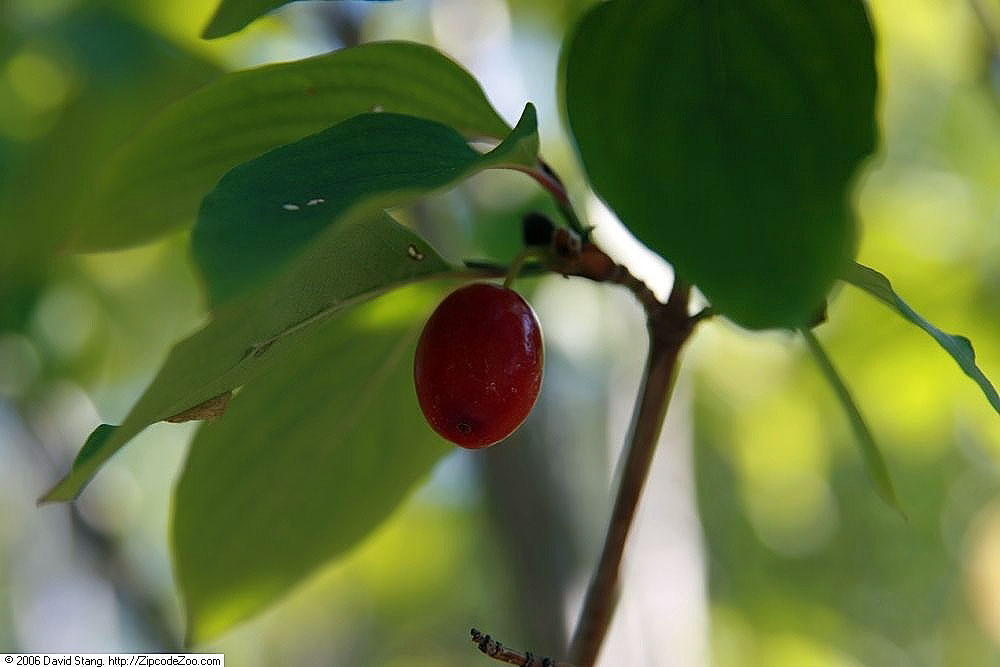
Cornus officinalis: yellow flowers in early spring, red drupes in autumn
Cornus officinalis is a deciduous plant in the dogwood family (Cornaceae). Its accepted botanical name is Cornus officinalis Siebold & Zucc., first described in 1839 in Flora Japonica (Kew). The species epithet officinalis means “sold in an apothecary,” so the name itself testifies that the plant has long been used as medicine (Missouri Botanical Garden). Indeed, in East Asia it has reportedly been used for more than 2,000 years as a remedy said to support the liver and kidneys (PMC review).
It grows roughly 4.5 to 7.5 m (15 to 25 ft) as a large shrub or small tree, with bark that peels in thin flakes and can look untidy (Missouri Botanical Garden). In early spring, around March and before the leaves emerge, star-shaped yellow flowers open in umbels ahead of the foliage. Come autumn, oblong fruits about 1.2 to 2 cm long ripen to red. They are technically edible but decidedly astringent (Missouri Botanical Garden). We will return to the source of that astringency shortly.
Botanically, the sansuyu fruit is a drupe. Like a peach or a jujube, it is built around one hard seed (stone) wrapped in juicy flesh. This precise double structure, red flesh and stony seed sharing one body, part of the elegant design God gave this small fruit, is the key that will divide the fruit’s fate.
Why only the flesh is used as medicine, and the seed removed
The “sansuyu” traded as a herbal material is not, in fact, the whole fruit. Ripe fruits are picked in late autumn, only the red flesh is stripped off, the seed inside is discarded, and the flesh is then dried (Me and Qi). Removing the seed is not a mere habit but a long-standing principle of preparing the herb.
The important point is that the answer to “why remove the seed” must be heard on three levels. First is the definition of the herb: the part used as medicine is defined as the flesh with the seed removed, so the seed was never a medicinal part to begin with. Second is traditional theory. Traditional East Asian medicine held that the flesh gathers and secures the body’s jing (essence) so it does not leak away, whereas the seed, being opposite in nature, tends to let the essence slip out, so a seed left mixed in was thought to hinder the effect. The renowned modern physician Zhang Xichun repeatedly stressed that “because the seed’s nature is the exact opposite of the flesh, it must be completely removed” (Me and Qi). This, however, is a traditional pharmacological theory, not a cause proven by modern science.
Third, and this must be underlined: the common explanation that “the seed is removed because it is poisonous” is poorly supported. Korean health articles often claim the seed “contains toxic alkaloids or lectins and must be removed,” but authoritative sources explain seed removal through the herb’s definition and traditional theory only; they do not present acute toxicity of the sansuyu seed as an established fact. Compositional analyses show merely that the seed contains more fat, fiber, and protein than the flesh, a difference in makeup, not evidence of poison. To declare “it is removed because it is toxic” therefore overstates the case. It is more accurate to understand that the seed is removed because of the herb’s definition and the traditional principle of preparation.
What the flesh contains, and its traditional uses
What lies in the red flesh left after the seed is removed? Notably, iridoid glycosides such as loganin, morroniside, cornuside, and sweroside; triterpenoids such as ursolic acid and oleanolic acid; anthocyanins; and a large amount of tannins (Wikipedia; Kew). Morroniside in particular is regarded as the most abundant iridoid glycoside in the sansuyu fruit (Wikipedia).
The astringency set aside earlier is precisely these tannins. By the same principle that makes an unripe persimmon pucker the mouth, tannins bind to proteins in the mouth and create a drawing, contracting sensation. Intriguingly, one sensory basis for the traditional description of sansuyu as “gathering the essence” was this very astringent, contracting taste.
Traditionally, sansuyu has been used to tonify the liver and kidneys and to hold in what leaks excessively from the body (Kew; Me and Qi). Yet it must be clear that such uses are traditional indications only. Sweeping efficacy claims, that it “multiplies vigor several times over” or “cures tinnitus and premature aging,” are not backed by reliable clinical evidence, and marketing figures of uncertain origin are best not taken at face value.
The confusing yellow flower of spring: Lindera obtusiloba is not poisonous
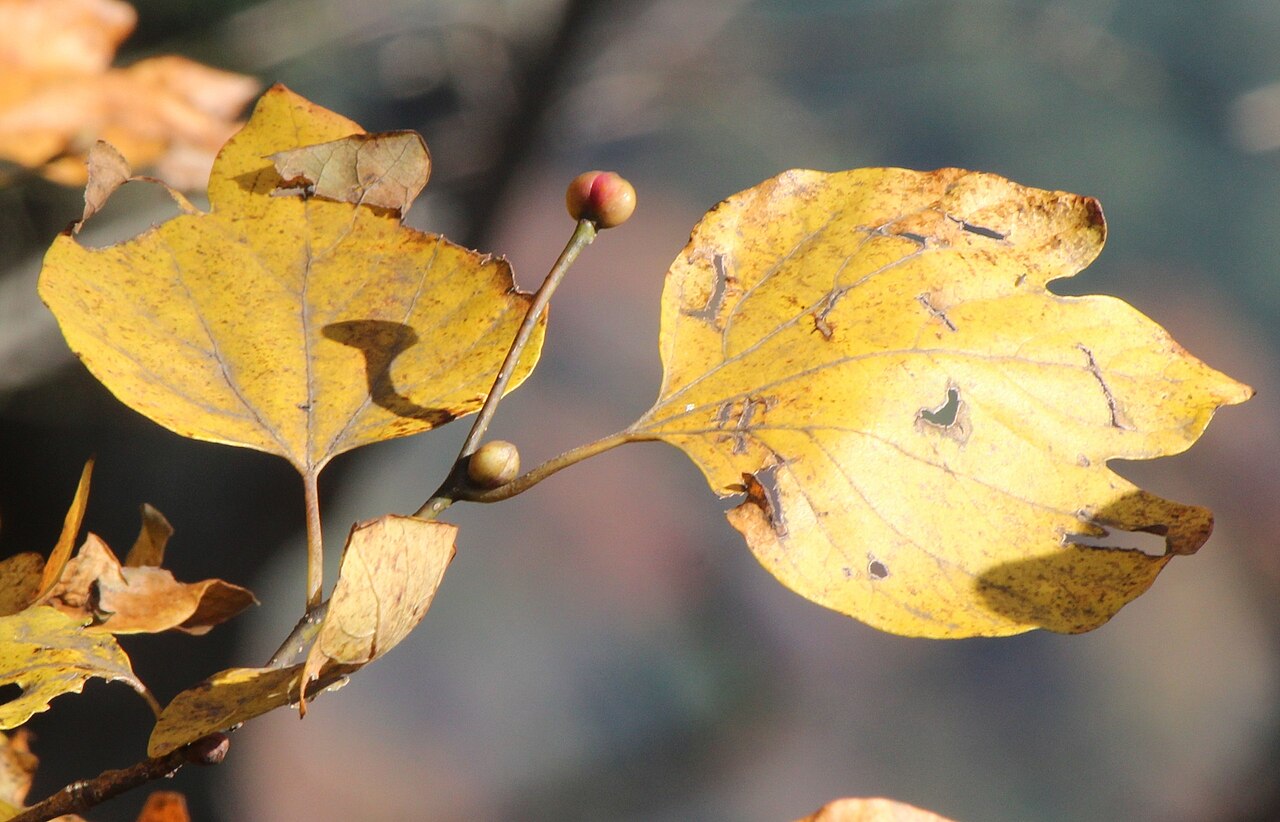
No discussion of sansuyu is complete without its “confusable” neighbors, but a common misunderstanding must be cleared up first. The tree most often confused with sansuyu in early spring is Lindera obtusiloba (Korean spicebush), and this confusion is a matter of identification, not danger. Lindera obtusiloba belongs to the laurel family and, like sansuyu, opens yellow flowers in early spring before its leaves appear, so from a distance the two are hard to tell apart. But both are non-toxic, so mistaking one flower for the other does not put you at risk.
Still, if you want to tell them apart, there are a few clues. Look at the flower stalks: sansuyu has long stalks so the clusters spread loosely, whereas Lindera obtusiloba flowers sit tight against the twig, bunched like little balls. Once leaves appear, check the leaf tip: a sansuyu leaf is egg-shaped and smoothly pointed, while a Lindera obtusiloba leaf is often bluntly three-lobed at the tip. The decisive clue is scent: snap and rub a twig or leaf of Lindera obtusiloba and it gives off a pungent, ginger-like smell, which is where its Korean name (meaning “ginger tree”) comes from (Wikipedia). Sansuyu has no such fragrance. Their bark differs too: sansuyu peels in untidy flakes, while Lindera obtusiloba stays comparatively clean.
Beware the red berries: the warning of yew and nandina
The confusion truly worth guarding against is not the yellow flower of spring but the red fruit of autumn and winter. Because a red, appetizing berry looks inviting, mistaking a dangerous plant for sansuyu can lead to an accident.
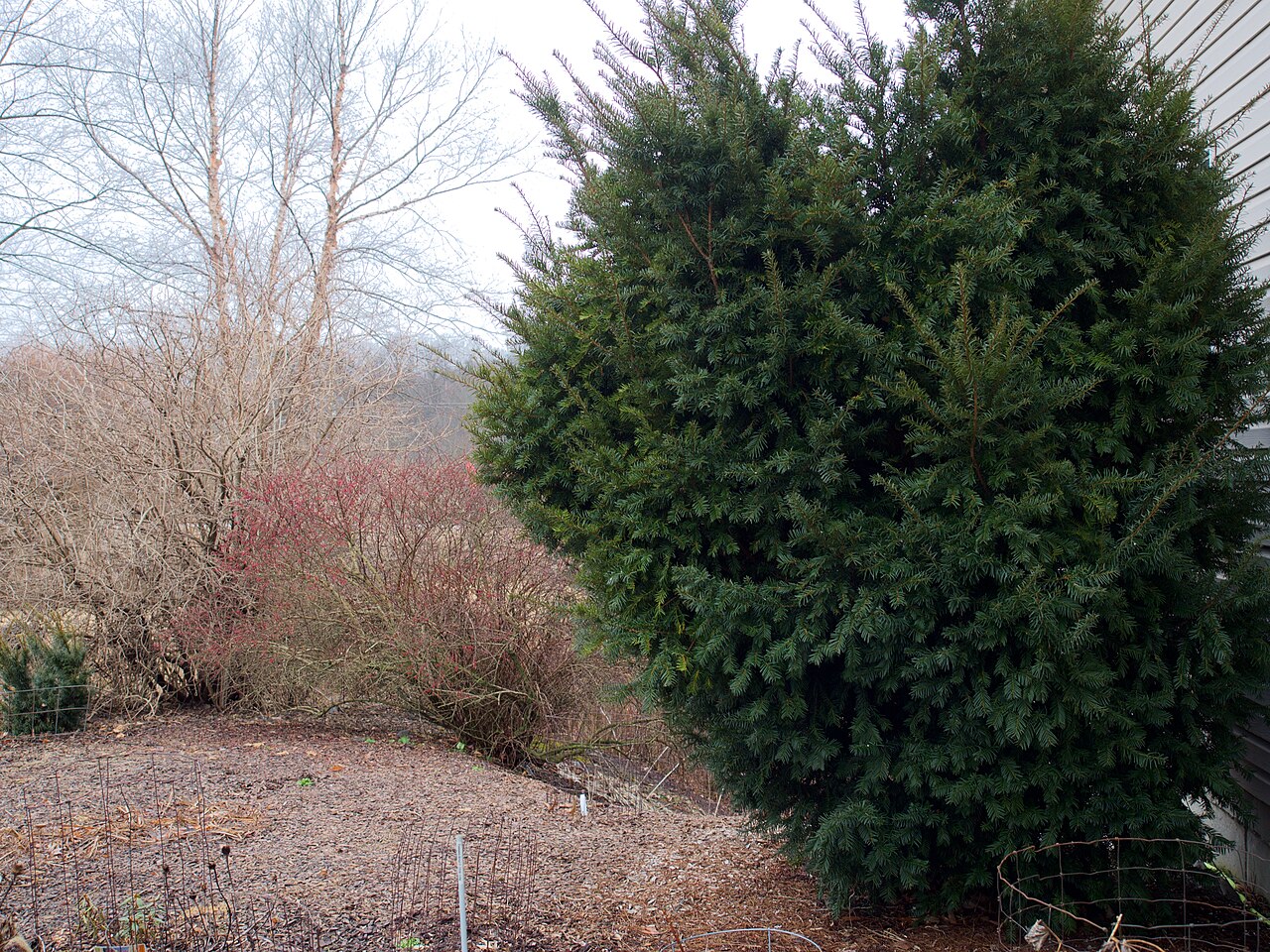
The prime example is the Japanese yew (Taxus cuspidata). The yew’s red fruit is a cup-shaped, soft aril wrapping a single seed, and remarkably, that red flesh is almost non-toxic. The danger lies in everything else: the seed within, and the foliage. These contain taxine alkaloids, which disrupt the heart’s calcium and sodium channels and cause serious cardiotoxicity; in severe cases the heart can stop, and the toxin is most concentrated in the seed (Wikipedia). There are reports of children being poisoned after eating the fruit.
Here the mirror contrast with sansuyu becomes vivid. Sansuyu uses the red flesh as medicine and deliberately discards the seed (per traditional theory). The yew is the reverse: its red flesh is comparatively harmless, but its seed carries a poison that must never be swallowed. The same “seed inside a red fruit,” and yet opposite fates.
Another plant to watch is nandina (Nandina domestica). This ornamental bears lush clusters of red berries in winter and contains cyanogenic glycosides that can release cyanide during digestion. To birds and pets it is toxic, and cases of bird deaths are known (Poison Control). That said, poisoning has almost never been reported in humans, and the toxicity of well-ripened berries is on the low side, so there is no need to exaggerate. The point is simple: not every red fruit is the same fruit.
Sansuyu holds two faces within a single fruit: the red flesh taken as medicine and the hard seed filtered out on principle. And among its neighbors stands the yew, a tree of the exact opposite “two faces,” whose flesh is harmless but whose seed is deadly. Not everything red is safe to eat, and the fate of a single seed differs so greatly from tree to tree. This is why, walking through the forest God made, we need eyes that weigh the structure and nature within rather than being charmed by surface color. Even in one red sansuyu fruit lies an old wisdom: discern what to take and what to let go.
References
- Cornus officinalis — Wikipedia
- Cornus officinalis — Plants of the World Online (Kew)
- Cornus officinalis — Missouri Botanical Garden
- Cornus mas and Cornus officinalis: Analogies and Differences — PMC
- Shan Zhu Yu (Cornus officinalis) — Me and Qi
- Taxus cuspidata (Japanese yew) — Wikipedia
- Nandina domestica (Heavenly Bamboo) — Poison Control
- Lindera obtusiloba — Wikipedia