
From a distance, it looks like a large picture. Step closer, and its surface is all thread. How do flowers and folds of clothing take shape in a tapestry? In the handwoven technique explored here, cloth and image emerge together as colored threads interlace. The crucial question is how far a thread of one color travels before it turns back. [1, 6]
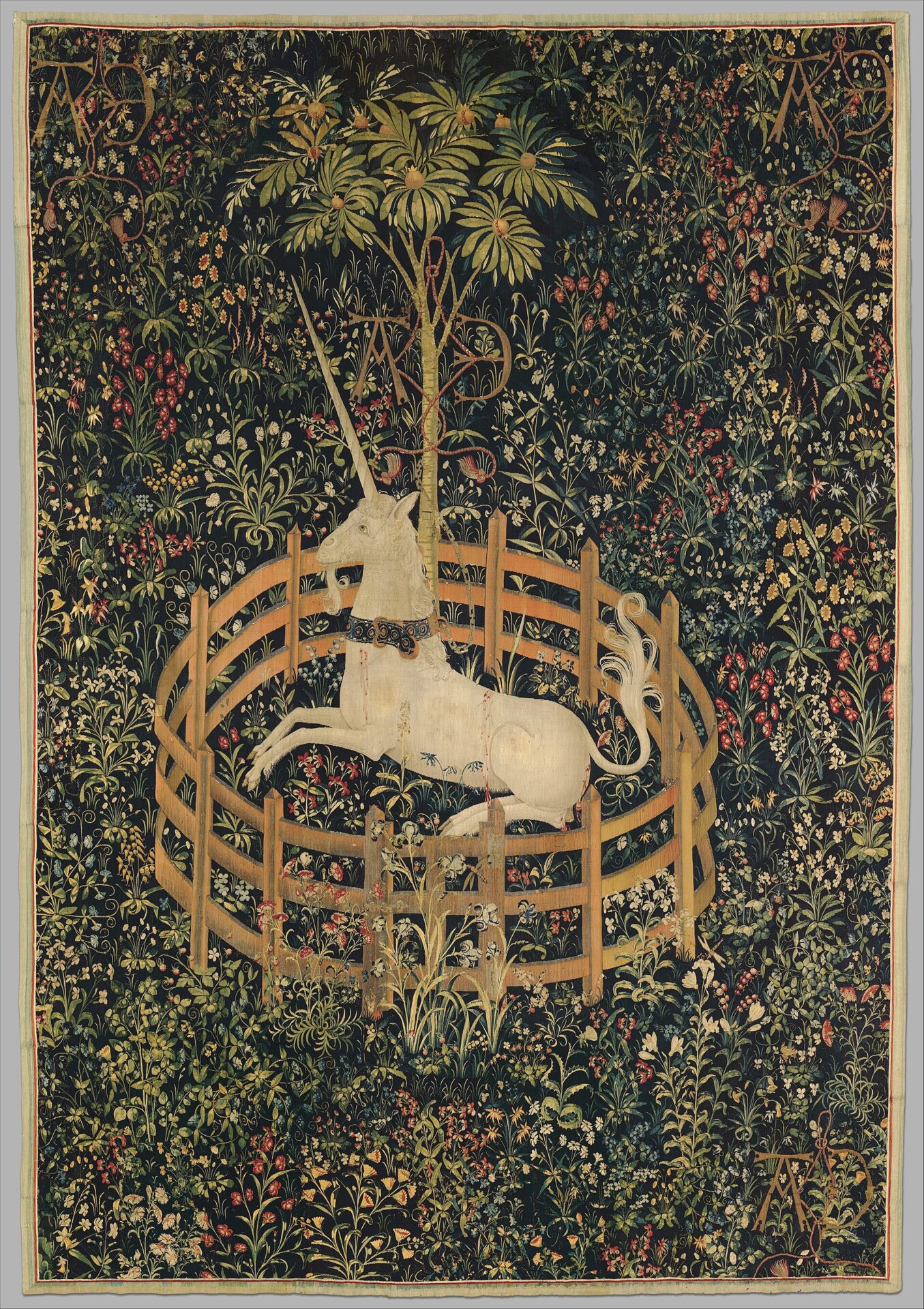
Image / collection: The Metropolitan Museum of Art · CC0 · Wikimedia Commons · Museum record
The threads you barely see support the picture
The foundation threads stretched under tension on a loom are the warp. The threads woven across them are the weft. On an upright frame, the warp looks vertical and the weft horizontal. Some looms lie horizontally, however, so remembering their roles is more useful than defining them by a fixed direction. [1, 4]
The basic tapestry structure is plain weave: weft passes alternately in front of and behind warp threads. Packing the wefts tightly together conceals the warp at the surface. The colors you notice belong mainly to the weft, while the hidden warp holds the fabric together. This is why the structure is described as weft-faced. [2, 3]

Illustration · AI-generated (Codex/ChatGPT subscription). Created to explain the roles of warp and weft.
A red flower’s thread does not travel through the blue sky
Imagine weaving a red flower against a blue background. Passing red yarn across the entire width each time would produce a red stripe. Instead, that yarn moves back and forth only through the warp threads needed for the red area; other colored wefts fill the surrounding areas. This is called discontinuous weft. “Discontinuous” does not mean the thread has broken accidentally. It means a single weft does not keep crossing the full width of the cloth. [1, 4]
Now consider the edge of a petal. Changing where the red thread turns from one row to the next changes the width of its color field. You can read a contour as both the edge of a color and a record of where threads changed direction. That small shift in attention offers a new way into the finished work.
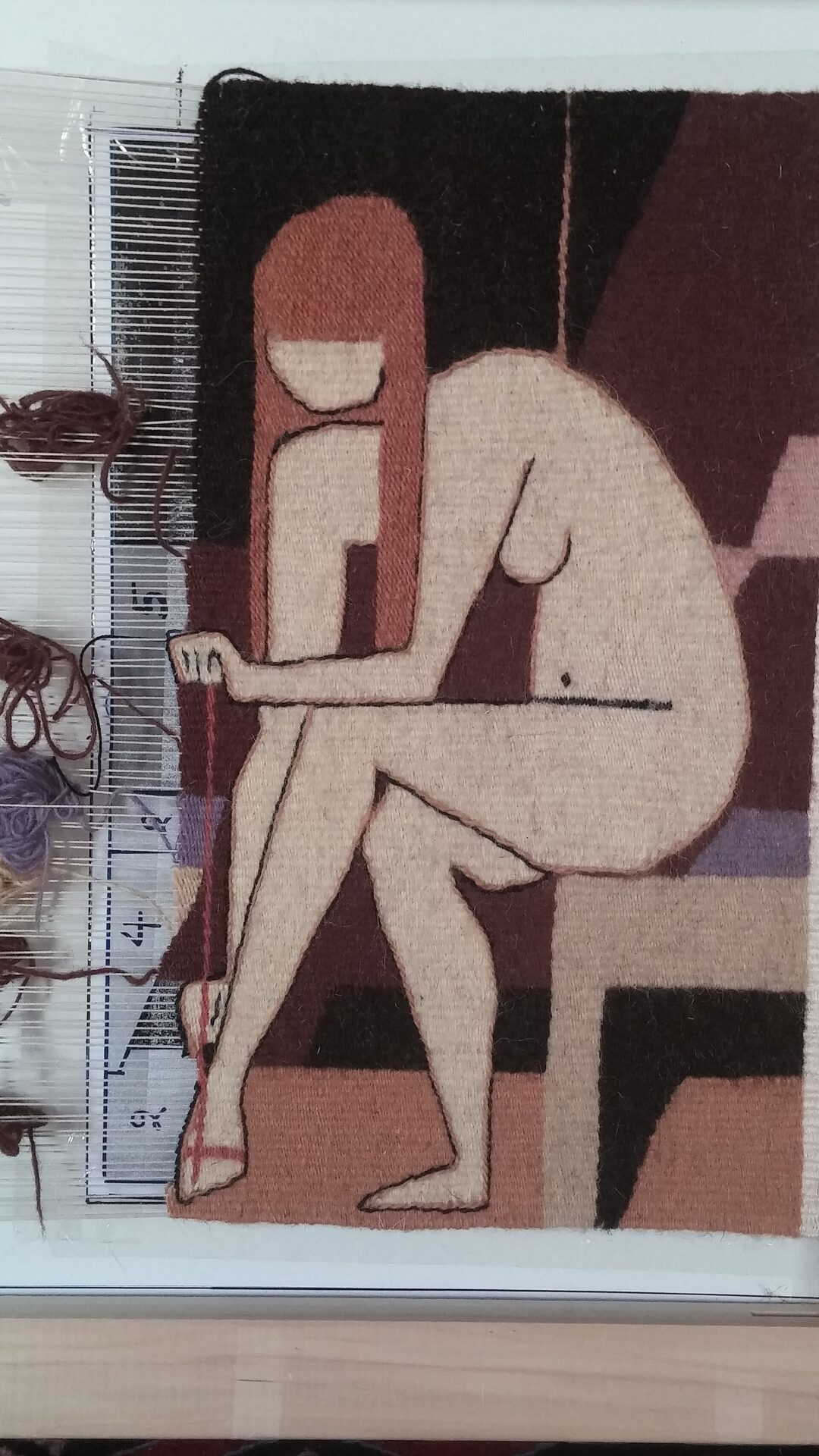
Image / collection: SEN Heritage Looms – Sophia Tsourinaki · CC BY-SA 4.0 · Wikimedia Commons
What happens where two colors meet?
If adjacent colored wefts turn around their own warp threads without joining, a gap can form at the boundary: a slit. There are also ways to connect the colors. Neighboring wefts may link around each other, or they may alternately wrap around a shared warp. The Art Institute of Chicago distinguishes these as interlocking and dovetailing. [3]
It would be misleading to treat every gap as a mistake. V&A research describes an Egyptian textile in which open slits help outline a cheek. It also discusses how Hannah Ryggen used shared-warp joins to create distinctive contours. These are examples from particular works, but they reveal how a join can help both hold a textile together and shape its image. [8]
Color can shift without mixing paint
Working in color fields does not mean every image must look like a set of large blocks. Medieval and Renaissance European weavers used hatching: narrow, tapering areas of different colors interpenetrated to suggest shading or a transition in color. The Metropolitan Museum’s conservation research also treats color areas and their joins as important clues to a textile’s structure. [4, 9]
Try following a single contour in a photograph of a tapestry. Up close, there are individual placements of colored thread; at a distance, they resolve into figures and plants. An overall photograph alone, however, cannot establish every fine joining technique. Distinguishing the design from the precise weave is a useful starting point.
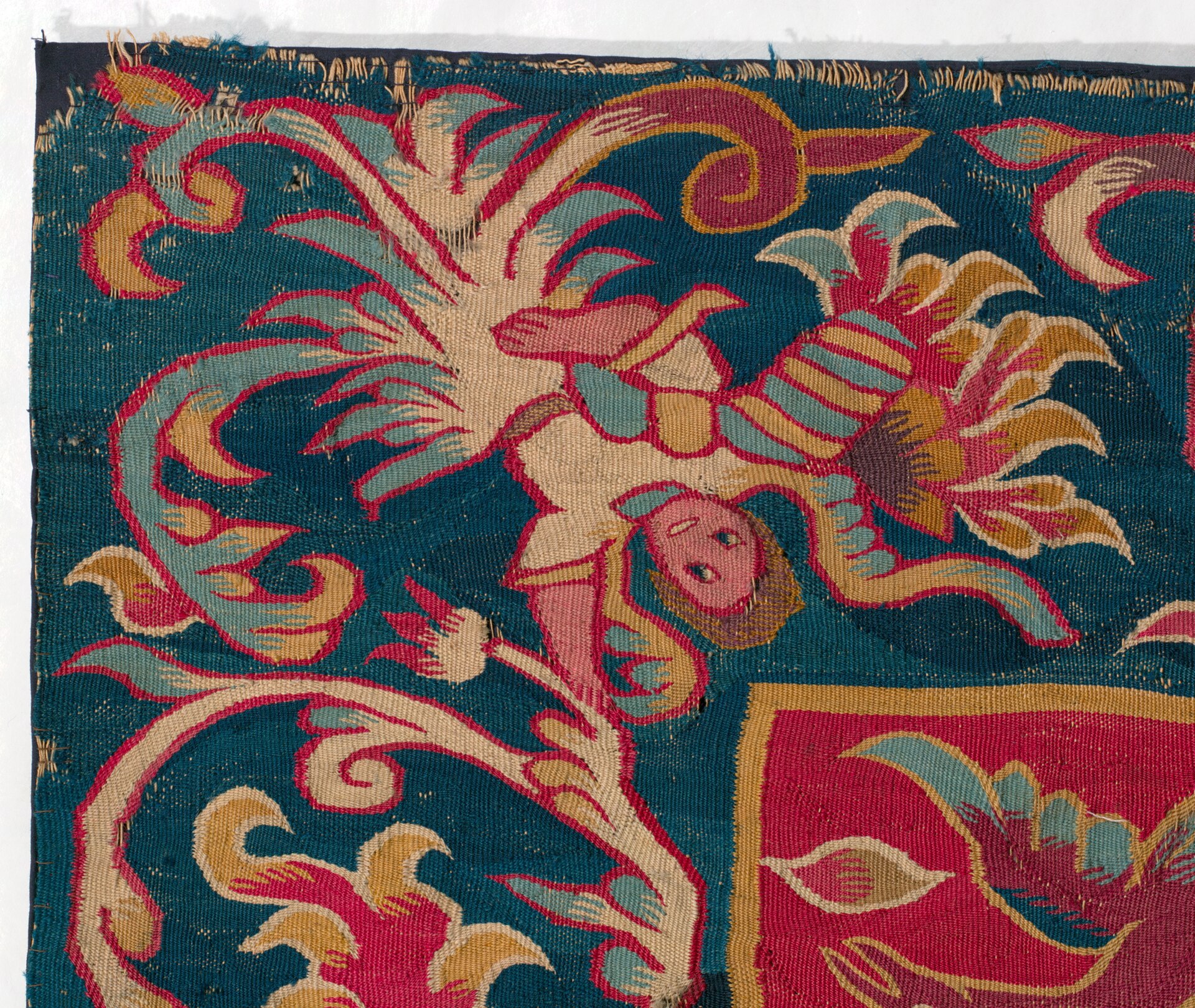
Image / collection: The Metropolitan Museum of Art · CC0 · Wikimedia Commons · Museum record
Different looms, the same roles for the threads
At France’s Gobelins manufactory, high-warp looms stretched warp between upper and lower beams, while low-warp looms laid it horizontally between beams. The arrangements changed how weavers viewed the work and its design. The Getty Museum highlights this distinction in its account of Gobelins production. [5]
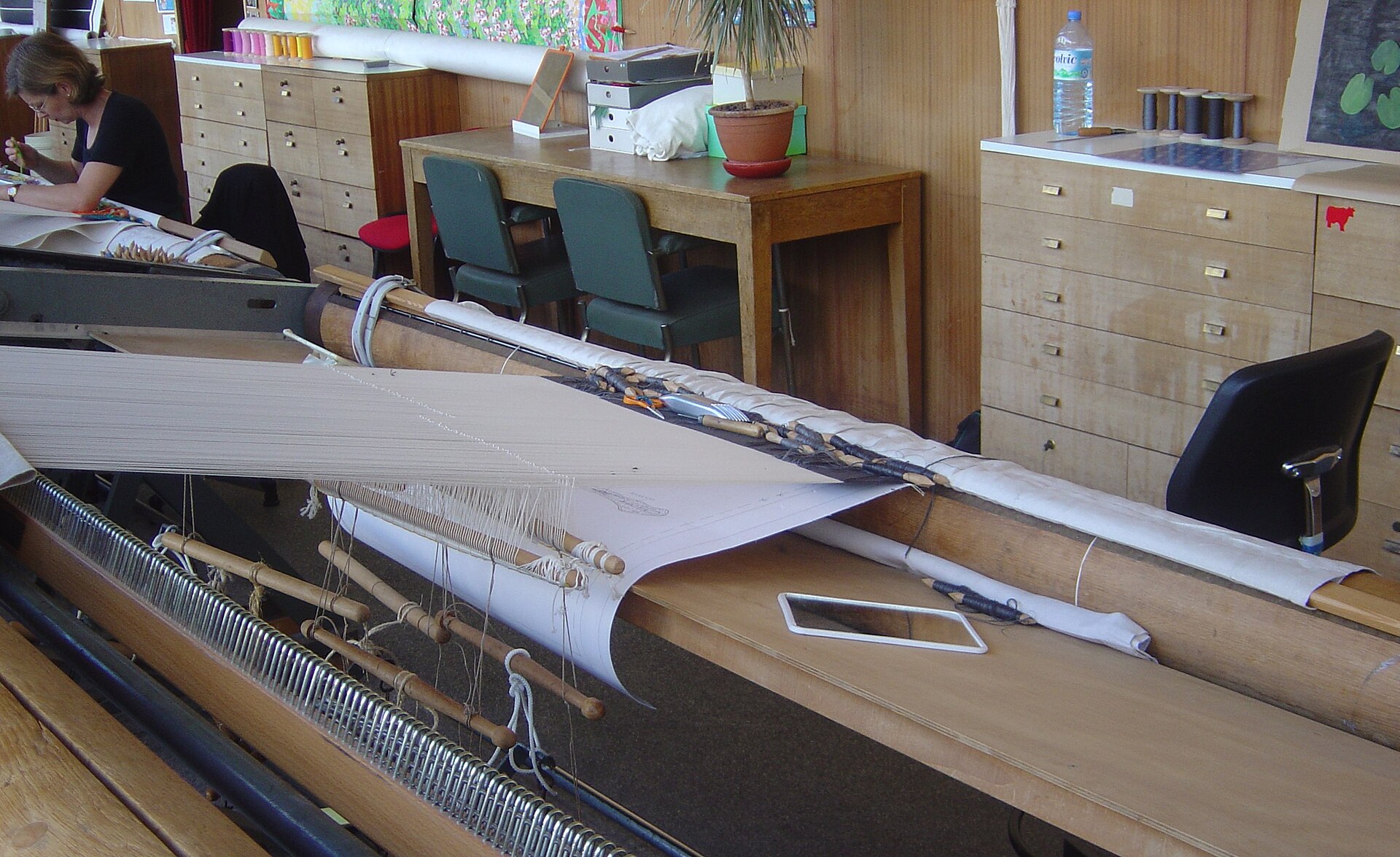
Image / collection: David Monniaux · CC BY-SA 3.0 · Wikimedia Commons
So a horizontal thread in a loom photograph is not automatically weft. First look for the long threads held under tension, then for those passing between them to build the colored areas. The loom makes visible the supporting role that the finished textile largely conceals.
A full-size design must be translated into thread
Traditional large European tapestries were often made with a full-size design called a cartoon. Here, the word means a working drawing or painting. Raphael’s Cartoons offer a prominent example of design meeting weaving. The V&A explains how copying a design on a low-warp loom relates to the reversal of the finished face. [7]
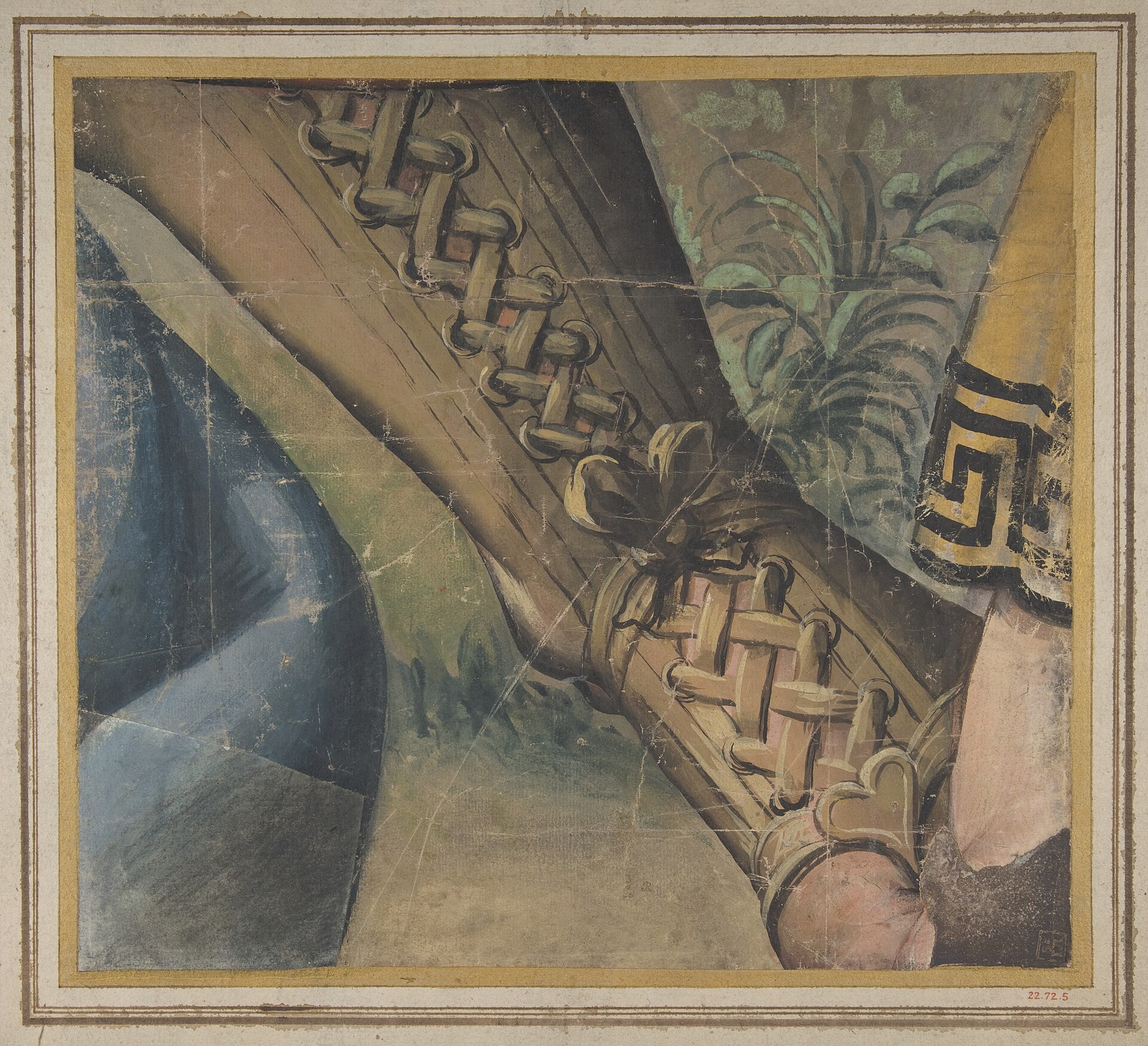
Image / collection: School of Raphael (Raffaello Sanzio or Santi) · CC0 · Wikimedia Commons · Museum record
The cartoon does not remain attached inside the completed cloth. It is a separate reference for translating colors and contours into yarn. Decisions about threads and joins still have to be resolved in weaving. Drawing an image on paper and constructing it in yarn demand different judgments. Nor does every contemporary artist use a cartoon or follow the procedures of a traditional workshop. [2, 7]
Why is the Bayeux Tapestry an embroidery?
A name does not always identify a technique. The Bayeux Museum describes its famous “tapestry” as embroidery: wool stitched onto a linen ground. Its image was added to cloth that already existed. In the woven tapestry technique discussed here, interlacing warp and weft creates the cloth and its pattern together. Both use thread to make images, but the relationship between image and ground is different. [6]
Look at three places next time
When you next encounter a tapestry, look first at the edge of one color, then at a small area where you can see the weave, and finally at the whole picture. At the edge, ask where that color’s thread might have turned. In the detail, ask which threads are visible and which are hidden. In the whole, ask how those choices became a scene.
The key goes beyond calling tapestry a picture made of thread. Its picture-making threads also make its fabric, and each meeting between colors carries a decision by its maker. After enjoying the image, return to a boundary. The production process that the finished work conceals begins to come into view.
References
- Victoria and Albert Museum — What is tapestry?
- The Metropolitan Museum of Art — Making a Tapestry—How Did They Do That?
- The Art Institute of Chicago — Weaving Structures
- The Metropolitan Museum of Art — How Medieval and Renaissance Tapestries Were Made
- J. Paul Getty Museum — Woven Gold: Tapestries of Louis XIV — Looms at the Gobelins Manufactory
- Bayeux Museum — The Bayeux Tapestry is an embroidery
- Victoria and Albert Museum — The story of the Raphael Cartoons
- Victoria and Albert Museum — The politics of tapestry: the V&A’s collection and the works of Hannah Ryggen
- The Metropolitan Museum of Art — Tapestry Technique and Materials in Islamic Culture