
In the dead of winter, on bare branches without a single leaf, a white flower barely two centimeters across sits crowned with snow. In the biting cold, what catches your attention first is, surprisingly, a strong fragrance. Many people remember this scene simply as ‘the flower that announces spring first,’ but a single plum blossom hides a fascinating story in which fragrance and defense share the same chemical skeleton. The molecule that gives the flower its sweet, bitter-almond scent is, in fact, the very same benzaldehyde that appears when an unripe ume seed defends itself by releasing cyanide.

A Winter Flower Closer to the Apricot Than the Plum
The plum blossom’s formal scientific name is Prunus mume, and it belongs to the rose family (Rosaceae). In English it is commonly called ‘Japanese apricot’ or ‘plum blossom,’ and its fruit is translated as ‘plum.’ Taxonomically, however, the tree is closer to the apricots than to the plums: within the genus Prunus it sits in the group that includes the apricots. That is why the common claim that ‘ume is a kind of plum’ is not quite accurate.
Its native range is the Yangtze River region of southern China, from where it later spread to Korea, Japan, Vietnam, and elsewhere. In the wild it grows even at elevations of 1,700 to 3,100 meters. The tree usually reaches 4 to 10 meters, and its flowers, 2 to 2.5 centimeters across, come in white, pink, and red, with a scent that can be very strong depending on the cultivar.
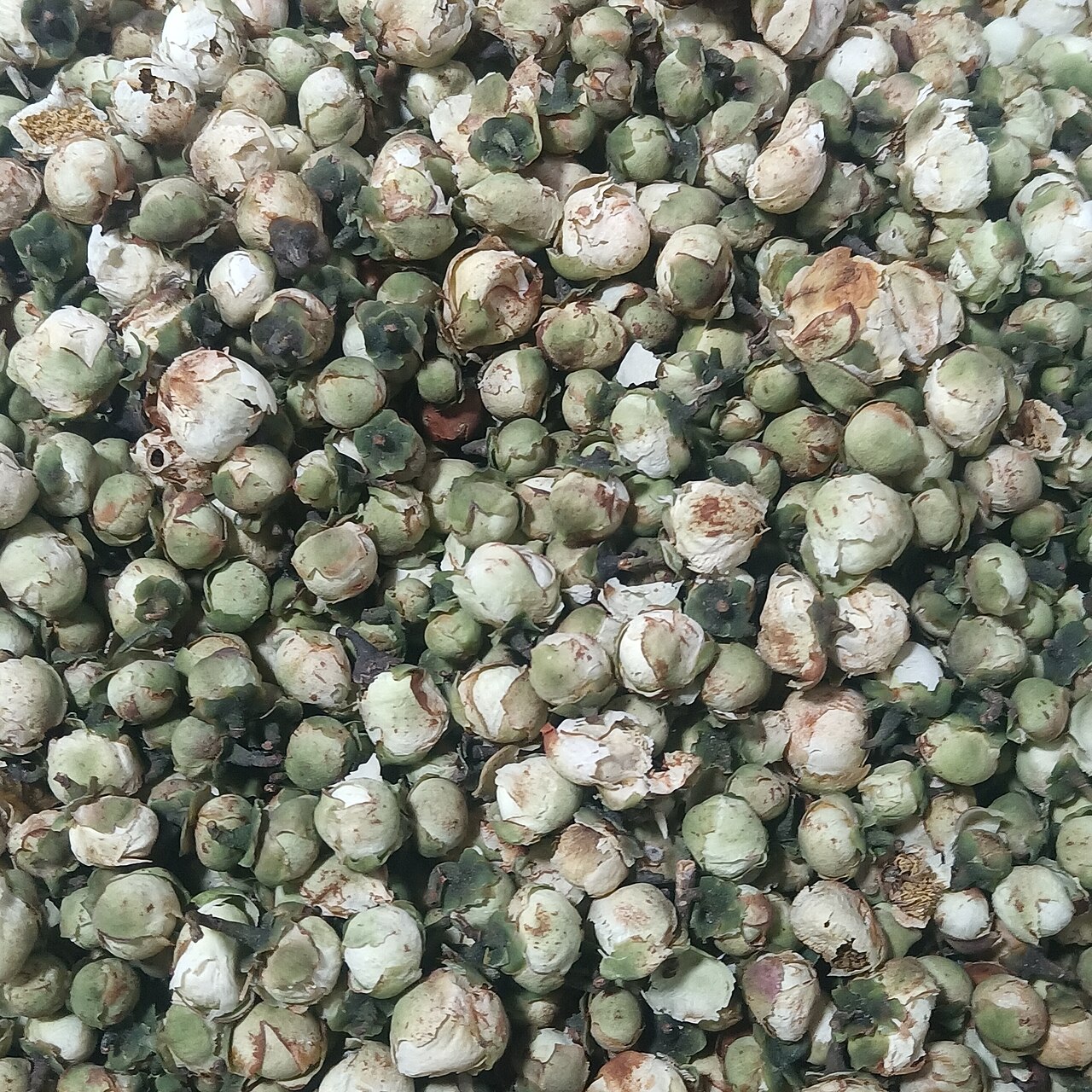
In East Asia its flowering season generally runs from January through the end of February, in the depth of winter. Its most striking feature is that the flowers open before the leaves. Because only flowers cover the bare branches before any foliage appears, the sight of blossoms crowned with snow stands out all the more. The fruit, the ume, is 2 to 3 centimeters across; when ripe its skin turns yellow (sometimes with a reddish blush), and it ripens in June and July. It is intensely sour and is rarely eaten raw.
It Blooms in Snow, but It Is Not the ‘Only Winter Flower’
Prunus mume is hardy to about USDA zone 6. According to the Brooklyn Botanic Garden, it is unlikely to endure winters much north of New York City. But hardiness does not mean the buds are safe from frost. If a hard frost strikes once the buds have opened, the flowers are damaged and look ‘burned.’ Interestingly, planting the tree in a sheltered, cozy spot can actually encourage it to bloom too early, leaving it more vulnerable to frost.
People often call the plum ‘the only flower that blooms in the snow,’ but this is an exaggeration. Several woody plants bloom between winter and early spring. Witch hazel, with its thread-like yellow flowers, wintersweet with its subtle fragrance, and camellia all flower at a time similar to, or even earlier than, the plum. It is more accurate to say the plum is among the earliest to bloom.
Because it keeps its resolve even in the cold, the plum has long been counted, together with the pine and the bamboo, as one of the ‘Three Friends of Winter.’ This, however, is a cultural symbol of endurance and hope rather than a botanical fact, and it is best to read symbol and fact separately.
The Chemistry of the Scent: What the Bitter-Almond Note Really Is
So what is the plum’s fragrance made of? When you analyze the volatile compounds the flower releases into the air, most of the scent comes from a family of aromatic compounds called phenylpropanoids and benzenoids. In a study examining several cultivars, these accounted for about 85 to 90 percent of the total volatiles, while fatty-acid derivatives and terpenoids made up only a small share.
The specific compounds and their ranges varied greatly from cultivar to cultivar. Benzyl acetate, which gives a jasmine-like floral note, ranged from 1.55 to 61.26 percent; benzaldehyde, reminiscent of bitter almond and cherry, from 5.34 to 46.46 percent; and the gentle benzyl alcohol from 5.13 to 57.13 percent. Eugenol, spicy like clove, ranged from 0.87 to 6.03 percent, and compounds such as chavicol and cinnamyl alcohol were also detected. Small shifts in the proportions of just a few aromatic molecules are enough to give each cultivar a different character of scent.
One thing to add: the claim that ‘the colder it is, the stronger the scent’ has no confirmed basis. The plum’s rich fragrance comes not from the cold itself but from the kinds and amounts of these aromatic compounds.
One Molecule, Two Faces: From the Flower’s Scent to the Seed’s Weapon
Above, benzaldehyde was named as a major component of the fragrance. Yet this very benzaldehyde is precisely the same compound that appears when an unripe ume seed defends itself. It is a chemical bridge linking fragrance and defense.
The seeds of ume and other rose-family plants contain a substance called amygdalin. Amygdalin is known as a ‘cyanogenic glycoside,’ meaning a sugar-bound compound that releases hydrogen cyanide, that is, cyanide, when it breaks down. Its molecular formula is C20H27NO11. It is also present, in differing amounts, in the seeds of apricot, bitter almond, peach, and plum.
Here lies an intricate defense device that God designed. Within the plant, amygdalin and the enzyme that breaks it down are stored separately, in different places. Normally they never meet; only when an insect chews the tissue or the cells are crushed do the two finally mix. At that moment enzymes such as beta-glucosidase act to produce cyanide and benzaldehyde together. As long as the tissue is unharmed no toxin forms; the defense compound switches on only at the instant of injury.
The breakdown proceeds in stages. According to a classic 1967 study, amygdalin is first split into prunasin and glucose, prunasin into mandelonitrile and glucose, and finally mandelonitrile into benzaldehyde and cyanide. A different enzyme is involved at each step.
One point deserves precision here. Amygdalin itself is nearly nontoxic; toxicity arises only when it is hydrolyzed and cyanide is released. So saying ‘there is potassium cyanide in ume seeds’ is inaccurate. Potassium cyanide is a separate substance; what the ume seed holds is a glycoside that releases cyanide when it is chewed or broken down.
Unripe Ume and the Wisdom of Processing
Amygdalin is an especially serious matter in unripe ume and in the seeds. A food-safety document from the Tokyo Metropolitan Government explains that unripe fruit and the kernels inside the seeds contain cyanogenic glycosides, and that when these are broken down by enzymes, cyanide is released and can cause poisoning with symptoms such as headache, dizziness, sweating, convulsions, and difficulty breathing. That is why ume is usually not eaten raw but is processed first. In fact, amygdalin is higher in unripe green fruit than in ripe fruit and decreases as the fruit ripens, and there is more of it in the seed than in the flesh.
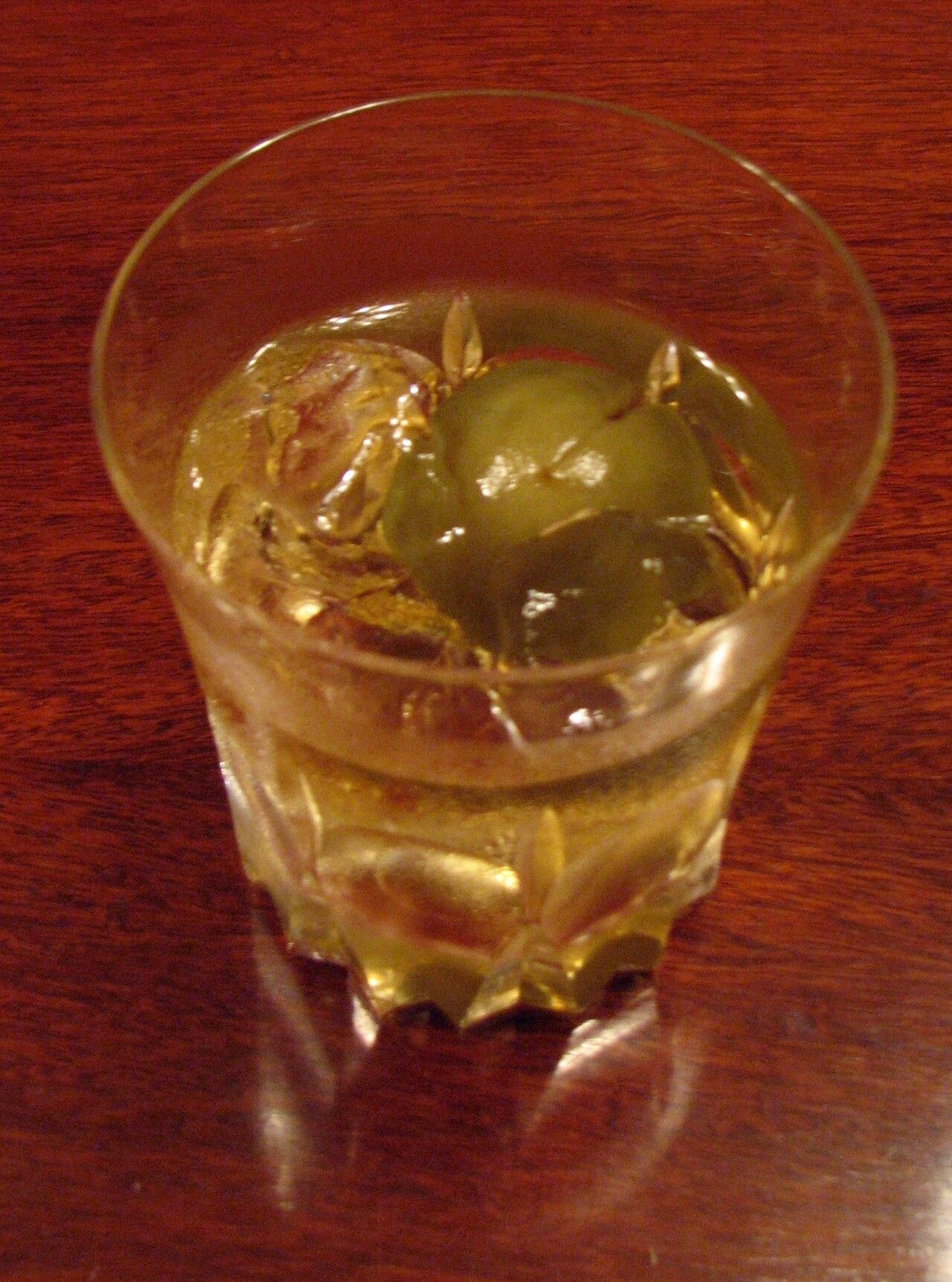
So how does the ume syrup we so often make become safe? A study that tracked fermentation over a full year gives the answer. Three months after being packed in sugar, syrup made from unripe ume contained more than about 63 milligrams of amygdalin per liter, higher even than syrup made from ripe ume (42 to 50 milligrams per liter). The less ripe the fruit, the more defense compound it left behind.
As time passed, however, the situation changed dramatically. After nine months, amygdalin plunged to around 3 to 12 milligrams per liter, and after twelve months it generally fell below 5 milligrams per liter. The researchers concluded that, regardless of the fruit’s ripeness, its origin, or the method of preparation, aging for at least nine months is the key to lowering amygdalin.
Even here, though, precise wording is needed. It is true that long aging greatly reduces amygdalin, but it does not disappear entirely. A small amount remains even after twelve months, and short-aged syrup still contains a substantial quantity. The claim that ‘plum syrup or plum wine removes the toxin completely’ is an exaggeration; ‘long aging greatly reduces it’ is accurate.
Finally, one more note. The claim that amygdalin, its derivative ‘laetrile,’ or so-called ‘vitamin B17’ can cure cancer has no reliable basis. A 2015 systematic review concluded that there is no trustworthy clinical evidence to support the claim that amygdalin or laetrile benefits cancer patients. If anything, it carries only the risk of cyanide poisoning.
A snow-crowned plum blossom, then, wears two faces. The benzaldehyde at the heart of the sweet fragrance that calls the bees appears again in the seed as a byproduct of defense, released together with cyanide. Invitation and defense overlap within the same molecular skeleton. In this small flower, which is the first to offer its scent in the cold and yet knows how to guard its own seed, we can read one thread of the intricate design the Creator has woven in.
References
- Prunus mume: botanical overview (classification, origin, flowering, fruit) — Wikipedia
- Analysis of volatile compounds in Prunus mume flowers — PMC
- Floral scent metabolome across plum blossom cultivars — MDPI Plants
- Amygdalin: overview — Wikipedia
- Food safety of unripe ume fruit and seeds — Tokyo Metropolitan Government
- Changes in amygdalin during one year of ume syrup fermentation — PMC
- Winter flowering and hardiness of Prunus mume — Brooklyn Botanic Garden
- The enzymic hydrolysis of amygdalin — PubMed