
The sky flashes. A moment later, thunder arrives. The light has vanished, but the rumble keeps going. Is lightning still flashing somewhere out of sight?
Sometimes it may be, but a long rumble does not necessarily mean that new lightning keeps forming. Sound from different parts of a long lightning channel can reach us at different times. What the eye takes in as one scene can unfold as a sequence at the ear. [1]

The Modern Polymath · CC BY 4.0 · Wikimedia Commons
Thunder does not begin with clouds colliding
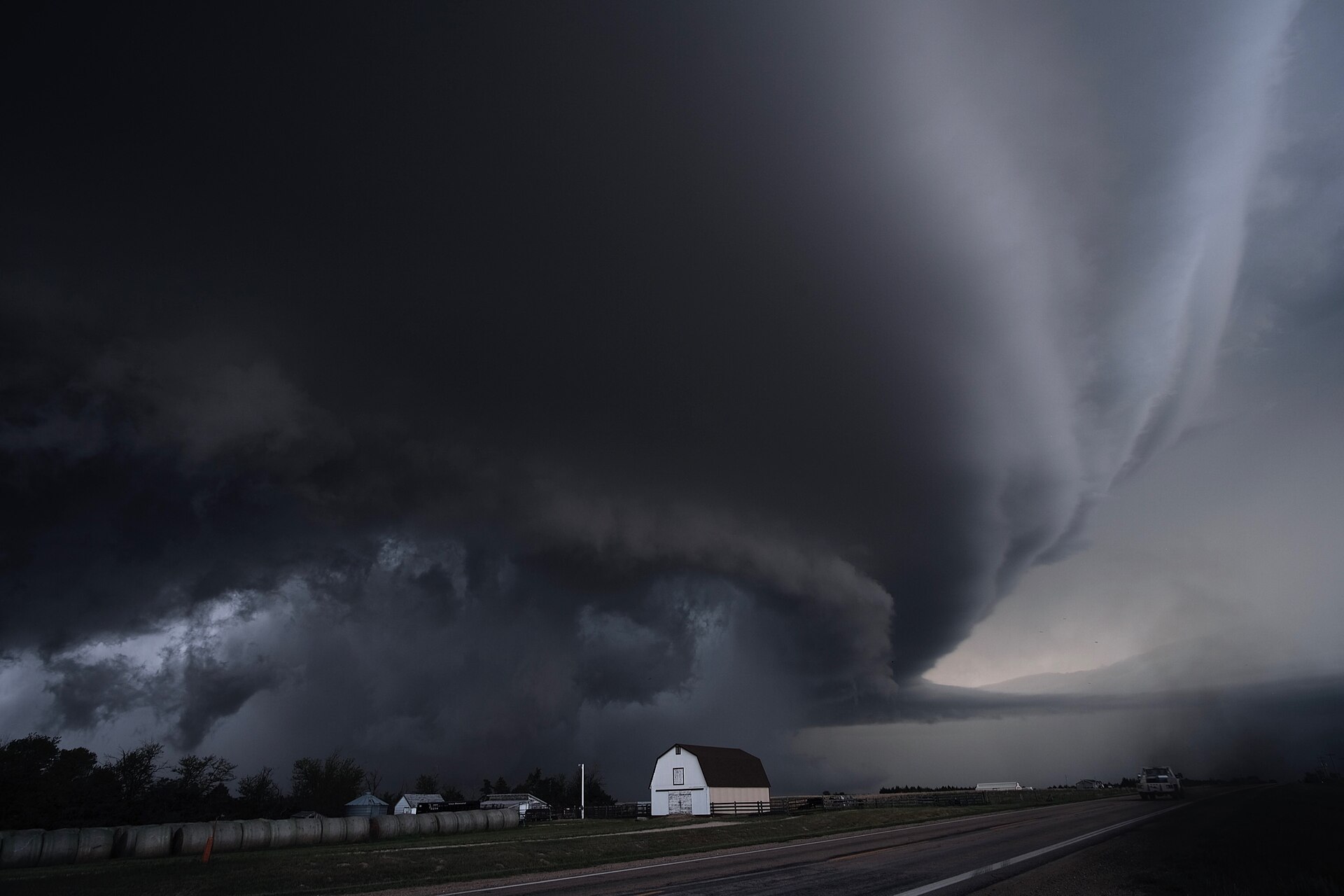
It is easy to imagine thunder as two masses of cloud bumping together. Its immediate cause is actually the rapid heating of a narrow channel of air carrying a lightning discharge. When a large amount of energy arrives in a very short time, the heated air expands rapidly and compresses the surrounding air. The resulting shock wave spreads outward. [3]
It does not remain a shock wave of the same strength throughout its journey. The US National Severe Storms Laboratory (NSSL) explains that the shock wave formed near the discharge channel develops into an ordinary sound wave as it travels. Thunder is what we hear when that pressure disturbance reaches our ears. [4]
Inside the cloud, collisions and movement of ice particles help separate and accumulate electrical charge. That process helps establish the electrical conditions for lightning. Separating charge transfer between particles from the heating of air by lightning reveals what is missing from the idea that clouds simply collide to make thunder. [4]
Mike Coniglio / NOAA NSSL · Public domain · Wikimedia Commons
Sound does not start only at the ground strike point
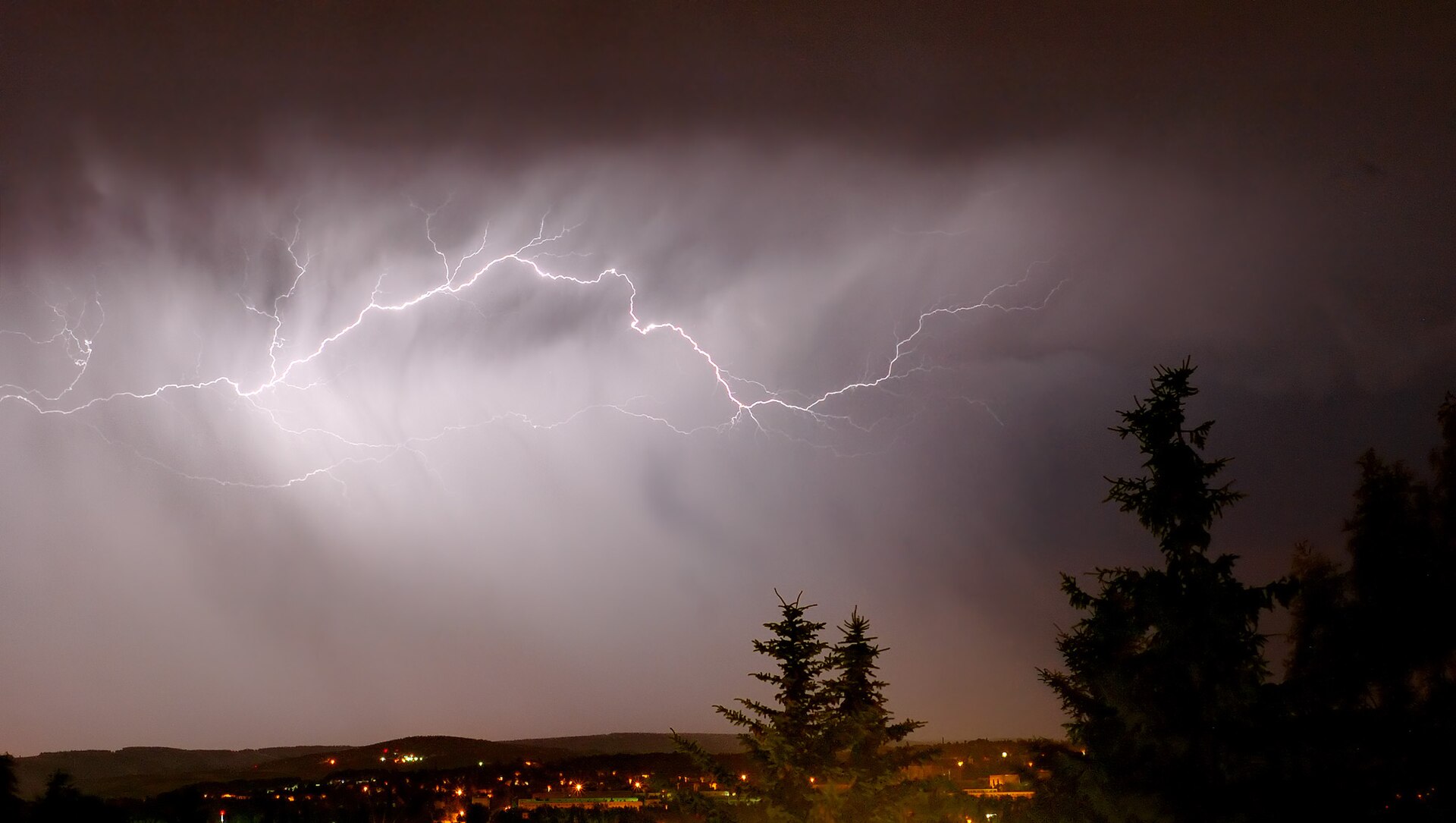
If we picture lightning as a single strike marker on a map, we might expect thunder to be one bang from that spot. But the discharge channel heating the air stretches through the sky. The sources of sound are distributed along it. Sound from a nearby section can arrive first, with sound from more distant sections following later. [1]
Consider a simple calculation. Suppose two sections of the same channel make sound almost simultaneously, and the sound travels straight to us at a constant speed. For this illustration, use 340 metres per second. This rounds the Met Office’s approximate value; actual sound speed varies with atmospheric conditions. [2]
| Section where sound begins | Distance to the listener | Time to arrive |
|---|---|---|
| Nearer section A | 1,020m | 3 seconds |
| Farther section B | 3,060m | 9 seconds |
Distance divided by speed gives an arrival gap of 6 seconds. No new lightning needs to be added during that interval in this imaginary example. A real channel has more than two points, so sound from its many sections overlaps. The calculation shows that differences in travel distance alone can spread out arrival times, even without adding echoes or repeated discharges.
The distances of 1,020m and 3,060m are measured from each section to the listener, not along the channel. A rumble lasting 6 seconds therefore does not directly imply that the lightning itself was 2,040m long. Channels of the same length can present different distances to their sections, depending on their orientation, bends and the listener’s position.
André Karwath aka Aka · CC BY-SA 2.5 · Wikimedia Commons
One visible flash may contain more than one stroke
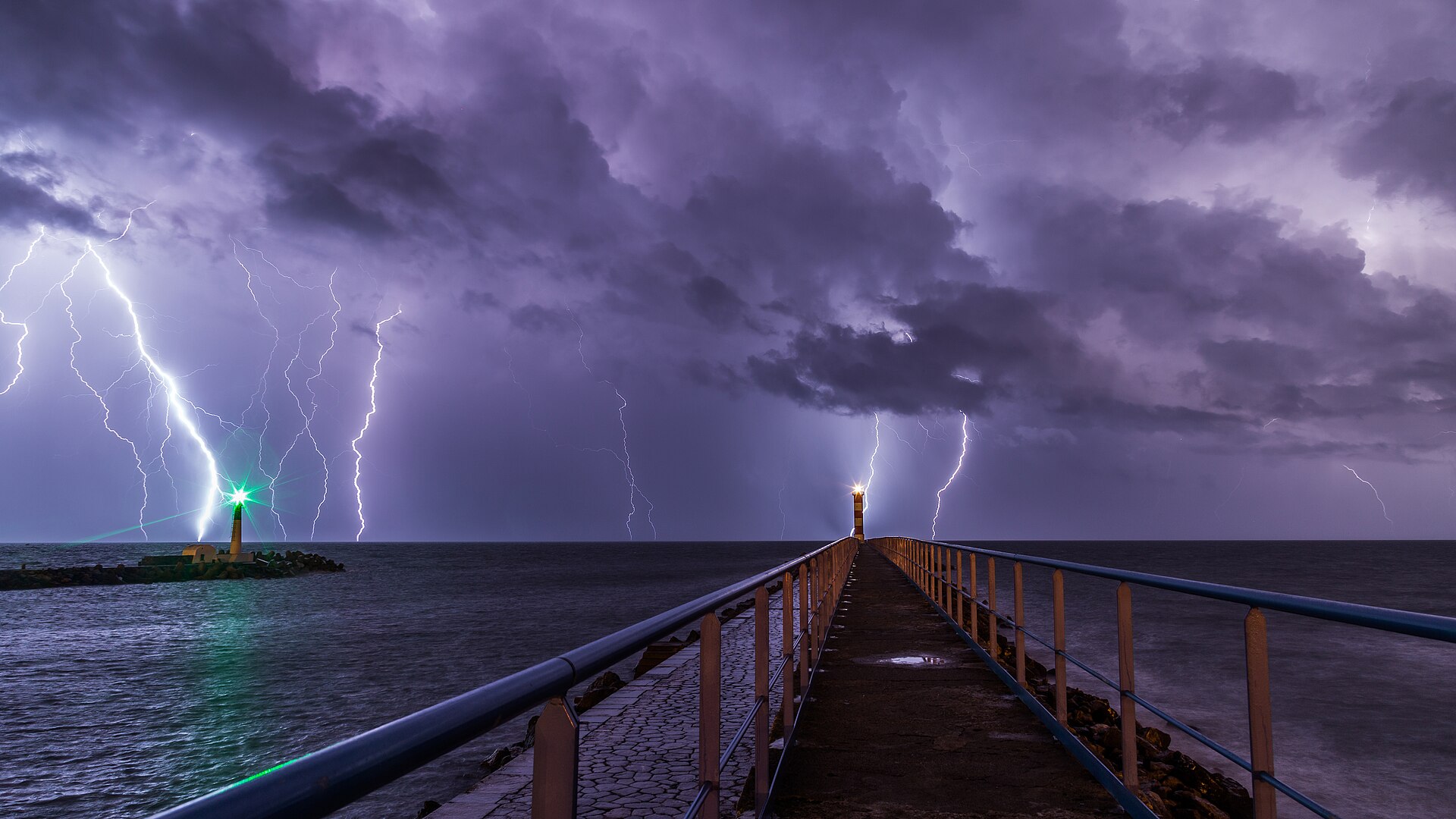
Separate from the sound’s travel time, the lightning itself may involve brief repetitions. In the common negative cloud-to-ground process described by NSSL, a leader extends downward. After connecting with a channel rising from the ground, a bright return stroke propagates upward along the established path. [5]
Further discharges may light a similar path again. One flash can therefore include several strokes. This should not be treated as a fixed sequence for all lightning. Many flashes remain within clouds without reaching the ground. [5]
It helps to separate two questions about a long rumble: When was the sound made? And when did that sound reach me? Repeated discharges belong to the first question; distance differences along a long channel belong to the second. One photograph, or a single rumble heard by ear, does not let us assign an exact share to each.
Maxime Raynal · CC BY 2.0 · Wikimedia Commons
The silence before thunder differs from the rumble itself
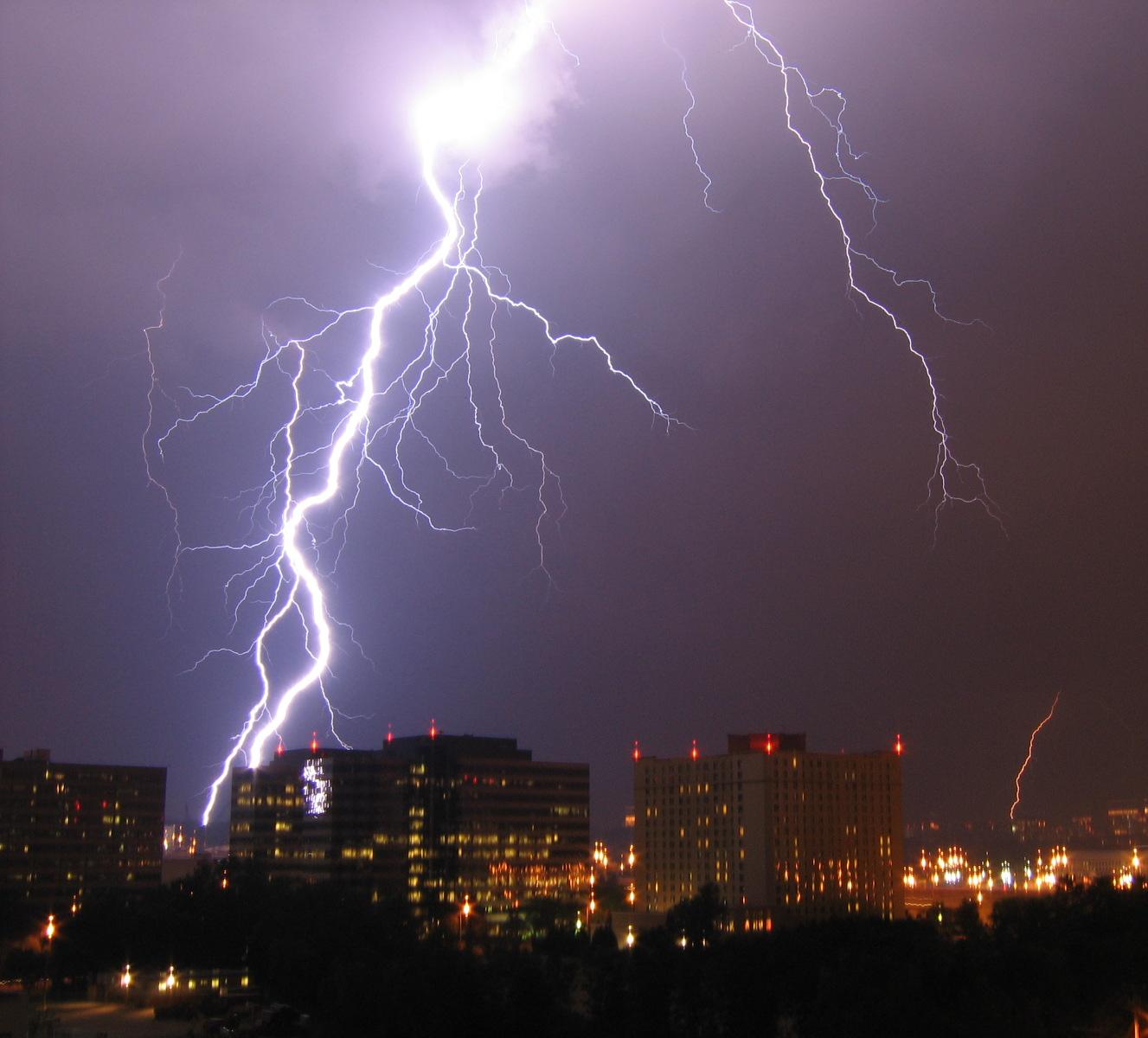
The wait between seeing lightning and hearing the start of thunder comes from the difference between the speeds of light and sound. The Met Office explains that dividing this interval in seconds by 3 gives an approximate distance in kilometres. The interval being measured is the wait before the first sound, not the time for which the thunder continues. [2]
That estimate does not map the entire discharge either. As in our imaginary example, it reflects the travel time from the part whose sound is heard first. It should not be used to determine the exact ground strike location or the location of the next flash.
There is no reason to stand outside counting. The US National Weather Service warns that hearing thunder can mean being within striking distance and advises moving immediately to a safe place. The calculation here is an explanation to consider from an already safe indoor location. [3]
Postdlf · CC BY-SA 3.0 · Wikimedia Commons
What about lightning seen without a sound?
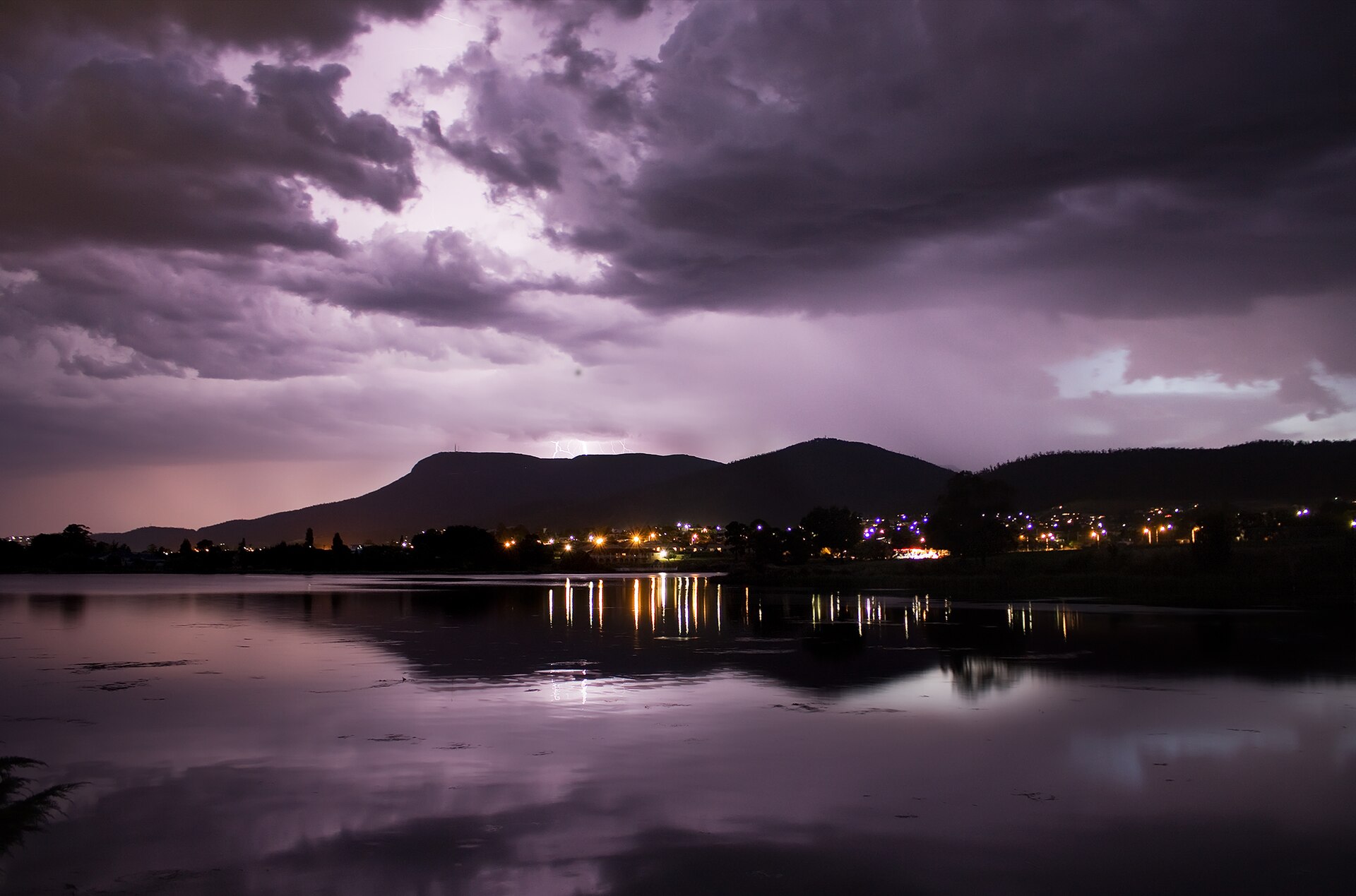
Sometimes distant skies or clouds flash silently. The National Weather Service explains that what is called heat lightning is not a special, soundless kind of lightning caused by heat. It is light from a distant thunderstorm. Terrain or clouds may hide the actual channel, leaving only the illuminated sky visible. [7]
Seeing the light does not mean that conditions allow us to hear the thunder. Audibility depends on the surroundings. An explanation from the National Weather Service in Melbourne notes that heavy rain and wind reduce the distance at which thunder can be heard, while calm, quiet nights may allow it to be heard farther away. There is no fixed boundary beyond which thunder suddenly disappears. [8]
Atmospheric conditions can also bend sound away from the ground. Not hearing it does not mean no sound was produced. [2]
JJ Harrison · CC BY-SA 3.0 · Wikimedia Commons
Beyond the photographed line: reading paths inside clouds
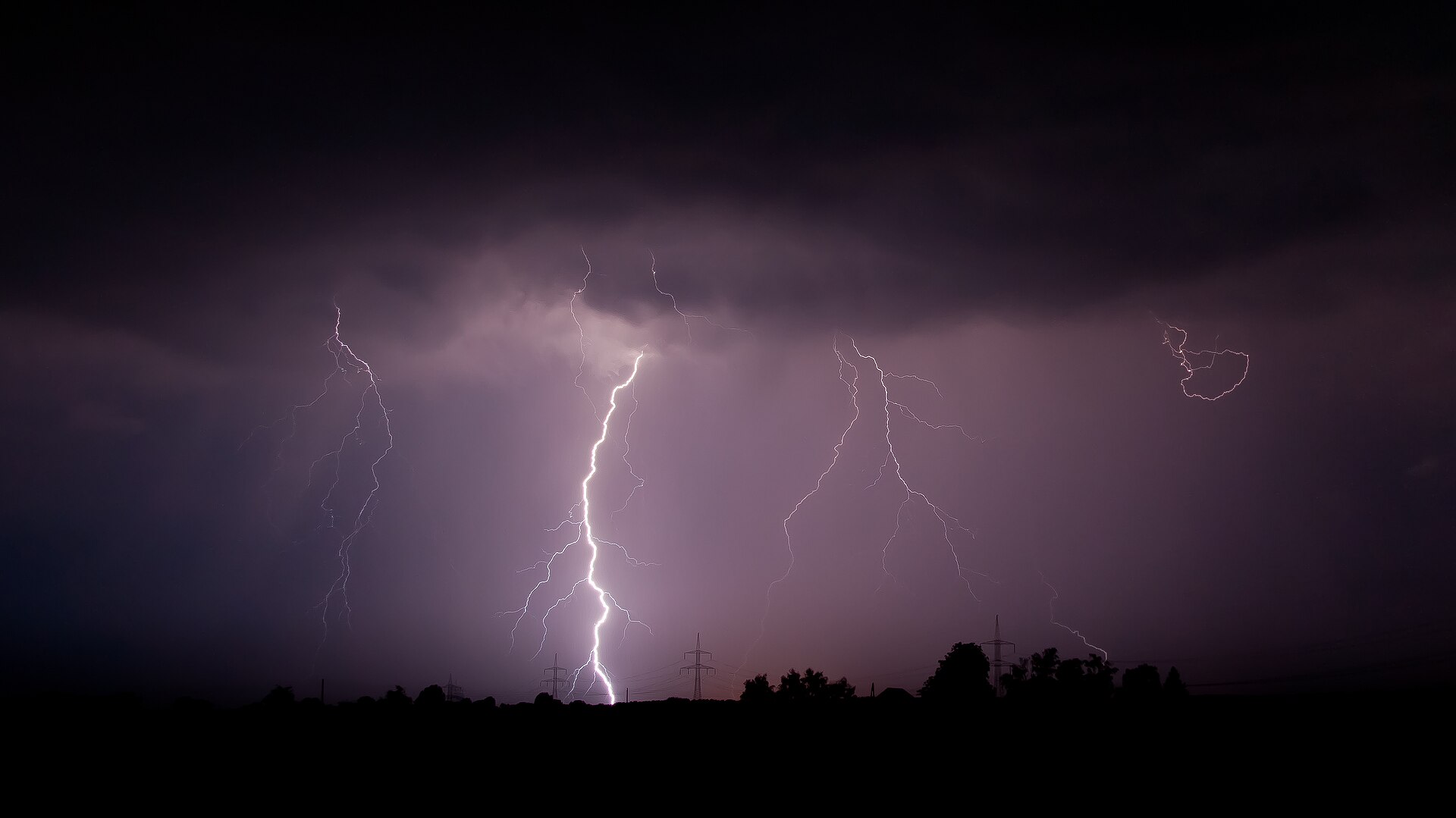
A photograph shows the shape of a bright channel, but cannot necessarily reveal every cloud-hidden section or its rapid sequence of development. This is where lightning research becomes especially interesting. NSSL’s Oklahoma Lightning Mapping Array maps points along discharge channels in three dimensions, allowing researchers to examine where lightning starts in a cloud and the space through which it spreads. [6]
The landscape photographs here are not measurements of the order in which sound arrived. Even when several bright lines appear in one frame, exposure time and photographic technique need to be checked. Evidence of a channel’s spatial shape should be distinguished from evidence that identifies the timing of individual discharges.
Mathias Krumbholz · CC BY-SA 3.0 · Wikimedia Commons
Think of thunder again. The brief quiet before the first sound points to the different travel speeds of light and sound; the following rumble can carry the effects of both a long channel and the timing of its discharges. A brief lightning flash can still be followed by a long rumble. Even a familiar event in the created world reveals more when we separate what happened from how it reached us.