
Pick up a head of napa cabbage and the outside and the inside look nothing alike. The outer leaves have opened away, while further in the leaves turn a pale yellow and pack together tightly. They grew on the same plant, yet the outer ones spread and the inner ones wrap.
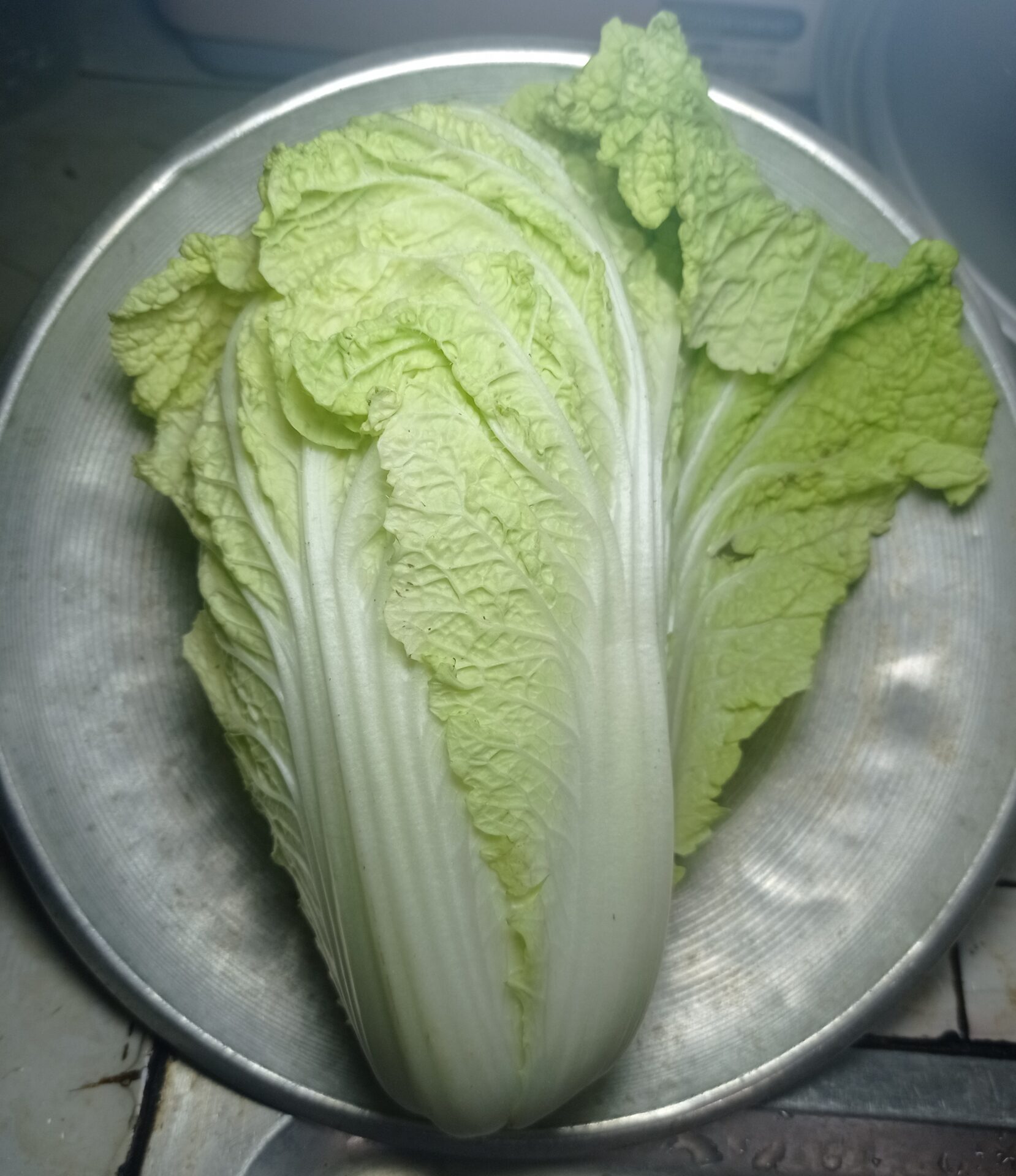
Photo: SarKaLay, Wikimedia Commons, CC BY-SA 4.0
This is no accident. The upper and lower faces of a single leaf grow at different rates, so the leaf rolls inward, and those leaves stack into the cabbage “head”. Botany calls the process heading.
Heading is a leaf folding itself
Heading is the process in which leaf incurvature, the inward bending of the inner leaves, continues until the leaves overlap densely into a leafy head that serves as a storage organ. A 2023 review of leaf curvature in Brassica rapa (Journal of Advanced Research 53:49–59) treats heading as the product of interactions among genes, microRNAs, plant hormones and environmental cues.
We also know which leaf marks the turn. A 2022 study that dissected the leaves of the cabbage line Chiifu-401-42 (L1, L2, L3, L5, L7 and L9) region by region and sequenced their RNA reported that the seventh leaf, L7, is the transition leaf sitting at the boundary between the inward-curving inner leaves and the outward-curving outer ones.
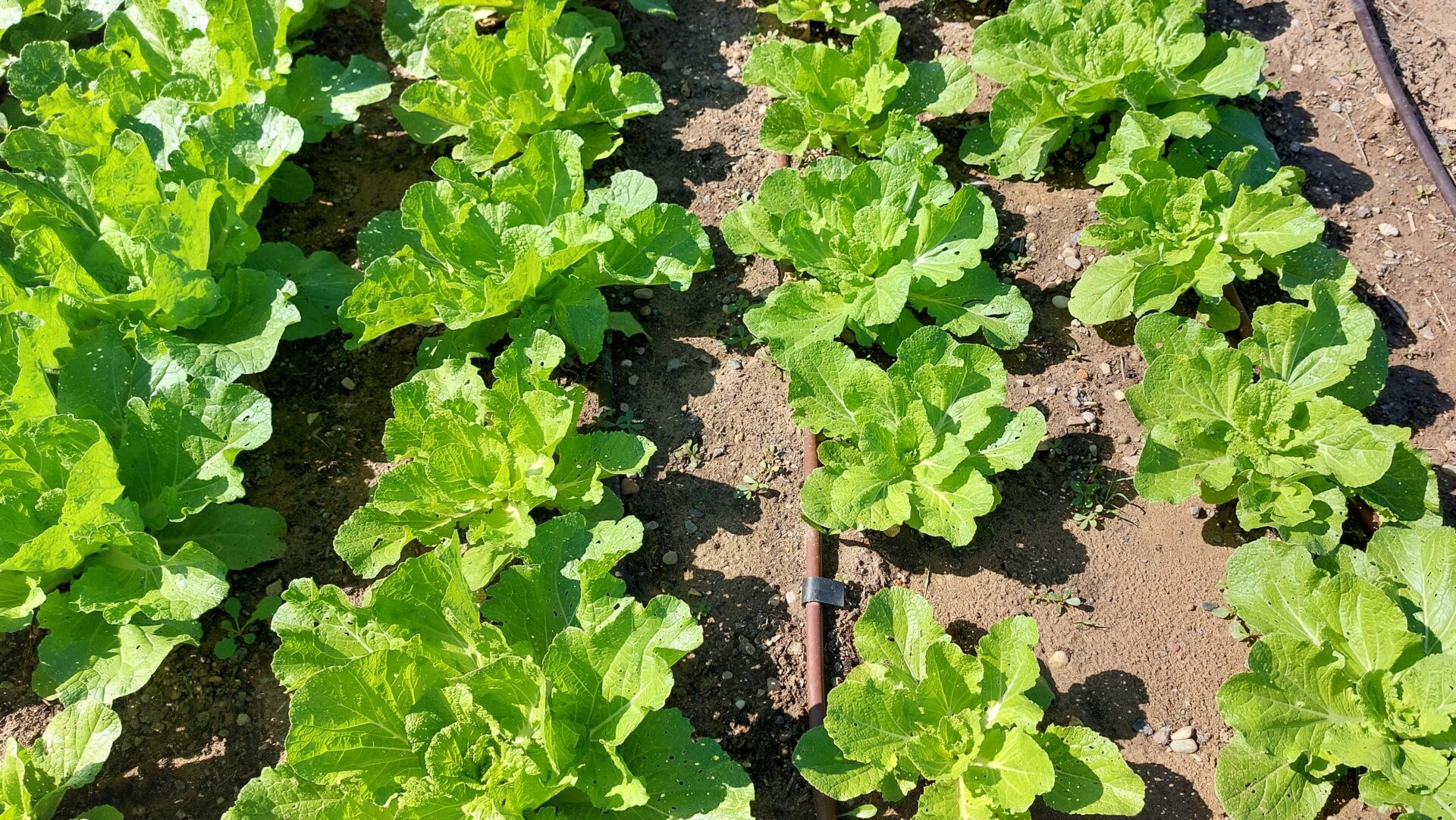
Photo: Josef Schlaghecken, Wikimedia Commons, CC BY-SA 4.0
The two faces grow at different speeds
When the lower face (abaxial) of a plant organ elongates faster than the upper face (adaxial), the organ bends upward — hyponasty; when the upper face elongates faster instead, it bends down and outward — epinasty. Those are the definitions from a 2011 review of petiole bending in Arabidopsis (AoB PLANTS), and they say that the direction of bending comes from the difference in growth rate between the two faces.
In a 2022 study in Frontiers in Plant Science, the auxin (IAA) content of the abaxial epidermal cells in the leaf veins of cabbage entering the heading stage was significantly higher than in the adaxial cells. The abaxial-to-adaxial ratio of epidermal cell numbers also came out at 1.98 in heading Chinese cabbage and 1.17 in non-heading pak choi.
In the same study, treatment with NPA, an inhibitor of polar auxin transport, left the leaves curled inward after seven days, a shape the authors described as closely resembling the curled leaves of heading Chinese cabbage. That is functional evidence obtained with an inhibitor.
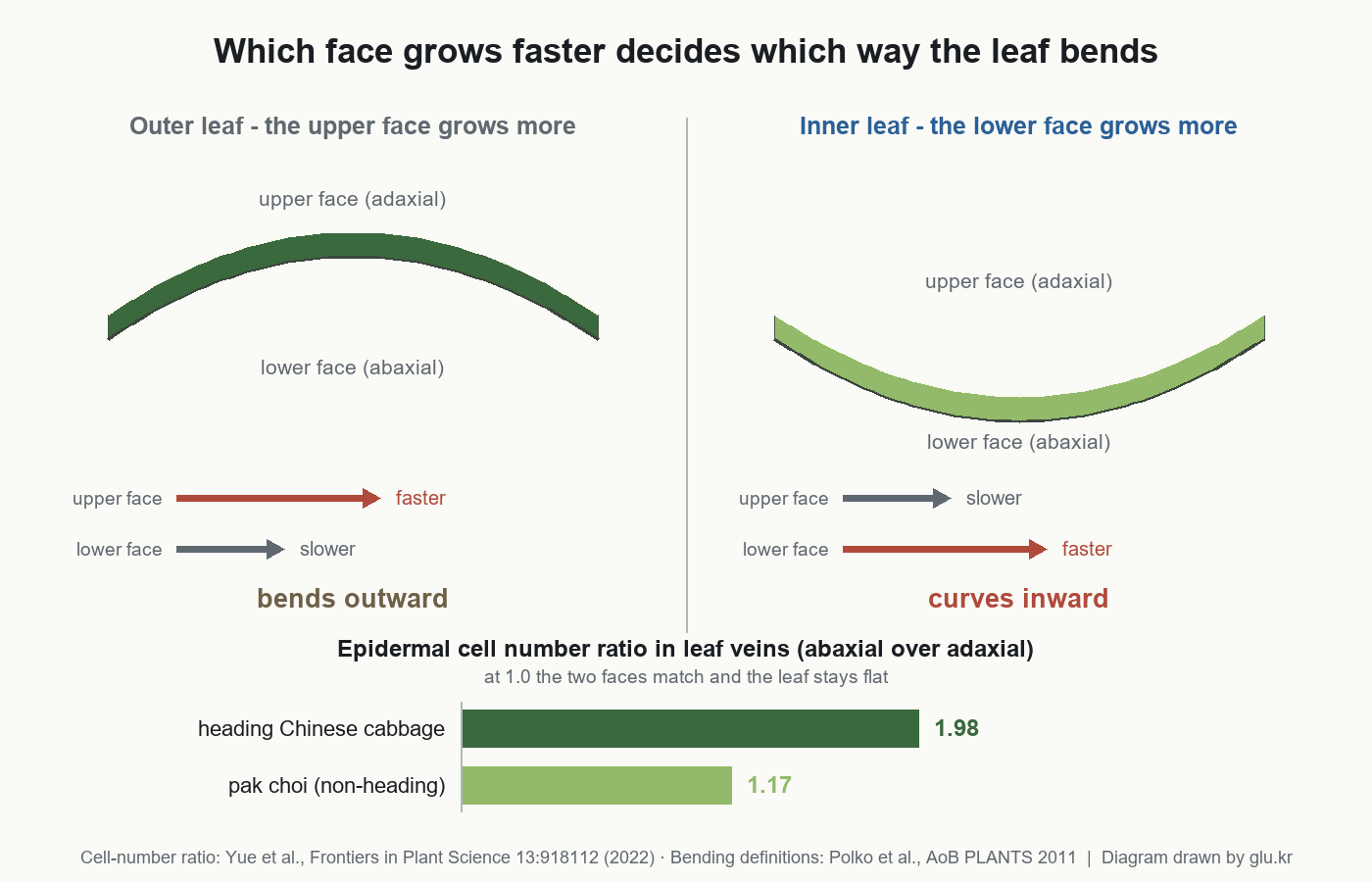
Diagram · drawn in-house by glu.kr (Python and PIL). Cell-number ratio: Yue et al., Frontiers in Plant Science 13:918112 (2022) · Bending definitions: Polko et al., AoB PLANTS 2011
What the cabbages that failed to head revealed
The precision of a design shows most clearly where it breaks. The non-heading mutant fg-1, obtained with the chemical mutagen EMS, grew flat leaves and carried 25.2% less IAA than the wild type at the early heading stage. Its epidermal cells changed size too: at the rosette stage the abaxial cell area was 57.7% and 28.9% larger at the leaf tip and the central edge, and at the late heading stage the adaxial cell area was 26.1% and 41.1% smaller at those same two points. These area figures, however, are a different measure from the cell number ratio above, and they do not by themselves explain the direction of bending.
Gibberellin proved decisive as well. The cabbage line nhm1, which carries a point mutation in the biosynthetic enzyme gene BrKS, failed to head, yet spraying it with exogenous GA3 restored the wild-type form; the allelic BrCPS1 mutants nhm4-1 and nhm4-2 behaved the same way. In the other direction, cabbage in which BcpLH was suppressed by antisense began curling its leaves about ten days earlier than the wild type.
Why the inner leaves are yellow
No light reaches the inner leaves under their cover of outer ones. A 2019 transcriptome analysis in Horticulture Research described how the inner leaves turn yellow, how the expression of most photosynthesis genes drops, and how they become a storage organ that no longer photosynthesises.
The “natural etiolation” in which chlorophyll precursors accumulate in place of chlorophyll itself has been reported in the inner leaves of cabbage heads (Brassica oleracea), another heading crop. Orange-hearted Chinese cabbage is a different case: the carotenoid isomerase gene BrCRTISO has lost its function, so prolycopene builds up instead.
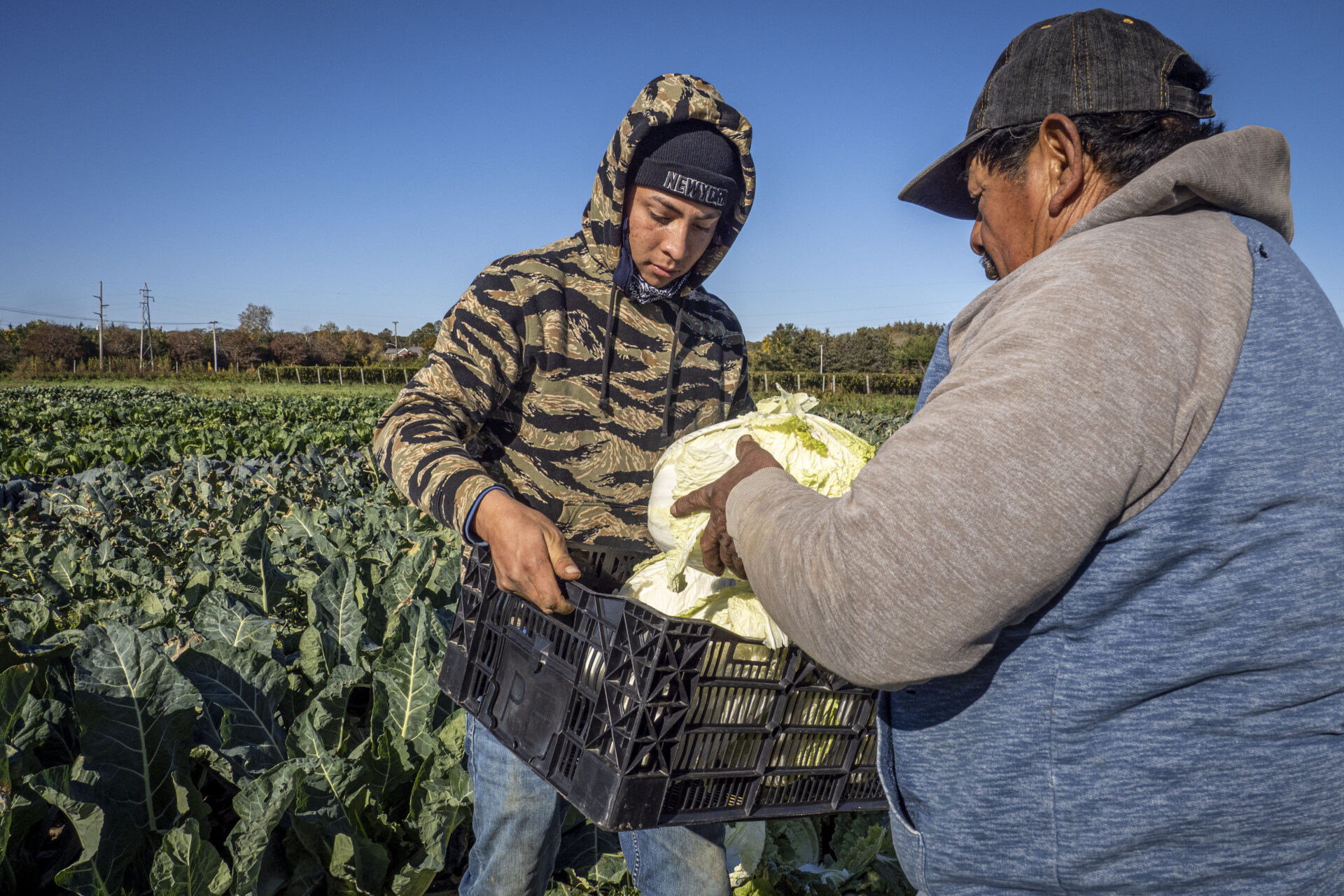
Photo: USDA, Wikimedia Commons, public domain
The twist: cabbage, turnip and pak choi are one species
The single species Brassica rapa holds not only heading Chinese cabbage (ssp. pekinensis) but also pak choi (ssp. chinensis), the turnip (ssp. rapa), mizuna (ssp. nipposinica) and tatsoi (ssp. narinosa). That is why heading research uses cabbage and pak choi as its standard contrasting pair. Within one species, whether a leaf curls or spreads is what parts them.
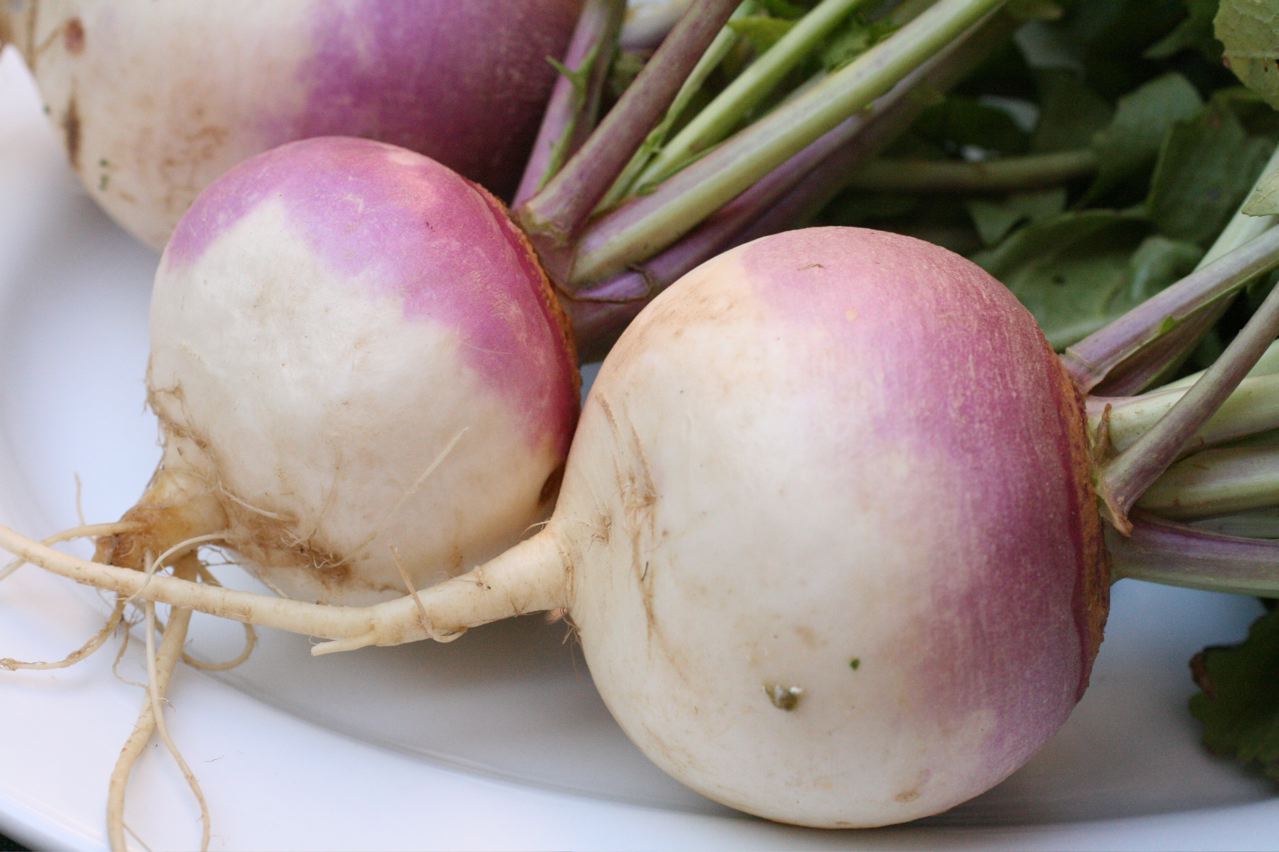
Photo: thebittenword.com, Wikimedia Commons, CC BY 2.0
The relationship among the six species is the Triangle of U. The three basic species are Chinese cabbage B. rapa (AA, 2n=20), black mustard B. nigra (BB, 2n=16) and cabbage B. oleracea (CC, 2n=18); pairing them two at a time gives the amphidiploid species rapeseed B. napus (AACC, 2n=38), brown mustard B. juncea (AABB, 2n=36) and Ethiopian mustard B. carinata (BBCC, 2n=34). The A genome of Chinese cabbage sits inside both rapeseed and brown mustard.
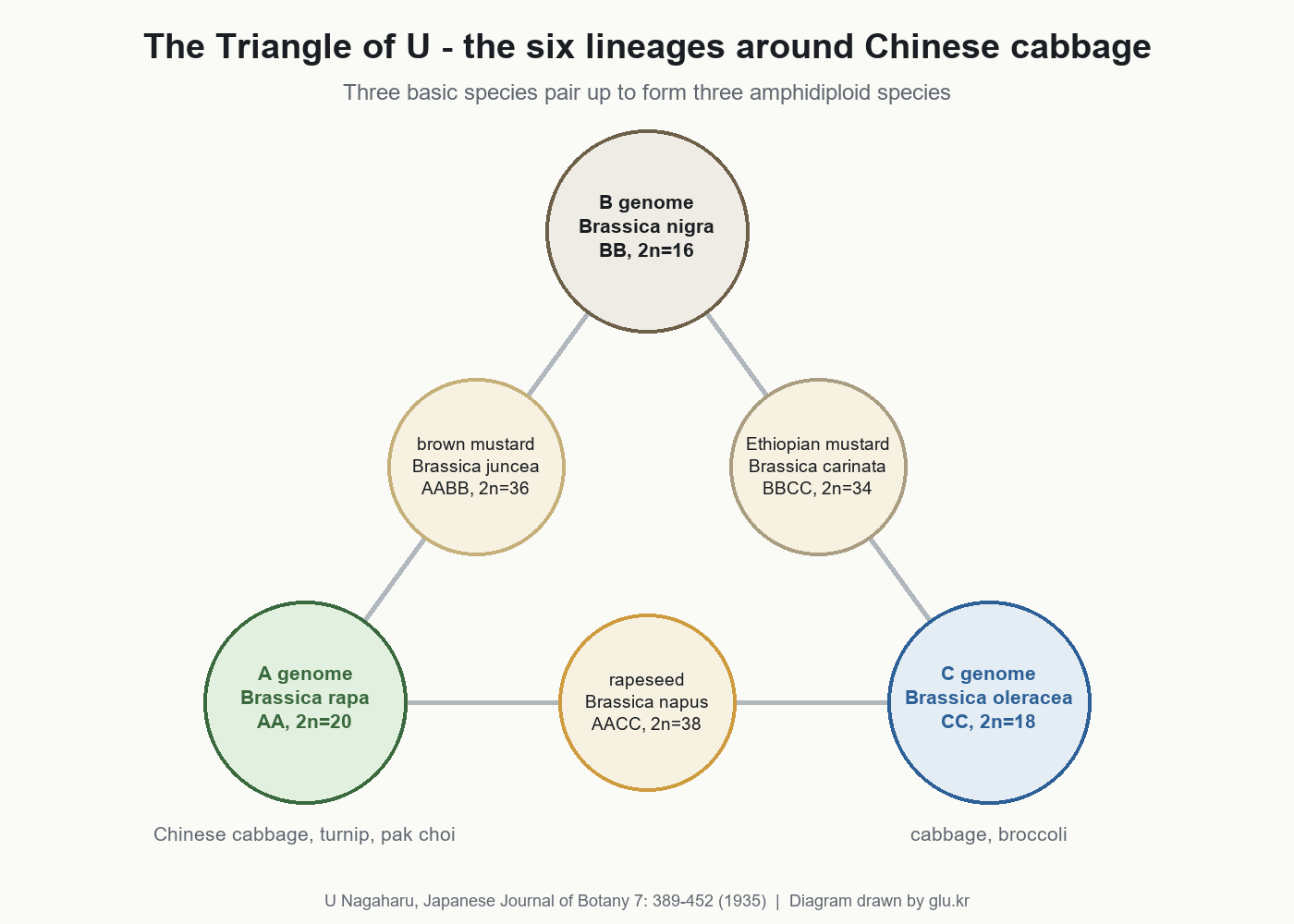
Diagram · drawn in-house by glu.kr (Python and PIL). Relationships from U Nagaharu, Japanese Journal of Botany 7: 389–452 (1935)
U Nagaharu, the man whose name the triangle carries, crossed Chinese cabbage (n=10) with cabbage (n=9) to produce experimentally the rapeseed (n=19) that already existed in nature, and worked out the genetics of how it happens (National Archives of Korea). The paper is Japanese Journal of Botany 7: 389–452 (1935). The seedless watermelon commonly credited to him was in fact first produced on trial in 1943 at the Kihara Institute for Biological Research of Hitoshi Kihara (木原均) of Kyoto Imperial University.
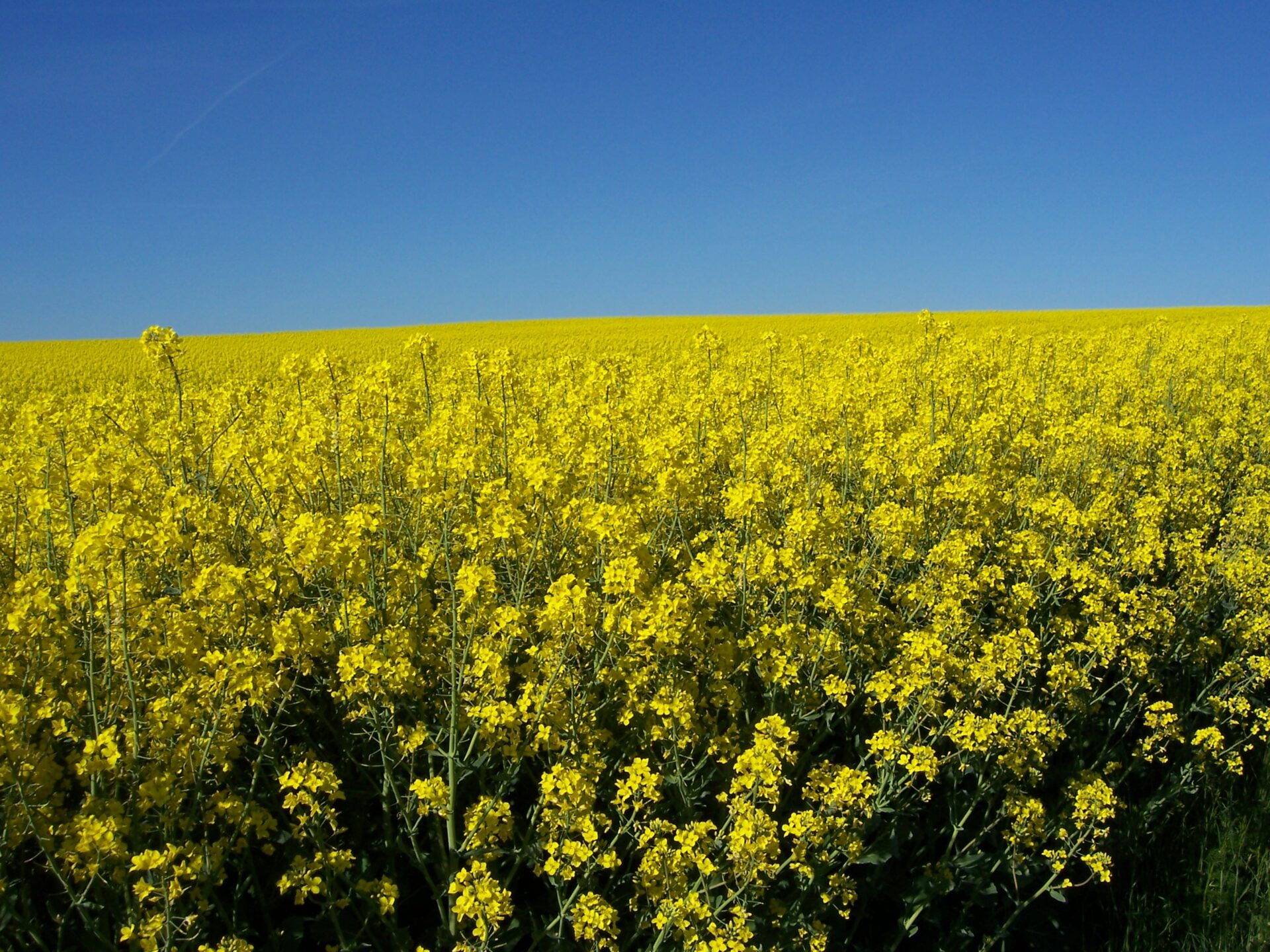
Photo: Met.salis, Wikimedia Commons, public domain
The narrow window at 15–18°C
Heading does not happen at just any temperature. Nongsaro, the extension service of the Rural Development Administration of Korea, gives 18–20°C as the temperature at which cabbage grows well and 15–18°C as the temperature at which it heads well, and warns that a week or more below 12°C sends the plant to bolt and destroys its market value. The Encyclopedia of Korean Culture puts the optimum heading temperature at 15–16°C.
Midsummer on the plains falls far outside that window. Using the 1991–2020 normals, the mean July temperature in Seoul (85.5 m above sea level) is 25.3°C, while the Daegwallyeong weather station (772.57 m) records 19.6°C, 5.7°C lower. Daegwallyeong is still 1.6°C above the heading optimum, though it does fall inside the growing optimum of 18–20°C. The pass itself is at 832 m, and Nongsaro classes land above 800 m as highland. That is why summer cabbage comes down from the highlands.
Cold, salt, and the kimchi crock
The saying that frost-touched cabbage tastes sweeter is rooted in cold acclimation. Plants adapting to cold accumulate soluble sugars, and those sugars are known to take part in osmotic balance and in lowering the freezing point. The quantitative data, though, come from another subspecies of the same species as Chinese cabbage (Brassica rapa). Wucai (乌菜), a Chinese vegetable in the same subspecies as pak choi, held 20.9% more soluble sugar after ten days at 10°C by day and 3°C by night than a control grown at 25°C by day and 18°C by night.
Chinese cabbage itself is not so simple. A study that kept the heading cultivar ‘Chunguang’ at 10°C for one to three days reported increases in proline and phenolic compounds, while a study that grew the Chinese landrace ‘Linglong Yellow No.2’ (LY2) at constant temperatures from 6°C to 15°C for thirty days found soluble sugars highest at 15°C instead.
What salt does is osmosis. The water content of fresh cabbage, 95.40%, fell step by step with brine concentration after six hours at 15°C: 95.04% in 1% brine, 92.42% in 6% and 90.00% in 10%. It is the same principle as plasmolysis, in which the protoplast pulls away from the cell wall in a hypertonic solution.
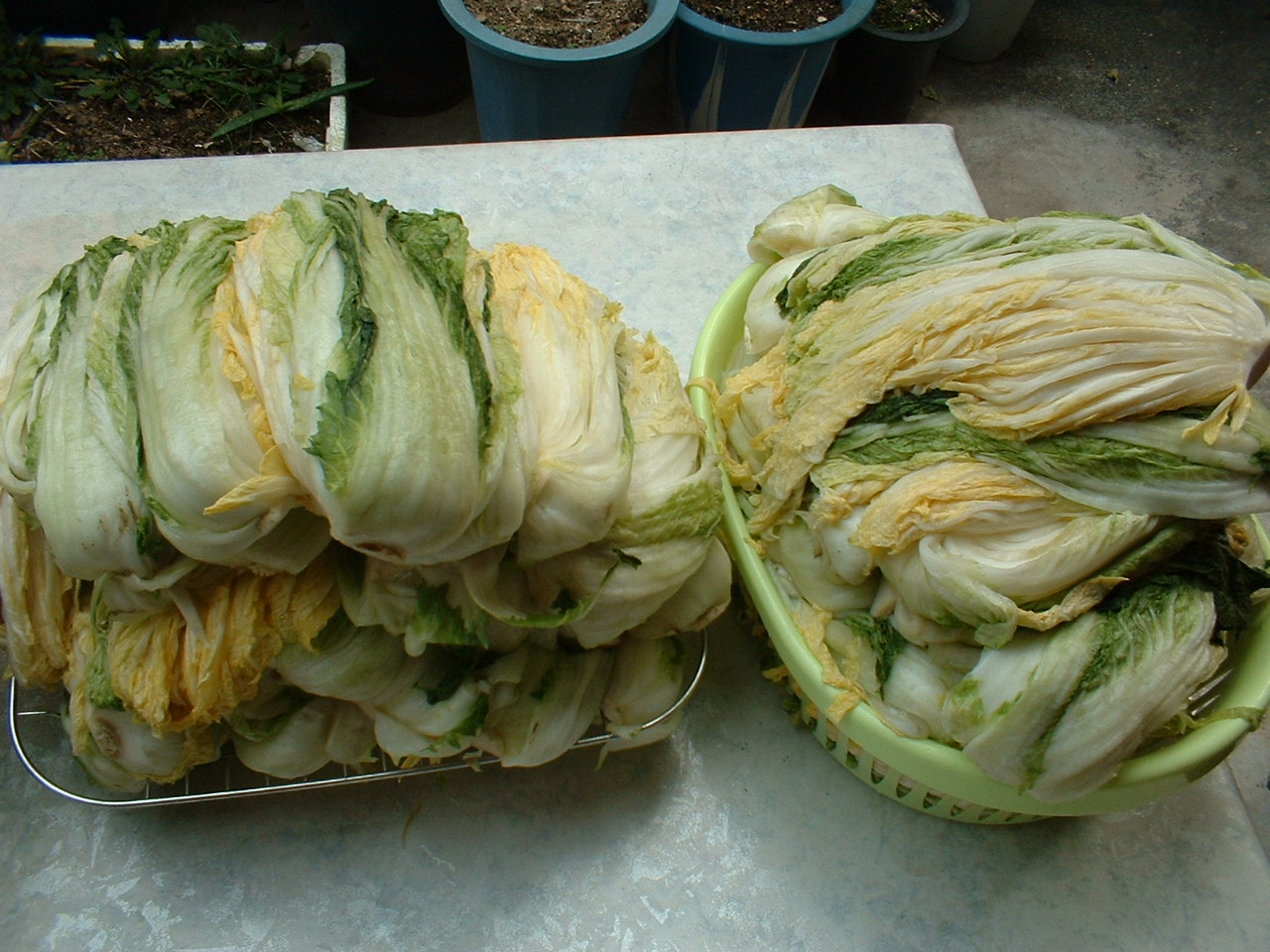
Photo: Joseph Steinberg, Wikimedia Commons, CC BY-SA 2.0
Lactic acid bacteria come next. In a 2025 experiment that fermented salted cabbage at 5°C for thirty-three days, the control kimchi with no starter added was dominated by Leuconostoc citreum from day 0 to day 6 before Weissella koreensis took over from day 11. In kimchi inoculated with Leuconostoc mesenteroides as a starter, that strain dominated the later stages instead. In both, the pH kept falling as fermentation went on.
A head of cabbage is a finely designed assembly. Somewhere around the seventh leaf the direction of bending flips, and the leaves fold in to become a single storage organ. Before it ever reaches the kimchi crock, the cabbage has already folded itself into a ball by regulating the growth rate of one leaf at a time.
References
- Tabusam J. et al., “Physiological Control and Genetic Basis of Leaf Curvature and Heading in Brassica rapa L.”, Journal of Advanced Research 53:49–59 (2023)
- Yue X. et al., “The Adaxial/Abaxial Patterning of Auxin and Auxin Gene in Leaf Veins Functions in Leafy Head Formation of Chinese Cabbage”, Frontiers in Plant Science 13:918112 (2022)
- Guo X. et al., “Series-Spatial Transcriptome Profiling of Leafy Head Reveals the Key Transition Leaves for Head Formation in Chinese Cabbage”, Frontiers in Plant Science 12:787826 (2022)
- Polko J.K. et al., “Petiole hyponasty: an ethylene-driven, adaptive response to changes in the environment”, AoB PLANTS 2011:plr031
- Li J. et al., “Characterization of Non-heading Mutation in Heading Chinese Cabbage (Brassica rapa L. ssp. pekinensis)”, Frontiers in Plant Science 10:112 (2019)
- Ren W. et al., “BcpLH organizes a specific subset of microRNAs to form a leafy head in Chinese cabbage”, Horticulture Research 7:1 (2020)
- Gao Y. et al., “The mutation of ent-kaurene synthase, a key enzyme involved in gibberellin biosynthesis, confers a non-heading phenotype to Chinese cabbage”, Horticulture Research 7:178 (2020)
- Gao Y. et al., “BrCPS1 Function in Leafy Head Formation Was Verified by Two Allelic Mutations in Chinese Cabbage”, Frontiers in Plant Science 13:889798 (2022)
- Sun X. et al., “Genome-wide transcriptome analysis reveals molecular pathways involved in leafy head formation of Chinese cabbage”, Horticulture Research 6:130 (2019)
- Kruk J., “Occurrence of chlorophyll precursors in leaves of cabbage heads — the case of natural etiolation”, Journal of Photochemistry and Photobiology B 80(3):187–194 (2005)
- Li J. et al., “Transcriptome Analysis of Orange Head Chinese Cabbage (Brassica rapa L. ssp. pekinensis) and Molecular Marker Development”, International Journal of Genomics 2017:6835810
- “Triangle of U” — Wikipedia (includes the citation for U Nagaharu, Japanese Journal of Botany 7:389–452, 1935)
- “Woo Jang-choon” — subject description, National Archives of Korea
- “Did Woo Jang-choon develop the seedless watermelon? A Japanese scholar did it first” — Munhwa Ilbo
- “Chinese cabbage” cultivation guide (growing, heading and bolting temperatures) — Nongsaro, Rural Development Administration
- “Highland cabbage cultivation” (definition of highland by elevation) — Nongsaro, Rural Development Administration
- “Baechu (Chinese cabbage)” — Encyclopedia of Korean Culture, Academy of Korean Studies
- Yuan L. et al., “Comparative Proteomics Reveals Cold Acclimation Machinery Through Enhanced Carbohydrate and Amino Acid Metabolism in Wucai”, Plants 8(11):474 (2019)
- Eom S.H. et al., “Plant Response to Cold Stress: Cold Stress Changes Antioxidant Metabolism in Heading Type Kimchi Cabbage”, Antioxidants 11(4):700 (2022)
- Zhang J. et al., “Global Transcriptome and WGCNA of Cold Stress Responses in Chinese Cabbage”, Genes 16(7):845 (2025)
- Lee M.-K. et al., “Changes in tissue and salinity of Chinese cabbage by salting method”, Journal of the Korean Society of Food Science and Nutrition 40(8) (2011)
- Lee J. et al., “Unravelling the key factors for the dominance of Leuconostoc starters during kimchi fermentation”, npj Science of Food 9:61 (2025)
- “Daegwallyeong” climate normals (1991–2020, weather station at 772.57 m) — Wikipedia (Korean)
- “Seoul” climate normals (1991–2020, weather station at 85.5 m) — Wikipedia (Korean)