
More than three thousand years ago, on a single night, the Greek army supposedly leaves a giant wooden horse in front of the gates of Troy and sails away. Inside the walls, the exhausted Trojans celebrate their apparent victory and fall asleep, and armed soldiers hidden inside the horse’s belly quietly slip out and open the gates. The waiting Greek fleet returns, and Troy is reduced to ashes in a single night — a scene almost anyone can picture the moment they hear the words “Trojan Horse.” But did this actually happen? Actually, there’s a more basic question to ask first: where, and when, was this story first written down in such vivid detail?
Homer Barely Mentions the Horse at All
Curiously, Homer’s Iliad, which deals directly with the Trojan War, never mentions the horse at all. The horse shows up instead in the Odyssey — and even there, only in a few brief, indirect references. In Book 4, Helen tests the Greek soldiers hiding inside the horse by mimicking the voices of their wives, and in Book 8, the bard Demodocus sings, almost in passing, of “the horse Epeius built with Athena’s help, which Odysseus led by a trick into the citadel.”
So where does the detailed story we know today come from — the deception of the Greek spy Sinon, Laocoön’s warning and his tragic death, the detail that the horse couldn’t fit through the gates so the Trojans tore down part of their own wall? Surprisingly, it wasn’t Greece but Rome that first assembled this narrative into the form familiar to us today. Most of the story’s key elements come together for the first time in Book 2 of Virgil’s Aeneid, written in the 1st century BCE. The fact that this famous scene — one we tend to think of simply as “Greek myth” — was actually completed by a Roman poet more than a thousand years after the Trojan War is supposed to have happened is the first clue that should make us look at this story again.
A City That Long Remained Nothing but Legend
Given how tangled the story’s origins are, it’s no surprise that the city of Troy itself was long regarded as a legend that existed only in literature. No one was even certain where it stood on an actual map, and Homer’s epics were often treated as products of imagination rather than historical record. That view was overturned in the late 19th century, when a businessman-turned-archaeologist began digging into a hill in northwestern Turkey.
Schliemann Recovers Troy from the Ground
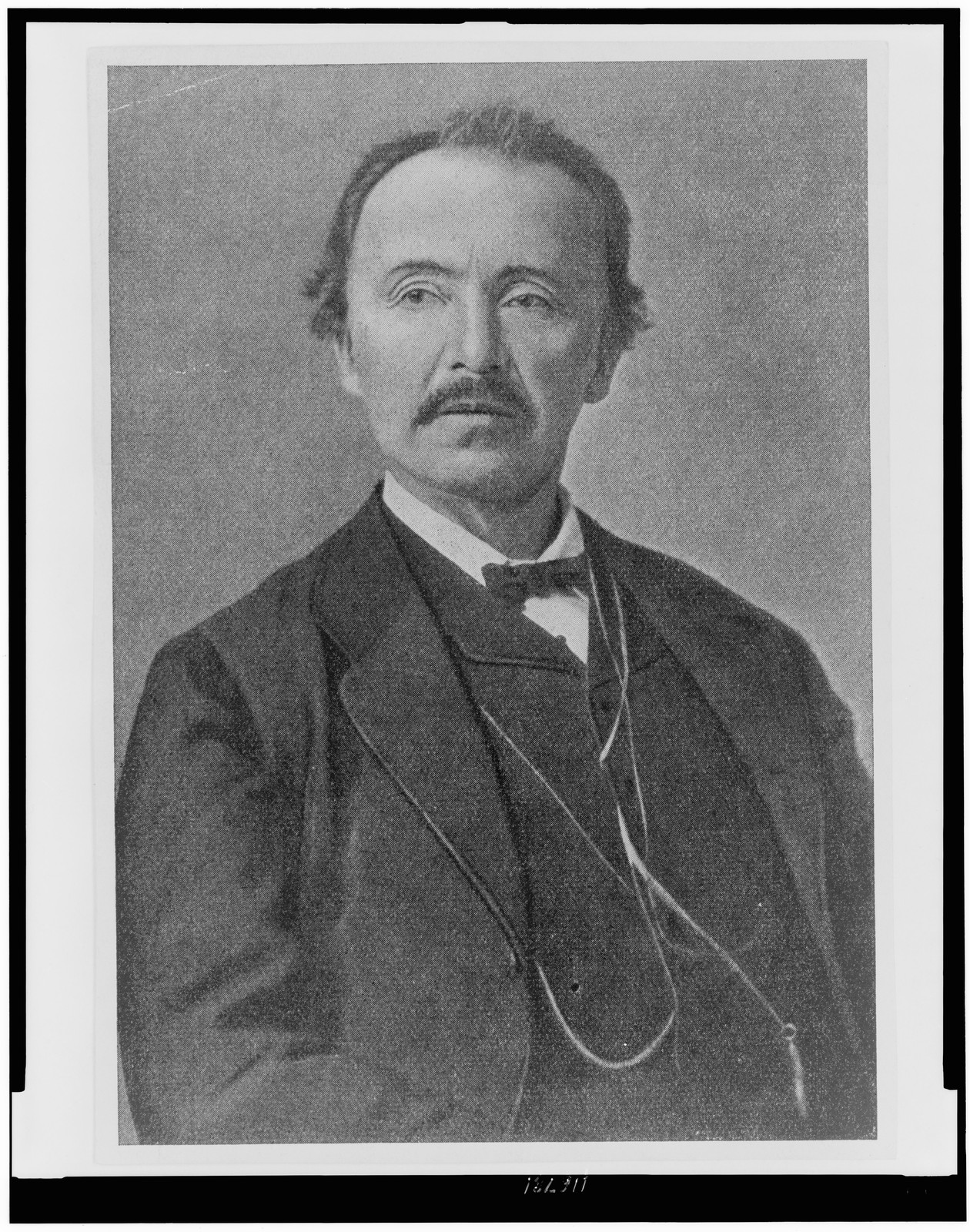
Photo: Miscellaneous Items in High Demand, PPOC, Library of Congress · Public domain · Wikimedia Commons
Heinrich Schliemann, a German-born businessman, first connected with the site in 1868 through Frank Calvert, a British diplomat who owned part of the land at Hisarlik. Calvert had already suspected that this hill might be the site of ancient Troy. Schliemann broke ground at Hisarlik in 1870 without formal excavation permission from the Ottoman authorities. In 1872, he pushed ahead with excavation methods that would be considered quite crude by today’s standards, mobilizing a large workforce to cut a massive trench roughly 13.7 meters (45 feet) deep straight across the mound.

Photo: Elizabeth Simpson · Public domain · Wikimedia Commons
In late May 1873, Schliemann uncovered what became known as “Priam’s Treasure” — a hoard of gold jewelry and crown-like ornaments. He declared it the treasure of King Priam of the Trojan War and even had his wife Sophia photographed wearing the pieces. Later, however, the artifacts were shown to actually come from Troy II, at least a thousand years earlier than the period when Priam is thought to have lived (Troy VI–VIIa, roughly 1300–1180 BCE). Schliemann’s hasty identification turned out to be archaeologically wrong. Afterward, the German architect Wilhelm Dörpfeld, who worked with Schliemann, introduced stratigraphic excavation methods from 1882 to 1890 and divided the Hisarlik site into Troy layers I through IX, with 46 sub-layers in finer detail. In the 1930s, Carl Blegen of the University of Cincinnati refined these layers still further, uncovering much more specific evidence of destruction in Troy VIIa.
Burnt Walls: What Layer VIIa Tells Us
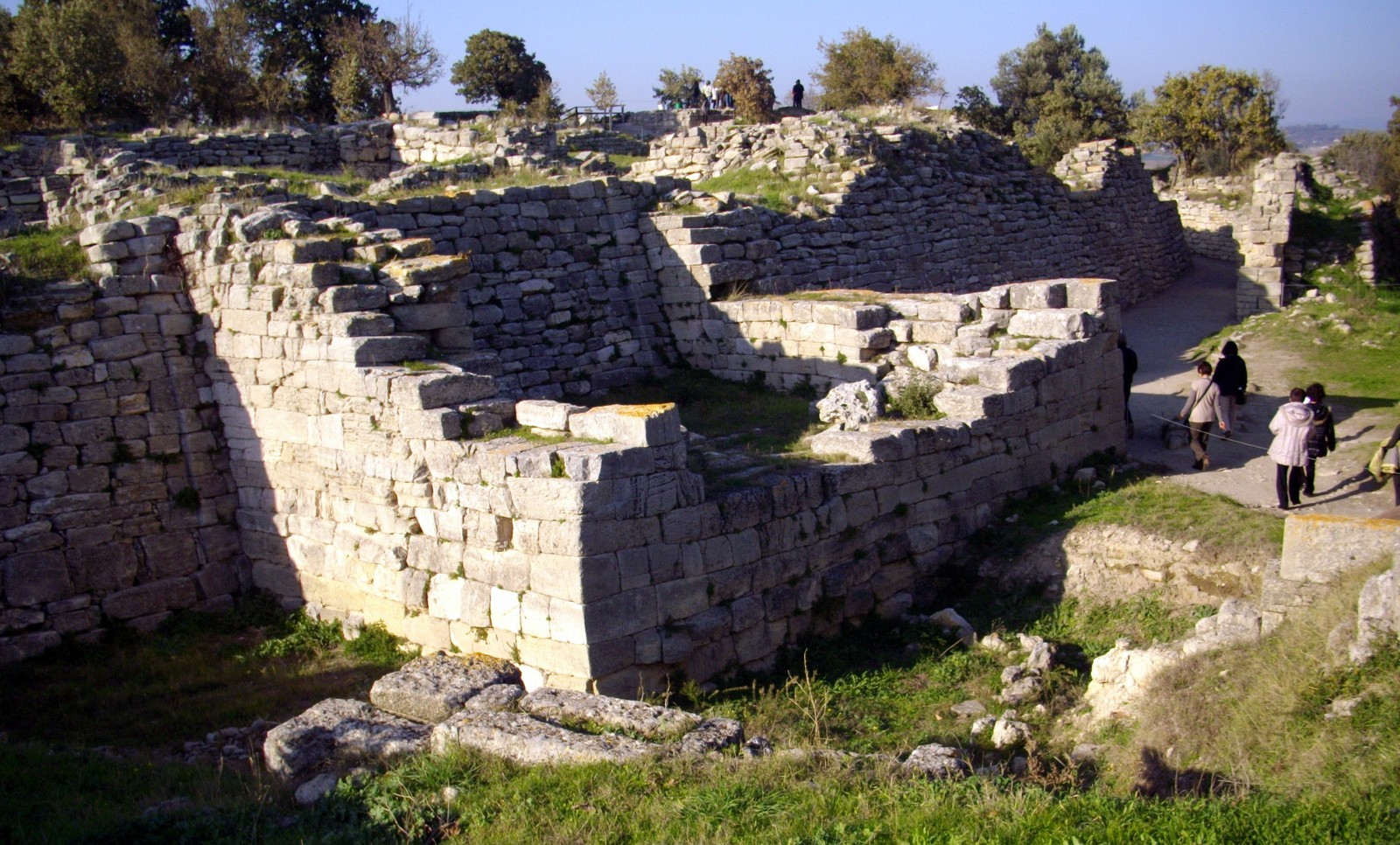
Photo: ykeiko · CC BY-SA 3.0 · Wikimedia Commons
The Troy VIIa layer that Blegen identified contained physical evidence pointing to a prolonged siege and fall: an ash layer up to about 1.5 meters thick, collapsed walls, charred timber, and even an arrowhead embedded in a wall. This layer is estimated to have been destroyed by fire around 1180 BCE. And it is a fairly well-established archaeological fact that this period coincides with the so-called Late Bronze Age Collapse (roughly 1200–1150 BCE), when Mycenaean civilization, the Hittite Empire, and several other eastern Mediterranean civilizations fell within a short span of one another.
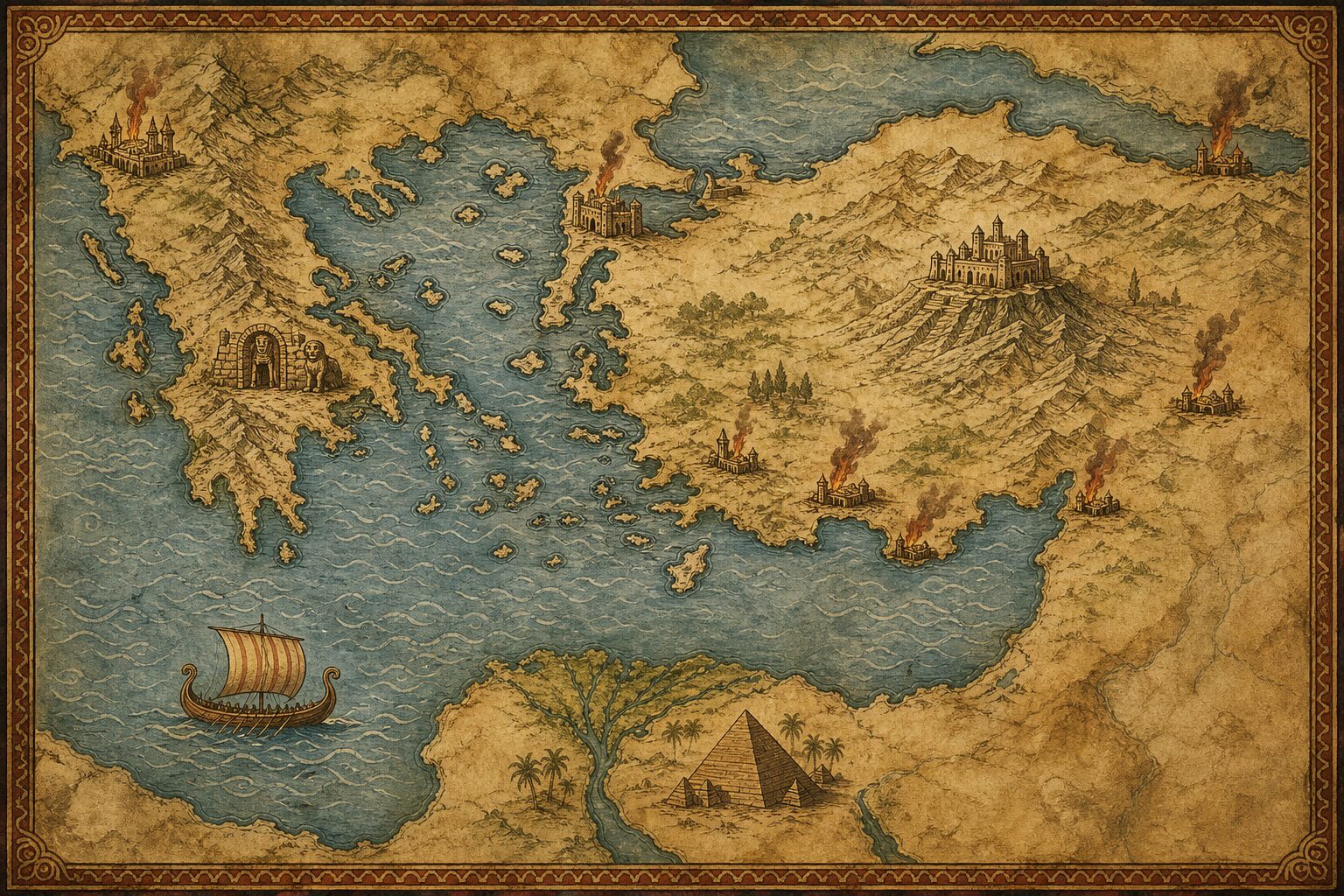
Illustration · AI-generated (Codex/ChatGPT subscription) · A textless conceptual map illustrating the state of the eastern Mediterranean in the late Bronze Age (roughly 1200–1150 BCE), as the regions of Troy, Mycenae, the Hittites, and Egypt were collapsing together
But confirming this destruction date and its coincidence with the wider collapse doesn’t mean we can conclude that the destruction was the “attack by the combined Greek forces” Homer described. Whether fire and collapse were necessarily the work of outside invaders is a separate question, and many archaeologists remain cautious on this point. The debate over Troy’s actual size is also still unresolved. Starting in 1988, Manfred Korfmann of the University of Tübingen argued, based on geomagnetic surveys and other evidence, that Bronze Age Troy was far larger than previously thought, with an extensive “lower city” outside the citadel walls. But in 2001–2002, fellow Tübingen ancient historian Frank Kolb strongly disputed this, calling it “close to exaggeration and fiction with no evidence,” sparking the so-called “Troy controversy” — and the actual size of the lower city still has no full scholarly consensus today. Even so, the “Archaeological Site of Troy” at Hisarlik was inscribed as a UNESCO World Heritage Site in 1998. UNESCO recognized the site as having outstanding significance for understanding the development of European civilization, calling it some of the most important evidence of the first contact between Anatolian civilization and the Mediterranean world.
So What About the “Horse” Itself — Three Competing Theories
What needs to be kept separate here is the fact that Troy existed and that layer VIIa was violently destroyed around 1180 BCE, versus the question of whether the “horse” device itself really existed — these operate on entirely different levels. Three broad theories about what the horse actually was have long circulated, and none of them has been settled as the scholarly consensus answer.
1. A Siege Engine
As early as the 2nd century CE, the Greek travel writer Pausanias wrote in his Description of Greece that “anyone who does not consider the Phrygians [Trojans] absolute fools knows that the work of Epeius [the horse] was a device to breach the wall of Troy.” In other words, an ancient tradition already read the horse as a metaphor for a siege engine — in effect, a battering ram. The modern historian Michael Wood, in In Search of the Trojan War, cites as supporting evidence the ancient Near Eastern — especially Assyrian — practice of naming siege engines after animals, and the fact that battering rams were sometimes covered with wet horsehide to guard against fire attacks. There is a counterargument, however, that this reading is anachronistic, since Assyrian-style siege technology did not fully develop until centuries after the Trojan War is thought to have taken place.
2. A Mythologized Earthquake
The Austrian classicist Fritz Schachermeyr noted that the destruction of Troy VI appears, from evidence such as tilted walls, to have been caused by an earthquake. Through Poseidon, the god who presides over both horses and earthquakes, this reading holds that the “horse” is really a mythologized depiction of walls collapsing in an earthquake. There is a counterpoint, though: in Greek myth, Poseidon is also credited with having built Troy’s walls in the first place, which sits awkwardly with the idea that he was the one who brought them down.
3. Pure Literary Invention
Jonathan Burgess, a classicist at the University of Toronto, points to the fact that the horse never appears in the Iliad at all, and instead gradually accumulated detail through the Odyssey and fragments of the later Epic Cycle. He argues the horse should be read as a mythical and symbolic narrative device rather than a record of an actual event, stressing that “the reality of the site of Troy does not prove the reality of the Trojan War.” In a similar vein, Cornell historian Barry Strauss, in The Trojan War: A New History, calls the horse a “red herring of Troy,” proposing as one hypothesis that rather than soldiers literally hiding inside a giant wooden structure, there may have been “some kind of ruse” closer to Hittite-style military deception. Eric Cline, an archaeologist at George Washington University, writes in The Trojan War: A Very Short Introduction that while he doesn’t rule out the possibility of an actual conflict near Troy in the late Bronze Age, he stops short of asserting the historicity of the horse itself, seeing it instead as something that settled into Homer’s narrative through oral tradition. He also suggests that Helen’s abduction, too, may have been a later explanatory device justifying larger economic and political motives rather than a direct cause of the war.
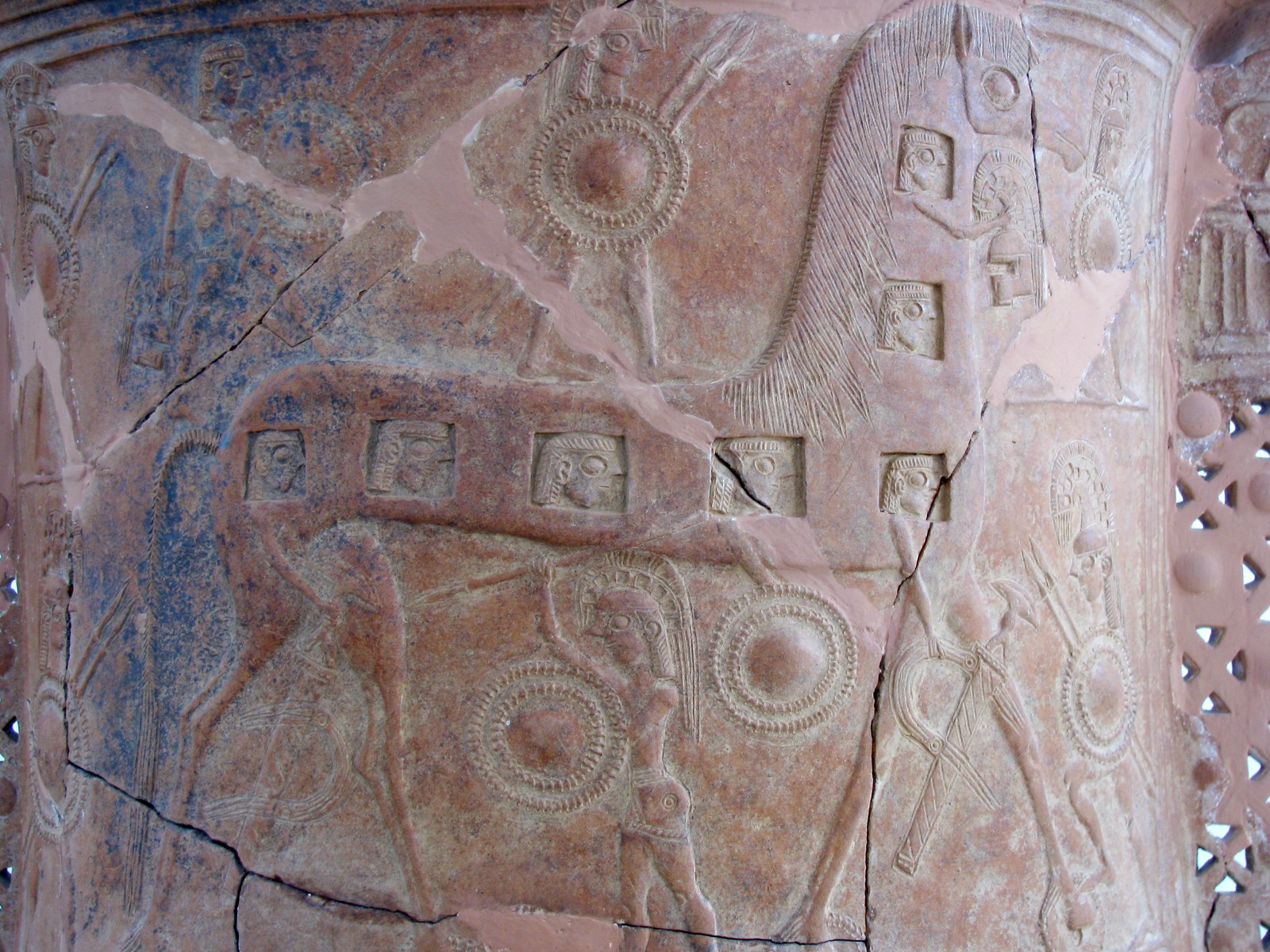
Photo: Travelling Runes · CC BY-SA 2.0 · Wikimedia Commons
There is also physical evidence of just how early — and how widely — this story captured the imagination. A large terracotta pithos found on the Greek island of Mykonos in 1961 is estimated to date from around 675 BCE; on its neck, a wheeled wooden horse is depicted with the faces of seven armed Greek soldiers hidden inside, visible through square window-like openings. It is the oldest known depiction of the Trojan Horse. The story’s popularity continued into Roman times. Wall paintings in several houses in Pompeii, buried by volcanic ash in 79 CE, depict the horse arriving at the city gates or being pulled along in a triumphal procession.
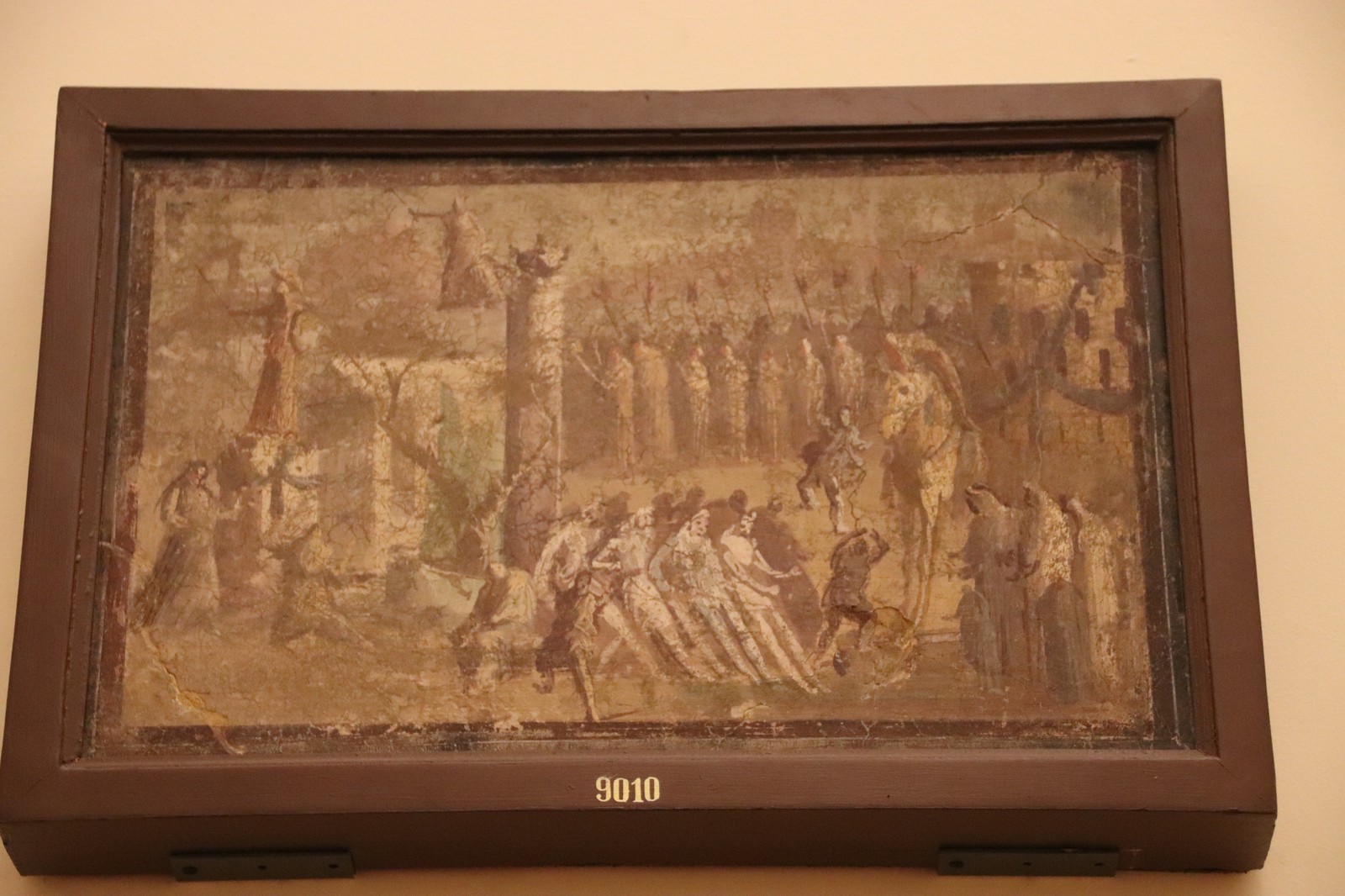
Photo: Gary Todd from Xinzheng, China · Public domain · Wikimedia Commons
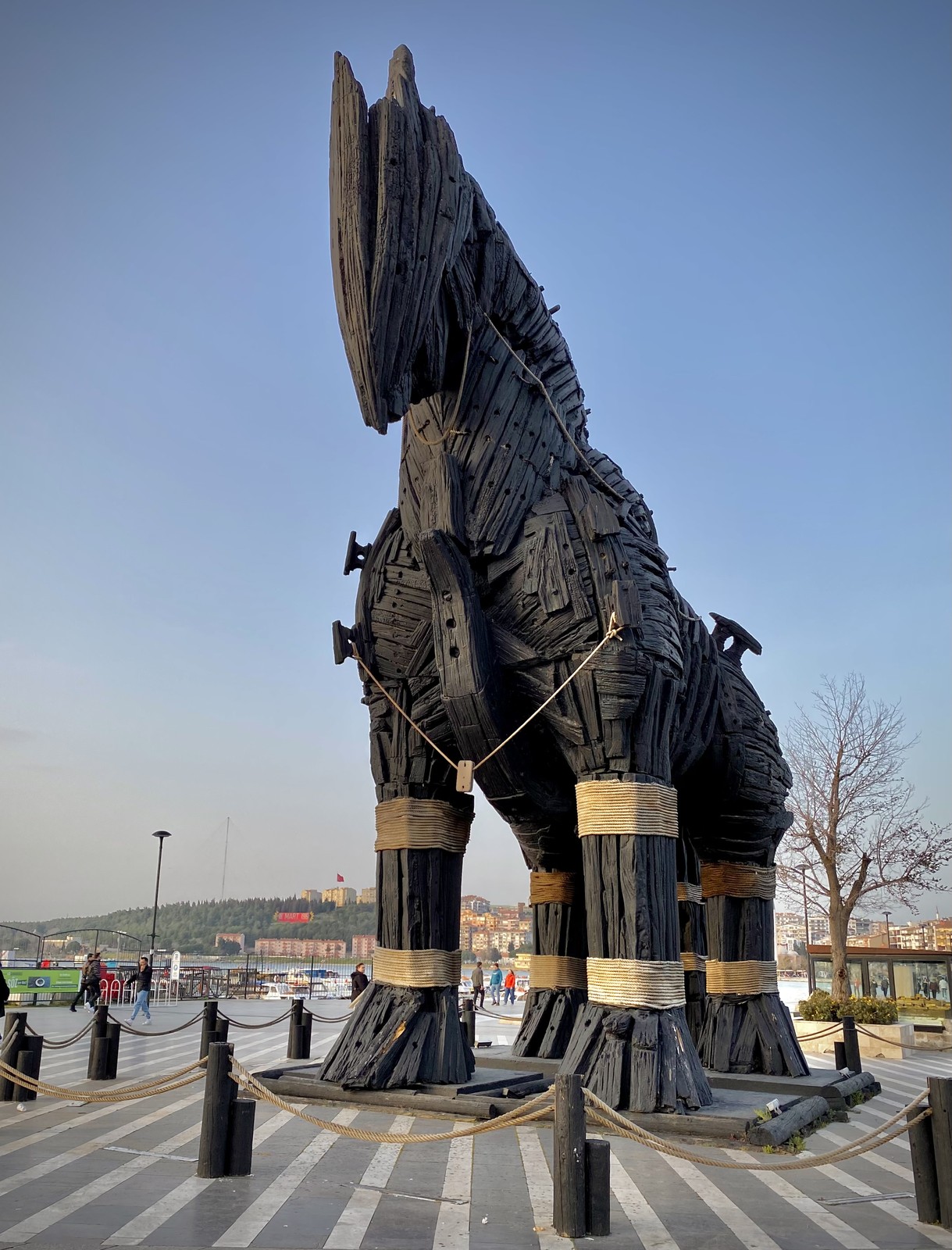
Photo: Sharon Hahn Darlin · CC BY 2.0 · Wikimedia Commons
The story’s staying power continues today. A large wooden horse sculpture now stands on the coast at Çanakkale, Turkey — not an ancient relic, but a modern one, built from a prop used in the filming of the 2004 movie Troy and donated to Turkey’s Ministry of Culture and Tourism afterward. The fact that a story nearly three thousand years old still draws people to that spot is, in itself, proof that it carries a kind of staying power capable of surviving in one form or another.
Conclusion: What We Know for Sure, and What We Still Don’t
To sum up: that Hisarlik is the site of ancient Troy, that the VIIa layer of the ruins was destroyed by a violent fire around 1180 BCE, and that this moment coincides with the Late Bronze Age Collapse that shook multiple eastern Mediterranean civilizations at once — these three things are relatively well-established archaeologically. On the other hand, whether it was really a combined Greek force that caused the destruction, how large the city of Troy actually was, and above all, whether the “horse” device was an actual event, a metaphor for a siege engine, a mythologized earthquake, or pure literary invention — all of this remains unresolved among scholars.
The one insight this piece hopes to leave you with is that this uncertainty is not a flaw. The ground Schliemann dug up, the words left behind by Homer and Virgil, and the careful hypotheses of the many scholars who fill the space between them are different kinds of evidence altogether — and refusing to stitch them hastily into a single conclusion is precisely what it means to treat this site and this story honestly. Troy was certainly somewhere, and it certainly burned at some point. Whether a wooden horse truly stood before that fire is a question likely to remain open for a long time to come.
References
- Trojan Horse – Wikipedia
- Archaeological Site of Troy – UNESCO World Heritage Centre
- Did the Trojan Horse Really Exist? – HISTORY
- The Trojan horse is barely mentioned in the ‘Odyssey’ – HistoryFacts
- Discovery of Troy – World History Encyclopedia
- Priam’s Treasure – Wikipedia
- Manfred Korfmann – Wikipedia
- Was There a Trojan War? – Archaeology Magazine Archive
- The Mykonos Vase: the Oldest Image of the Trojan Horse
- Çanakkale Trojan Horse – Atlas Obscura