
On gentle swells, a huge disc-shaped fish floats on its side as if dead. Only a single dorsal fin pokes above the surface and sways; the rest of the body seems perfectly still. This fish is the ocean sunfish (Mola mola). Known to grow up to roughly 3 meters long, this giant drifting at the mercy of the waves is often shared online as a symbol of listlessness.
But this brief moment of appearing stuck to the surface is far from how the ocean sunfish spends most of its day. Research that tracked sunfish using accelerometers and illuminated cameras attached directly to the animals revealed that this fish is in fact an active predator, repeatedly diving down into the dark deep sea to hunt several times a day. Lying on its side at the surface is not evidence of lethargy — it is a strategic rest to rewarm a body chilled by the deep, known as “rewarming.”
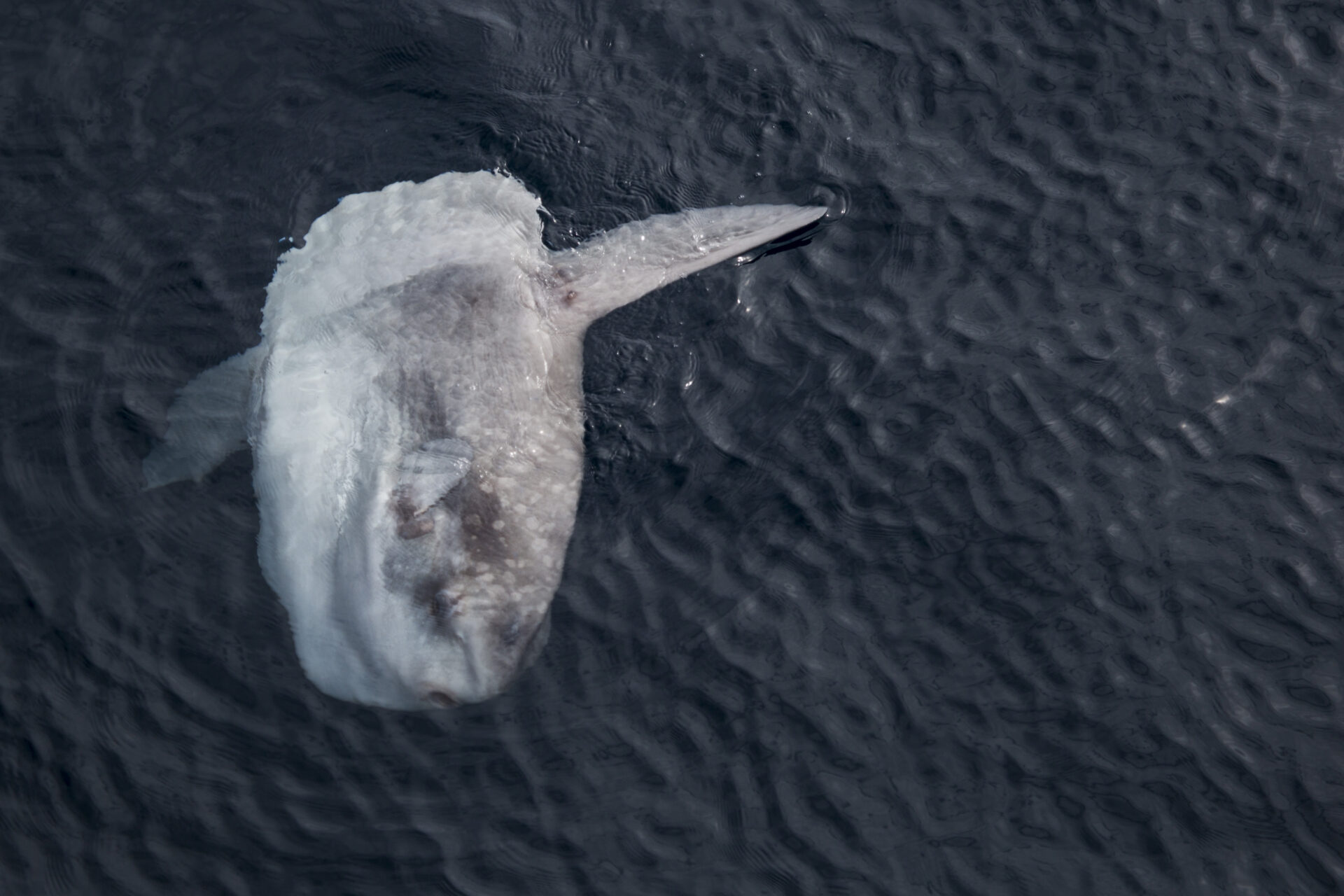
Photo · National Marine Sanctuaries, Public Domain, Wikimedia Commons
Sunbathing at the Surface Is Actually Rewarming
A paper by Nakamura, Goto & Sato published in the Journal of Animal Ecology in 2015 was the first to directly film and document this double life of the ocean sunfish. The team attached accelerometers and lit cameras to several sunfish, released them, and tracked their behavior. The results showed that during the day, sunfish repeatedly dove to a cold deep-sea layer at 50-200m depth, where water temperatures fall below 12°C, to hunt siphonophores, then returned to the surface to warm up — a pattern they repeated over and over. The team concluded that the “main function” of floating at the surface is thermal recovery, or rewarming.
The ocean sunfish is ectothermic, so its internal temperature tracks the surrounding water. Staying too long in deep water around 12°C slows the response speed of its muscles and nerves, putting it at a disadvantage for the next hunt. This rewarming rest at the surface functions more like a recharge for the next dive. The footage actually captured the sunfish approaching siphonophores in the dark depths.
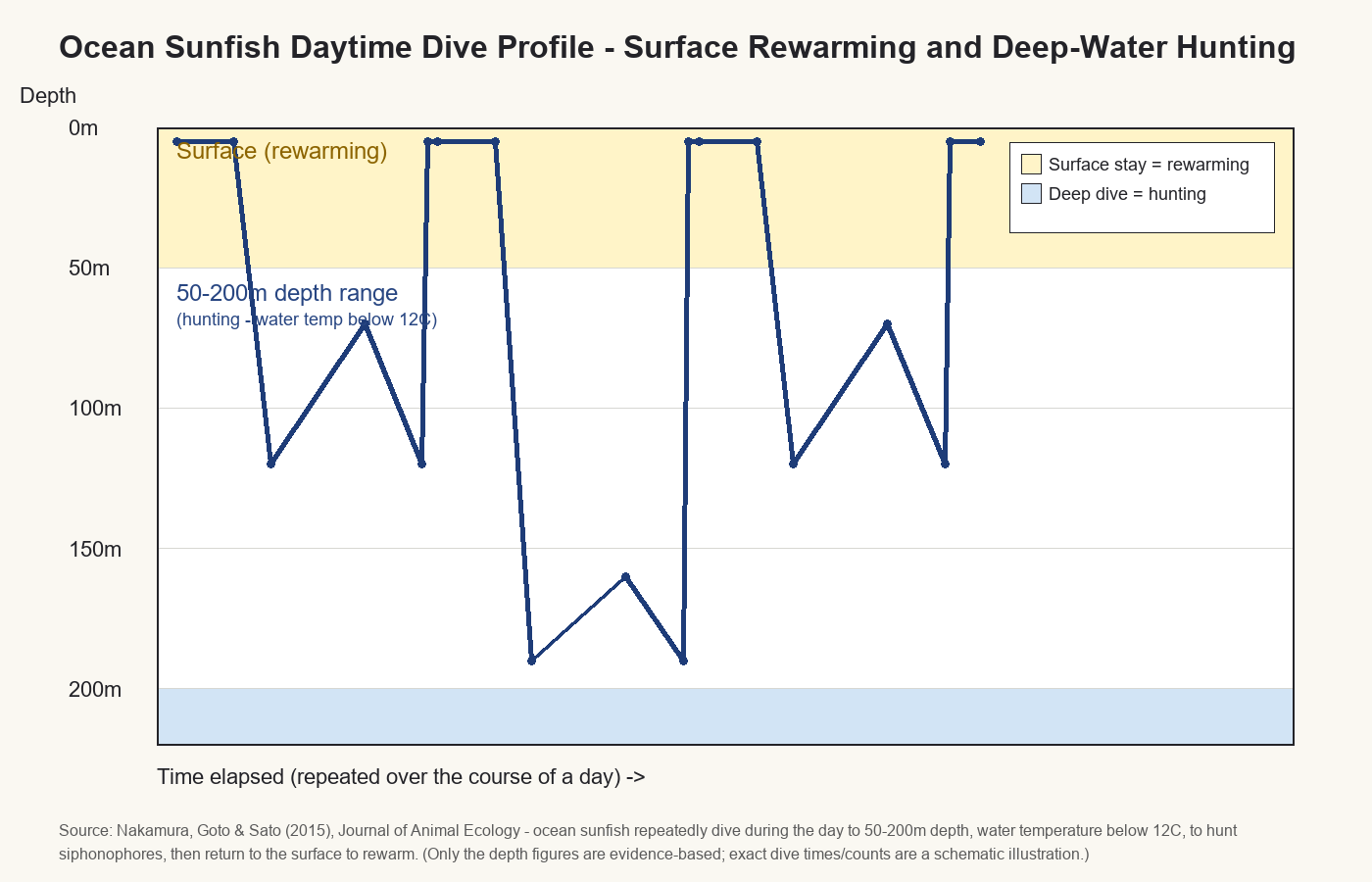
Diagram · glu.kr original illustration (research-based concept diagram)
What It Hunts, and How
The ocean sunfish has long been known as “the fish that only eats jellyfish.” But a 2016 DNA barcoding study (Sousa et al.) published in Scientific Reports overturned this assumption. When the team analyzed DNA from sunfish stomach contents, the actual diet turned out to be “cosmopolitan”: about 37% crustaceans (malacostracans), about 24% bony fish, about 15% hydrozoans (a jellyfish-related group), and the remaining roughly 24% made up of copepods, bivalves, cephalopods, and gastropods. Jellyfish were only part of the menu, not all of it.
The same study also confirmed ontogenetic dietary shifts that vary with body size. Smaller, younger individuals mainly eat small crustaceans and small fish, while larger individuals eat proportionally more cnidarians (jellyfish-relatives). As the fish grows, its hunting strategy and dietary breadth change together.
A Structure Built to Support a Giant Body
Supporting this diving and hunting is a distinctive body structure. The ocean sunfish lacks a true caudal (tail) fin like ordinary fish. Instead, its dorsal and anal fins fuse together at the rear to form a pseudo-tail called the “clavus.” Propulsion is thought to come from sweeping the dorsal and anal fins side to side, and the fish is also reported to lack pelvic fins.

Photo · Edgard Dias Magalhães, CC BY-SA 3.0, Wikimedia Commons
The skin covering its body is also extraordinary. Measured at the belly, it can reach up to about 7.3cm thick, and the gelatinous layer beneath it, while roughly 90% water, keeps its strength through a mesh of collagen and elastin fibers. This thick, tough skin and gelatinous layer appear to function as a physical barrier that withstands deep-sea pressure and cold as well as predator attacks.
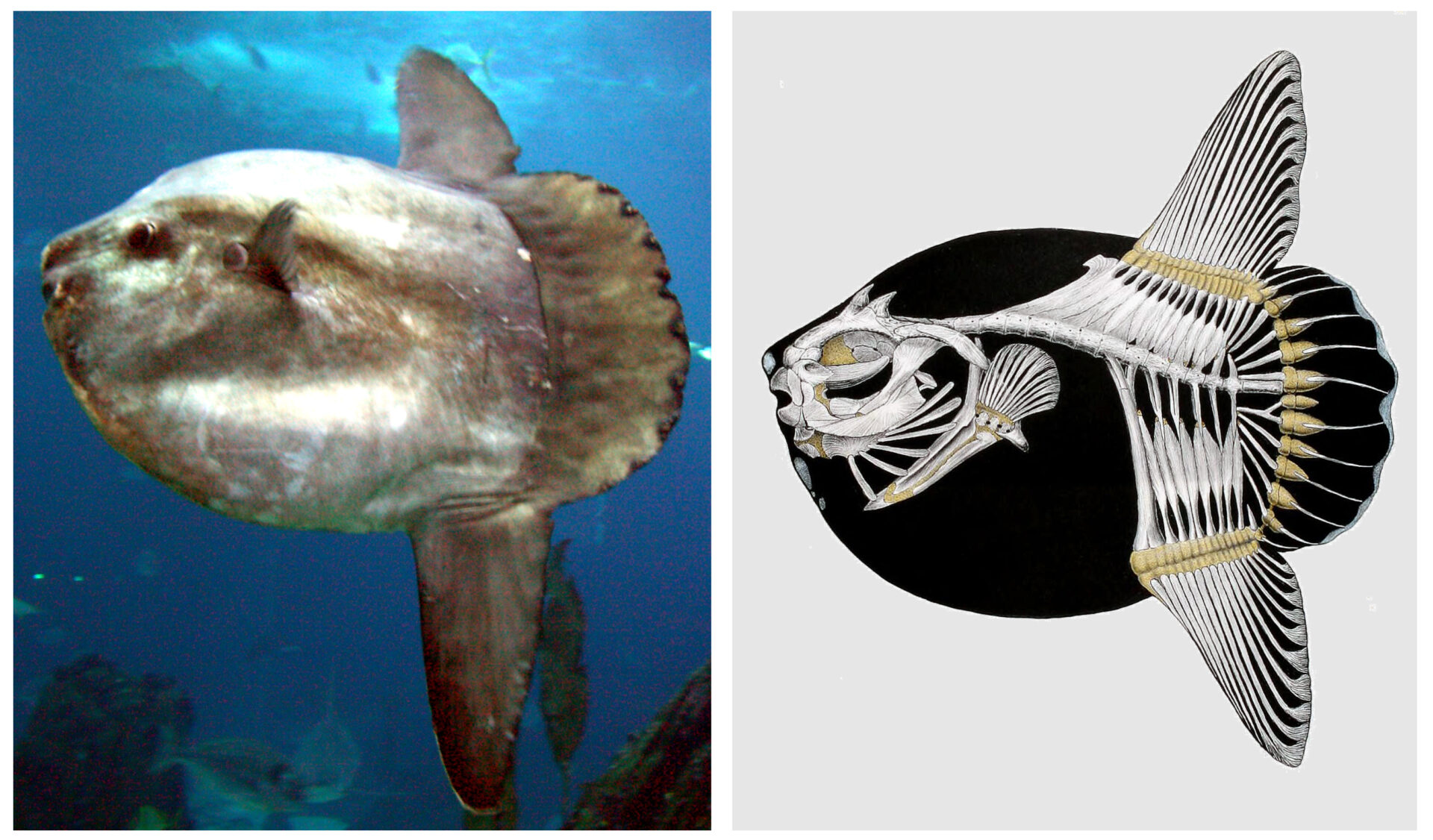
Photo · Nol Aders (edited by PaladinWhite), CC BY-SA 4.0, Wikimedia Commons
Hitchhikers and Cleaners on Its Body
The huge, seemingly languid body of the ocean sunfish is also an attractive habitat for other creatures. More than 40 genera of parasites have been reported across the species as a whole — this is not a count found on a single individual at once, but a cumulative record across the entire species. That gives some sense of how much of the sunfish’s skin and body serves as habitat for a wide range of parasites.
There are also creatures that remove these parasites. On the Argentine continental shelf (Patagonian waters), southern giant petrels (observed in 2016) and black-browed albatrosses (observed in 2019) have been photographed pecking parasites off sunfish floating at the surface. It is a mutually beneficial cleaning symbiosis between seabirds and a giant fish of vastly different size. Small fish, not just seabirds, are also often seen accompanying sunfish and playing a similar role.
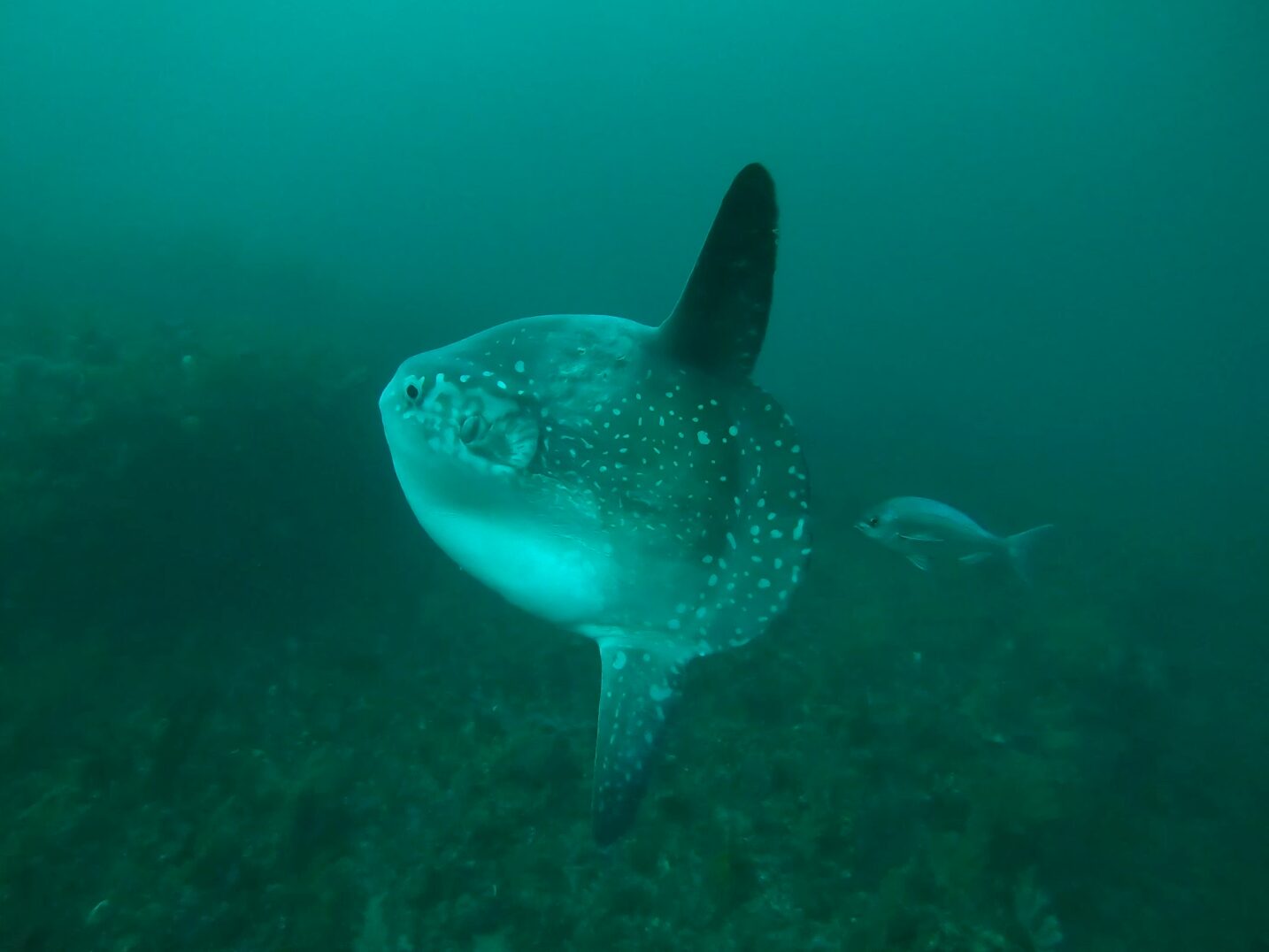
Photo · Wreckless Marine, CC BY-SA 4.0, Wikimedia Commons
The Twist Behind the “World’s Heaviest Bony Fish” Title
The ocean sunfish was also long famous for holding the title of “the world’s heaviest bony fish.” The record holder was an individual weighing 2,300kg with a total length of 2.72m, caught near Kamogawa in Chiba Prefecture, Japan, in 1996. But a 2017 redescription study by a Hiroshima University team (Sawai et al.), published in Ichthyological Research, corrected the record: based on the characteristic bumps on the head and jaw and the shape of the rounded clavus, this “record-holding” individual was in fact not an ocean sunfish (Mola mola) but a closely related species, the southern sunfish (Mola alexandrini).
This finding was more than a simple correction. Around the same time (2017-2018), Nyegaard and colleagues combined mitochondrial DNA and morphological analysis to describe the hoodwinker sunfish (Mola tecta) as a new species — the first new species added to the genus Mola in 125 years. As a result, the genus Mola was redivided into at least three species — the ocean sunfish (M. mola), the southern sunfish (M. alexandrini), and the hoodwinker sunfish (M. tecta). Later, an individual reportedly weighing 2,744kg, found around 2021 near the Azores in Portugal (also reported as Mola alexandrini), was reported in the scientific literature as the new heaviest-weight record.
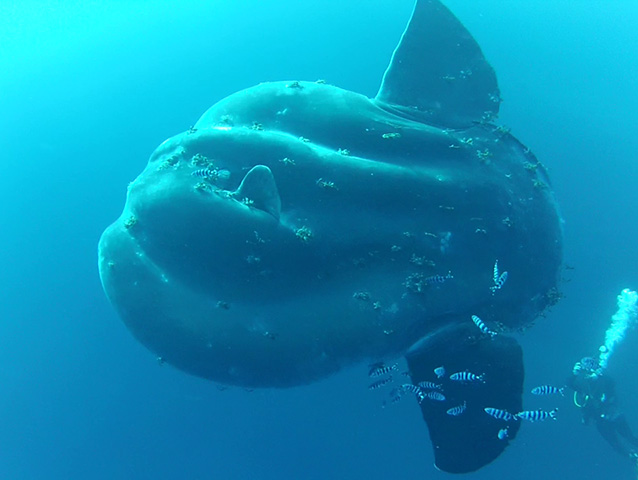
Photo · Erik van der Goot (courtesy Marianne Nyegaard/FishBase), CC BY-SA 4.0, Wikimedia Commons
In the end, the heaviest-weight record long attributed to the “ocean sunfish” was reassigned to a closely related species as genetic analysis and precise morphological comparison accumulated. This kind of review, teasing apart subtle differences between individuals that look similar on the outside, shows that observing and classifying the natural world is not a one-time task but a process that keeps getting refined.
From Egg to Giant
There is one number about ocean sunfish reproduction that has circulated for a long time. A 1920s survey (often cited as “Schmidt 1921”) recorded a single 137cm female carrying roughly 300 million eggs. However, this figure is an old estimate nearly a century old, and there is no clear evidence it has been reconfirmed by modern research. What’s more, since species within the genus Mola were not distinguished as precisely in the 1920s as they are today, it has been suggested that the individual surveyed may actually have been a southern sunfish. Even so, the “300 million eggs” figure is still frequently cited when introducing the ocean sunfish today.
What is relatively well established is the extreme size difference between newly hatched larvae and adults. A newly hatched ocean sunfish larva measures only about 2.5mm in length. But at this stage the larva is round and spiny, a body shape very different from the flat, disc-shaped adult, so length alone cannot simply be converted into volume (or weight). This tiny larva is known to be able to increase in weight by up to roughly 60 million times by adulthood, considered the most extreme growth multiple of any vertebrate.
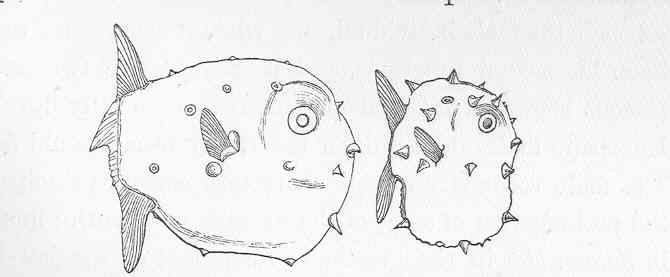
Illustration · Albert Günther, Public Domain, Wikimedia Commons
Lineage and Name
The ocean sunfish belongs to the order Tetraodontiformes (pufferfishes) and the family Molidae. When Linnaeus first named the fish in 1758, its scientific name was “Tetraodon mola,” classifying it as a member of the pufferfish genus. It was later split off into its own genus, Mola, once anatomical differences were confirmed. Although it looks nothing like a pufferfish on the outside, at the order (目) level it shares a common root with pufferfish as a close relative.
Predators and Conservation
Even a giant like the ocean sunfish has natural predators. Orcas, sharks, and California sea lions are the most notable. In Monterey Bay in particular, California sea lions have been observed biting the fins off juvenile sunfish in autumn. Based on its 2015 assessment, the IUCN Red List classifies the ocean sunfish as “Vulnerable,” with its population trend listed as decreasing.
Closing Thoughts
Judging the ocean sunfish only by that brief moment of appearing slumped on the waves misses the sophisticated thermoregulation strategy and hunting ability this fish possesses. From the rewarming routine that manages body temperature by shuttling between the cold deep sea and the warm surface, to a structure of thick, resilient skin that withstands pressure and predation alike, to a classification system so finely divided that closely related species with similar outward appearances must be sorted out down to the genetic level — behind the familiar meme lies a finely engineered survival strategy, together with the precise science that is uncovering that design piece by piece.
References
- Nakamura, Goto & Sato (2015), Journal of Animal Ecology — research on ocean sunfish diving and rewarming
- Sousa et al. (2016), Scientific Reports — DNA barcoding reveals the ocean sunfish’s diet
- oceansunfish.org — Parasites and Predators
- Seco Pon et al. (2023), Symbiosis — study of cleaning symbiosis between ocean sunfish and seabirds
- Wikipedia (English) — Ocean sunfish
- ScienceDaily (2017) — World’s heaviest bony fish identified and correctly named
- Nyegaard et al. (2018), Zoological Journal of the Linnean Society — description of the hoodwinker sunfish (Mola tecta) as a new species
- Gomes-Pereira et al. (2023), Journal of Fish Biology — report of a 2,744kg individual
- Guinness World Records — Most eggs produced by a fish in a single spawning
- Korean Wikipedia — Ocean sunfish (in Korean)