
The oldest light in tonight’s sky has traveled for 13.8 billion years to reach our eyes. Since the universe is known to be 13.79 billion years old, it might seem natural to assume that the edge of the universe we can see should also be 13.8 billion light-years away. But astronomers say the radius of the observable universe isn’t 13.8 billion light-years — it’s 46.5 billion light-years. Where does this gap of more than threefold, between 13.8 billion and 46.5 billion, actually come from?
What Is the Observable Universe?
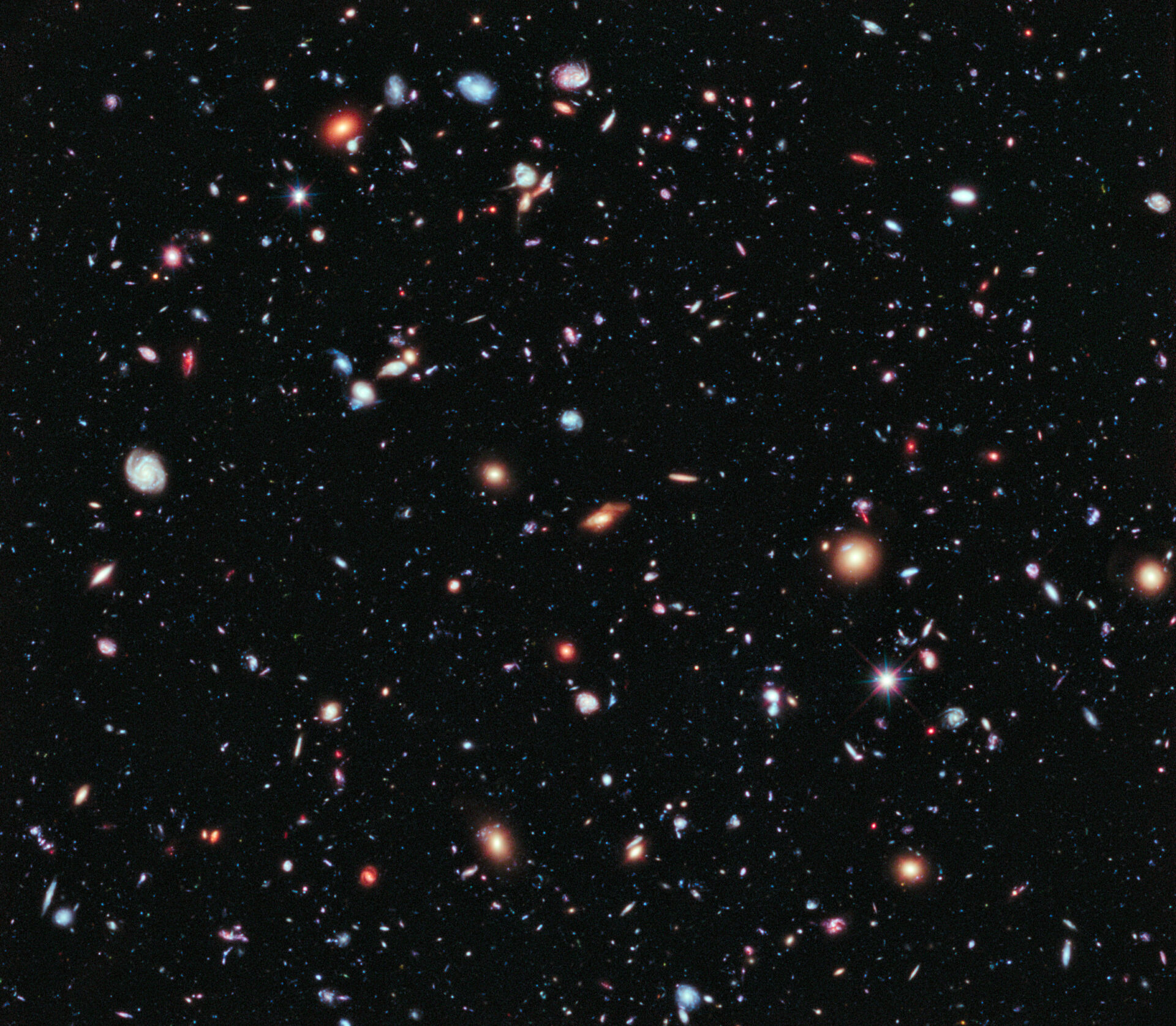
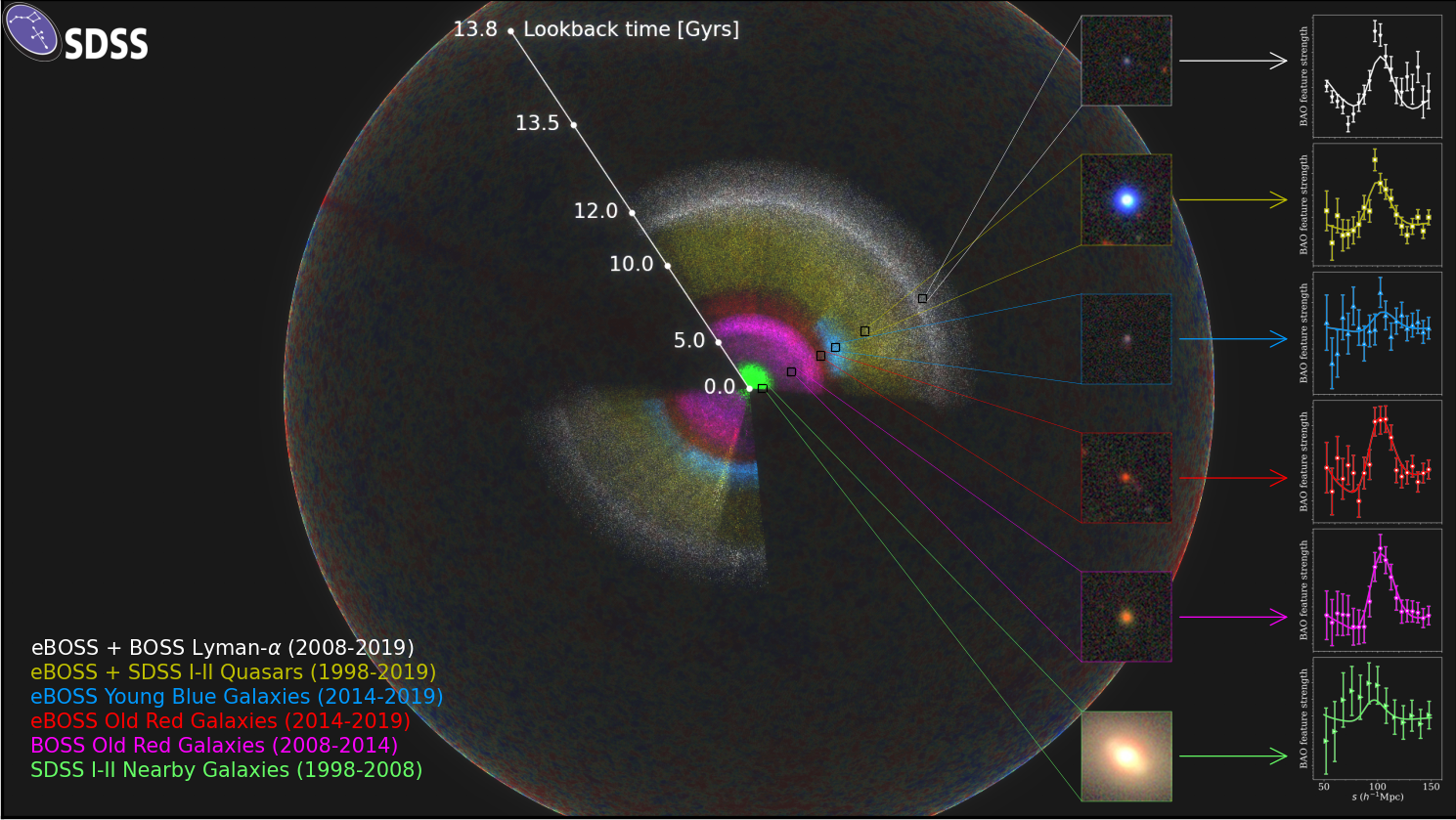
The observable universe is the region from which light has been able to reach us since the universe began. The technical term for it is the particle horizon, and its present-day radius is exactly 46.5 billion light-years (46.5 Gly, about 14.26 gigaparsecs). Converted to a diameter, that comes to 93 billion light-years.
- Radius of the observable universe: about 46.5 billion light-years (46.5 Gly)
- Diameter of the observable universe: about 93 billion light-years
- Age of the universe (per Planck 2018): 13.79 billion years (13.787±0.020 Gyr)
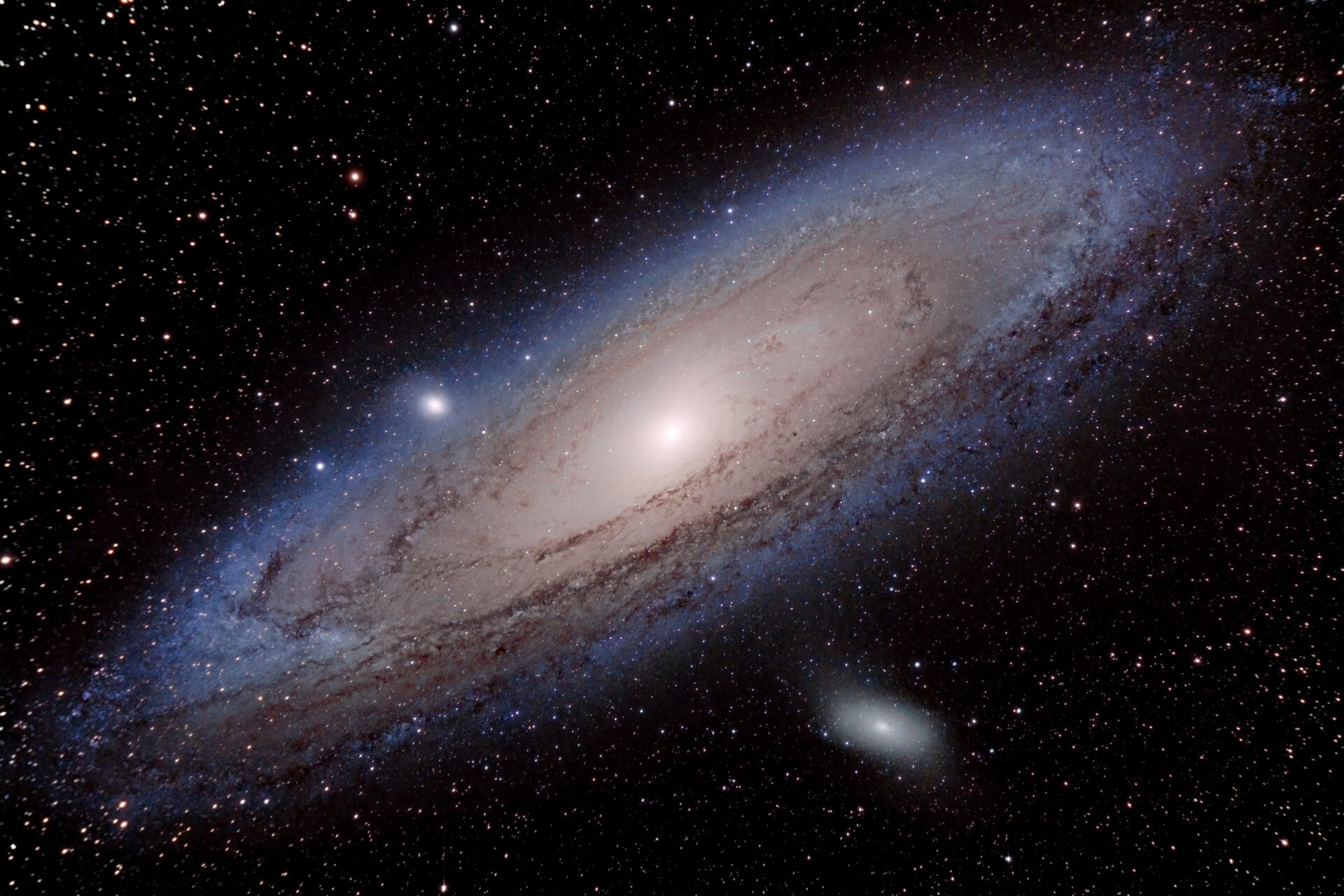
What matters here is that “observable universe” and “the universe as a whole” are different concepts. 46.5 billion light-years is merely the boundary of the region we can, in principle, see — not the size of the universe itself. For comparison, the distance to the Andromeda Galaxy, the nearest large neighboring galaxy to our own, is about 2.5 million light-years. Next to the observable universe’s 46.5-billion-light-year radius, even Andromeda is practically next door.
Why Not 13.8 Billion Light-Years? Space Itself Expanded Along the Way
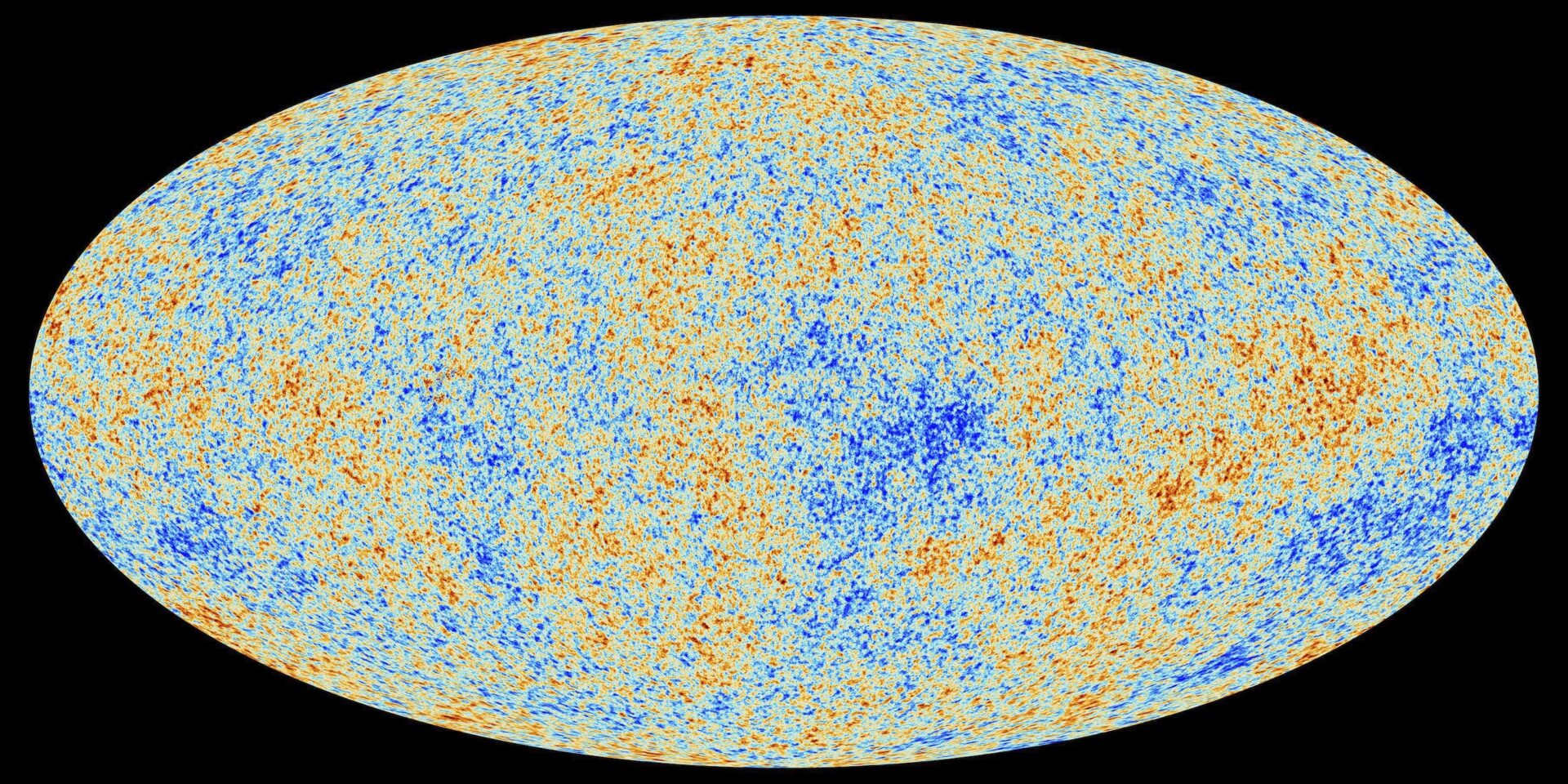
The oldest light we can see is the cosmic microwave background (CMB). Emitted about 380,000 years after the Big Bang (the recombination era, at redshift z ≈ 1100), this light has crossed the universe for nearly 13.8 billion years to reach us now. Up to this point, we’re talking about “light-travel distance” — the actual time and distance the light has traveled.
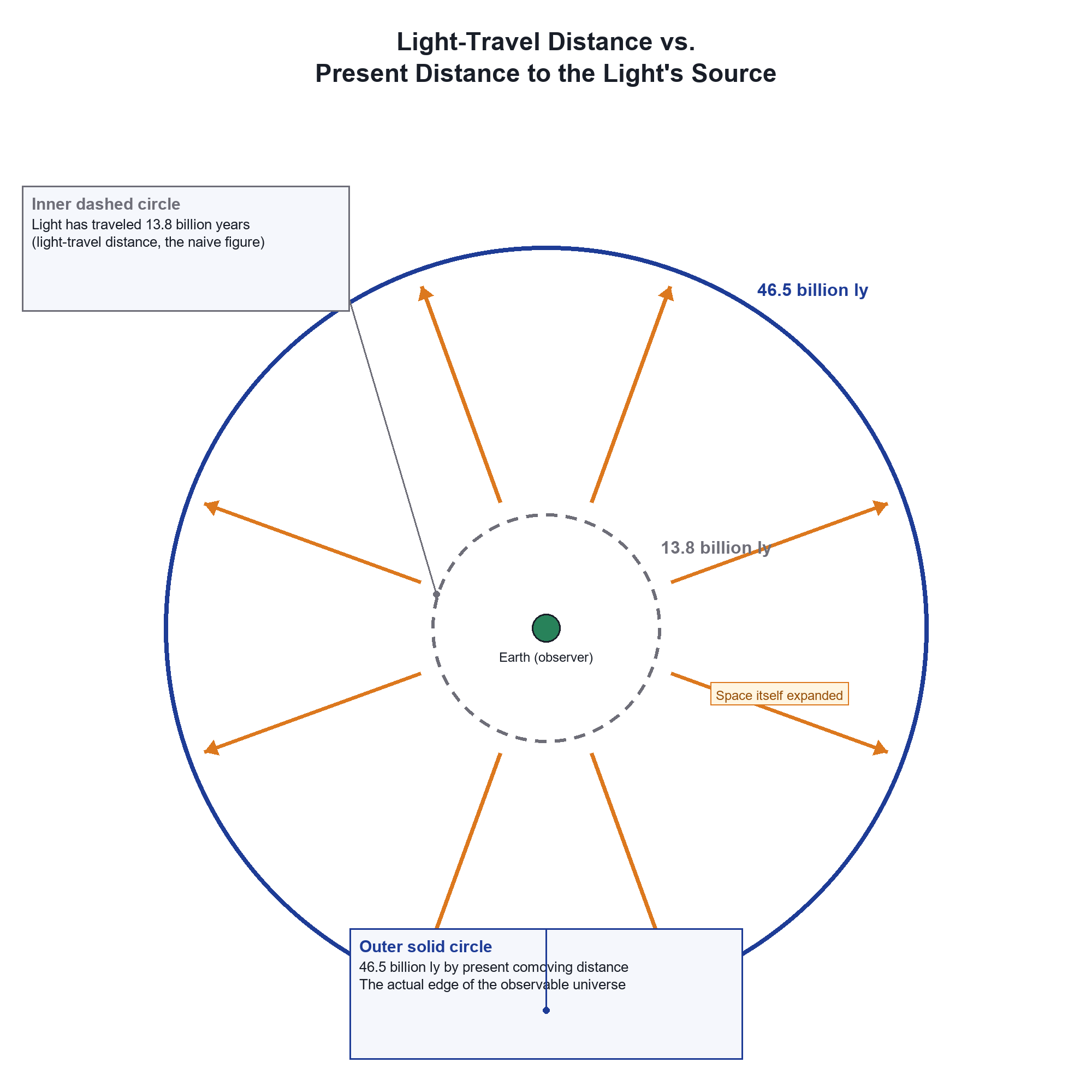
The catch is that while that light was traveling, the very space it passed through kept expanding. This expansion of space, governed by the scale factor, is called metric expansion. The matter that emitted the CMB was much closer to us 13.8 billion years ago, but as space has kept stretching ever since, it now sits 46.5 billion light-years away from us. In other words, 46.5 billion light-years isn’t “the distance the light traveled” — it’s “the actual (proper) distance to where that light’s source is right now,” in other words the comoving distance.
For reference, observations indicate the Big Bang wasn’t an explosion from a single point — it was an event in which space itself began expanding everywhere at once. The universe has no center: this is supported by two observations — that the directions galaxies recede from each other don’t point toward any particular spot, and that the CMB, the primordial afterglow, remains evenly spread across the entire sky.
What the 3.37× Ratio Between the Universe’s Age and Size Means
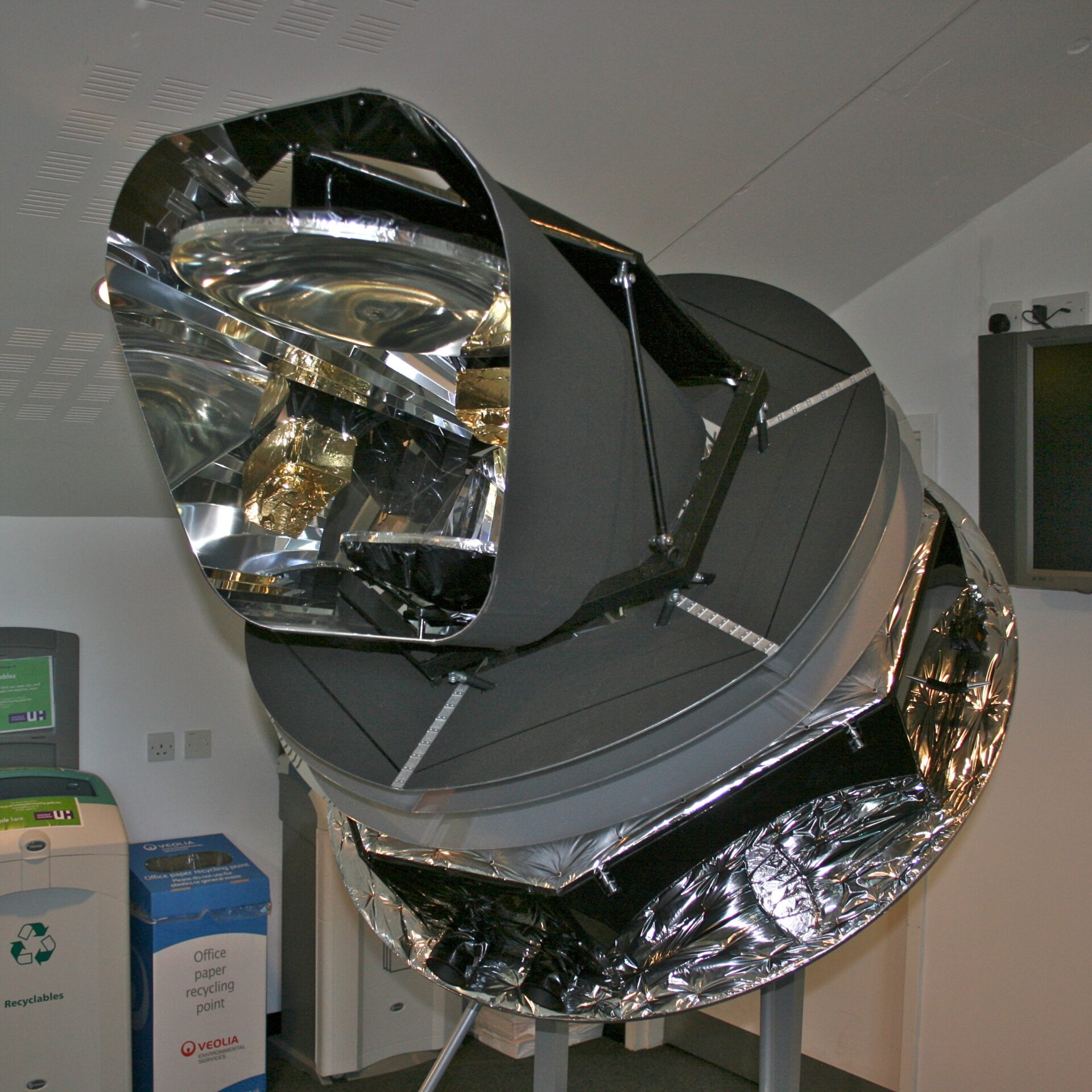
Dividing 46.5 billion light-years by the universe’s age of 13.79 billion years gives about 3.37. That number means the actual distance, once the accumulated expansion of space is factored in, is 3.37 times farther than the distance light would cover simply by traveling for the age of the universe. The universe’s age was calculated from cosmic microwave background data precisely measured by the European Space Agency’s (ESA) Planck satellite. At the first full data release in 2013 the figure was 13.82 billion years; the final 2018 data updated it to 13.787±0.020 Gyr (13.79 billion years).
Even Though Galaxies Recede Faster Than Light, Relativity Still Holds
In the 1920s, Edwin Hubble observationally established that more distant galaxies recede from us faster (Hubble’s law). Extending this relationship to the whole universe leads to an interesting conclusion: galaxies beyond the so-called “Hubble radius” appear to recede faster than the speed of light.
That doesn’t mean special relativity breaks down. This recession speed isn’t an object “moving” faster than light within any observer’s local inertial frame — it’s the rate at which coordinate distance changes on the non-inertial coordinate system of expanding space. Locally, information or matter still never travels faster than light — it’s just that no such limit applies to the rate at which space itself stretches.

How Big Is the Whole Universe? Nobody Knows Yet
So how big is the universe as a whole, beyond the observable universe? The honest answer is: we don’t know. The Planck satellite measured the universe’s curvature (Ωk) at 0.0007±0.0019, which is close enough to zero to be consistent with a flat universe. That said, some CMB-only analyses have also reported a weak closed-curvature signal (Ωk ≈ -0.044), so the question isn’t fully settled.
Flatness alone, however, doesn’t settle whether the universe is infinite. A flat space that is topologically “simply connected” would be infinite, but one with a “multiply connected” topology, like a donut shape, could be flat and still finite. Whether the universe is simply or multiply connected hasn’t been settled by current observations. So whether the universe as a whole is finite or infinite remains an open question.
The Hubble Tension: An Unresolved Debate Over the Universe’s Age
There are two main ways to measure the Hubble constant (H0), which describes the universe’s expansion rate. Calculating it from the early universe (the CMB), as the Planck satellite does, gives 67.4±0.5 km/s/Mpc. Measuring it directly from the nearby universe (SH0ES) using Cepheid variables and Type Ia supernovae gives about 73–74 km/s/Mpc (a 2023 James Webb Space Telescope re-confirmation put it at 74.03±1.42 km/s/Mpc). The gap between the two values exceeds 5 sigma, which is hard to dismiss as chance.
This is called the “Hubble tension” — an unresolved standoff in which neither measurement can be declared correct. NASA itself states that the cause of the Hubble tension remains a mystery, and the 2023 James Webb Space Telescope observations didn’t resolve the tension either — if anything, they sharpened it.
One Thing Worth Remembering Today
To sum up: what we see is not the whole universe — it’s only the part from which light has been able to reach us since the universe began, the observable universe with its 46.5-billion-light-year radius. What lies beyond it, and whether the universe as a whole is finite or infinite, are questions today’s science still cannot answer.
From this site’s perspective of learning all things the Creator has made, the figure we’ve confirmed today, 46.5 billion light-years, isn’t a boast of knowledge; it’s closer to honestly drawing the boundary of what we know. The very fact that the observable universe alone has a structure this vast and this precisely describable, and that what lies beyond remains unknown, may itself be the best evidence of the universe’s true scale.
References
- Wikipedia — Observable universe (definitions of radius/diameter/comoving distance)
- Wikipedia — Age of the universe (2018 Planck: about 13.8 Gyr; the precise figure 13.787±0.020 Gyr is per the Observable universe article infobox)
- ESA — Planck reveals an almost perfect Universe (official release)
- Wikipedia — Hubble tension (67.4 vs. 73-74 km/s/Mpc, >5σ)
- NASA Science — Hubble Constant and Tension (official, “still a mystery”)
- arXiv (Davis & Lineweaver) — Superluminal Recession Velocities (superluminal recession and relativity)
- Wikipedia — Shape of the universe (Ωk ≈ 0, flat; finite vs. infinite undetermined)
- NASA Science — Webb Telescope & The Big Bang Q&A (Big Bang = simultaneous expansion everywhere, John Mather)
- Wikipedia — Cosmic microwave background (definition and emission time)
- Wikipedia — Particle horizon (definition and conformal time)