
A bird running its beak through its wing may look as though it is simply tidying up. That movement can also help realign the connections within a feather. Why can a smooth feather vane split into separate strands and then become neat again?
The answer lies in microscopic hooks between the feather’s branches. Intact connections that have come undone can engage again. This is different from damaged tissue healing by growing anew.
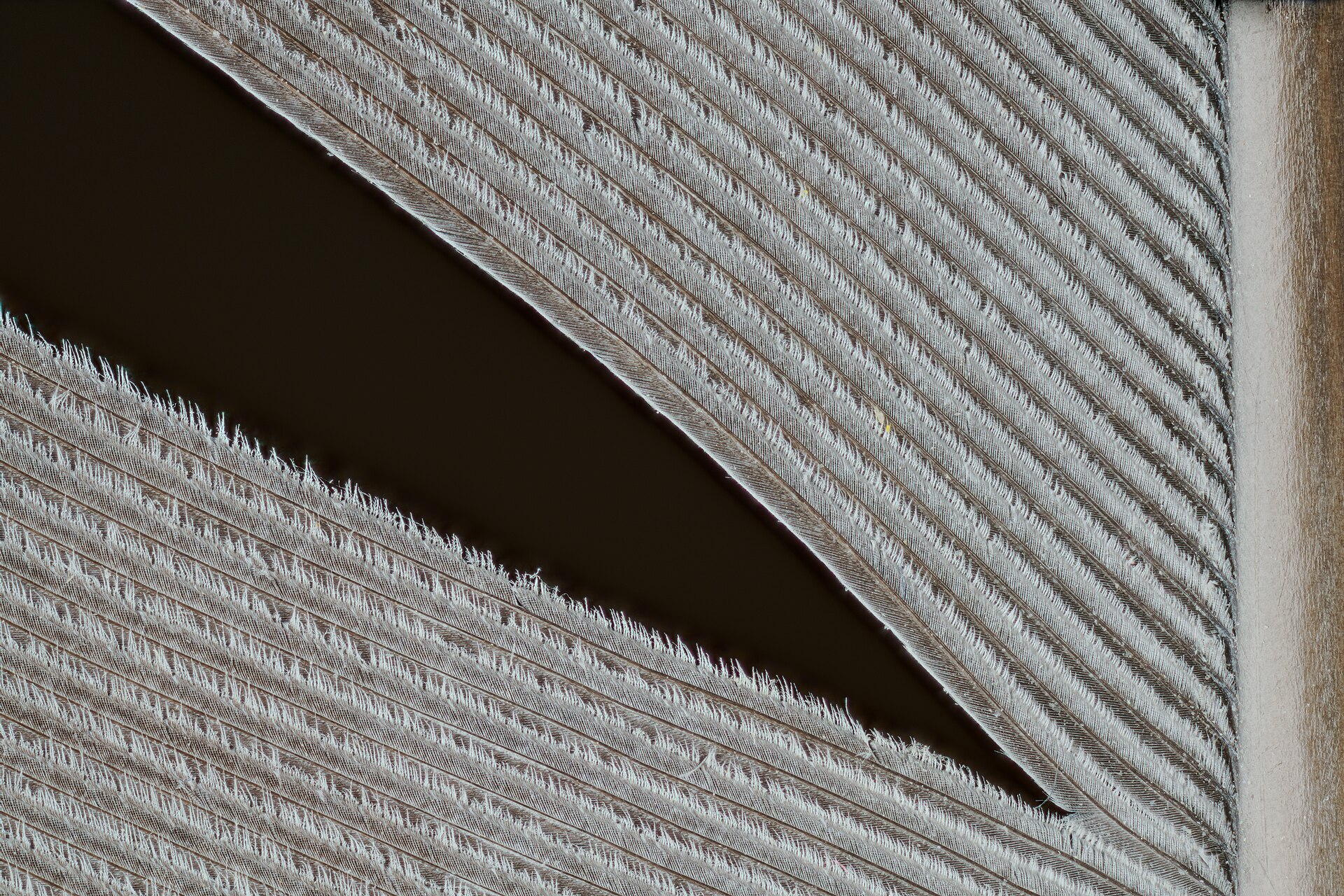
Franz van Duns · CC BY-SA 4.0 · Source: Wikimedia Commons
A network of branches, rather than a single sheet
A flight feather’s central shaft, or rachis, carries branches called barbs that form the vane. Smaller branches from each barb are called barbules.[1]
Having many branches is only part of the story. Neighboring branches must connect to work together as a light, broad surface. Experiments comparing individual barbs with connected arrays found that interlocking affects the vane’s mechanical behavior by limiting barb rotation. Fine members support one another rather than filling the entire surface with thick material.[2]
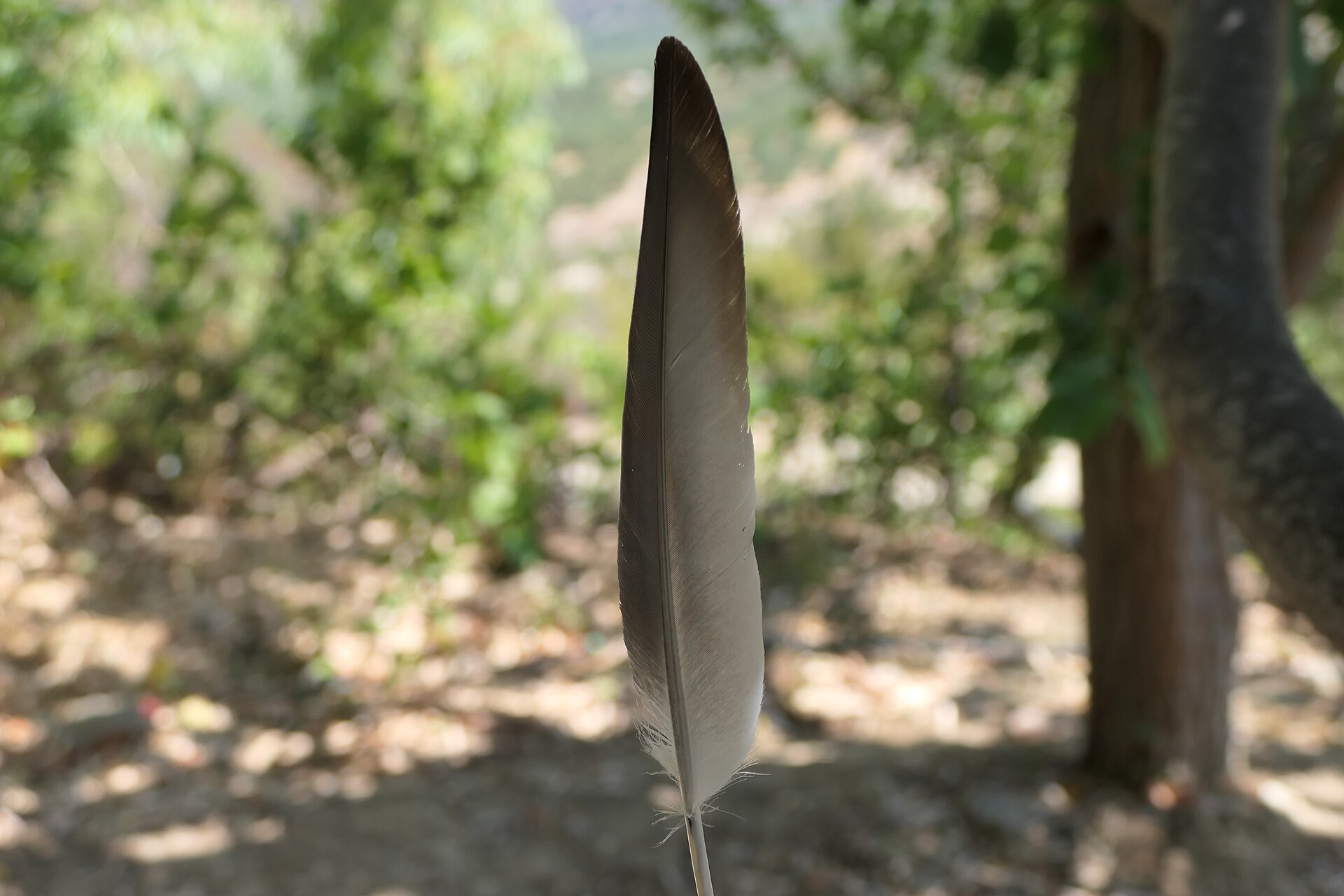
Petro Stelte · CC BY-SA 4.0 · Source: Wikimedia Commons
Where a hook meets an edge
Hooks on one barbule catch the curved edge of a neighboring barbule; identical hooks do not mesh against one another.[3]
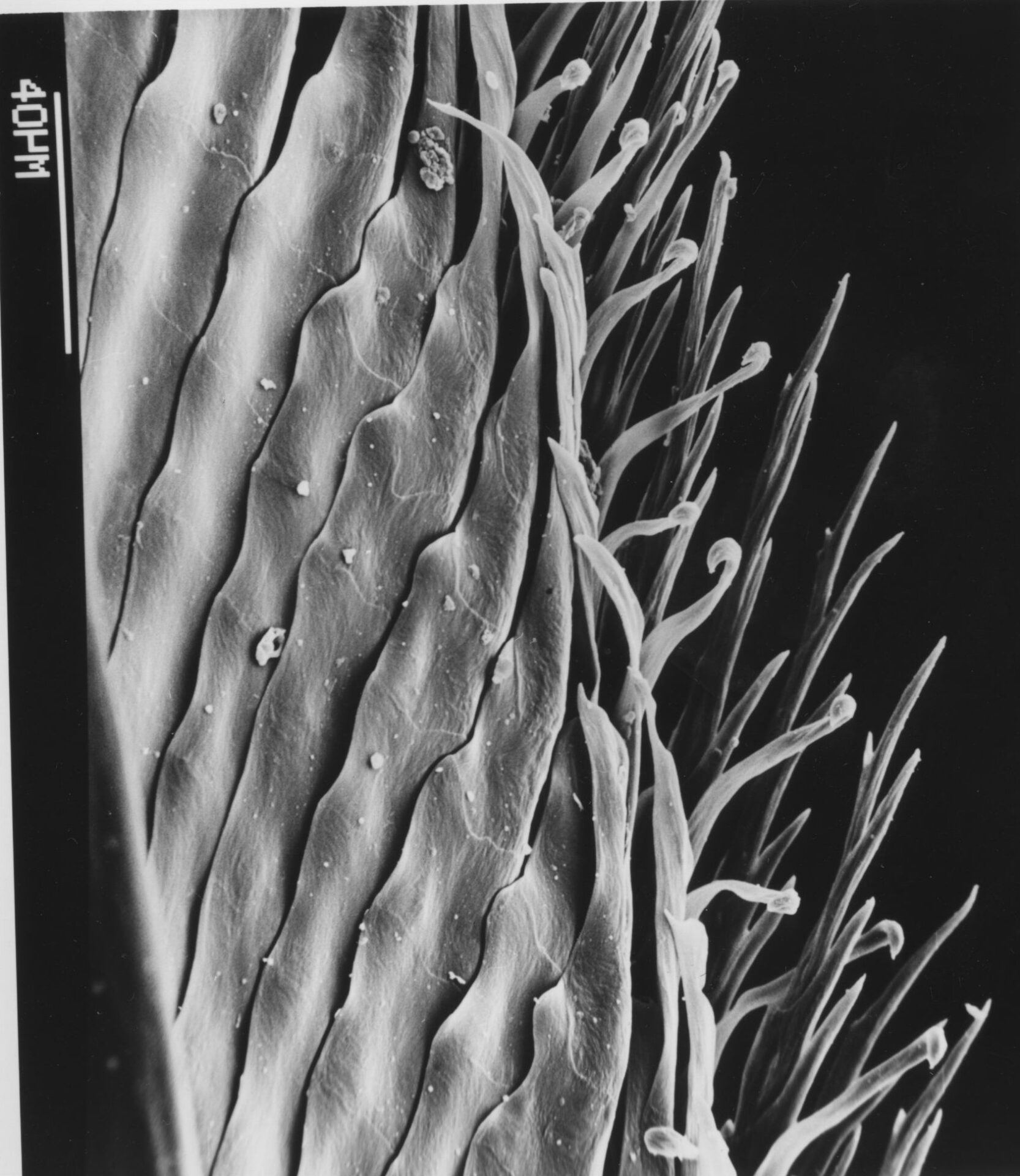
Melanine1951% · CC BY 4.0 · Source: Wikimedia Commons
A 2018 goshawk flight-feather study observed hooks sliding, catching projections, and releasing under greater deformation as the pulling force increased.[3]
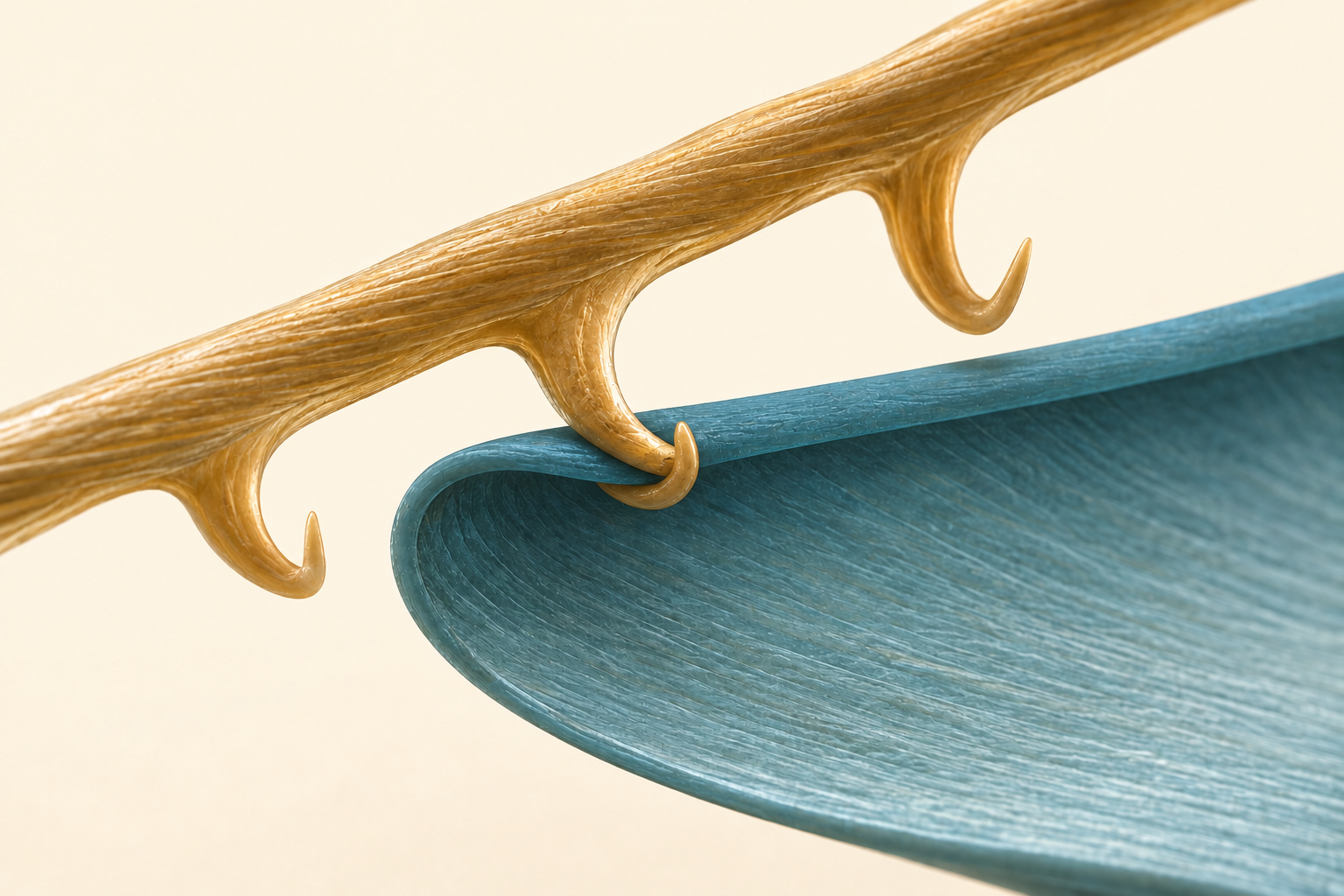
Illustration · AI-generated (Codex/ChatGPT subscription). Simplified to explain microscopic attachment.
How far does the zipper comparison go?
Pulling barbs apart releases connections and opens a gap in the vane. Realigning intact structures allows hooks to catch their neighbors again. A study of this reversible behavior, including restoration by gently stroking the feather, is aptly titled Unzipping bird feathers.[4]
A feather does not contain a clothing zipper’s single row of teeth and slider. Its attachment points are distributed between the branches. “Zipping” describes the ability to disconnect and reconnect. A visible gap alone cannot tell us whether hooks have merely disengaged or some structures have broken.
Repeated separation and manual realignment also allowed reconnection in the 2018 study. This does not establish unlimited recovery for every feather.[3]
Preening is a form of maintenance
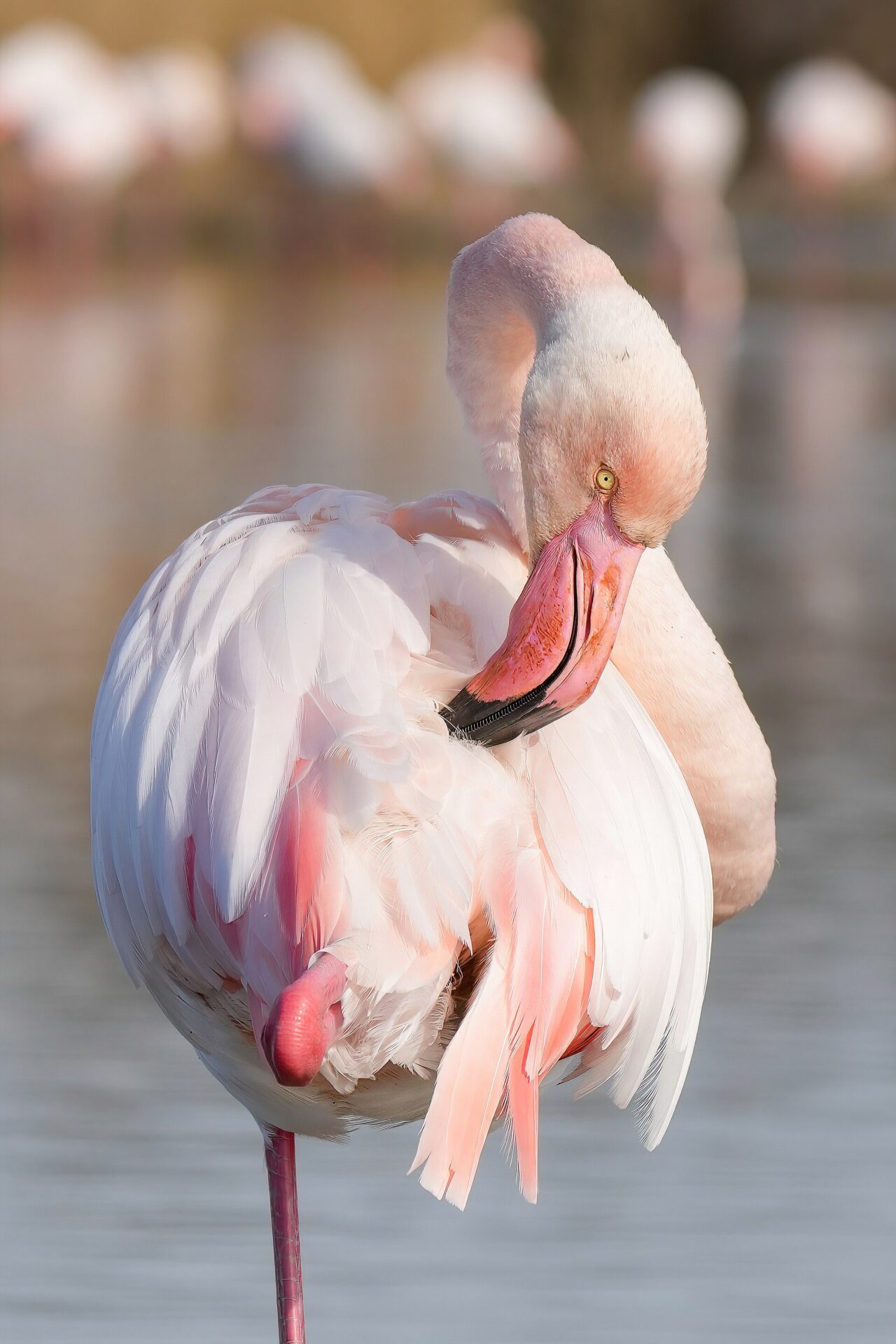
A bird’s feather-grooming behavior is called preening. Its beak helps bring disturbed structures back into alignment. Research on restoring ruffled vanes has examined both beak preening and wing shaking. The movements that help reposition the parts work together with their capacity to re-engage.[5]
Giles Laurent · CC BY-SA 4.0 · Source: Wikimedia Commons
Grooming can therefore be understood as maintaining a working structure. The British Trust for Ornithology also describes bill-assisted realignment as routine feather care.[7] However, observing a single beak movement from a distance does not establish that a particular microscopic hook has reattached. The photograph shows preening behavior; evidence for the tiny connections comes from magnified observations and experiments. A companion data paper provides electron-microscope observations of pigeon feather structures and records of recovery. It accompanies the preceding recovery study, rather than being an independent replication by another team.[6]
Why does down stay fluffy?
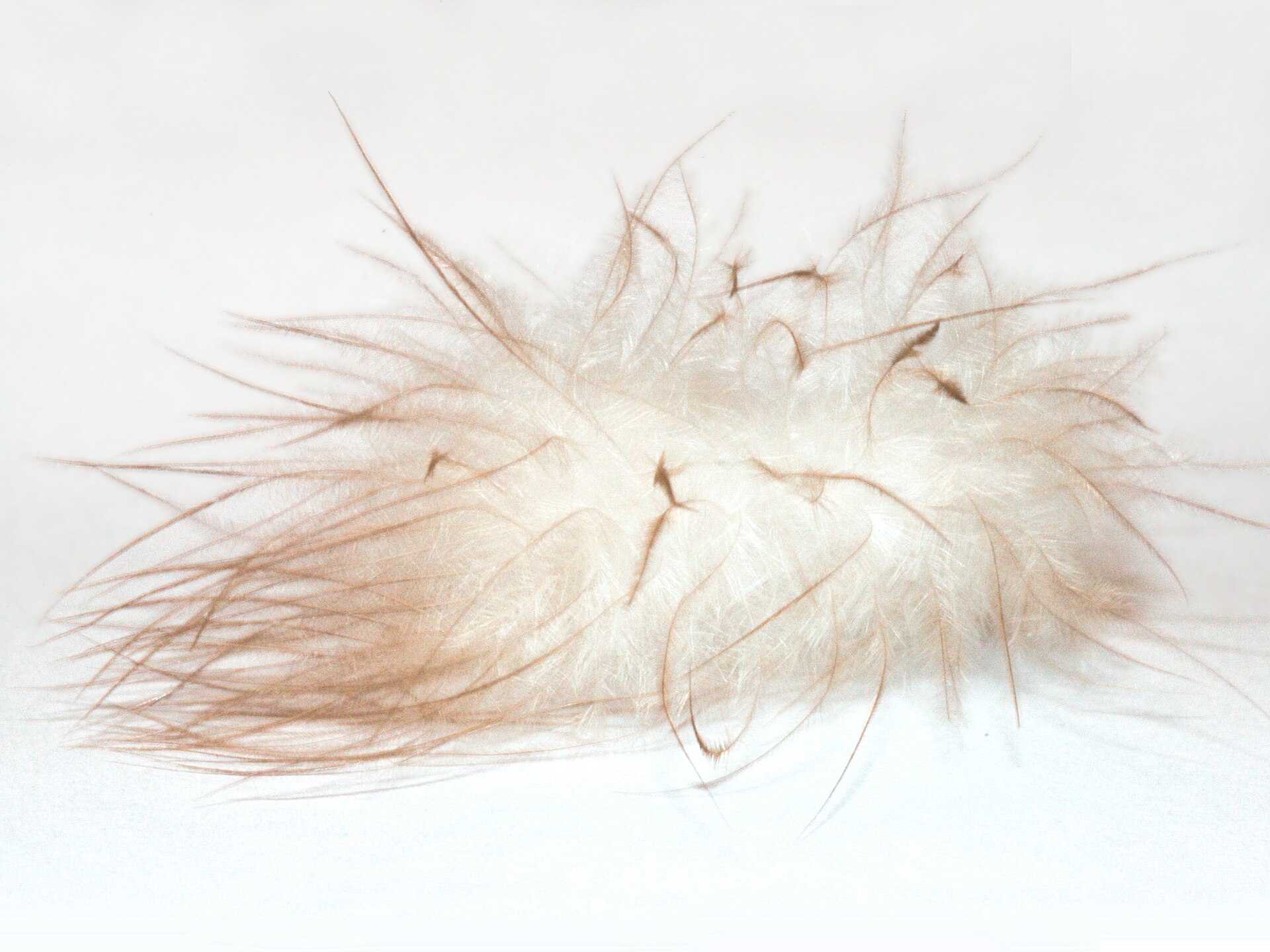
Down’s loose, non-interlocking structure traps air.[1]
Yoky · CC BY-SA 4.0 · Source: Wikimedia Commons
Fluffiness does not signal broken connections. One feather can contain both downy and interlocking regions.[1]
Where these connections meet flight
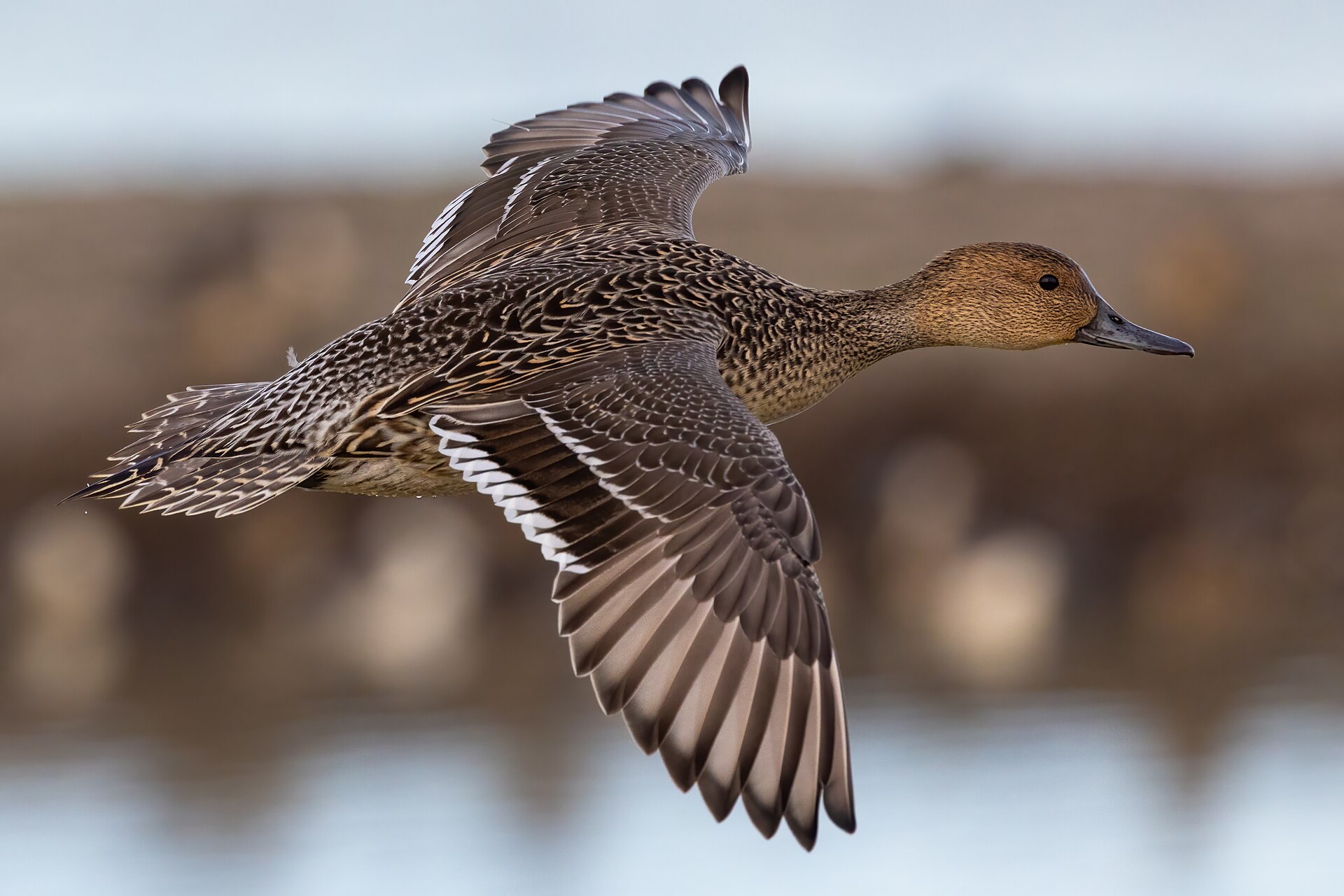
A vane is a surface that interacts with moving air. Research using pelican flight feathers and other birds investigated connections between barbule attachment and air passage. Permeability varied with direction and structure, while the effect of detachment depended on barb dimensions.[8] Treating a vane as a perfectly airtight sheet would therefore be another oversimplification.
Frank Schulenburg · CC BY-SA 4.0 · Source: Wikimedia Commons
The feather’s sophistication goes beyond resisting force. It joins slender, lightweight parts while allowing some released connections to be restored. Material properties, component geometry, and the bird’s grooming behavior work together to maintain function.
Reconnecting is different from regrowing
A mature feather cannot heal like living skin. Intact hooks that have disengaged can reconnect after realignment, but stroking cannot regrow a broken shaft or barb.[1] Worn feathers are replaced through molt.[7]
This brings us back to the opening question. A separated vane can reconnect because surviving microscopic structures can catch again, rather than because fresh glue appears. The familiar sight of a bird tending its wing reveals a precise principle: restoring small connections helps preserve a broad working surface.
Watch the short
References
- Everything You Need To Know About Feathers
- A lightweight, biological structure with tailored stiffness: The feather vane
- Repairable cascaded slide-lock system endows bird feathers with tear-resistance and superdurability
- Unzipping bird feathers
- Shaking the wings and preening feathers with the beak help a bird to recover its ruffled feather vane
- Data of feather recovering performance of birds and micro structure of pigeons' feathers
- Preening, sunbathing, dustbathing and waterbathing
- Reversible Attachment with Tailored Permeability: The Feather Vane and Bioinspired Designs