
When a robotic arm tries to grasp an object in the vacuum and weightlessness of space, most of the methods that work reliably on Earth become useless. Suction cups rely on a pressure difference between inside and outside, but a vacuum has no atmospheric pressure to begin with, and adhesives or tape dry out and harden almost instantly in the icy vacuum. So what is left, when you need to grip a smooth, irregular object — a satellite component or a piece of space debris — with no handle to hold onto?
A Solution Borrowed from the Gecko’s Foot
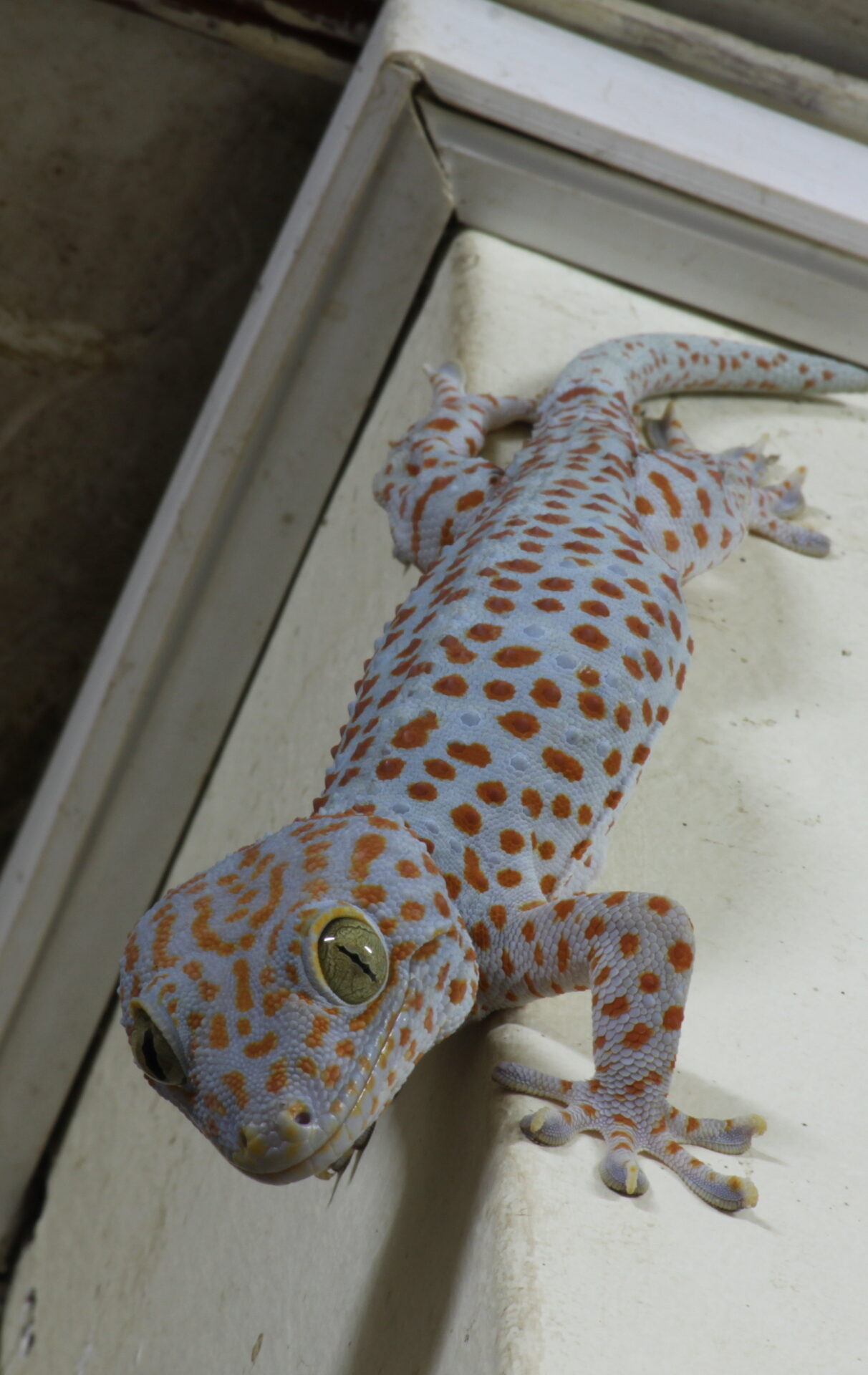
Engineers found their answer in the foot of the gecko. Geckos climb glass-smooth vertical surfaces without any adhesive, and experiments have pinned down the mechanism behind this grip: van der Waals forces, the faint attraction that acts between molecules. A study led by Kellar Autumn, published in PNAS in 2002, used experiments on the foot structure of the tokay gecko to rule out capillary (moisture-layer) and chemical-secretion hypotheses and show that van der Waals forces were the dominant mechanism. Two years earlier, in a 2000 paper in Nature, the same research team had directly measured the adhesive force of a single seta for the first time in the world.
Half a Million Hair Tips, and the Van der Waals Force
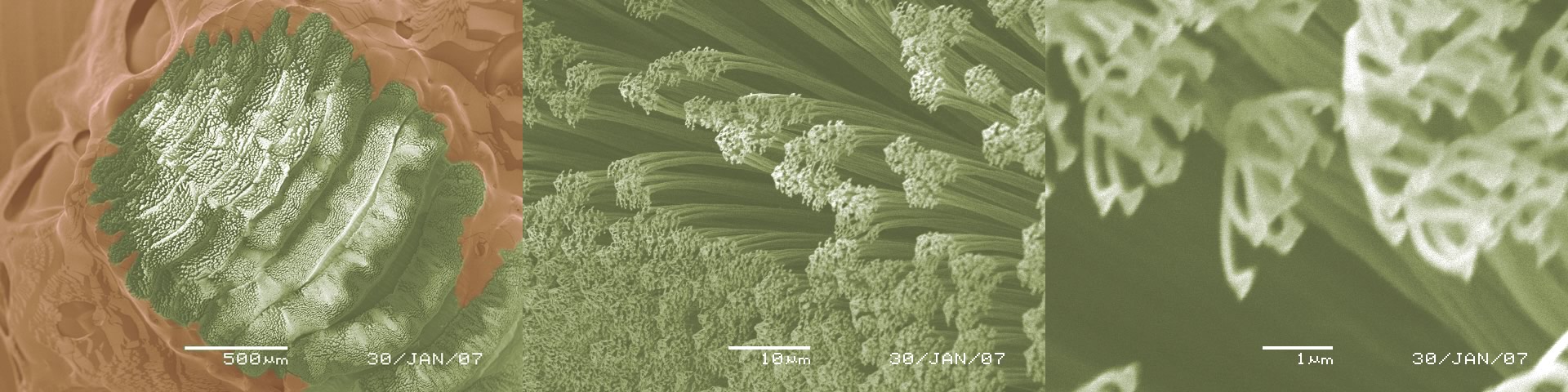
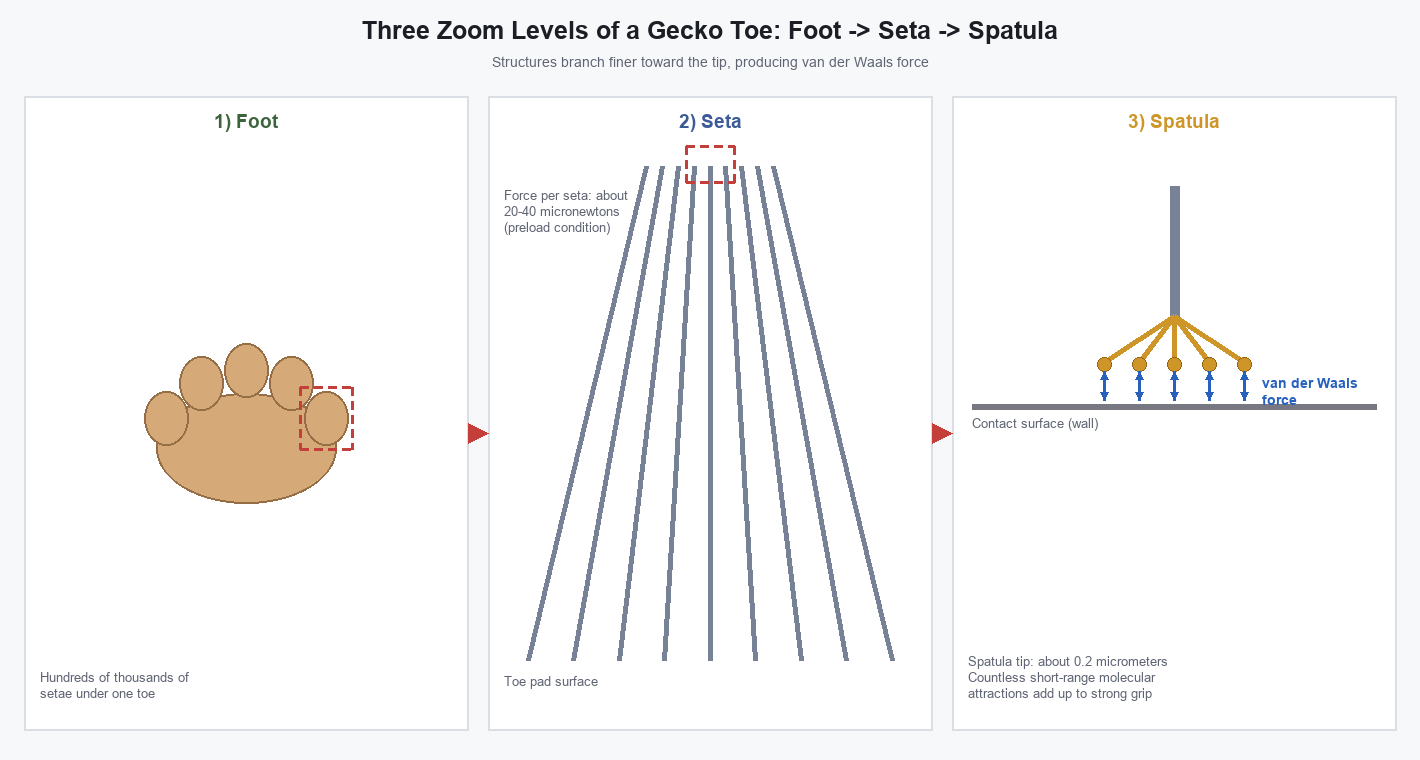
A single gecko footpad is reported to carry roughly 500,000 microscopic hairs called setae. Each seta splits at its tip into a spatula-like structure only about 0.2 micrometers across, and every one of these generates a van der Waals force wherever it touches a surface. Under preload conditions, the adhesive force of a single seta has been measured at roughly 20 to 40 micronewtons (density figures vary across sources and should be treated with caution). Acting together, these countless contact points let a single gecko theoretically support as much as about 50 times its own body weight, according to one study.
Stanford’s Stickybot, JPL’s Gripper for Space
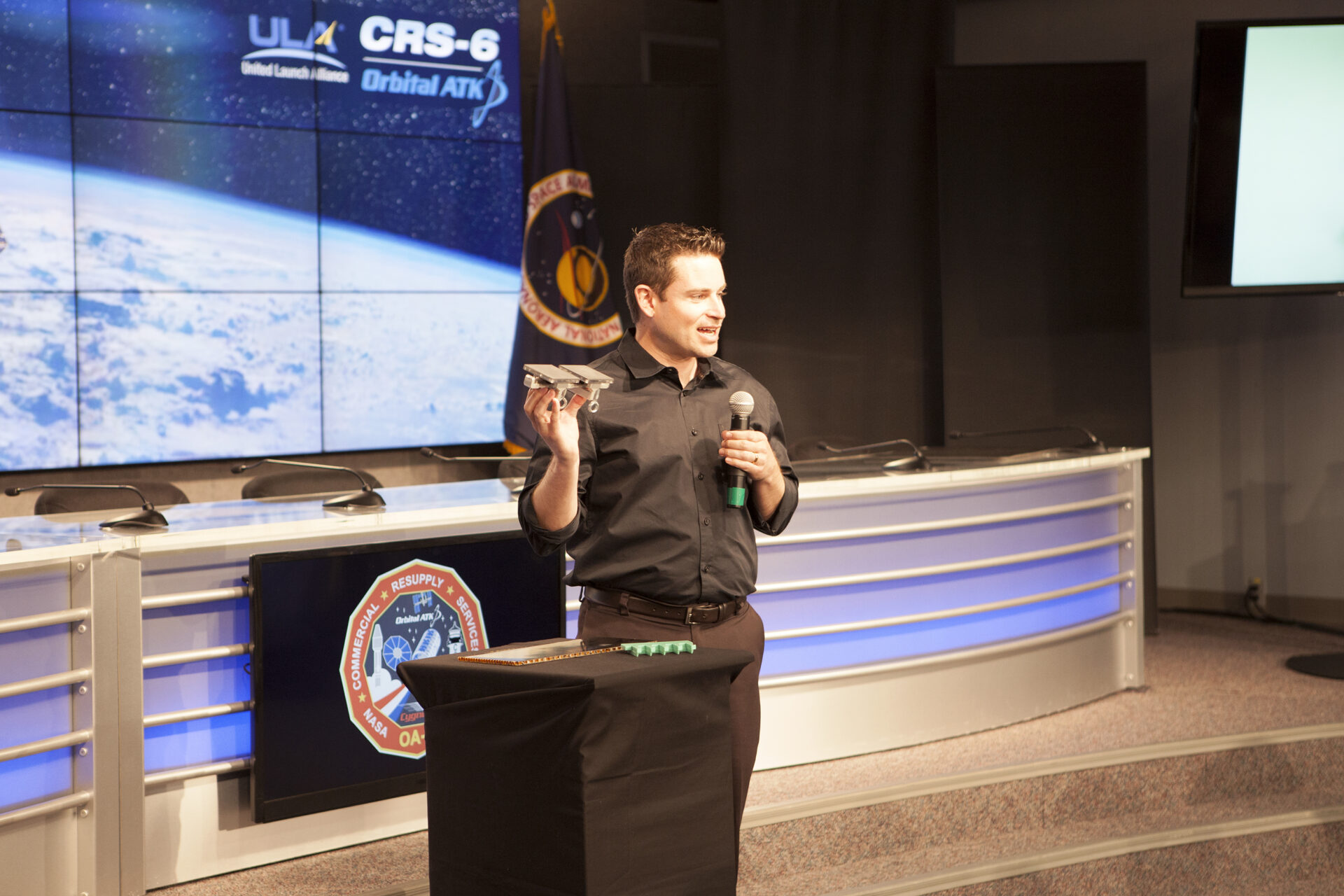
The first lab to turn this principle into an engineered “directional adhesive” was Professor Mark Cutkosky’s lab at Stanford University. The lab’s climbing robot, Stickybot, began scaling smooth vertical surfaces without any adhesive around 2006, and the corresponding paper appeared in the IEEE journal on robotics in 2008. It was NASA’s Jet Propulsion Laboratory (JPL) that carried this technology into space. Aaron Parness, who joined JPL in 2010, led a team that put the adhesive through chamber tests simulating a full vacuum at minus 60 degrees Celsius.
From the Ground to Near Orbit, Step by Step
From there, demonstrations advanced in stages. In a 2014 test aboard the C-9B parabolic-flight aircraft, the gripper successfully grasped a 20-pound cube and a 250-pound panel. In 2016, five adhesive samples were sent to the ISS to test their long-term performance in microgravity. A 2017 joint Stanford-JPL study published in Science Robotics reported towing a 300-kilogram robot on a ground-based air-bearing facility and successfully catching a cube and a large beach ball across roughly 80 parabolic flights. The paper itself, however, states that “the next step is to prepare for testing outside the station,” making clear that even an exterior ISS test had not yet taken place.
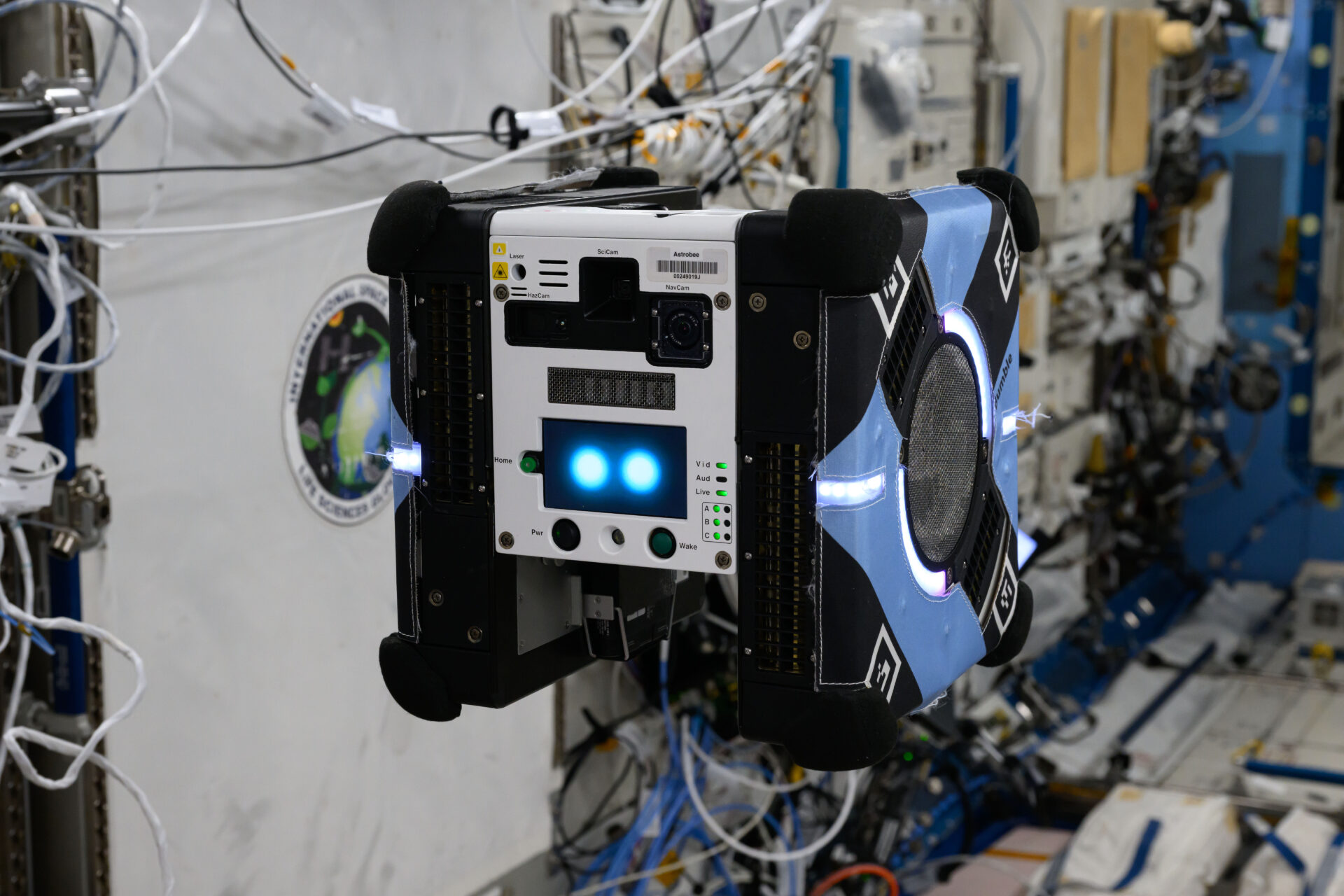
Inside the ISS, Alongside Astrobee
A separate case was actually demonstrated with a robot inside the ISS. Distinct from the JPL lineage, a gecko gripper developed by Stanford’s Cutkosky and Pavone labs was built for NASA Ames’s free-flying robot Astrobee and launched to the ISS in 2019. On April 9 and 15, 2021, astronauts Kate Rubins and Victor Glover mounted it on Astrobee (nicknamed “Honey”) inside the pressurized cabin, measuring its grip force and testing whether Astrobee could fly to a wall and attempt to perch using the gripper alone. No actual capture of orbital debris has been confirmed to have taken place; JPL’s own orbital-debris page frames the goal only in conditional terms — that the gripper “could” stick to and capture a piece of space debris. Earth’s low orbit is reported to hold more than 20,000 pieces of debris larger than 10 centimeters.
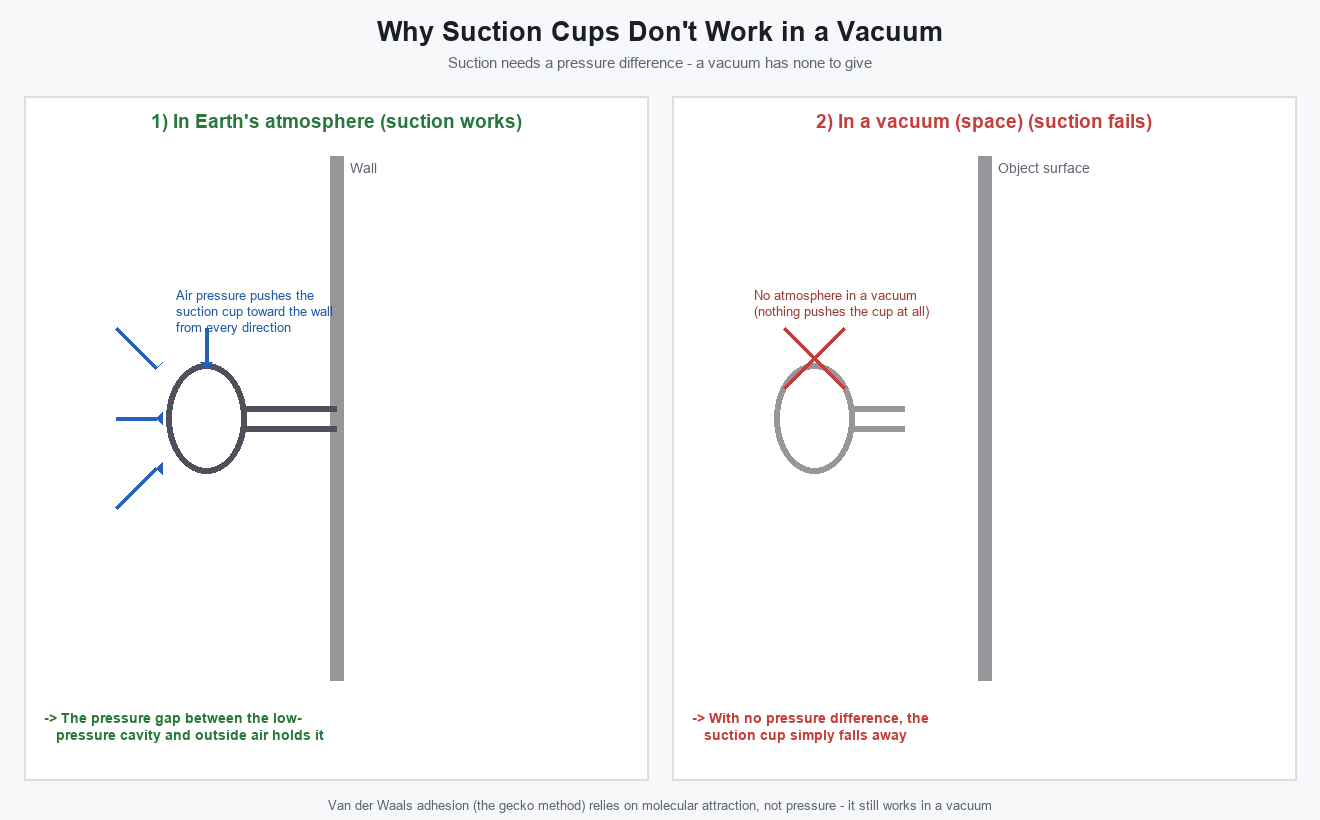
Why Suction Cups and Adhesives Fail in Space
A vacuum has no atmospheric pressure, so the pressure-difference principle that suction cups rely on simply does not hold, and adhesives or tape soon harden through curing and outgassing. Gecko-inspired adhesion based on van der Waals forces, by contrast, involves no chemical curing process, which is cited as the reason it is fundamentally insensitive to changes in temperature, pressure, and radiation — and why it suits the space environment.
An Industrial Gripper That Came Back Down to Earth
This principle has also made its way back into terrestrial industry. A gripper (OnRobot) that commercialized the JPL technology raised the adhesive pressure from an original 4-5 kilopascals to 35-40 kilopascals, enough to lift a metal plate weighing about 6.4 kilograms, while the DARPA-funded “Phoenix Gecko Gripper” combines JPL’s space-grade adhesive with a compliant capture head and is being developed as a gripper for servicing defunct satellites. Other biomimetic approaches exist too, such as soft grippers modeled on octopus suckers, but these are mostly designed for underwater or terrestrial use — which only makes the uniqueness of van der Waals adhesion in space stand out more.
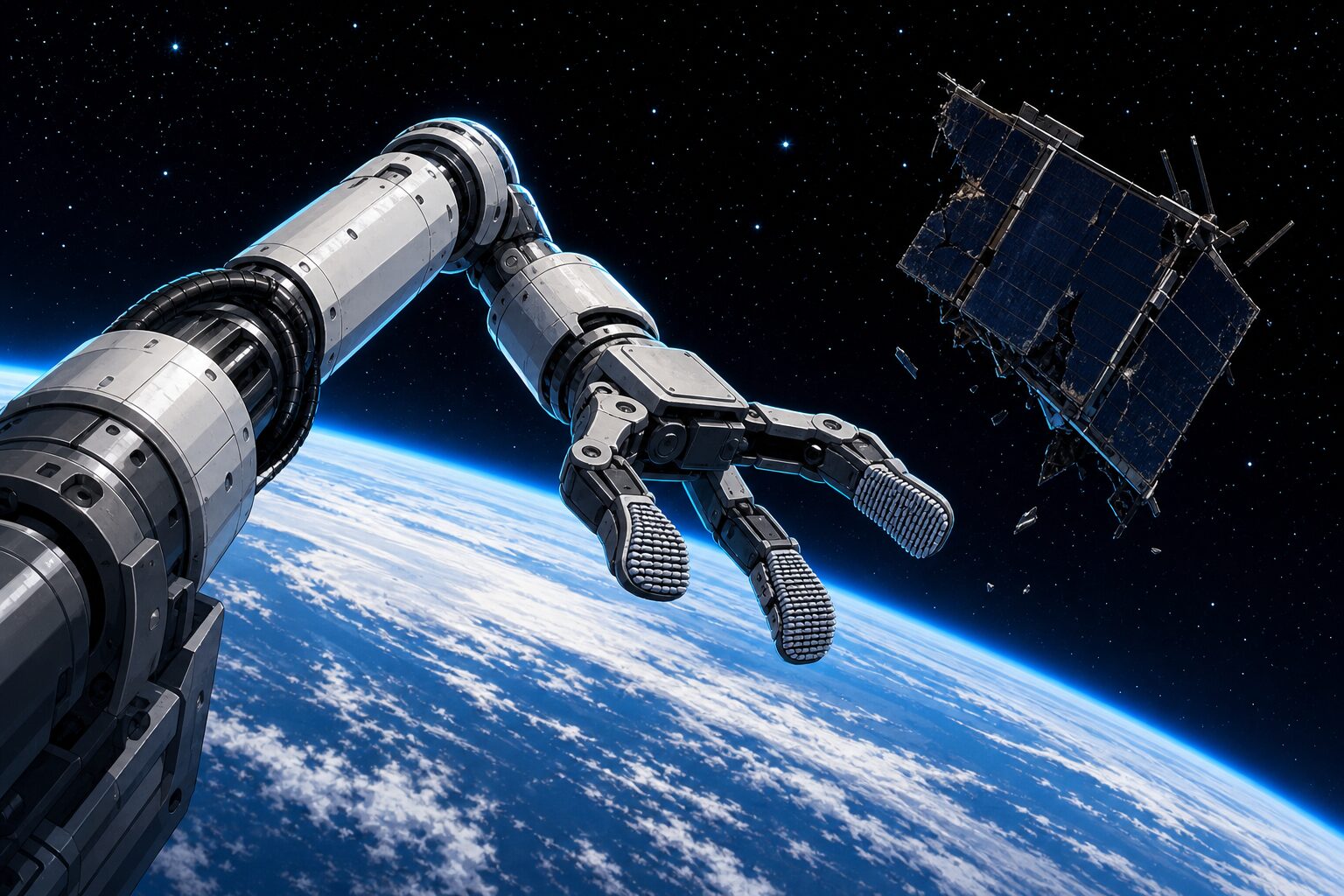
Engineering That Belatedly Read an Elegant Design
The gecko’s footpad turns out to have been an elaborately engineered adhesive structure all along, and it took human space engineering years of observation and experiment to discover that its underlying van der Waals principle is fundamentally insensitive to changes in temperature, pressure, and radiation — and to begin carrying that discovery over into robotic grippers. In the vacuum of space, where suction cups and adhesives alike go powerless, the physics etched into a small lizard’s toes is becoming the fingertip of a robot.
References
- NASA JPL Robotics – Gecko Gripper
- NASA JPL Robotics – Gecko-like Adhesives for Orbital Debris Applications
- NASA JPL Robotics – Phoenix Gecko Gripper
- NASA JPL News – Gecko Grippers Get a Microgravity Test Flight (2014)
- NASA JPL News – Gecko Grippers Moving On Up (2015)
- Stanford News – 'Gecko gripper' tested aboard ISS (2021)
- Stanford News – Engineers design a robotic gripper for cleaning up space debris (2017)
- PNAS 2002 – Evidence for van der Waals adhesion in gecko setae (Autumn et al.)
- Nature 2000 – Adhesive force of a single gecko foot-hair (Autumn et al.)
- NASA Spinoff – New Industrial Robotic Gripper Copies Geckos' Toes