
The great white shark chases down prey with startling speed even in cold water. Most fish are ectotherms whose body temperature simply follows the surrounding water, so their muscles tend to stiffen in cold water — yet the great white can twist and strike in an instant even in water around 10°C. Behind this lies an elegantly designed heat-management structure that keeps part of its body warmer than the surrounding water.
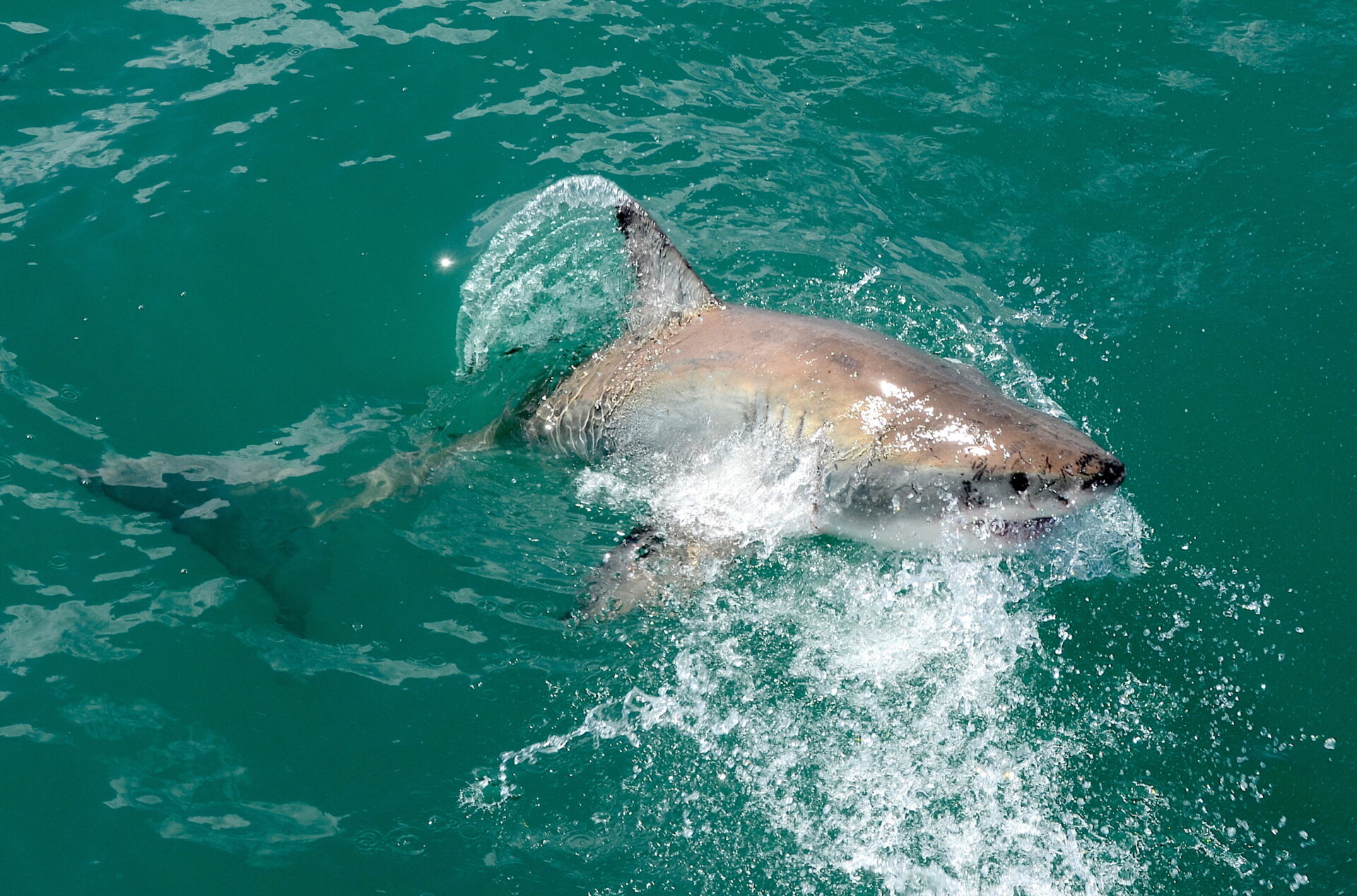
Neither Cold-Blooded Nor Warm-Blooded: Regional Endothermy
The great white shark is often called “warm-blooded,” but that isn’t quite accurate. The U.S. National Oceanic and Atmospheric Administration (NOAA) describes it as “partially warm-blooded — regionally endothermic, meaning it can maintain a body temperature above that of the surrounding water.” Rather than warming its entire body, it warms only specific parts — the swimming muscles and digestive organs such as the stomach, and in some species even the brain and eyes. Scientists call this regional endothermy, or mesothermy.
A Design Called the Countercurrent Heat Exchanger
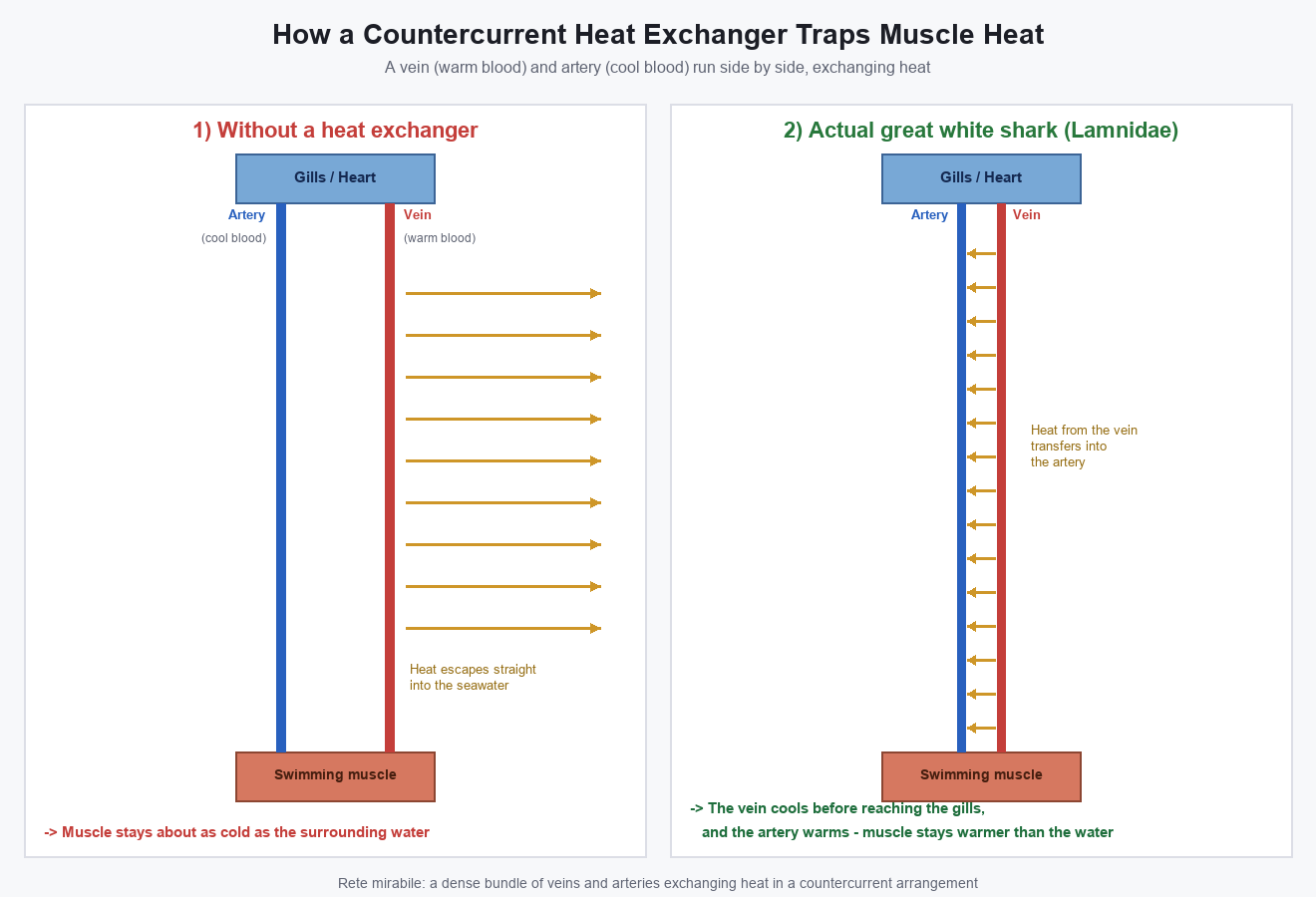
The structure that creates this localized warmth is a countercurrent heat exchanger called the rete mirabile (“wonderful net”). Metabolic heat generated by the swimming muscles is carried by venous blood heading toward the gills, but the veins and arteries run side by side as a dense bundle of fine vessels, so heat from the warm venous blood transfers into the cooler arterial blood. Because this plumbing traps the heat instead of letting it escape, tissue around the swimming muscles and stomach stays several degrees Celsius warmer than the surrounding water.
In 1982, Carey and colleagues tracked a great white shark and confirmed that its muscle temperature was up to 5°C warmer than the water, and a 1997 study by Goldman measured stomach temperatures of 24.7–26.8°C even in water of 12.9–16.1°C.
Not the Great White’s Alone: A Design Shared Across Lamnidae
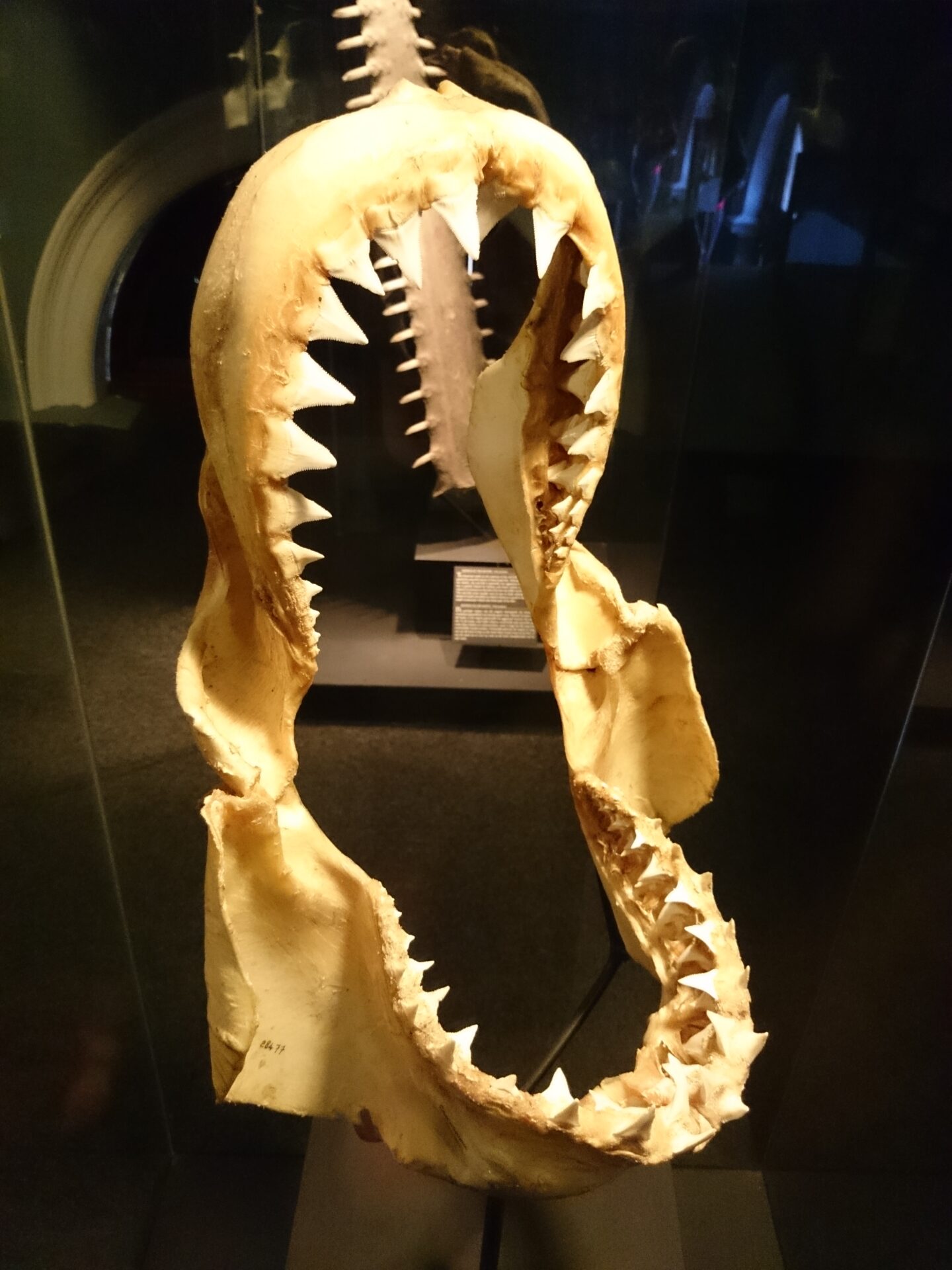
This regional endothermy isn’t a secret belonging to the great white shark alone — it’s a design shared across the entire family Lamnidae to which it belongs. Lamnidae comprises five species besides the great white (Carcharodon carcharias): the shortfin mako, longfin mako, porbeagle, and salmon shark — all fast-swimming predators that favor cold water and carry the same heat-exchange structure. A 1985 study by Block and Carey showed that the brain and eye temperatures of the shortfin mako and porbeagle stay about 5°C warmer than the surrounding water, confirming a separate heat-exchanger network around the eye socket as well. Nor is this design confined to sharks. Tuna species, which diverged from Lamnidae some 400–450 million years ago and evolved independently since, show nearly identical traits — centralized red muscle, a streamlined body, and regional endothermy — and a 2004 study by Donley and colleagues published in Nature proposes that the two lineages each independently acquired this trait under similar selective pressures roughly 40–60 million years ago.
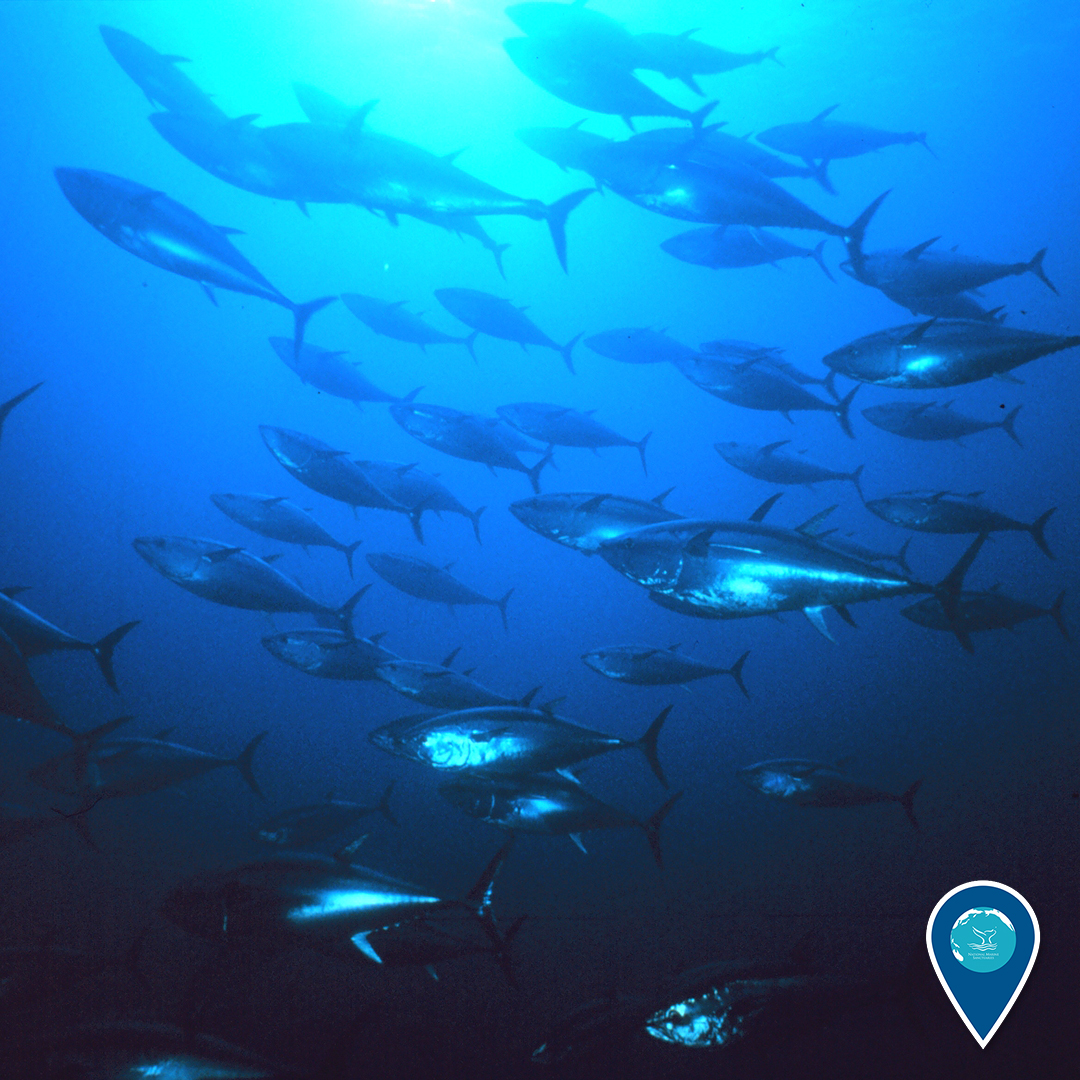
This is different, however, from whole-body endothermy, which warms the entire fish. The only confirmed case of whole-body endothermy is the opah (Lampris guttatus), which generates heat by continuously flapping its pectoral fins and distributes it throughout the body via a countercurrent heat exchanger in the gills — a different mechanism from Lamnidae, which warms only specific regions.
The Hunting Range That Warm Muscle Opens Up
Warmed muscle translates into real advantages. According to a 2015 analysis by Watanabe and colleagues published in PNAS, regionally endothermic fish have 2–3 times the cruising speed and maximum annual travel distance of fish that lack this trait, though at roughly twice the energetic cost (cost of transport). The great white shark inhabits a wide temperature range of 10–27°C, from tropical to subarctic oceans, and a 2022 study by Anderson and colleagues measured a median cruising speed of about 0.6 meters per second in juveniles. Thanks to its warm muscles, it doesn’t lose its prey in cold water that would slow down other ectothermic fish.
The Relationship with Megalodon: Redrawing the Family Tree
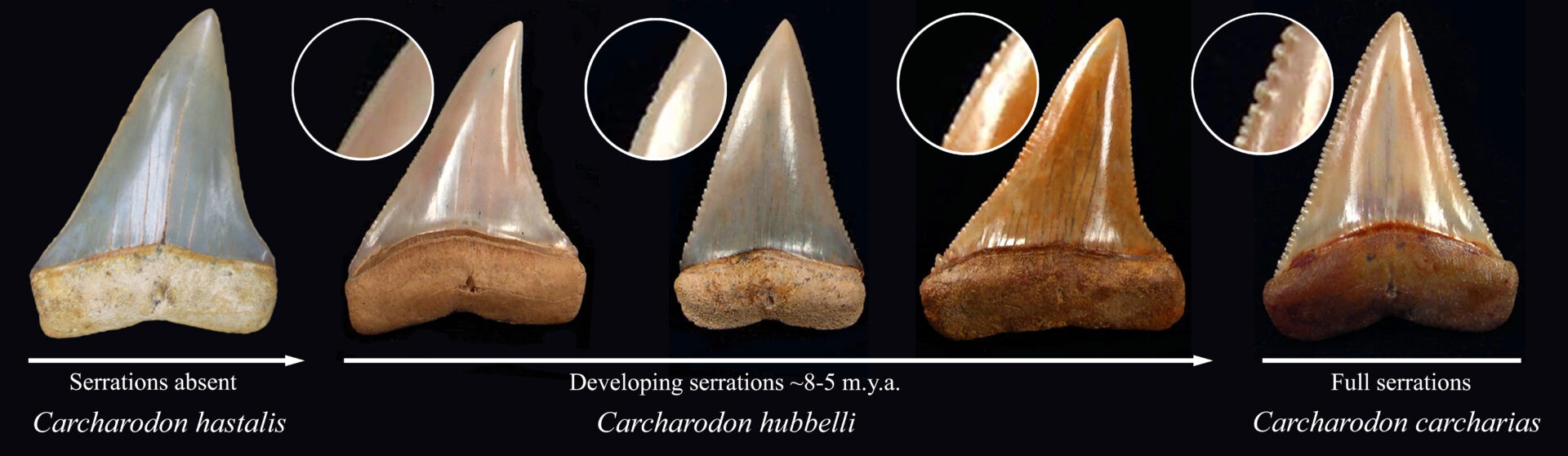
A popular notion holds that the great white shark is a direct descendant of the giant shark megalodon (Otodus megalodon, also formerly called Carcharodon megalodon). However, a 2006 study by Nyberg and colleagues analyzing the serration structure of fossil teeth found that great white shark teeth are more closely related to the broad-tooth mako lineage than to megalodon, and a transitional fossil, Carcharodon hubbelli, unearthed in Peru by Ehret and colleagues in 2012, showed a form intermediate between the mako ancestor and the modern great white. The exact genus assignment of megalodon is still debated, but the view that the great white is not megalodon’s direct descendant — having instead branched off from a separate lineage — is now the more prevailing one. This should be seen not as a refutation but as a process of classification becoming more refined as fossil evidence accumulates.
In Closing
The countercurrent heat exchanger quietly at work inside the great white shark is a design woven together down to every last blood vessel. This design isn’t confined to the great white alone — it appears again and again across the entire family Lamnidae, and even in tuna, an entirely separate lineage. This elegant structure that lets the shark swim with hot muscle through cold water shows once again the precision of design etched throughout the created world.
References
- NOAA Fisheries: White Shark
- Wikipedia: Lamnidae
- Wikipedia: Great white shark
- PMC10645071 — Regional endothermy in sharks
- Watanabe et al. 2015, PNAS 112(19):6104-6109
- Donley et al. 2004, Nature 429:61-65
- Goldman 1997, J. Comp. Physiol. B 167:423-429
- Carey et al. 1982, Copeia 1982(2):254-260
- Nyberg, Ciampaglio & Wray 2006, J. Vertebrate Paleontology 26(4):806-814
- Korean Wikipedia: Family Lamnidae (source for the standard Korean common name)