
On January 20, 1942, fifteen senior officials of Nazi Germany gathered at a villa on the shore of Lake Wannsee, southwest of Berlin. Over a working lunch, they divided among their ministries the task of “handling” roughly 11 million Jews across Europe. It is often said that the Holocaust “began” at this Wannsee Conference, but that is not true. By that day, hundreds of thousands had already been killed at gunpoint. The Holocaust was not the madness of one man or a single decision; it was a state-sponsored crime built up over years by laws, bureaucracy, and countless collaborators. Nazi Germany and its collaborators systematically murdered about six million European Jews.
Laws That Divided People by Blood
To understand the Holocaust, we first have to see why it targeted Jews. Nazi antisemitism went beyond religious prejudice; it was a theory of “race.” The Nazis defined Jews not as a matter of faith but as an “inferior and dangerous race.” Because it was a mark of blood that conversion could not wash away, it differed fundamentally from earlier religious persecution (USHMM).
After Hitler and the Nazi Party seized power in January 1933, persecution quickly put on the garb of law. The Nuremberg Laws, enacted in September 1935, are the clearest example. The Reich Citizenship Law stripped Jews of their German citizenship and reduced them to inferior “subjects,” while the Law for the Protection of German Blood and Honor banned marriage and sexual relations between Jews and non-Jews. Who counted as a “Jew” was decided not by belief but by the blood of one’s grandparents: anyone with three or more Jewish grandparents out of four was classified as a Jew (USHMM).
Violence soon spilled into the streets. On the night of November 9 to 10, 1938, an organized pogrom swept across Germany. In this event, known as Kristallnacht, the “Night of Broken Glass,” the Nazis burned more than 1,400 synagogues and smashed thousands of Jewish-owned shops, and they imprisoned about 26,000 Jewish men in concentration camps. Hundreds lost their lives in the process. It was the opening signal of state violence disguised as “the anger of the people” (USHMM).
The Guns Came First: Ghettos and the Mobile Killing Units
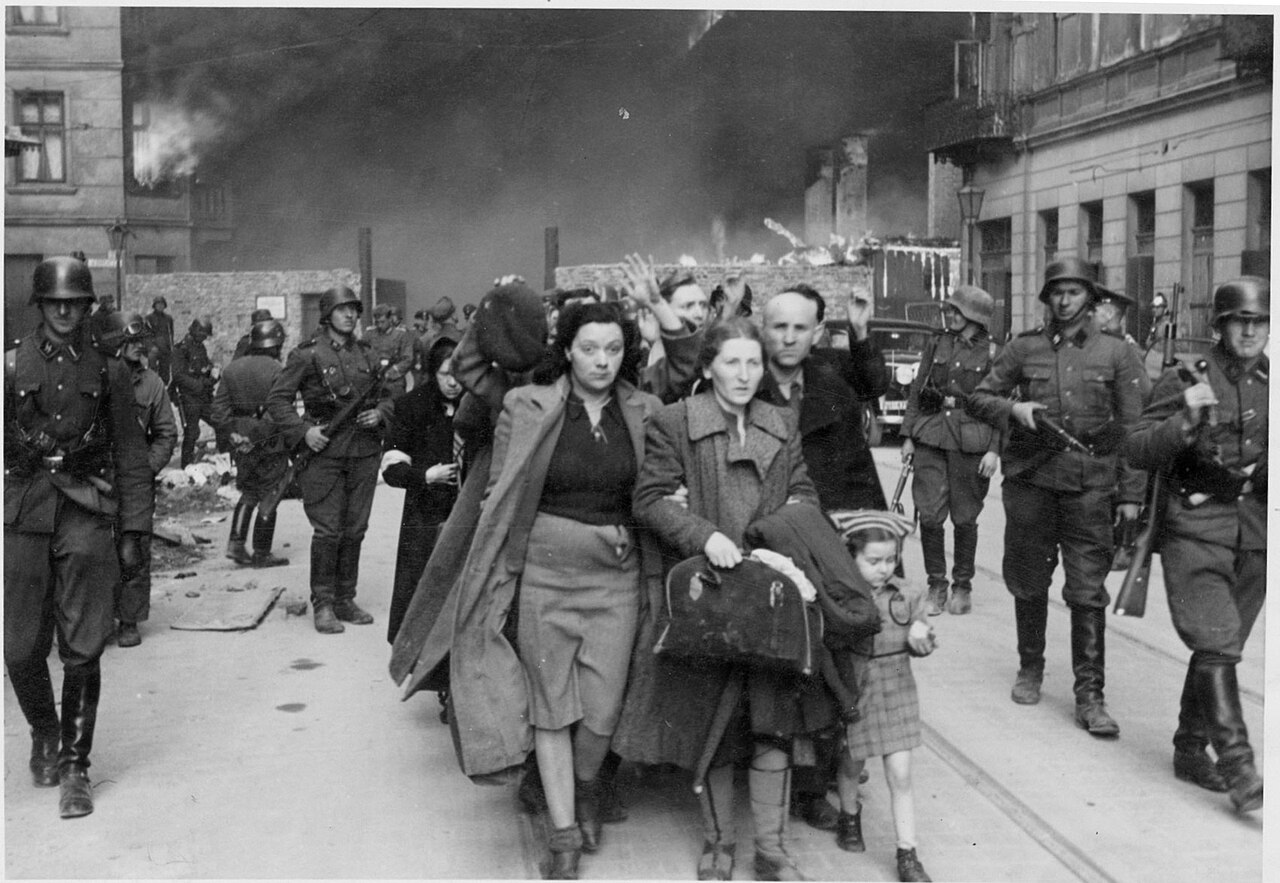
When the Second World War broke out, persecution crossed over into slaughter. In occupied Poland, the Nazis herded the Jews of cities such as Warsaw and Lodz into cramped, sealed-off districts, the ghettos. A ghetto was not a mere place of residence but a holding area where people were confined amid hunger and disease before being handed over to deportation and murder.
The decisive turn came with Germany’s invasion of the Soviet Union in June 1941. Following behind the invading army, the Einsatzgruppen, the mobile killing units, dragged Jews out of their towns across Eastern Europe, lined them up before pits, and shot them. About two million Jews were killed by these shootings alone. The first phase of annihilation, then, unfolded not in gas chambers but in fields at gunpoint (USHMM).
It was in January 1942, when such killing was already underway on a massive scale, that the Wannsee Conference was held. Chaired by Reinhard Heydrich, the meeting was convened to coordinate and expand the “Final Solution of the Jewish Question” aimed at Jews across all of Europe. To stress it again: the Wannsee Conference was not the beginning of the killing but an administrative meeting that systematized, for the whole of Europe, a slaughter already in progress. Many groups were victimized, but the people the Nazis sought to wipe out entirely across all of Europe were the Jews (USHMM).
When Death Became a Factory: The Killing Centers
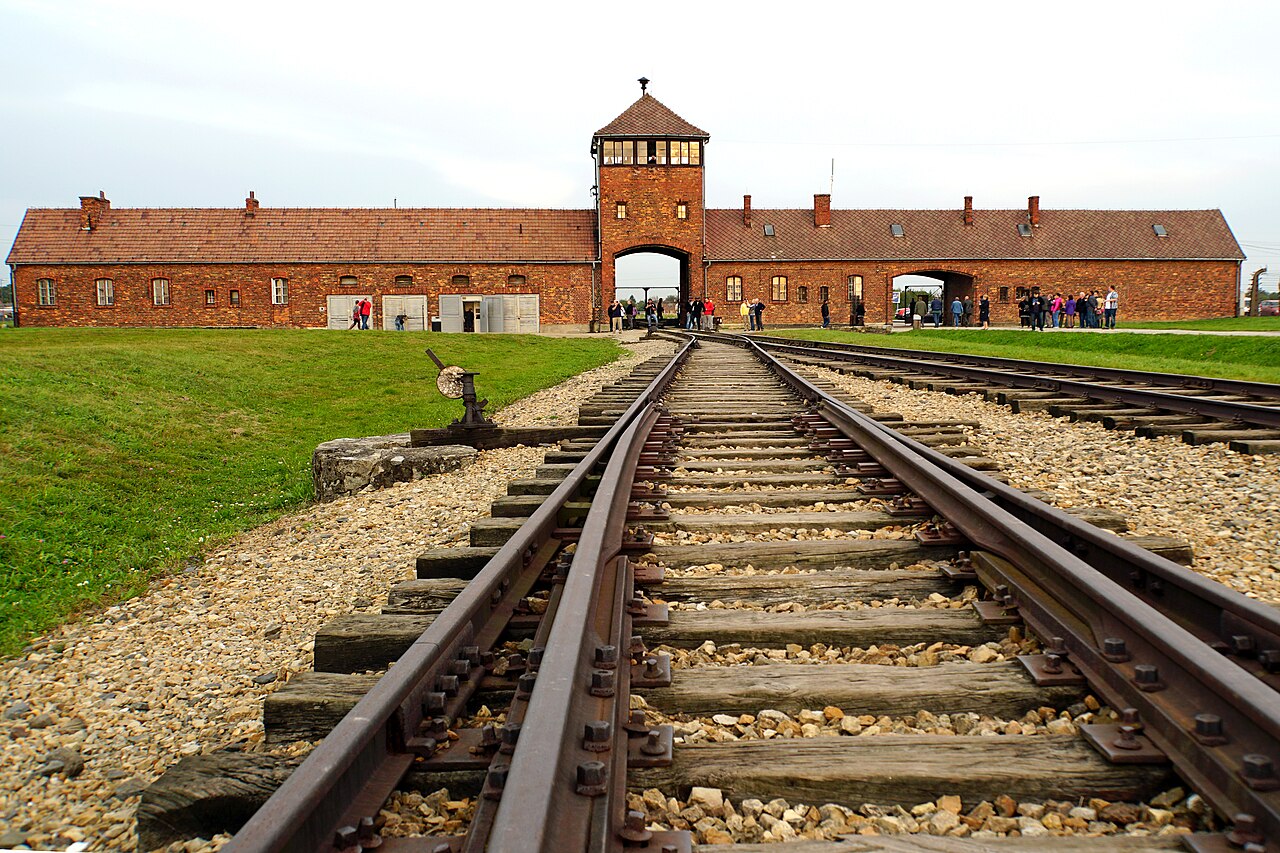
As the Final Solution was coordinated, the Nazis turned killing into a “process.” Though the terms are often blurred, concentration camps and killing centers differed in nature. A concentration camp was a facility for forced labor and detention, whereas a killing center was designed solely for mass murder. Chelmno, Belzec, Sobibor, Treblinka, and Auschwitz-Birkenau: at these five sites established in occupied Poland, about 2.7 million Jews were killed, mostly with poison gas (USHMM).
Among them, Auschwitz-Birkenau became the symbol of the Holocaust. About 1.1 million people lost their lives there, more than 90 percent of them Jews. Here one thing must be corrected. For a long time the figure of “four million dead at Auschwitz” circulated, but that was an exaggeration from a plaque of the old Soviet era; the figure confirmed today by the museum and by scholars is about 1.1 million (Auschwitz-Birkenau Museum).
On January 27, 1945, when the Soviet army reached Auschwitz, only a few thousand utterly emaciated prisoners remained. Facing imminent defeat, the Nazis had already forced the prisoners westward in “death marches” and, to destroy the evidence, had blown up the gas chambers and crematoria (Auschwitz-Birkenau Museum).
The People Behind the Numbers
When we speak of the Holocaust, numbers call for the greatest care. The exact figure can never be established, but studies put the number of Jews murdered at about six million. That is a scale in which two of every three Jews who had lived in prewar Europe vanished (USHMM).
Jews were not the only victims. The Nazis and their collaborators killed about 3.3 million Soviet prisoners of war and about 1.8 million Polish civilians, and they persecuted and murdered many other groups, including between 250,000 and 500,000 Roma, between 250,000 and 300,000 people with disabilities under a so-called “euthanasia” program, and about 1,700 Jehovah’s Witnesses (USHMM). These numbers are not statistics but individual people, each with a name, a face, and a story, each created in the image of God.
Those Who Resisted Nonetheless
Even in despair, there was resistance. The best known is the Warsaw Ghetto Uprising, which lasted from April 19 to May 16, 1943. When the Nazis tried to deport the remaining Jews to a killing center, young people led by the Jewish Combat Organization took up arms. A few hundred fighters, led by twenty-three-year-old Mordecai Anielewicz, held out for nearly a month against heavily armed German forces. It was a fight with neither weapons nor hope of victory, yet it was the first large-scale urban uprising in Nazi-occupied Europe (USHMM).
Resistance was not only armed struggle. People smuggled food into the ghettos, secretly buried documents and records that would one day testify to the truth, and slipped children over the walls to hide them. In that same year, 1943, prisoners also rose up at the Treblinka and Sobibor killing centers, and some escaped. These were struggles to hold on to dignity in the very midst of death.
Judgment, and Memory
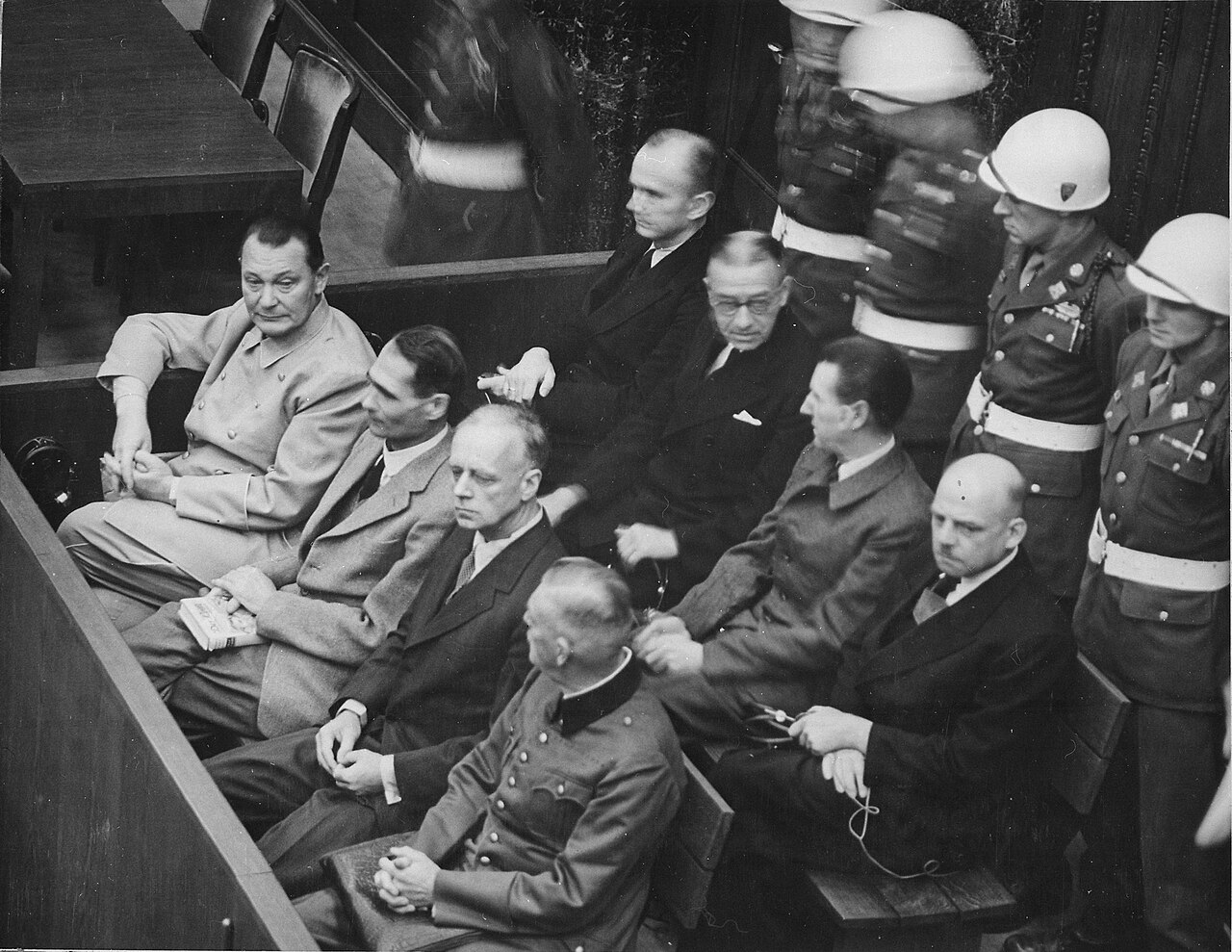
After Nazi Germany collapsed in May 1945, the world asked how to judge this crime. From November of that year to October of the next, the International Military Tribunal was held in Nuremberg, Germany. This court, established jointly by the United States, Britain, the Soviet Union, and France, tried twenty-two major war criminals and sentenced twelve of them to death. In October 1946, many of those found guilty met their end on the gallows. This trial, in which an international court judged crimes against humanity committed by a state, became a landmark of international law (USHMM).
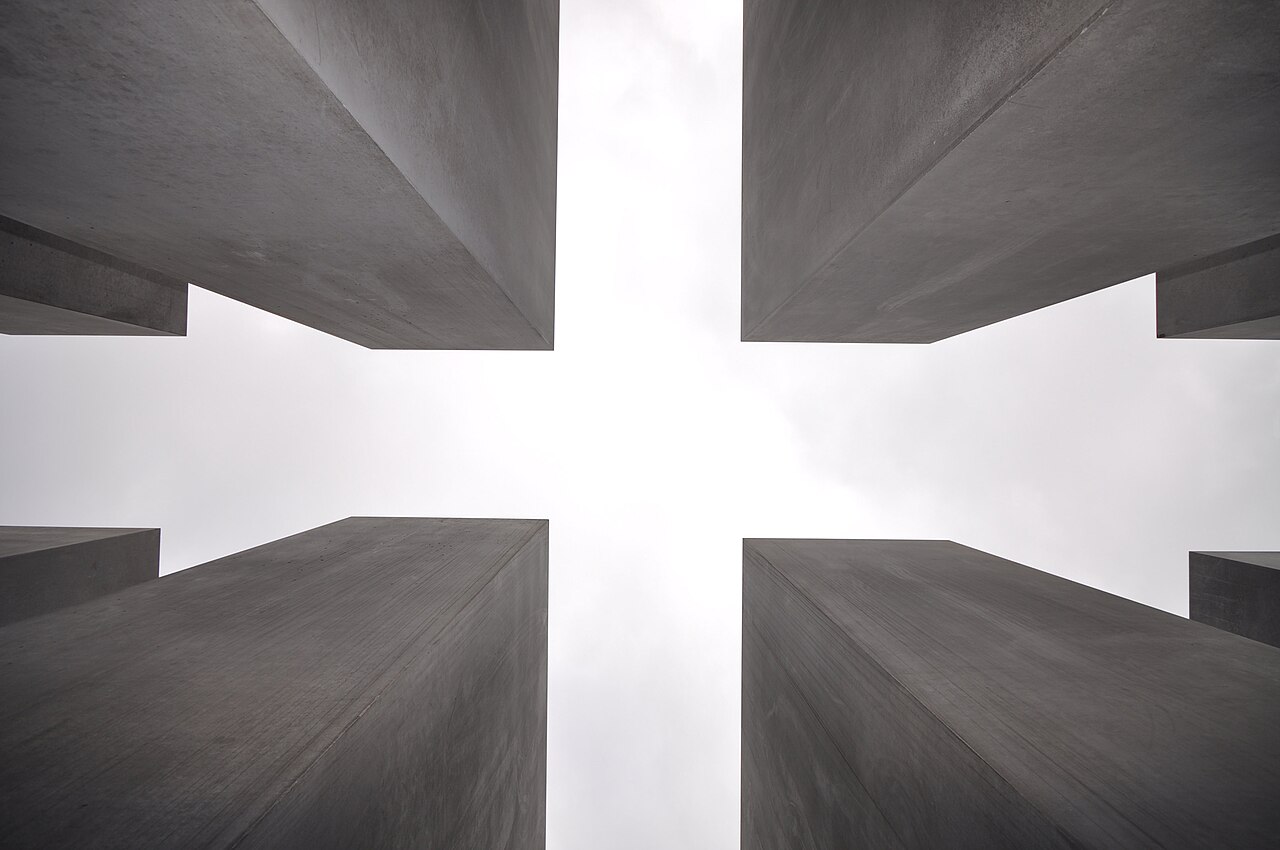
Today, January 27, the day Auschwitz was liberated, is observed as International Holocaust Remembrance Day. Institutions of research and memory around the world, including Yad Vashem in Jerusalem and the United States Holocaust Memorial Museum in Washington, have documented this event with vast archives, testimony, and physical evidence. In the face of such firm evidence, Holocaust denial, which claims “there were no gas chambers” or seeks to minimize the number of victims, is not a historical viewpoint but plain distortion.
In the end, the question the Holocaust leaves us is about human beings: how ordinary laws, bureaucrats, and neighbors come to take part in the mass murder of people each created with dignity. To remember is not merely to mourn the dead but to keep alive the resolve that it must never happen again.
References
- USHMM, “Introduction to the Holocaust”
- USHMM, “Documenting Numbers of Victims of the Holocaust and Nazi Persecution”
- USHMM, “The Nuremberg Race Laws”
- USHMM, “Kristallnacht”
- USHMM, “The Wannsee Conference and the Final Solution”
- Auschwitz-Birkenau Museum, “The Number of Victims”
- USHMM, “The Warsaw Ghetto Uprising”
- USHMM, “International Military Tribunal at Nuremberg”