
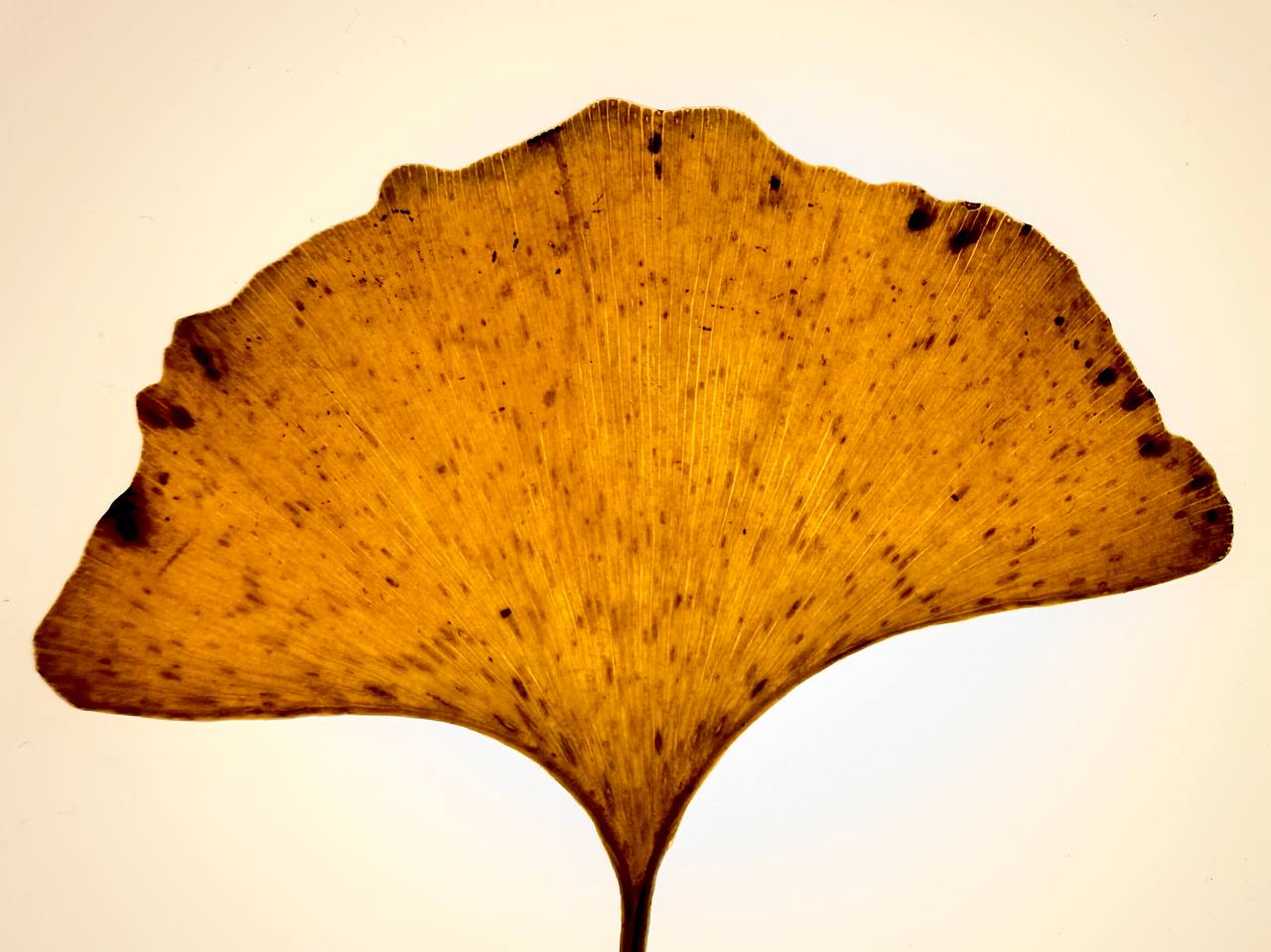
Every autumn, golden fan-shaped leaves carpet the streets. We pass these roadside trees without a second glance, yet a single one of them is the last survivor of an almost unimaginably ancient lineage that reaches back before the dinosaurs ever appeared. The ginkgo leaves we tread on each year are, in fact, the leaves of a “living fossil” that has scarcely changed its form in over 200 million years.
Fargoh · CC BY-SA 4.0 · Wikimedia Commons · Source
Leaves That Endured 200 Million Years — A Sole Survivor
The oldest fossil record of the Ginkgoales, the order to which the ginkgo belongs, reaches back to the genus Trichopitys, found in earliest Permian strata in France (about 299–293 million years ago). This lineage flourished from the Permian through the Triassic, once forming a diverse group of some fifteen genera.
But at the end of the Cretaceous, as flowering plants (angiosperms) rapidly took over the world, nearly all members of the Ginkgoales vanished. The only one to survive to the present day is a single species, the ginkgo (Ginkgo biloba). It is the sole living species across its class, order, family, and genus, standing alone to represent the entire plant division Ginkgophyta. Few organisms are so taxonomically isolated.
Daderot · CC0 · Wikimedia Commons · Source
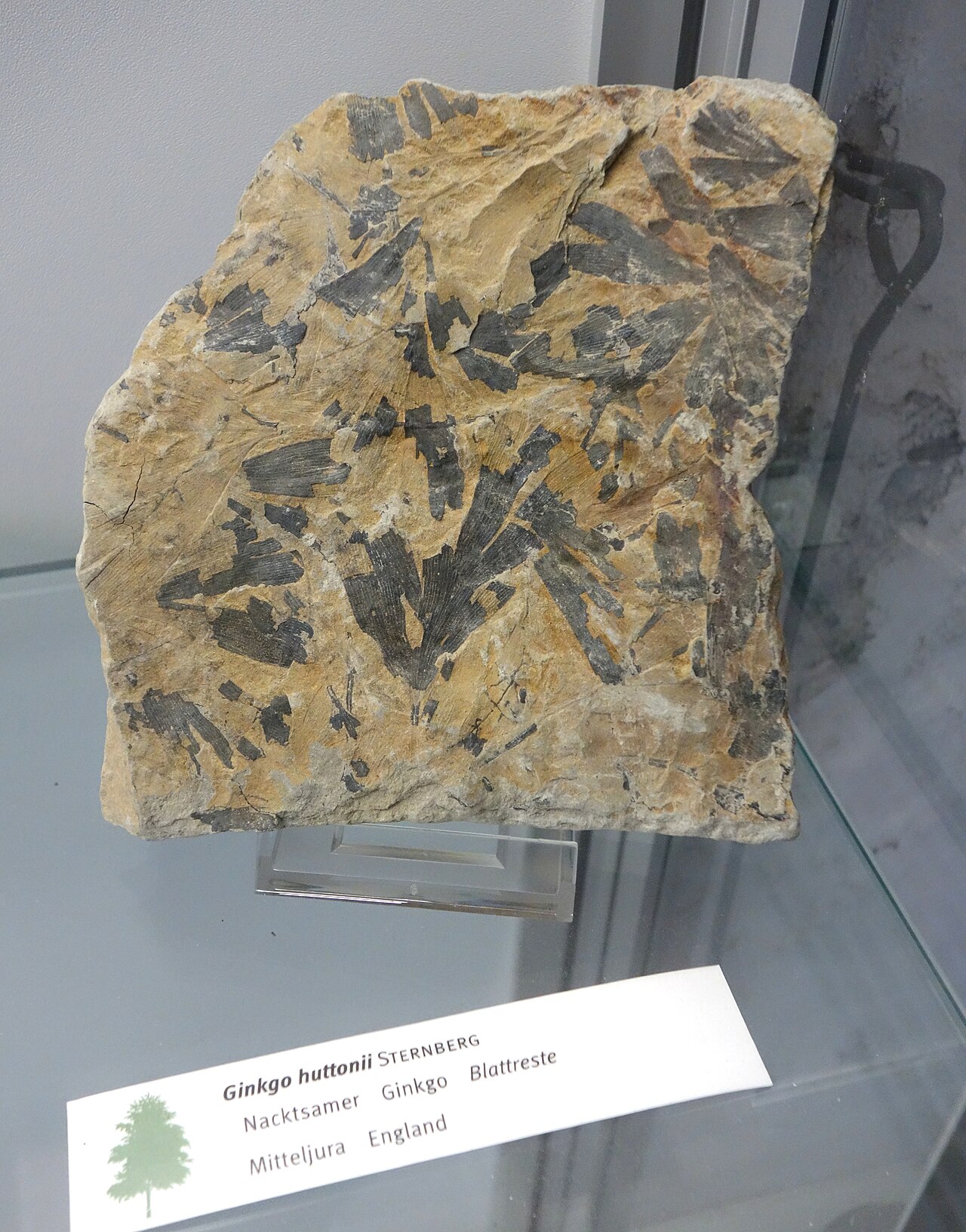
The phrase “living fossil” is no exaggeration, and the proof is in the leaves. The fossil leaves of Ginkgo huttonii, found in abundance in Jurassic strata in Yorkshire, England, show a simple four-lobed structure and radiating venation that clearly resemble modern ginkgo leaves. The leaves of Ginkgo adiantoides, which remained in the Northern Hemisphere around the Paleocene, are virtually indistinguishable from today’s ginkgo leaves. This long morphological stasis, confirmed by the fossil record — the fact that the leaf’s form has scarcely changed for at least 200 million years — is the very reason the ginkgo is regarded as the quintessential “living fossil.”
It is not only the leaves that have stayed the same. Twenty ginkgophyte seedling fossils excavated from Middle Triassic sandstone in France (about 240 million years ago) matched modern ginkgo even in their germination and the developmental pattern of their young shoots. Even the way the seed sprouts has carried on unchanged since the Mesozoic.
Fan-Shaped Leaves and Dichotomous Veins — A Gymnosperm Apart
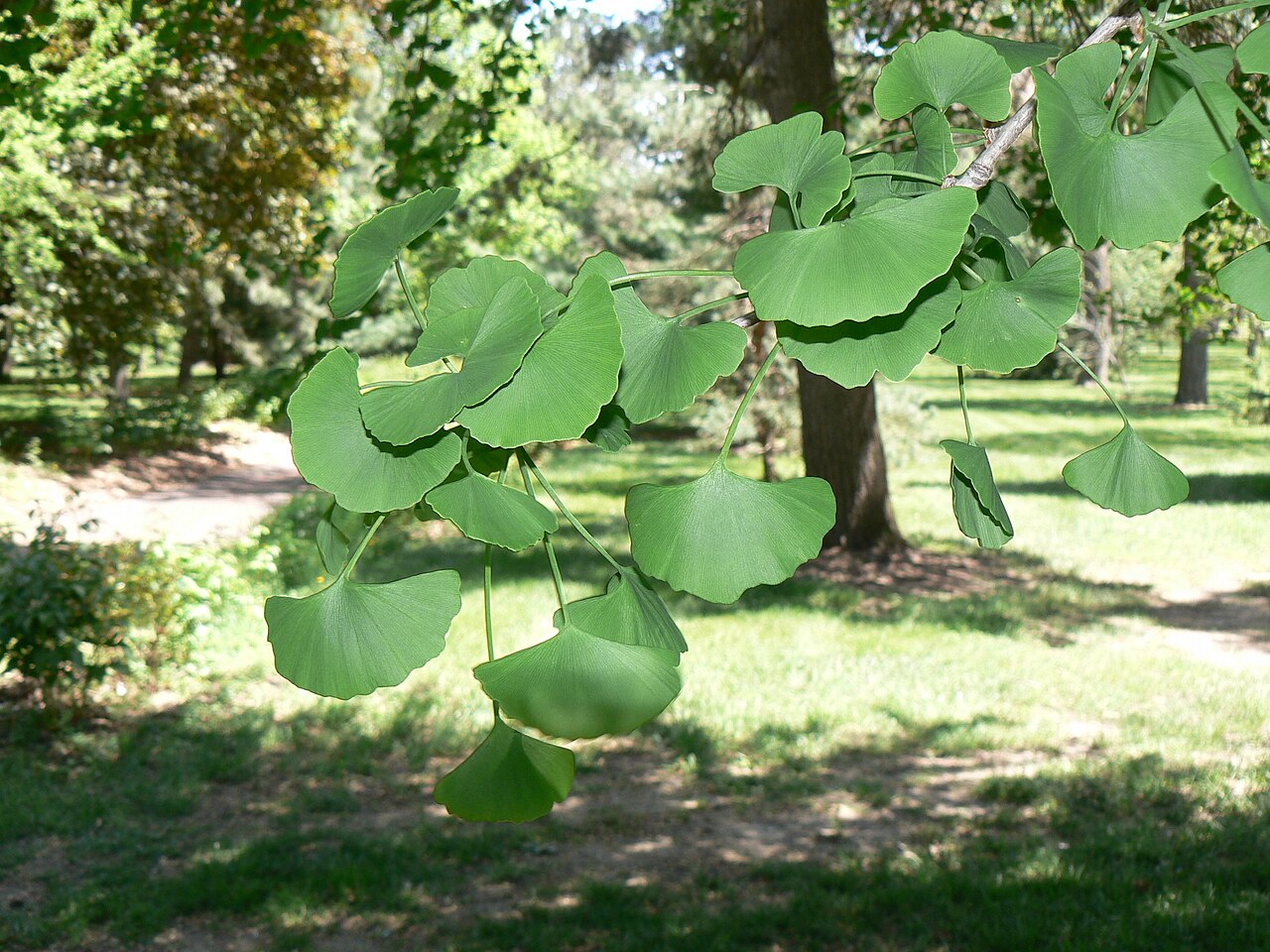
Look closely at a ginkgo leaf and you will see the veins begin at a single point and repeatedly fork in two. This is called dichotomous (forking) venation. These veins never meet again to form a net, and such pure dichotomous venation is a feature that appears distinctly only in the ginkgo among living seed plants.
MONGO · Public domain · Wikimedia Commons · Source
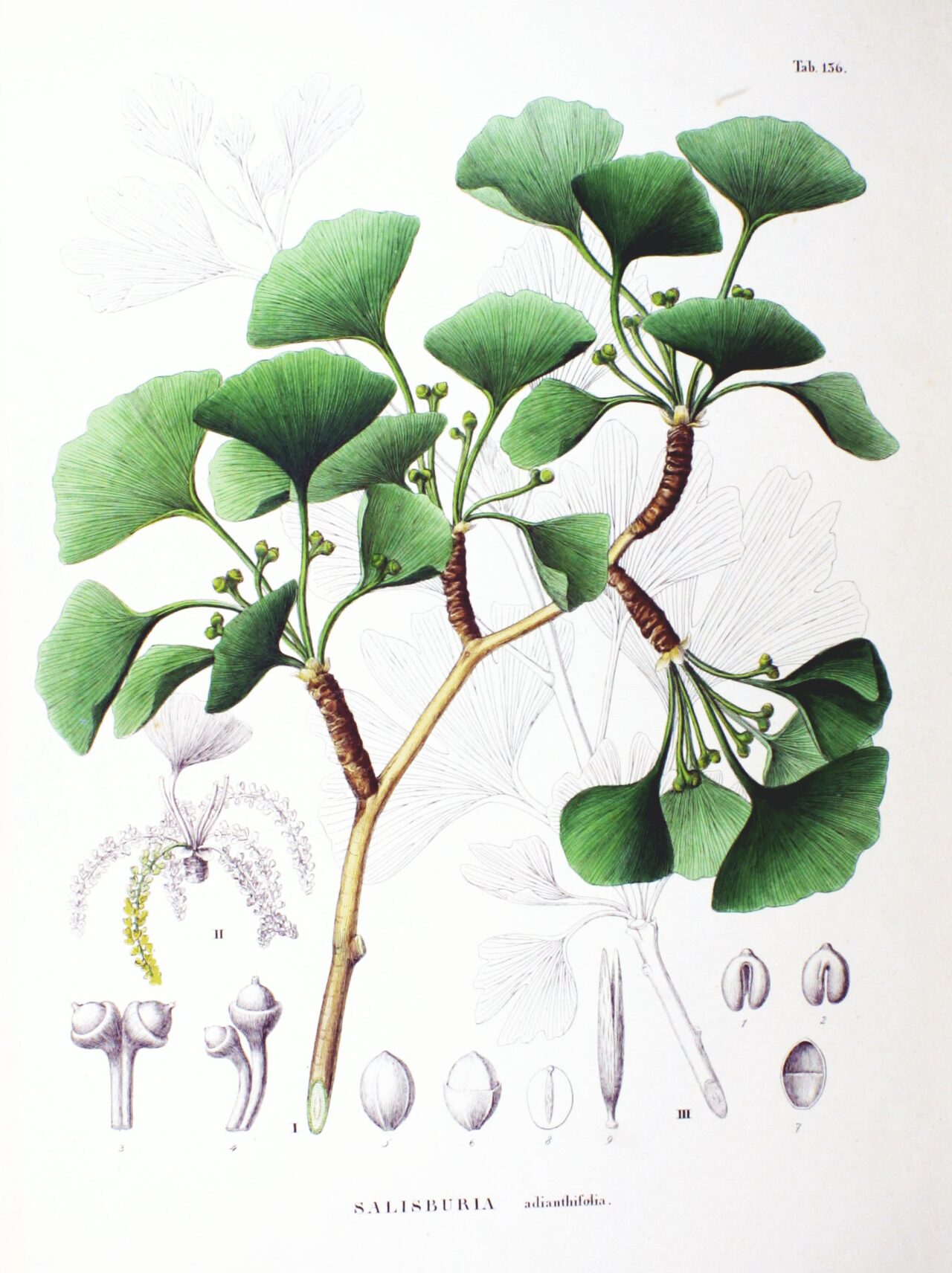
The ginkgo is a gymnosperm, with seeds borne exposed, yet it belongs to its own group, distinct from the conifers, cycads, and gnetophytes. Different from both the needles of conifers and the pinnate leaves of cycads, this fan-shaped leaf is the last testimony of a lineage that vanished long ago. The leaves and reproductive organs of the ginkgo were also recorded in precise plates in the Flora Japonica, published in the 19th century by Philipp Franz von Siebold and Zuccarini.
Philipp Franz von Siebold and Joseph Gerhard Zuccarini · Public domain · Wikimedia Commons · Source
Swimming Sperm and a Seed That Is Not a Fruit
The ginkgo’s mode of reproduction bears deep traces of ancient plants. The ginkgo is dioecious — male trees form pollen cones, while female trees form two ovules at the tip of a stalk. And in 1896, Sakugoro Hirase (平瀬作五郎) of the University of Tokyo became the first in the world to discover, in a ginkgo ovule, motile sperm that swim with flagella.
This sperm is ringed with about 1,000 flagella and reaches 250–300 micrometers in size — utterly unlike human sperm with its single tail. Among living seed plants, only the ginkgo and the cycads possess such swimming sperm. The ginkgo still preserves, within its seed, the ancient method by which sperm once swam through water to fertilize.
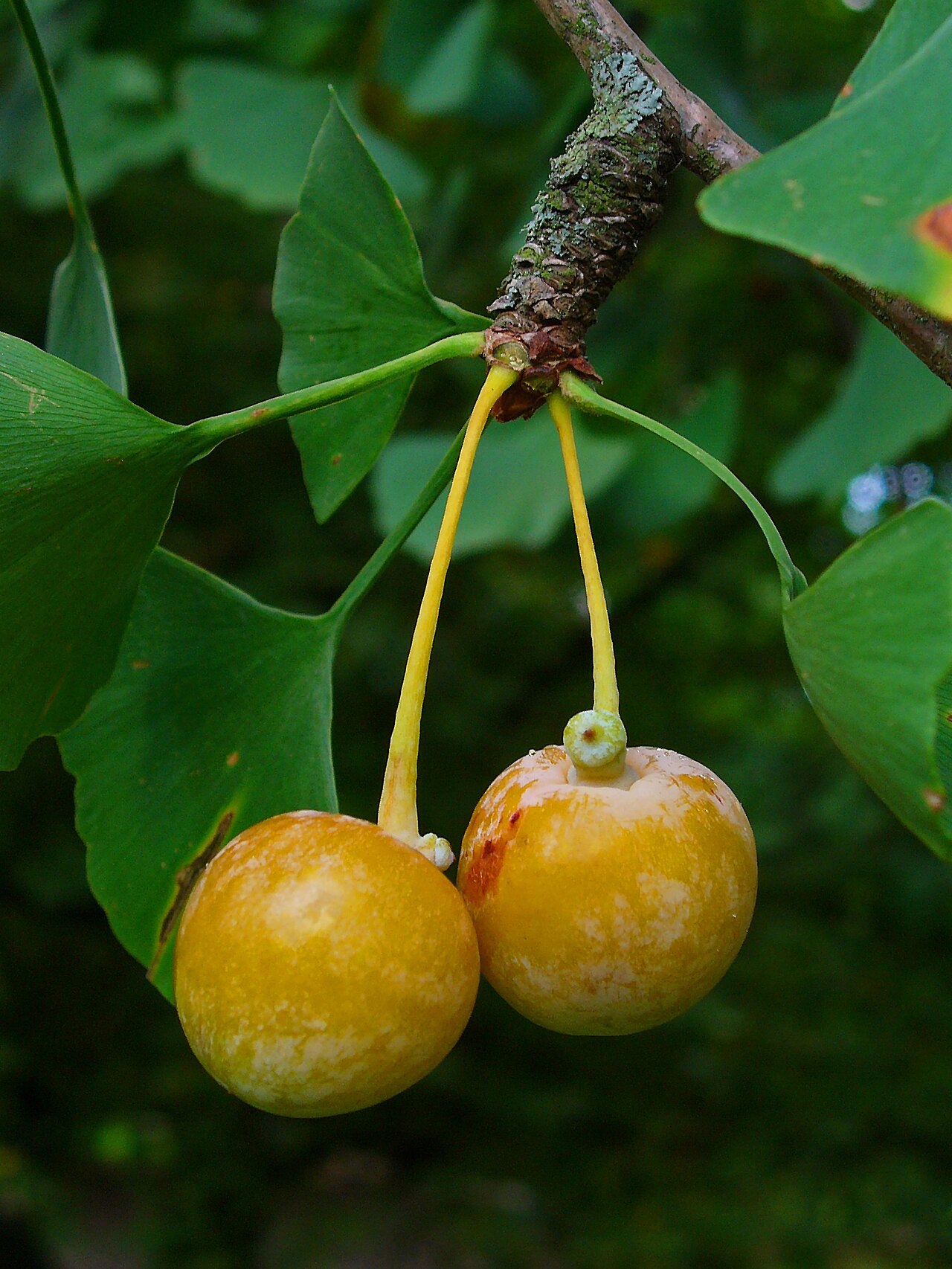
Even the yellow autumn balls commonly called “ginkgo fruit” are not an accurate term. As a gymnosperm, the ginkgo has no ovary and so bears no true fruit. That yellow structure is botanically a seed, not a fruit, made of a soft outer coat (sarcotesta) and a hard inner shell (sclerotesta).
H. Zell · CC BY-SA 3.0 · Wikimedia Commons · Source
The source of that intense stench wafting from the streets each autumn is the butyric acid in the outer coat — the same compound responsible for the smell of rancid butter or vomit. The nutritive tissue inside the seed (the female gametophyte in gymnosperms), on the other hand — the “ginkgo nut” we eat — turns translucent when heated and is edible. Eating too many, however, can cause poisoning from ginkgotoxin (4′-O-methylpyridoxine), so children in particular should be careful not to eat too much.
A Tree That Endures a Thousand Years, Surviving Alongside People
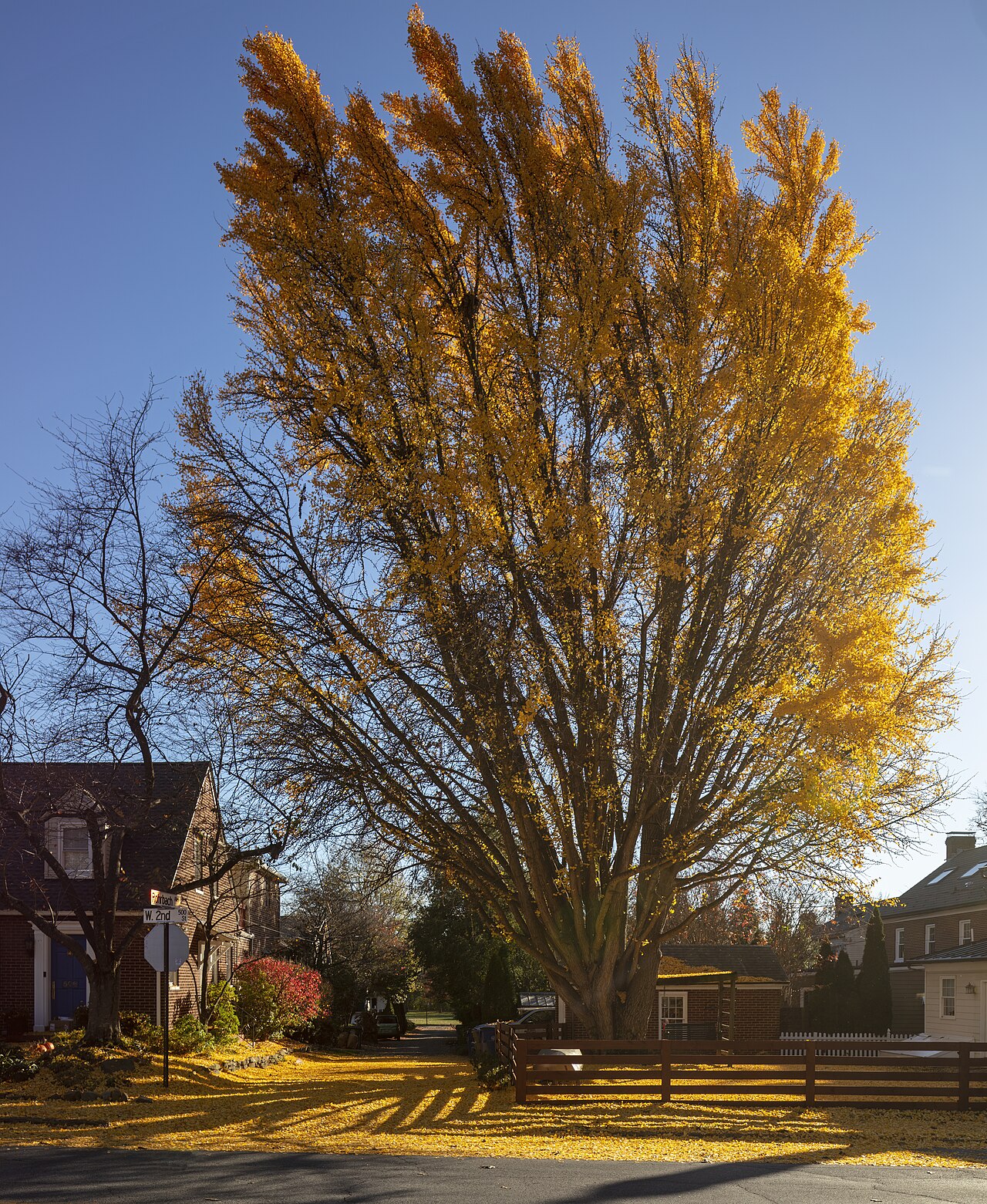
The name eunhaeng (銀杏) means “silver apricot.” The seed resembles an apricot, and its surface is covered with a silvery white powder — hence the name. Another nickname, gongson-su (公孫樹), captures the tree’s slow sense of time: it takes about 30 years to bear seeds, so a grandfather who plants it will see fruit only in his grandchild’s generation. The scientific name Ginkgo arose in 1712 when the German physician Engelbert Kaempfer mistranscribed the Japanese word “ginkyo” into the Latin alphabet, and Linnaeus later adopted it as is, fixing it as the official name.
Acroterion · CC BY-SA 4.0 · Wikimedia Commons · Source
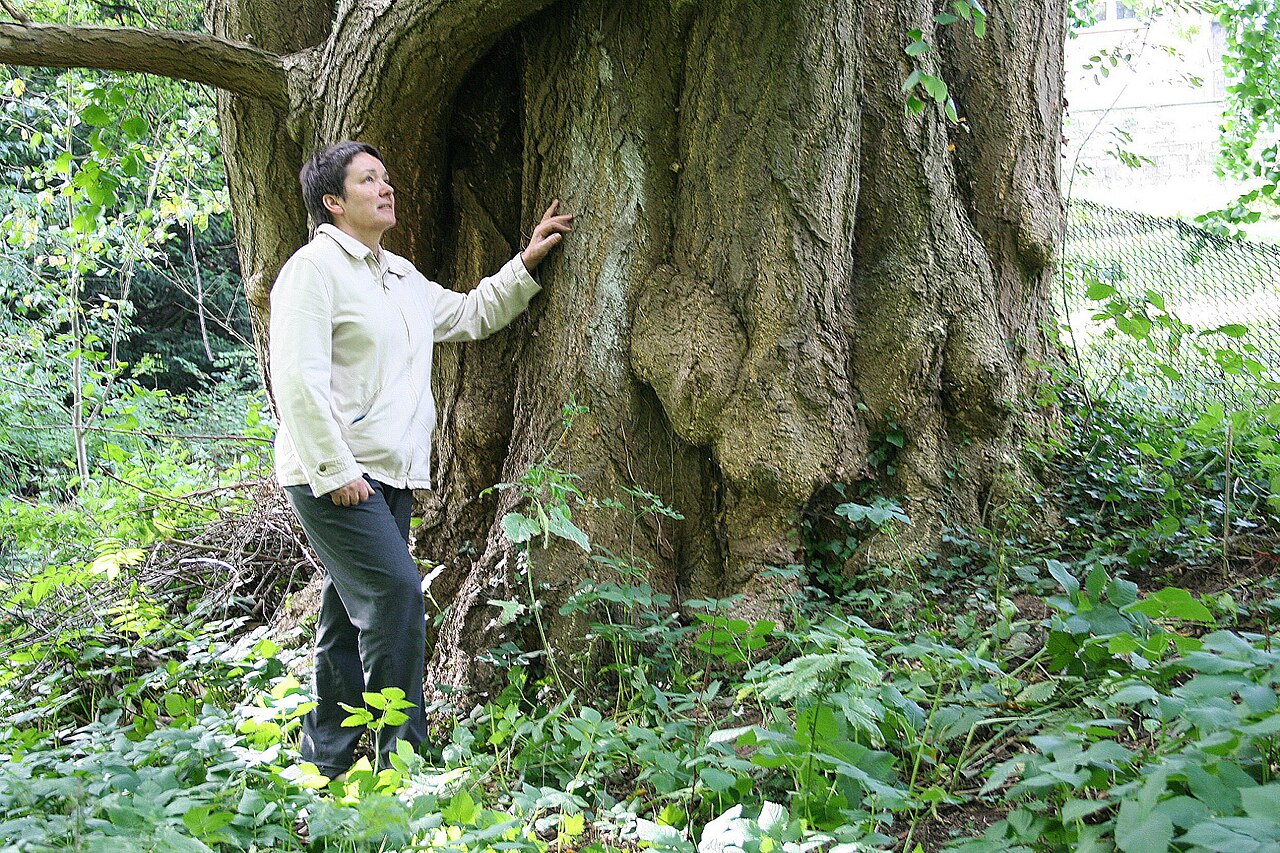
Slow to grow, the ginkgo lives long. The ginkgo at Yongmunsa Temple in Yangpyeong, Gyeonggi Province (Natural Monument No. 30) is estimated to be about 1,100 years old, 38.8 m tall, with a base circumference of 14 m — the largest and tallest ginkgo in Korea. There is even a story that it was granted a senior court rank (Dangsang, junior third rank) during the reign of King Sejong of Joseon. Standing before a giant that has endured a thousand years in one place, you feel the weight of time itself.
Jean-Pol GRANDMONT · CC BY 3.0 · Wikimedia Commons · Source
The ginkgo’s vitality has shone even amid the most extreme ordeals. When the atomic bomb fell on Hiroshima in 1945, six ginkgo trees within about 1,130–2,160 m of the hypocenter endured the intense heat and radiation and survived. Having put out new buds the following spring, these trees are called “symbols of hope” (hibakujumoku).
And yet this seemingly common tree is in fact listed as an endangered species on the IUCN Red List. Truly wild populations remain only in a few small areas, such as the Dalou (大婁) Mountains of southwestern China or Tianmu Mountain (天目山) in Zhejiang Province. The 244 semi-wild ginkgos of Tianmu Mountain grow in natural habitats like steep rock faces and cliff edges, yet it is hard to rule out that Buddhist monks planted them near the temple about 1,000 years ago, so whether they are truly wild remains debated. A 2019 study in Nature Communications analyzing 545 genomes identified three glacial refugia within China and revealed genetically that human religious and cultural practices contributed decisively to the ginkgo’s spread and survival.
Crusier · CC BY-SA 3.0 · Wikimedia Commons · Source
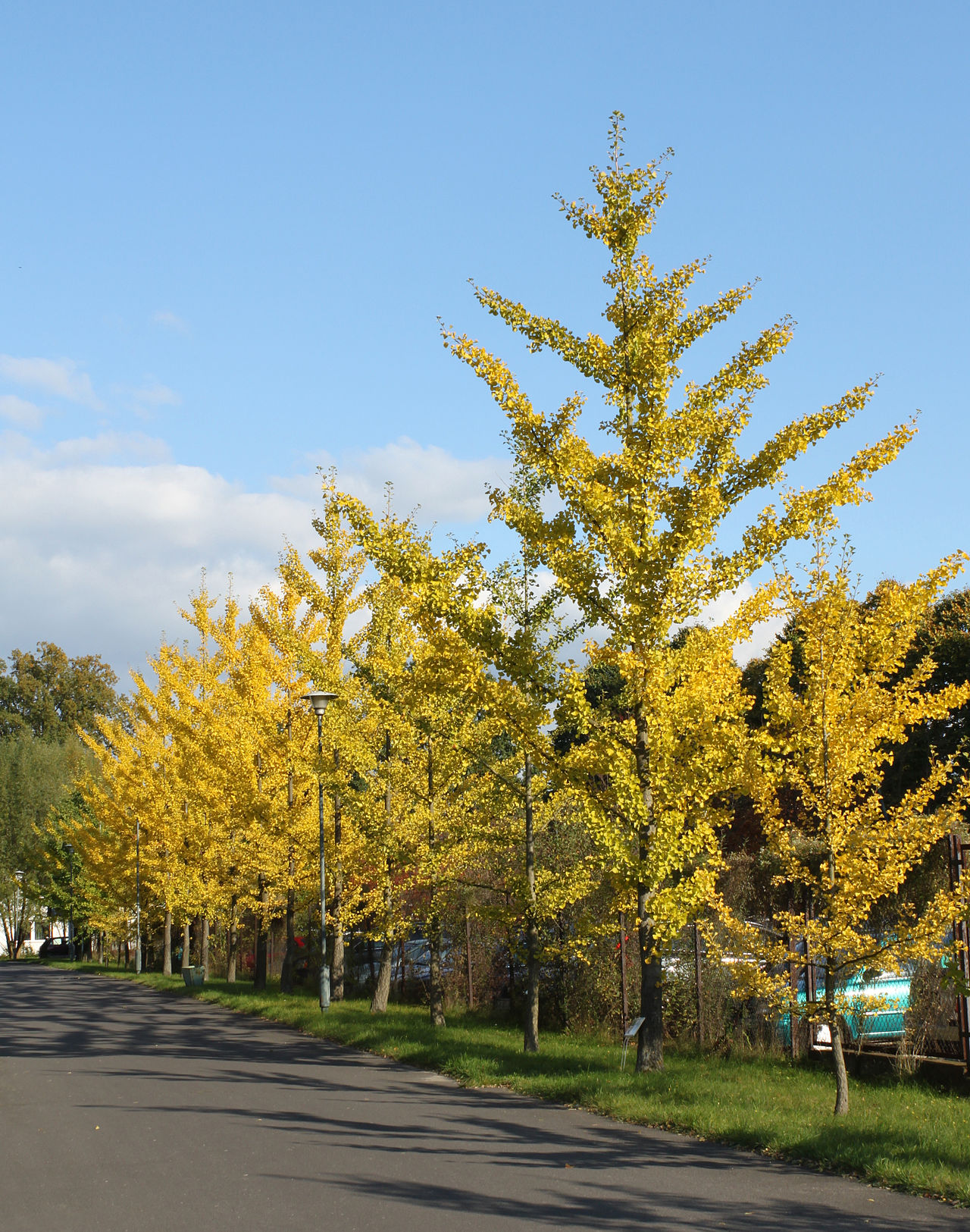
The ginkgos that fill city streets today were all propagated by people. With an outstanding ability to withstand pollution and heavy metals, giving off compounds that insects avoid and so resisting pests, and offering shade, scenery, and durability all at once, cities around the world have chosen it as a street tree. That a tree nearly gone from the wild has become the most common sight on our streets is the result of a long companionship in which humans and tree saved each other.
A Design That Endured Time
The ginkgo shows us two things at once. One is a “design that endured time,” surviving more than 200 million years almost unchanged; the other is the fact that human hands carried that life — imperiled in the wild — from street to street. In a single golden leaf that piles at our feet each autumn lie both the memory of unfathomably deep geological ages and a thousand-year story of living alongside people. To be able to look closely at a life so deep and ancient is a quiet wonder that the created world offers us.
References
- Ginkgoales – Wikipedia
- Ginkgo biloba – Wikipedia
- Ginkgo huttonii – Wikipedia
- Fossil Record of the Ginkgoales – UCMP Berkeley
- Fossil ginkgophyte seedlings from the Triassic of France resemble modern Ginkgo biloba – PMC
- Resequencing 545 ginkgo genomes reveals the evolutionary history of the living fossil – Nature Communications
- Evidence for the persistence of wild Ginkgo biloba populations in the Dalou Mountains – PubMed
- The Swimming of the Ginkgo Sperm – Arnold Arboretum, Harvard University
- Yangpyeong Yongmunsa Ginkgo Tree – Wikipedia (Korean)
- A-bombed Ginkgo trees in Hiroshima, Japan