
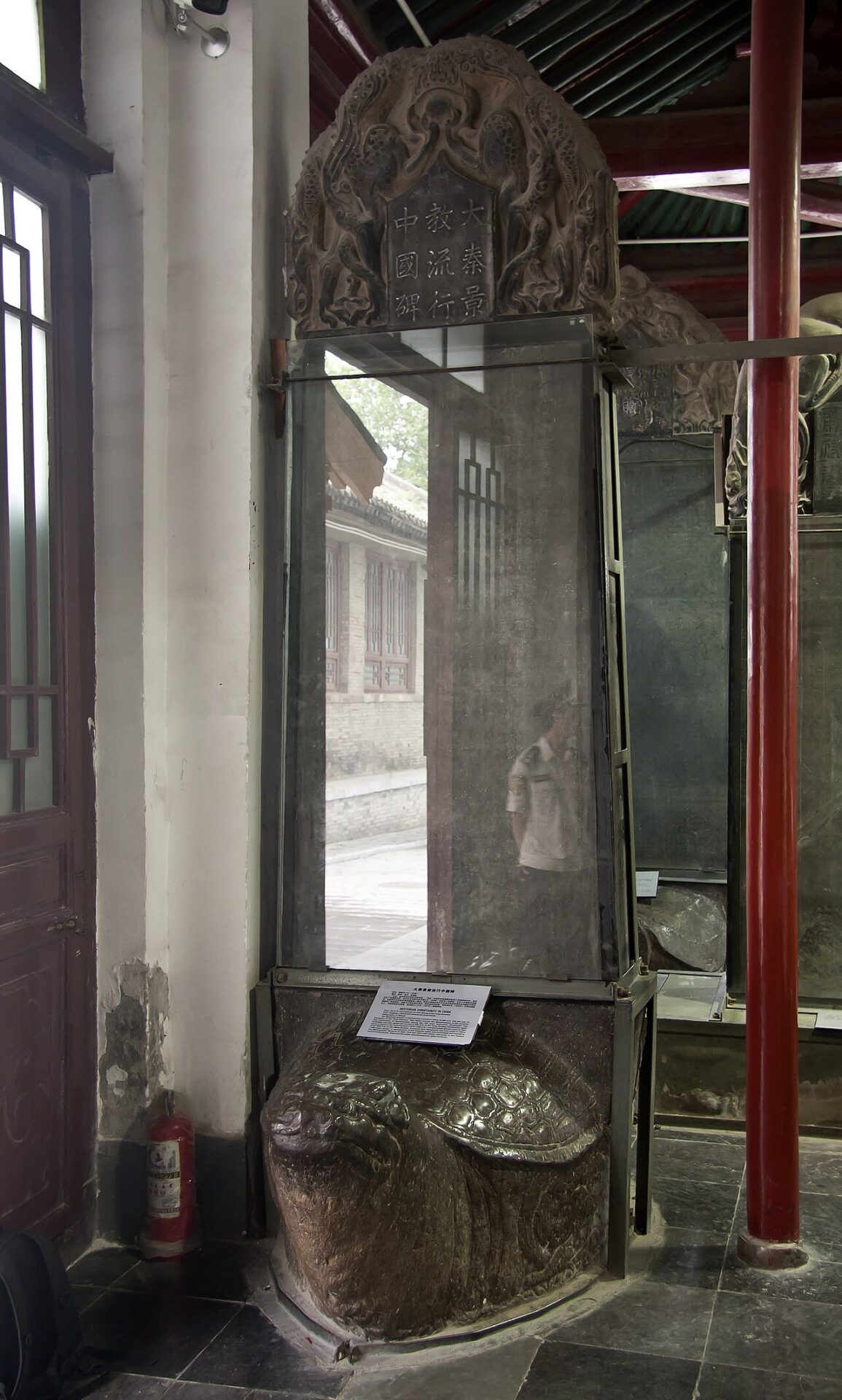
The Xi’an Jingjiao stele, preserved in the Beilin Museum in China, was erected in 781. Its Chinese and Syriac inscriptions include an account of Alopen’s arrival in Chang’an in 635. Yet the event in 635, its recording in 781, and the stone’s rediscovery in the seventeenth century belong to different moments. Keeping them separate helps us see both what the monument establishes and what it cannot tell us.
Start by separating three dates
| Date | What happened? | How to read it |
|---|---|---|
| 635 | Alopen’s arrival in Chang’an, as reported by the inscription | A retrospective account in the 781 inscription, rather than a record written on the spot that year. |
| 781 | Erection of the stele in Jianzhong year 2 | The date of the monument itself, 146 years after 635. |
| 1623 or 1625 | Rediscovery in the late Ming period | Both dates appear in scholarly institutional descriptions. Neither tells us when the stone was buried. |
The Beilin Museum dates the monument to 781. ISEAS’s description of Paul Pelliot and Antonino Forte’s study gives its rediscovery as 1623 or 1625. It is more accurate to preserve both the firm date of production and the variation in discovery accounts than to present the two discovery dates as one settled date.
A sentence you can locate in the inscription
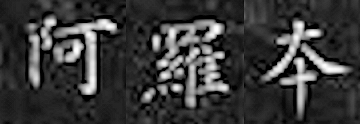
The Chinese text includes 「貞觀九祀至於長安」: “arrived in Chang’an in Zhenguan year nine.” That reign year corresponds to 635. It continues with the translation and examination of scriptures under imperial authority, an edict dated to Zhenguan year twelve, or 638, and an account of a monastery and twenty-one monks. These passages can be compared with the Chinese text on PDF page 4 of L. Eccles and S. N. C. Lieu’s text and translation.
The wording of our own account matters. Saying only “this happened in 635” hides the gap between event and record. Saying “the inscription of 781 reports the arrival in 635” makes the source’s character visible. That does not make a later account worthless. It is valuable evidence of how the community remembered its beginnings and presented them publicly.
The inscription’s information and its purpose
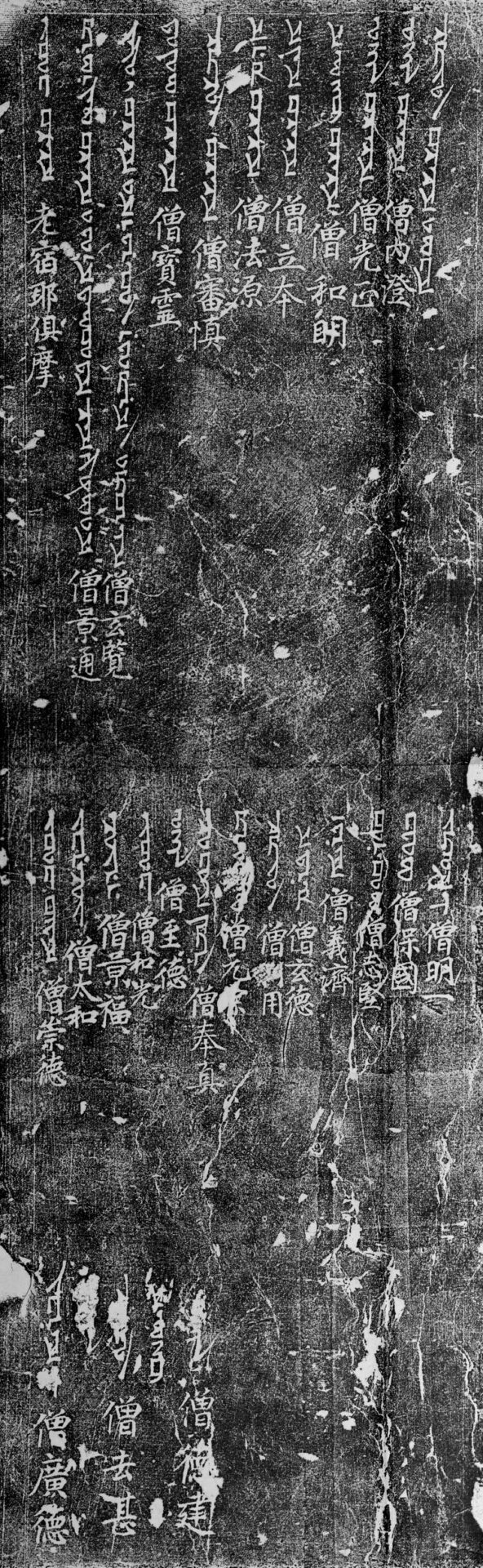
The text was composed by Jingjing (景淨), known in Syriac as Adam; Lü Xiuyan (呂秀巖) supplied the calligraphy. The museum description and inscription’s signatures distinguish their roles. Its explanation of the faith is followed by praise for imperial patronage and the community’s achievements. It is both a record of people and dates and a text intended to honour support and commend the faith.

| What the monument can establish | What one monument cannot settle |
|---|---|
| A community recording its history in Chinese and Syriac in 781 | The exact number of Christians across Tang China |
| An account of an arrival in 635 and an edict in 638 | Independent confirmation of every detail in that account |
| Language emphasizing imperial support and the faith’s value | A conclusion that all of society shared that assessment |
| The surviving stone and later rubbings and printed versions | The date and reason for burial, or the full continuity of the faith afterward |
Cross and lotus: where observation meets interpretation
The headpiece bears a cross together with lotus and cloud motifs. The University of Washington’s description of a Seattle Art Museum rubbing also discusses a particular scholar’s symbolic reading. The presence of a motif and an explanation of its intended meaning are different kinds of evidence. We can consider how readers familiar with Buddhism or Daoism might have understood it, but this design alone cannot establish either doctrinal fusion or triumph over other religions.
“Daqin” (大秦) is also difficult to read as though it were a modern nationality. The Beilin Museum explains it as an old Chinese designation for the Eastern Roman Empire. Its appearance in the title does not establish Alopen’s birthplace, nationality or every stop on the road to Chang’an. Here the emphasis is on a faith being presented in the Chinese language of its time, without claiming to reconstruct an exact itinerary.

Can rediscovery tell us how long it was buried?
There is a missing link between the stone’s reappearance in the seventeenth century and the claim that it spent “about 780 years underground”: the date of burial. The text of 781 cannot record the circumstances of its own later burial. Accounts connect it with religious suppression under Emperor Wuzong, but subtracting an assumed burial date from a rediscovery date does not produce a verified duration.
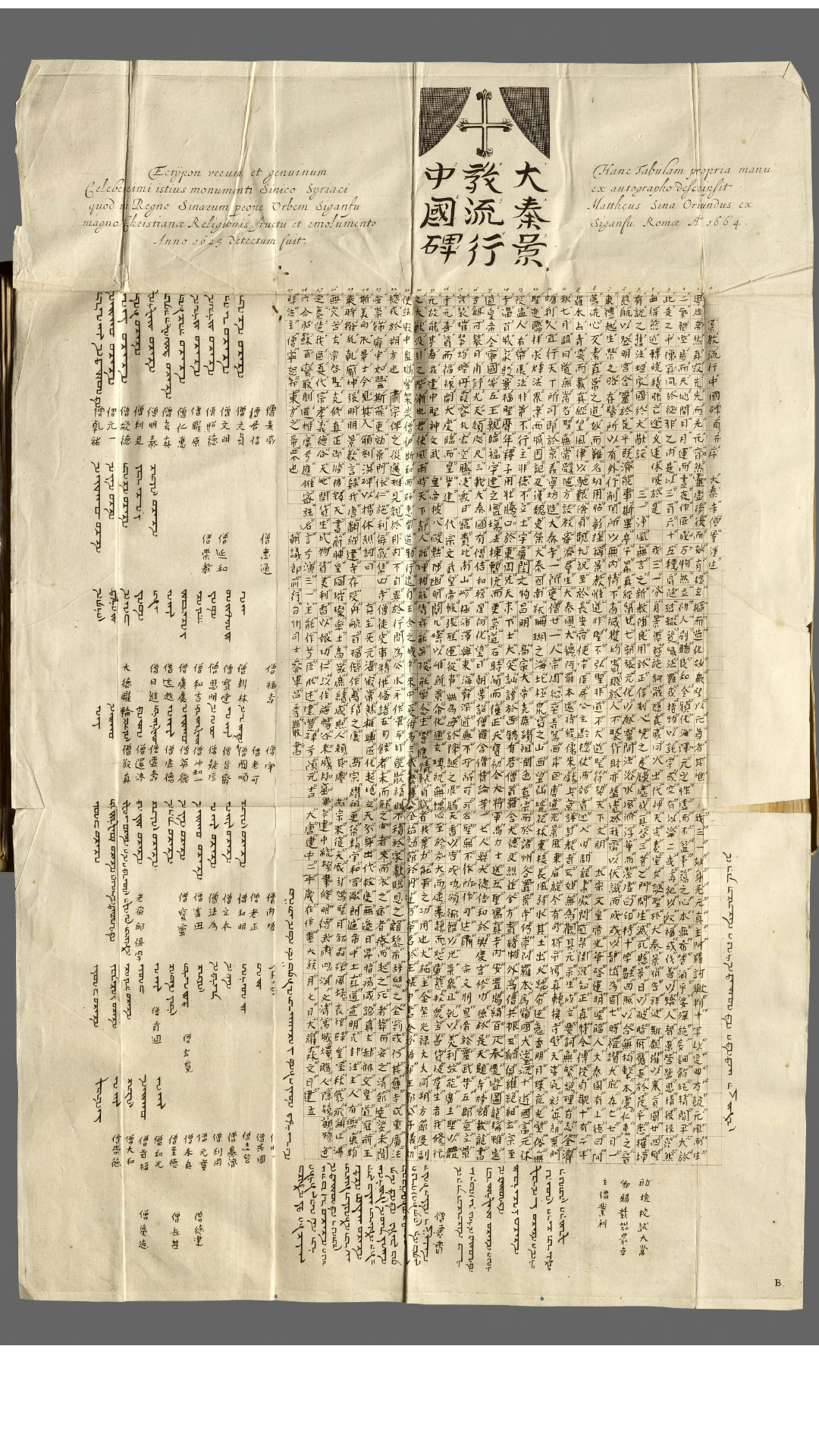
After rediscovery, the history of the stone and the history of its reproductions also diverge. HKU Libraries’ rare-book catalogue describes Semedo’s account and Kircher’s China Illustrata (1667). Kircher never visited China; he compiled materials supplied by other missionaries. The book’s image of the inscription is therefore a different kind of source from a present-day photograph of the stone. It shows how the text was transmitted and explained in Europe.
Reading two dates in a museum record
British Museum object 1989,1004,0.1–4 consists of rubbings of the stele’s headpiece, front and sides. The record dates the stone to 781 but separately dates the paper rubbings to the 1980s. The stone and the paper have different dates. A rubbing can preserve ancient writing without the paper itself being ancient.
The Royal Asiatic Society’s side rubbings, SC79, preserve Chinese and Syriac names of clergy along with an inscription recording a visit in 1859. Even within one rubbing, original writing and later additions may need to be separated. Asking what was reproduced, when the reproduction was made, and which text was added later makes museum descriptions much easier to interpret accurately.
What does “800 years” in the title compare?
The comparison here is between the stele’s erection in 781 and Ricci and Ruggieri’s establishment at Zhaoqing in 1583. The difference is 802 years, reasonably described as “about 800.” Starting with Alopen’s reported arrival instead gives 1583−635=948 years. Neither calculation measures how long the stele was buried.
Nor does 1583 mean the first arrival of all Western missionaries in East Asia. Joseph Sebes’s study, published by Macao’s Cultural Affairs Bureau, describes earlier visits and attempts at settlement. The title’s comparison should be read narrowly as the interval between two particular events.
The stele’s strength lies in the connections between its Chinese and Syriac names, its date of 781 and its retrospective account of 635. It does not fill every gap. By separating event from record, original from reproduction, and observation from interpretation, we can read it as more than a surprising old story: it becomes a lesson in handling historical evidence.
References
The inscription was checked against publicly available transcriptions and translations. The list below contains the materials actually used. Consulting a scholarly book’s description was not treated as reading the full book.
- Xi’an Beilin Museum: the Jingjiao stele
- L. Eccles and S. N. C. Lieu: inscription, translation and parallel translations (PDF)
- ISEAS: Pelliot and Forte’s study of the inscription
- University of Washington Silk Road exhibition: Seattle Art Museum headpiece rubbing
- Royal Asiatic Society: side rubbings, SC79
- British Museum: stele rubbings, 1989,1004,0.1–4
- HKU Libraries: Western rare books catalogue, printed pp. 8–9 and 16–19 (PDF)
- Macao Cultural Affairs Bureau: Joseph Sebes, The Precursors of Ricci