
On an evening in November 1953, a handful of researchers with the U.S. Army and the Central Intelligence Agency (CIA) sat together at a lodge beside Deep Creek Lake in Maryland. Among them was Frank Olson, a bacteriologist from the Army’s biological warfare laboratory. Without his knowledge, the drink in front of him had been laced with the powerful hallucinogen LSD. Days later Olson fell into severe mental distress, and nine days after that he plunged to his death from the window of a New York hotel. For a long time the government recorded the death as a suicide. What had been in that glass, and why any of it had happened, would remain hidden from the public for more than twenty years.
The name of this effort was Project MKUltra. At the height of the Cold War, it was a program of human experimentation through which the CIA secretly probed whether a person’s mind and behavior could be controlled. This is the story of what those experiments sought, how they failed, and how records that were nearly buried came to light again.
A “Behavior Control” Plan Born of Cold War Fear
MKUltra was formally launched on April 13, 1953, with the approval of CIA Director Allen Dulles (Wikipedia). Behind it lay a fear characteristic of the Cold War. When some American soldiers taken prisoner in the Korean War returned home after making statements favorable to the enemy, alarm spread in the United States that the Soviet Union or China might have acquired so-called “brainwashing” techniques. The CIA reasoned that if its adversaries held such methods, it had to understand them too, and it embarked on a secret plan to study ways of controlling human behavior.
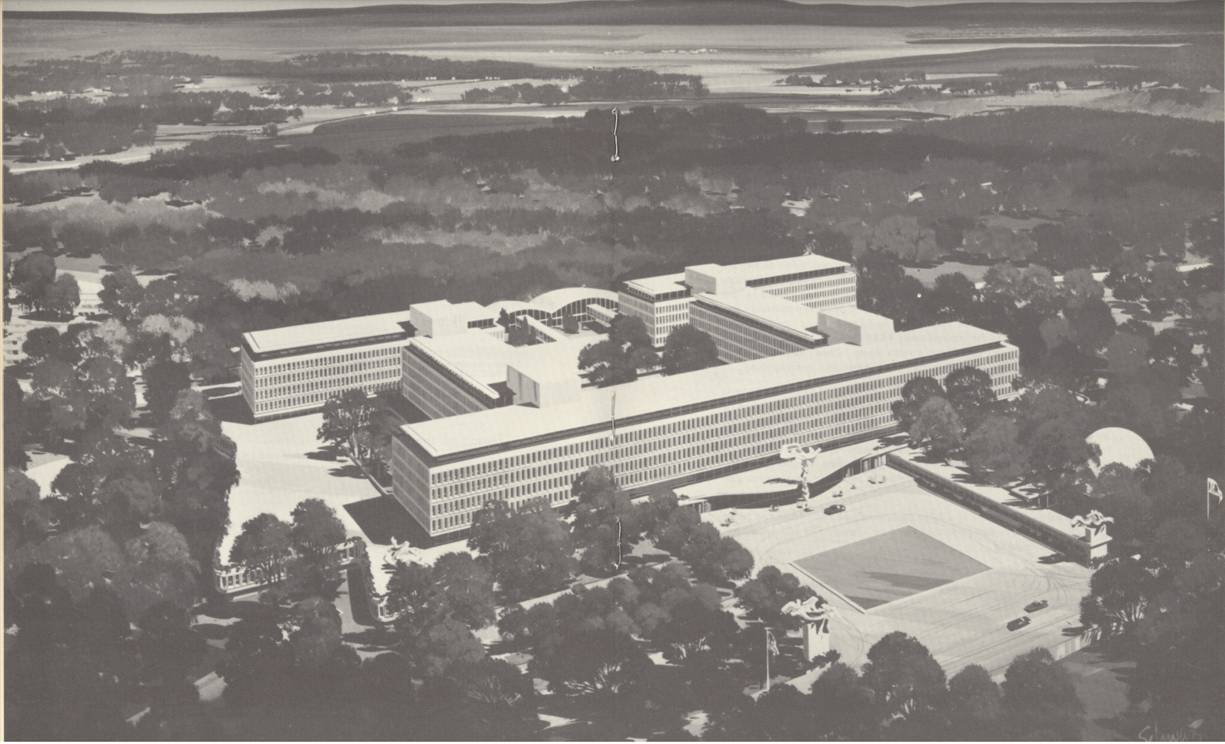
The work was handled by the CIA’s Technical Services division, and the chemist Sidney Gottlieb led the effort. It also cooperated with Fort Detrick, home of the U.S. Army’s biological warfare laboratory. The goal was to determine whether one could extract truth in interrogation, incapacitate an opponent, or disrupt memory and judgment. The plan was not a single experiment but spread out like an umbrella into many branches. Figures vary by source, but funding went to roughly 150-odd subprojects, and, apart from the military, more than 80 universities, hospitals, prisons, pharmaceutical firms and the like were drawn into the research (Wikipedia). The estimated budget was about 10 million dollars, which in today’s terms is put at roughly 87 million dollars.
LSD, Hypnosis, Sensory Deprivation — What Was Tested
The substance MKUltra invested in most heavily was LSD. The aim was to see whether this powerful hallucinogen, then only beginning to be known, could be used for interrogation or to induce confessions. There are accounts that in 1953 the CIA purchased a considerable quantity of LSD, with one description putting the sum at about 240,000 dollars. This figure, however, varies from source to source and is hard to state with certainty. Besides LSD, psychoactive drugs such as mescaline, hypnosis, methods of isolating a person under sensory deprivation, and electroshock were all subjects of testing (Wikipedia).
The most troubling part was the experiments in which such drugs were administered secretly, without the subjects’ consent. Those subjected to them included hospital patients, prisoners, and even ordinary citizens who had no idea what was happening. In New York and San Francisco, at safehouses run by the narcotics agent George White, experiments were conducted in which drugs were slipped to citizens and their reactions observed (National Security Archive). The research as a whole was carried out under cover of the names of universities and hospitals, so that often even the institutions taking part did not know the funding came from the CIA.
So did the CIA obtain the “mind-controlling technique” it wanted? The short answer is no. There is no evidence that it ever produced a brainwashed human being who would move at a single command, as popular culture has imagined. On the contrary, Gottlieb himself, who led the effort, later assessed before an investigating committee that, weighed against the cost and the risk, it had probably not been a high-payoff program. His testimony was that interrogation using LSD had as many failures as successes (National Security Archive). MKUltra is less a terrifying success story than a failed experiment that poured out vast resources without yielding any clear result.

The Death of Frank Olson, an Unanswered Question
The figure who symbolizes the tragedy of MKUltra is the aforementioned Frank Olson. On November 19, 1953, at a retreat at Deep Creek Lake, Gottlieb and his deputy administered LSD, without their knowledge, to Olson and the other attendees. Olson afterward suffered severe anxiety and confusion, and nine days later, in the early hours of November 28, he fell from the window of a room at the Hotel Statler in New York and died (Wikipedia).
The government treated the case first as a suicide and later as an accident. Part of the truth emerged in 1975. As the covert drug experiments on agents were made public in the course of the investigations, the Olson case came back into the light. The family received a settlement of 750,000 dollars and an official apology from President Gerald Ford and the CIA director of the time, William Colby (Wikipedia).
The story did not end there. In 1994, at the request of Olson’s son Eric, the body was exhumed and a second autopsy was carried out. A forensic scientist, citing injuries to the head and other findings, gave the opinion that the death was hard to regard as a simple fall, and the New York prosecutor’s office changed the classification of the cause of death from “suicide” to “unknown.” One point, however, must be made clear. It has never been established that Olson was killed by anyone, and no one has been charged in the case. Whether it was suicide or homicide remains, to this day, an open and unresolved question.

Destroyed Records and the 20,000 Pages That Survived
There is a reason MKUltra stayed buried for so long. In 1973, CIA Director Richard Helms, together with Gottlieb, ordered most of the records related to MKUltra destroyed. It was a time when, amid the Watergate affair, scrutiny of the intelligence agencies was growing sharp (Wikipedia). Because of this, the claim long circulated that “all the records are gone and the truth is buried forever.”
Yet the destruction was not complete. About 20,000 pages of documents concerning budgets and accounting had survived, misfiled in a separate archive. This bundle of documents was disclosed in 1977 by CIA Director Stansfield Turner, prompted by a freedom-of-information request from the researcher John Marks. It was precisely through these “surviving 20,000 pages” that the outline of the program someone had tried to burn could be drawn again (National Security Archive).
What pulled the trigger on the exposure was the press. On December 22, 1974, when the journalist Seymour Hersh reported in The New York Times on illegal activities the CIA had carried out against American citizens, Congress moved. In January 1975 the Senate, by an overwhelming vote of 82 to 4, formed a special committee to investigate intelligence activities — the so-called Church Committee. That summer the Church Committee and the presidential Rockefeller Commission brought the CIA’s human experiments before the world (Church Committee and Rockefeller Commission reports).
What the Exposure Left Behind
The Church Committee’s conclusion was cold. It was that clearly no prior consent had been obtained from the people who became experimental subjects. This judgment led to changes in the rules that followed. In 1976, through an executive order, President Ford prohibited drug experiments on human beings carried out without the subject’s consent given in writing and in the presence of a third party (Wikipedia). “Informed consent,” now a basic principle of medical research, was made firmer on the ground of such reflection. At the bottom of that principle lies a conviction that each person is not an instrument of experiment but a being made, in itself, with dignity.
The reason the story of MKUltra is still recounted is not simply that it is sensational. It is because of the questions raised by the fact that a state agency conducted secret experiments on its own citizens, and that this was concealed for a long time. At the same time, the affair shows another side. From the press coverage, to the congressional inquiry, to the freedom-of-information request, to the president’s official apology, the secret abuse of power went through a process of being exposed and corrected through public procedures in the end.
The records that someone tried to destroy were not entirely erased, and the 20,000 pages that survived revived the outline of a concealed plan. Questions that in the end were never answered — like the death of Frank Olson — also remain. What MKUltra has left us today is not a finished technique of mind control, but a warning about how far unchecked secret power can go, and a lesson in why it matters to bring such things to light and preserve them in the record.