
In June 1940, as France collapsed and London was gripped by fear that a German invasion of the British mainland was imminent, an aging cruiser quietly dropped anchor at the port of Halifax, Canada, across the Atlantic. Below deck, crates and boxes wrapped in newspaper filled the hold. Inside was neither weapons nor troops. It was Britain’s gold bullion and securities — the nation’s last financial reserve, the very measure of whether it could keep fighting the war. This clandestine shipment, later known as “Operation Fish,” is described by numerous outlets as an operation of a scale with few precedents at the time: the wholesale transfer of one nation’s entire financial assets across the ocean to another continent.
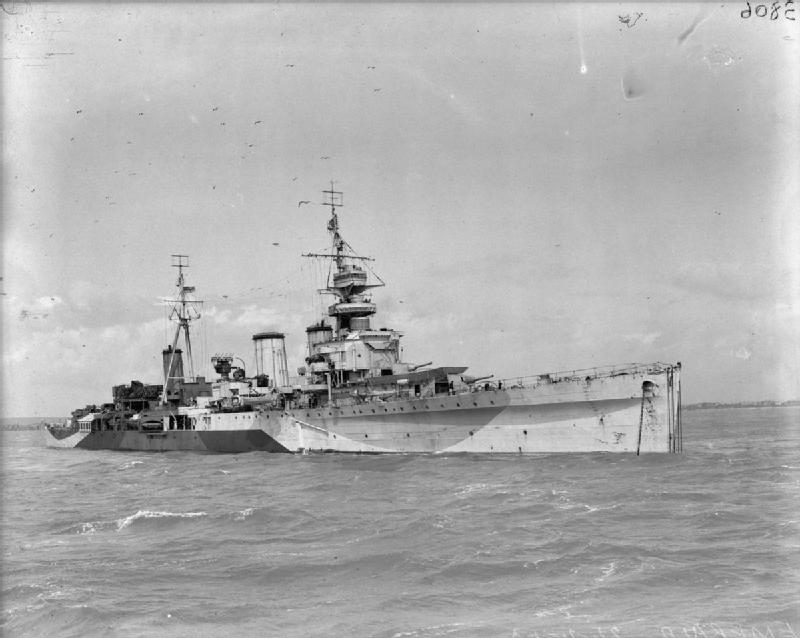
Royal Navy official photographer · Public domain · Source: Wikimedia Commons
Background — From Securities Registration to the Shadow of Invasion
The roots of Operation Fish trace back to 1939, well before Churchill became prime minister. In September 1939, the British government required citizens to register any securities they held abroad with the Treasury, and in early 1940 the Emergency Powers Act further broadened the scope of registration and requisition of privately held securities. The practice of depositing gold in Canada already existed by around 1936: for the May 1939 royal tour of Canada by King George VI and Queen Elizabeth, the battlecruiser HMS Repulse was originally slated to carry gold bullion but was withdrawn from the task partway through, and two other ships — not clearly identified by name in the sources — carried it instead, completing the first large shipment before the outbreak of war (accounts of the shipment’s size vary, ranging from “about 50 tons, £14 million” to “£30 million, 2,229 boxes”). After Britain and France declared war on Germany on September 3 of that year, HMS Emerald arrived in Halifax in October carrying the first wartime convoy shipment, and small-scale transfers were already under way by then.
The turning point came with the fall of France in June 1940. The Churchill government decided to dramatically expand the transatlantic transfer of national assets, on the judgment that “even if the British mainland were occupied, the Empire must be able to keep fighting on somewhere.” In other words, Churchill was not the originator of the operation from the start; rather, after becoming prime minister on May 10, 1940, he was the political decision-maker who elevated an already-ongoing, small-scale transfer into a central pillar of wartime national survival strategy and greatly accelerated it.
Gold Across the Atlantic — How the Operation Unfolded
On June 24, 1940, HMS Emerald left the port of Greenock, Scotland, carrying securities, and set out across the Atlantic. After a voyage of roughly 4,600 km, she reached the port of Halifax, Canada, on July 1. In mid-July, a large convoy of five ships then carried roughly £192 million worth of gold bullion together with securities worth several hundred million pounds. According to Canada’s History, the ships involved in the transfers included HMS Emerald (initially under Captain Augustus Agar, later Francis Flynn), HMS Revenge, HMS Enterprise, HMS Caradoc, HMS Bonaventure, HMS Furious, and HMS Resolution, along with SS Antonia, SS Duchess of Liverpool, Monarch of Bermuda, SS Sobieski, and SS Batory.
This was by no means a safe voyage. According to Forbes, in May 1940 alone, some 100 Allied and neutral merchant ships were sunk, meaning that crossing the North Atlantic in this period carried substantial risk. Compounding this, the 1917 sinking of SS Laurentic by a German mine off Ireland — which lost 3,211 gold bars (about 43 tons, worth £5 million at the time) and killed 354 people — was repeatedly cited as a cautionary tale by those who designed Operation Fish. Despite these dangers, multiple sources consistently state that none of the Operation Fish convoy ships carrying gold or securities were sunk by enemy action.
Sources differ on the total amount of gold transferred to Canada over the course of the operation: “more than 1,500 tons” (per most sources) versus “nearly 2,000 tons” (per the Bank of Canada Museum). This discrepancy likely stems from the fact that the transfers occurred repeatedly over several years, and sources differed on their counting basis — whether only pure gold bars were tallied or coins were included as well. Estimates of monetary value likewise vary widely depending on the year of calculation and what is included, ranging from “gold leaving the Bank of England alone exceeded £470 million (roughly $67 billion in 2014 dollars)” to “roughly $160 billion in 2017 dollars was transferred over the course of the entire operation” (Bank of Canada Museum) — so it is more accurate to understand this as a range rather than pin it to a single figure.

Why “Fish”? — The Origin of the Code Name
On July 2, 1940, at Bonaventure Station in Montreal, Sidney Perkins of Canada’s Foreign Exchange Control Board went to meet Alexander Craig, a representative of the Bank of England. According to the story, Craig remarked that he had “brought along a considerable quantity of fish” — and this exchange is said to be the origin of the code name “Fish” later used for the operation. This anecdote is corroborated consistently across multiple sources, including the Bank of Canada Museum, War History Online, and the Fairview Historical Society. Referring to the cargo of gold and securities obliquely as “fish” is also an example of how a brief conversation on a harbor dock can end up as a name that symbolizes an era.
The Vault in Ottawa, the Underground Fortress in Montreal
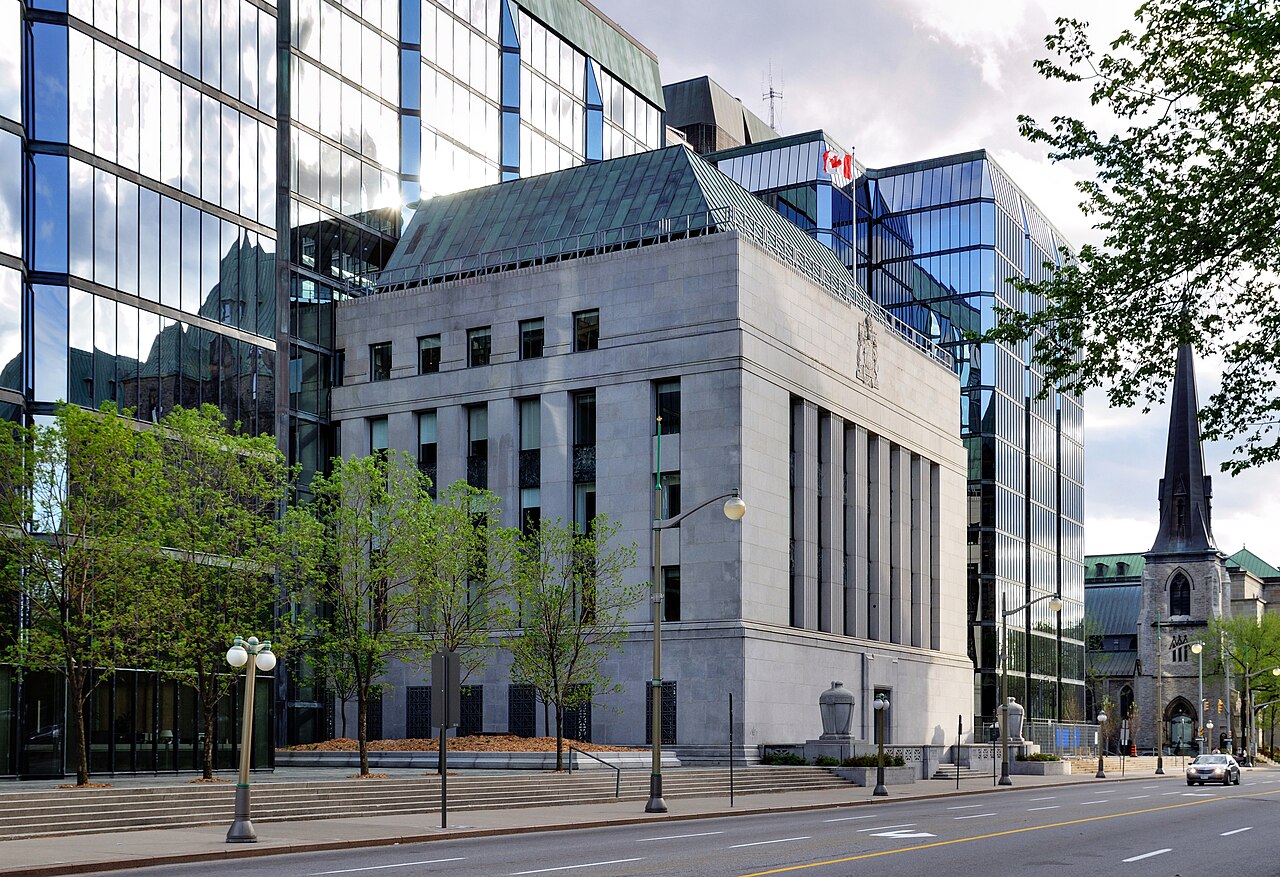
After arriving in Halifax, the gold and securities were loaded onto special Canadian National Railway trains and transported, under armed guard, through Montreal to Ottawa. Rail transport costs alone came to more than a million dollars paid to Canadian National. The physical gold bars were stored in the Bank of Canada’s vault on Wellington Street in Ottawa, while the securities and cash-equivalent assets went to a newly built vault on the third basement level of the Sun Life Building in Montreal.
The Sun Life vault was built about 15 meters below ground, out of reinforced concrete walls roughly 0.9 meters (3 feet) thick using recycled steel from decommissioned railway tracks, and was even fitted with ultra-sensitive microphones said to be able to detect the sound of a drawer opening and closing. The vault door was borrowed from the Royal Bank of Canada, and 900 four-drawer filing cabinets were filled with securities. About 24 Royal Canadian Mounted Police (RCMP) officers were stationed there around the clock, providing 24-hour security, while roughly 120 to 130 retired bankers, stockbrokers, and secretaries were hired under oaths of secrecy to record and manage the securities. Most of the roughly 5,000 employees who worked in the building had no idea what lay beneath their feet, and only rumors circulated that “British crown jewels were hidden” there. According to Acres of Snow, the personnel involved in the operation — including ship crews and dock workers — numbered well over 600, yet no information leaked until after the war, and it went unreported even in the British press.

Who Ran the Operation
Churchill’s name is often placed front and center when Operation Fish is discussed, but the actual picture is a bit more complex. As prime minister, Churchill was the political decision-maker who approved and pushed forward the large-scale transatlantic transfer of national assets. According to a Canada’s History article, Churchill is said to have remarked to the effect that without these assets, Britain would have had no means at all to cover the cost of fighting the war — though the article does not specify the exact source of this remark, such as a speech or memoir. Those who actually commanded the ships, organized the convoys, and handled the transfer of assets, however, were not Churchill but the personnel on the ground. Naval officers such as HMS Emerald’s captain, Augustus Agar, and Rear Admiral Lancelot Holland, who briefed him, handled the voyages, while Montagu Norman, Governor of the Bank of England since 1920, was involved in decision-making on the British side. Alexander Craig managed operations on the Bank of England’s side, while David Mansur and Sidney Perkins of the Bank of Canada handled the receiving operations on the Canadian side, with Bank of Canada Governor Graham Towers overseeing the whole. In short, this was a structure in which decisions approved and accelerated by the Churchill government were carried out by the hands-on staff of the Bank of England, the Navy, and the Bank of Canada.
The Gold That Didn’t Make It — The Exception of the Émile Bertin
Not every shipment reached its destination safely. In June 1940, the French cruiser Émile Bertin was en route to Canada carrying roughly 254 tons of French gold (an amount the Bank of Canada estimates at about $305 million). But when news of France’s surrender reached the ship mid-voyage, its captain changed course and diverted to Martinique in the Caribbean. This French gold never reached Canada (Ottawa). So the claim that “not a single ship in the Operation Fish convoys was lost” refers, strictly speaking, only to the convoys that departed from Britain bound for Canada; the Émile Bertin’s French gold should be treated as a separate case — one that failed to reach its destination not through sinking but through its own change of course.
After the War — How the Assets Were Used
The assets moved to Canada were not simply kept safe; they were put to use. Until the U.S. Lend-Lease Act took effect in March 1941, the U.S. Neutrality Act allowed Britain to purchase weapons and war materiel only with cash, and only by carrying them away on its own ships. In this period, when credit purchases were strictly forbidden, having gold and dollars in reserve was, in effect, a lifeline for Britain’s war effort — and Forbes independently confirms this same “cash-and-carry” backdrop. The securities held in Montreal were gradually sold off over the following years, including on the New York Stock Exchange, to help fund the war, but the Canada’s History article notes that the total amount sold is unknown because the records of exactly how much was sold and when are incomplete.
From 1938 to 1945, the gold ultimately held by the Bank of Canada is tallied at 186,332 bars of roughly 400 ounces each, plus more than 8 million ounces in other forms such as coins. This final total is not just the single 1940 Operation Fish shipment, but a cumulative figure that includes additional gold deposited over several years by France and other countries up through the end of the war — so its scope is broader than the transfer volume of Operation Fish itself mentioned earlier (more than 1,500 tons to nearly 2,000 tons). Indeed, even after the war, France and several other countries continued to maintain gold accounts deposited in Ottawa, and some even increased their holdings after 1945. The 10,581 gold bars deposited by France remained frozen by decision of the Canadian government until the end of the war.
Significance
Operation Fish is often described as “the largest physical movement of wealth in history,” but this is less a rigorously verified academic record than a phrase that popular history outlets — including the Bank of Canada Museum and War History Online — have repeatedly used. Even setting that rhetoric aside and looking only at the facts, it remains a rare case of a nation moving most of its gold and securities across an ocean infested with enemy submarines to another continent, and keeping that fact entirely secret until the end of the war. Carried out through the combination of the Churchill government’s resolve and the coordinated efforts of the Bank of England and Bank of Canada staff, the operation stands as a quiet but decisive behind-the-scenes chapter that preserved the financial foundation Britain needed to keep fighting even in the worst-case scenario.
References
- Bank of Canada Museum: Operation Fish
- Canada’s History: Guarding the Gold
- The Historical Society of Ottawa: Operation Fish
- War History Online: Operation Fish
- Fairview Historical Society: Operation Fish
- Acres of Snow: Operation Fish
- Forbes: Gold, World War II And Operation Fish
- Wikipedia: Operation Fish
- Wikipedia: Montagu Norman, 1st Baron Norman