
The woman who created Mother’s Day spent the last of her money and her strength trying to ‘abolish’ it. Anna Jarvis of West Virginia gave the modern holiday to the world when she led the first service honoring her mother in 1908, yet forty years later, in 1948, she died penniless in a sanitarium. Florists, candy shops, and greeting-card companies had turned the day into an occasion for buying gifts, and she fought back with lawsuits, boycotts, and protests until she had lost everything. For those of us who reflexively picture a carnation every May, the origin of the holiday is shorter, and stranger, than we might expect.
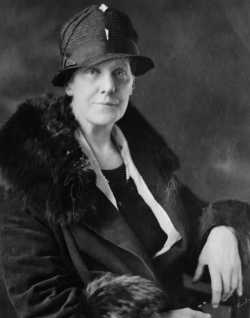

Anna Jarvis and the Birth of Mother’s Day in 1908
The May Mother’s Day now kept in many countries is not an ancient festival but a relatively new holiday invented in the early twentieth century in the United States. English Wikipedia states plainly that this modern Mother’s Day is ‘not directly related’ to the ancient Greek worship of a mother goddess, to Roman spring festivals, or to medieval Christian custom. (English Wikipedia)
The holiday began as one person’s private act of mourning. To honor her mother, Ann Reeves Jarvis, who died on May 9, 1905, Anna Jarvis arranged a memorial service at the Andrews Methodist Episcopal Church in Grafton, West Virginia, the church her mother had attended all her life. The first official commemorative service was held on May 10, 1908, and a large event took place the same day at Wanamaker’s department store in Philadelphia. (Britannica, English Wikipedia)
There is also a reason Mother’s Day settled on the ‘second Sunday of May.’ Anna set the holiday on a day close to the anniversary of her mother’s death (May 9, 1905), and the first celebration, on May 10, 1908, happened to fall on the second Sunday of that year. Anna chose the white carnation, her mother’s favorite flower, as the symbol of the day and handed out 500 of them at the 1908 event. Her insistence on the singular possessive ‘Mother’s’ rather than the plural ‘Mothers” also carried meaning: the day was not to lump all mothers together but for each household to honor its own single mother. (English Wikipedia)
The Road to a National Holiday
What began as a private memorial spread quickly across the country. Anna Jarvis wrote tirelessly to politicians and influential figures, urging them to make Mother’s Day an official holiday. As a result, on May 8, 1914, the United States Congress passed a resolution designating the second Sunday of May as Mother’s Day, and the next day, May 9, President Woodrow Wilson officially proclaimed it. The first national observance was May 10 of that year, the second Sunday. The proclamation defined the day as one for the ‘public expression’ of love and reverence for mothers, including the display of the flag. (English Wikipedia)
One misunderstanding is worth correcting here. President Wilson only ‘proclaimed’ Mother’s Day; he did not ‘found’ it. The founder of the holiday was, from first to last, Anna Jarvis.

The Founder Who Fought the ‘Day for Buying Gifts’
As the holiday spread nationwide, something Anna Jarvis had not anticipated took place. Florists raised the price of carnations, and candy and greeting-card companies treated Mother’s Day as a peak season. Jarvis could not bear to see the day degenerate into an occasion ‘for buying gifts.’ In 1912 she trademarked the phrases ‘Second Sunday in May’ and ‘Mother’s Day’ and founded the Mother’s Day International Association in an effort to control the meaning of the holiday herself. (English Wikipedia)
From then on Jarvis issued statements, organized boycotts, and filed lawsuits against commercialization. In one statement preserved by the U.S. National Park Service, she denounced the commercial interests as ‘charlatans, bandits, pirates, racketeers, kidnappers and other termites.’ In 1925 she went to a convention of the American War Mothers, who were selling carnations, protested, and was arrested for disturbing the peace. According to Encyclopædia Britannica, Jarvis, who died in 1948, spent the last years of her life trying to abolish the holiday as a protest against its commercialization. The person who created the holiday, in other words, ended her life penniless while struggling to tear it down. (U.S. National Park Service, Britannica)
The ‘Mother’s Days’ Before Mother’s Day
Anna Jarvis’s Mother’s Day had roots that came before it, though these were separate, pioneering efforts quite different in purpose from today’s holiday.
The first was Anna’s own mother, Ann Reeves Jarvis. In the 1850s she organized ‘Mothers’ Day Work Clubs’ to improve sanitation and public health, and during the Civil War she cared for wounded soldiers on both the Union and Confederate sides. In 1868, after the war, she held a ‘Mothers’ Friendship Day’ to promote reconciliation among families divided by the conflict. (English Wikipedia, U.S. National Park Service)
The second was the poet and activist Julia Ward Howe. In 1870 she issued the ‘Mother’s Day Proclamation,’ appealing for anti-war peace in the face of the horrors of the Civil War and the Franco-Prussian War. In 1872 she proposed keeping June 2 each year as a ‘Mother’s Peace Day,’ but the idea never took firm root and faded. It was a ‘peace movement’ different in both purpose and date from today’s May Mother’s Day. That said, the record notes that Anna Jarvis was influenced, through her mother, by Howe’s work. (Mother’s Day Proclamation, National Geographic)

Different Days, Different Roots Around the World
The wish to honor mothers exists everywhere. Its date and origin differ from country to country, yet the fact that the impulse to honor the one who gave you life surfaces across every culture and creed calls to mind the ancient charge to ‘honor your father and mother’ — as though this impulse were planted within us from the very start.
Britain and Ireland’s ‘Mothering Sunday’ has roots distinct from the American Mother’s Day. Since the Middle Ages the day grew out of a Christian tradition of returning, on the fourth Sunday of Lent, to the ‘mother church’ where one had been baptized, which is why its date drifts between March and April each year. In the early twentieth century Constance Smith, inspired by the American Mother’s Day, revived the old tradition in modern form beginning in 1913, and today it has effectively been absorbed into Mother’s Day. (English Wikipedia)
The variety of dates is striking. Many countries, including the United States, Canada, Japan, Germany, Italy, and Australia, keep the second Sunday of May, but Russia and other former Soviet states mark International Women’s Day on March 8, while Egypt and other Arab countries take March 21, around the spring equinox. Thailand keeps August 12, the birthday of Queen Sirikit, and Mexico observes a fixed May 10 each year. In Vietnam, the Vu Lan festival on the fifteenth day of the seventh lunar month serves as a day to honor the grace of one’s parents. (English Wikipedia)
Korea’s May 8: From Mother’s Day to Parents’ Day
So how did Korea’s Parents’ Day (Eobeoinal) come about? Korea’s May 8, too, was not from the start a day honoring ‘parents.’
This day became an official holiday in Korea in 1956. By a decision of the State Council, May 8 was established as ‘Mother’s Day’ (Eomeoninal), with the aim of comforting and honoring the mothers who, after the Korean War, had shouldered both child-rearing and making a living. At that time it was a day honoring only ‘mothers,’ not ‘fathers.’ (Encyclopedia of Korean Culture, Korean Wikipedia)
The name ‘Parents’ Day’ appeared seventeen years later. On March 30, 1973, under Presidential Decree No. 6615, the ‘Regulations on Various Commemorative Days,’ ‘Mother’s Day’ was expanded and renamed ‘Parents’ Day.’ The change reflected both the observation that there was no separate day for fathers and a wish to embrace the tradition of respect for elders and filial devotion. The date remained May 8. The Encyclopedia of Korean Culture defines the day as one ‘to give thanks for the grace of one’s parents and to honor the traditional virtue of respecting elders and the aged.’ (Encyclopedia of Korean Culture)
And what of the carnation pinned to the chest? This, too, is not a native Korean tradition but a custom that came from the United States. Korean Wikipedia explains that the carnation custom of Parents’ Day originated around 1907, when Anna Jarvis handed out white carnations at church. This symbol appears to have taken hold in Korea as Protestant missions and modern culture spread. (Korean Wikipedia)
Following the history of these holidays, we learn that customs we took for granted each carry a story of their own. The second Sunday of May grew from one daughter’s grief at losing her mother; the white carnation was that mother’s favorite flower; and Korea’s Parents’ Day was forged where the wounds of war met the tradition of filial devotion. What the founder Anna Jarvis wanted to protect, in the end, may not have been an expensive gift but the impulse to hold a living mother’s hand one more time. To know the origin of a holiday is, in part, to recover the original place of that impulse.
References
- Mother’s Day (United States) — Wikipedia
- Mother’s Day — Wikipedia
- Mother’s Day Proclamation — Wikipedia
- Mothering Sunday — Wikipedia
- Anna Maria Jarvis — U.S. National Park Service
- Eobeoinal (Parents’ Day) — Encyclopedia of Korean Culture
- Eobeoinal — Korean Wikipedia
- The dark history of Mother’s Day — National Geographic
- Mother’s Day — Encyclopædia Britannica