
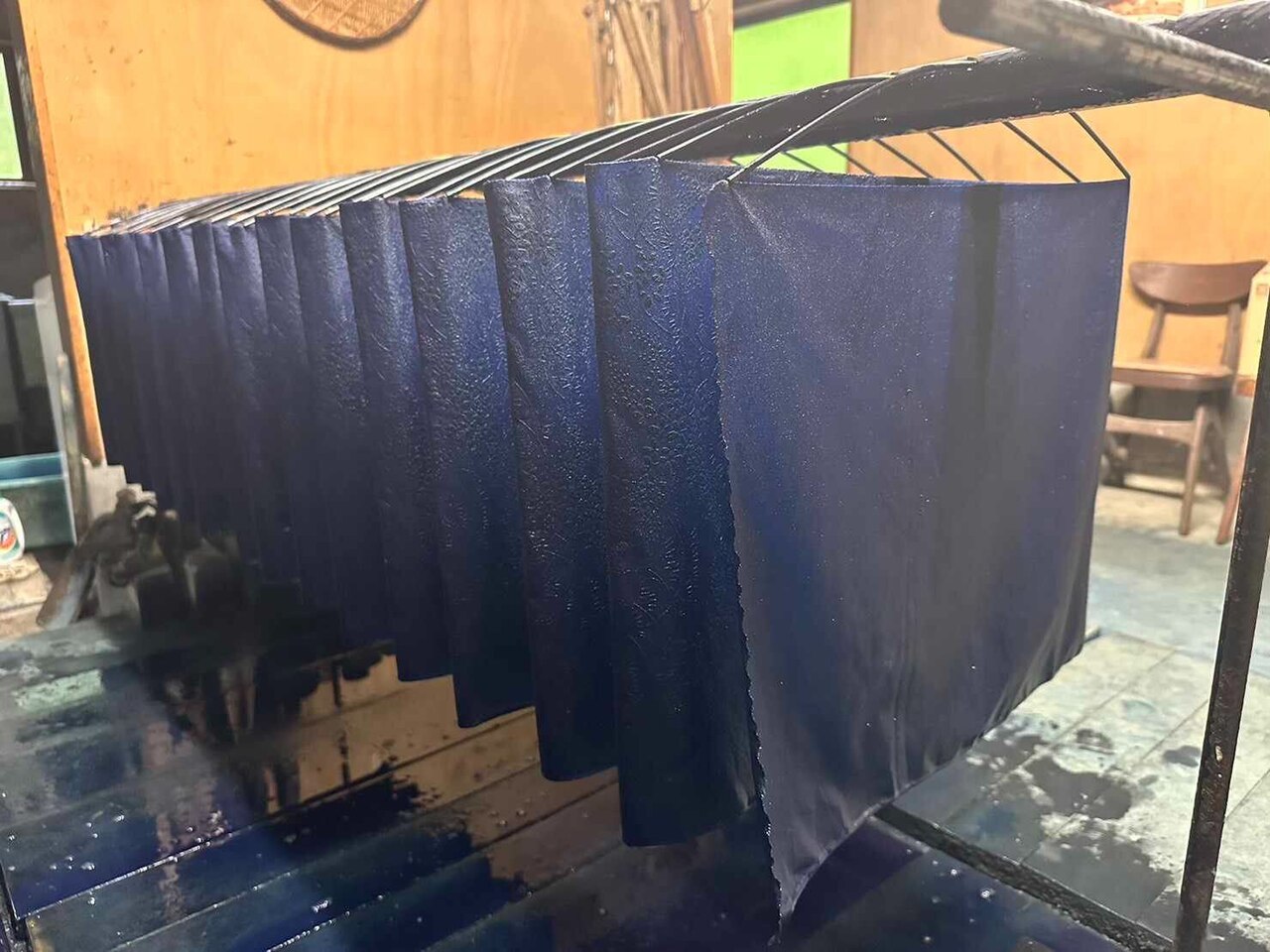
When dyeing with indigo, spreading the cloth out in the air after lifting it from the vat matters just as much as dipping it in. The blue that appears on the cloth is not simply the result of moisture drying. Oxygen in the air is changing the dye’s chemical form. [1]
There is a paradox here, though. Indigo, the substance that makes the cloth blue, does not dissolve readily in water. How, then, does a dyer get it into the cloth? The key to conventional reduction vat dyeing is to turn indigo into a water-soluble form inside the vat, then return it to its poorly soluble blue form after taking the cloth out. The process that changes the color also helps leave the color in the fabric. [1] [2]
Markmcnbowe97 · CC BY-SA 4.0 · Wikimedia Commons · License
Why not just mix it into water like blue paint?
Salt dissolves when you put it in water. Dropping a lump of blue indigo into water, however, does not produce a dye solution in the same way. Blue particles dispersed in water are different from a substance dissolved in solution at the molecular level. Indigo dyeing makes use of that distinction.
The American Chemical Society explains that, because indigo is insoluble in water, dyeing uses an alkaline solution of its yellow reduced form, leucoindigo. A reduced form is one in which a substance has gained electrons, changing its chemical state. In this state, its behavior in water also changes, allowing the dye to be transferred to fibers. [1]
It is important to distinguish an alkaline environment from the reduction reaction. Making a vat alkaline and reducing indigo are separate things. The conditions in the vat must work together to make the soluble reduced form available. Simply adding more blue dye will not solve the problem. [2]
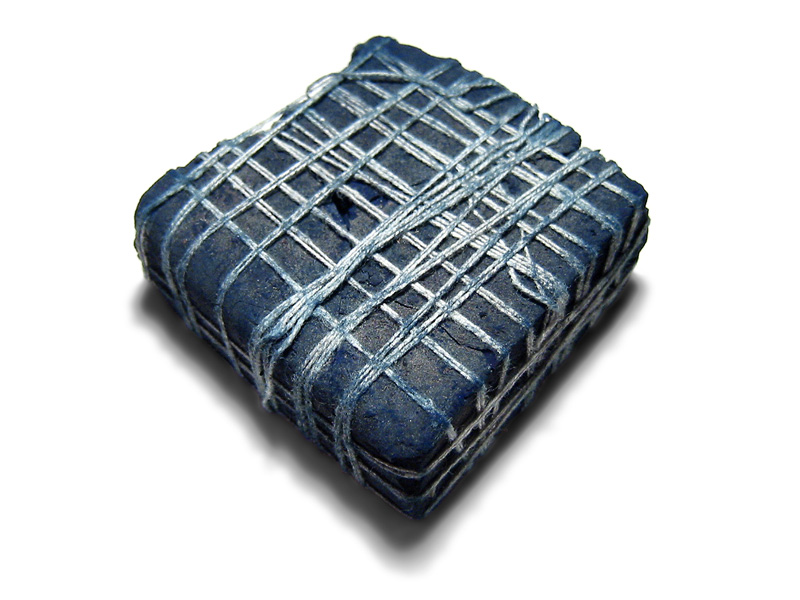
Photo by Evan Izer (Palladian) · CC BY-SA 2.5 · Wikimedia Commons · License
Reduction in the vat, oxidation in the air
When cloth is immersed in the dye bath, the dissolved, reduced dye can adsorb onto and penetrate its fibers. Once the cloth is lifted out and exposed to air, oxygen causes oxidation. Leucoindigo turns back into blue indigo, leaving the poorly water-soluble dye in the fibers. The vat and the air perform different jobs. [2]
That is why explaining the blue color only as something that deepens as the cloth dries misses the crucial reaction. Exposure to air gives the cloth time to dry, but it is also a stage that oxidizes the dye. During this process, areas with a yellowish or greenish appearance may turn blue. Not every dye bath and fabric, however, goes through exactly the same sequence of colors at the same speed. [1] [6]
The sequence can be summarized as follows: insoluble blue indigo → reduction to a soluble form in an alkaline vat → transfer to fibers → oxidation in air → insoluble blue indigo. The technique involves making the same dye display different properties at the moments they are needed. [1] [2]
Markmcnbowe97 · CC BY-SA 4.0 · Wikimedia Commons · License
Obtaining dye from leaves and dyeing cloth are different stages
To understand this principle, it helps to unpack the phrase “fermenting indigo.” Obtaining the material for the color from leaves and preparing a vat so that indigo already obtained can enter cloth are separate stages.
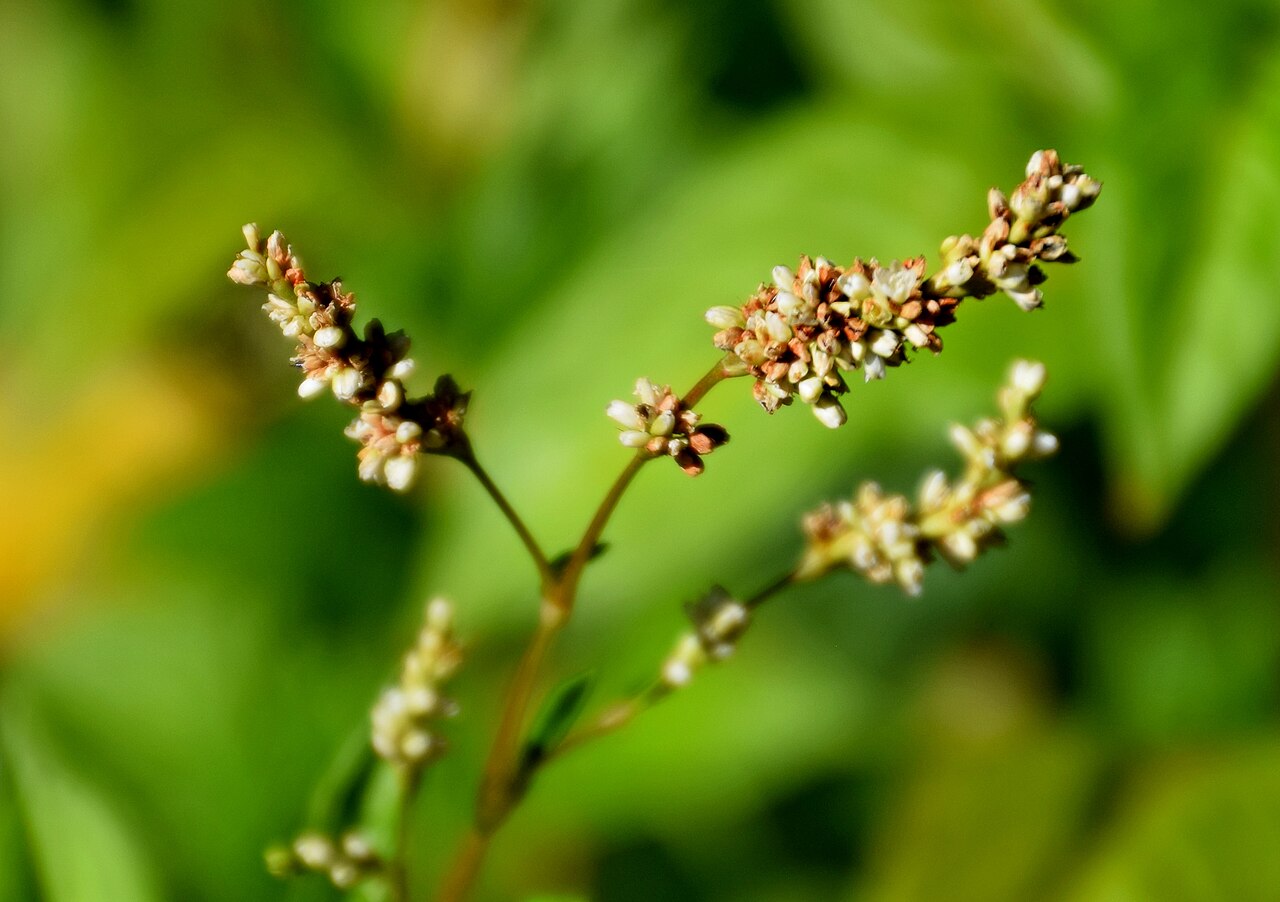
Indigo-producing plants contain precursors from which the pigment is formed. One well-known example is indican. Removing the sugar from indican produces indoxyl, and subsequent reactions produce blue indigo. Leucoindigo, by contrast, is the reduced form of indigo described above. Despite their similar names, indican, indoxyl, and leucoindigo are not interchangeable names for the same substance. [2]
There is also more than one way to establish reducing conditions in a vat. Microbial activity is involved in traditional fermentation vats, while other processes use chemical reducing agents. Researchers are also studying electrochemical reduction. These approaches differ in their materials and operation, but they share the task of converting existing indigo into its reduced form for use. [2] [3]
The explanation so far concerns processes that use a reduction vat. Methods using fresh leaves, or research applying indican to fibers, should not all be placed into this same production sequence. The fact that a material comes from a plant does not make every indigo dyeing method identical. [2]
Krzysztof Golik · CC BY-SA 4.0 · Wikimedia Commons · License
Recognizing the dyer’s judgment in Korean indigo traditions
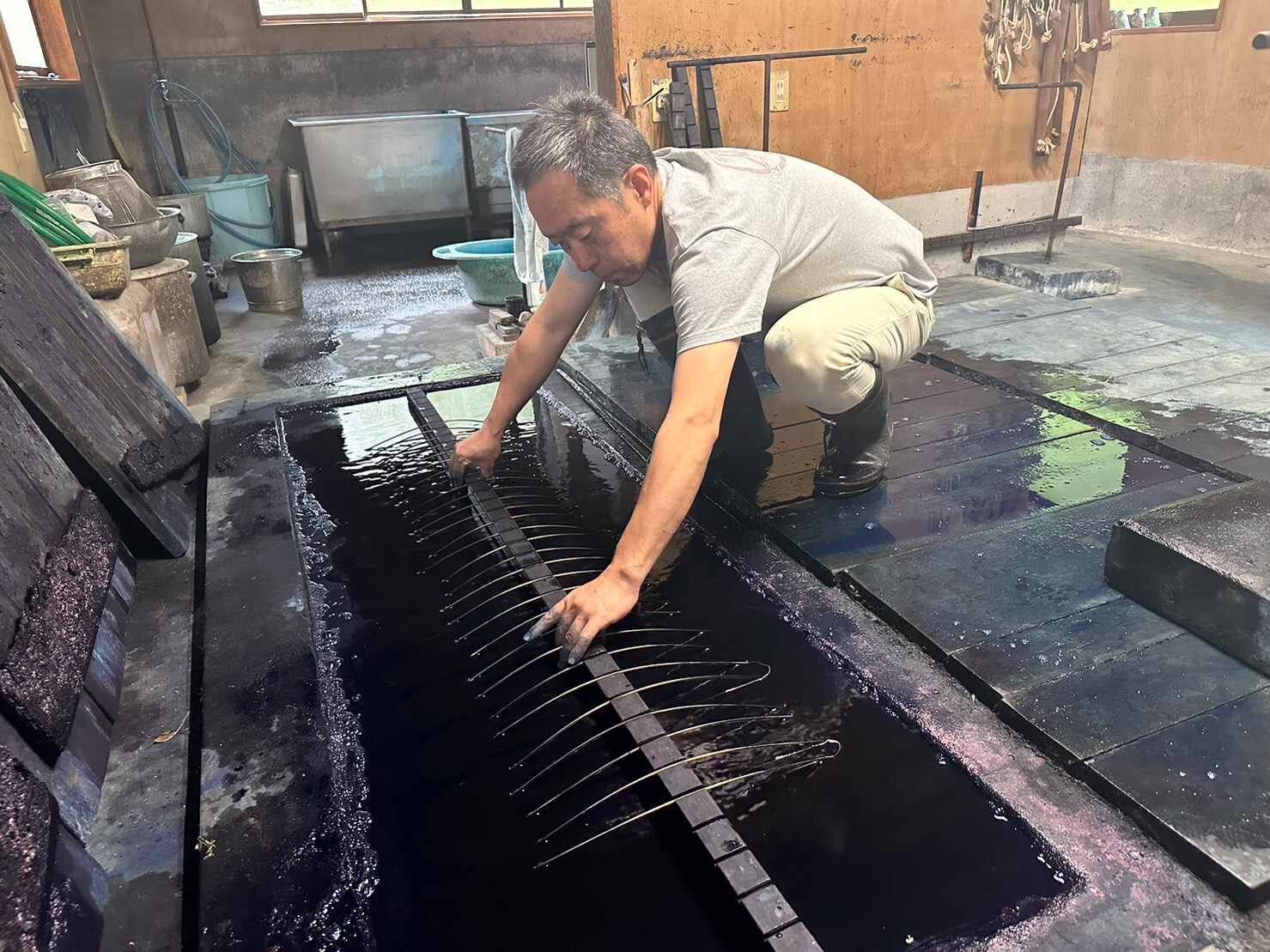
Korea’s traditional dyeing craft also distinguishes between obtaining the dye, preparing the dye bath, and coloring the cloth. The Korea Heritage Agency’s account of indigo dyeing in Naju shows how sediment obtained from indigo plants and lye are used to prepare a dye bath. The work does not end with adding ingredients: it involves bringing the bath into a condition suitable for dyeing. [6]
Here, manual skill also means knowing how to wait for reactions. A dyer must distinguish between exposing material to air while obtaining the dye, managing a vat that needs to remain in a reduced state, and exposing the cloth to air again after lifting it out. Depending on the stage, both “air is needed” and “air must be handled carefully” can be true. [6] [3]
Seeing the process as separate stages changes how we read small gestures in a dyeing demonstration. Checking the vat, ensuring that the dye bath reaches the cloth evenly, and spreading the cloth after lifting it out all involve judgments intended to leave an even color. Those gestures preserve a culture of working with the properties of materials in creation through long observation and hands-on experience.
What changes when dipping and airing are repeated?
Repeated dipping and exposure to air can deepen the color in indigo dyeing. In its account of adire textiles from the Yoruba region of Nigeria, Britain’s Victoria and Albert Museum describes lifting cloth from the vat to oxidize it and repeating the process to build a deeper shade. Repeating the same movements becomes a way to build up color. [7] [5]
The number of dips, however, is not an absolute formula for the final shade. If the starting fabric and the condition of the dye bath differ, the same number of dips does not guarantee the same result. The key thing to observe is not only how many times the cloth is dipped, but whether each immersion is followed by lifting the cloth out to oxidize. [5]
Nor does poor water solubility mean that the color will remain unchanged forever. Cloth containing indigo can still change color through use and rubbing. The statement that the dye becomes insoluble after dyeing should not be stretched into a guarantee that the color can never fade. [2]
How do white patterns remain on blue cloth?
Another striking feature of indigo dyeing is the boundary between blue and white. Tying or blocking selected areas to prevent the dye from reaching them leaves a pattern after dyeing. This is called resist dyeing. Rather than painting the white areas first, the maker plans which parts will take the dye and which will take less dye or none at all. [7] [8]

Karl Gruber
· CC BY-SA 4.0 · Wikimedia Commons · License
Yoruba adire includes methods that use raffia ties or starch to resist dye penetration. In the Central European Blaudruck tradition described by UNESCO, makers apply a resist paste with carved wooden blocks and other tools before dyeing with indigo. The protected patterns remain white or undyed. These two examples cannot be merged into a single regional technique, but both show ways of controlling where color enters the cloth. [7] [8]
A white pattern can now prompt another question alongside “What shape is it?”: “Which parts were protected before dyeing, and how?” The blue ground reveals the properties of the dye, while the white boundaries reveal the maker’s sequence of work.

Katie · CC BY-SA 2.0 · Wikimedia Commons · License
The questions about natural and synthetic indigo change, too
Indigo obtained from plants and synthetic indigo come from different production routes. The indigo molecule responsible for the blue color, however, is chemically the same. That does not mean the overall composition of a natural dye material, or the actual dyeing results, will always be identical. The identity of one molecule must be distinguished from the dye product as a whole. [4] [5]
The reaction that turns the dye blue in air therefore cannot serve as proof that it came from natural indigo plants. Synthetic indigo shows the same core reaction when it passes through its reduced form and is then exposed to air. To establish whether indigo is natural or synthetic, you need to check the materials and production history, rather than rely on the color change alone. [1] [4]
Environmental judgments also require looking at the whole process. That is why research continues into reducing the chemicals and process burdens involved in indigo reduction. Describing a material as plant-derived does not remove the environmental burdens of every step in dyeing. [2]
Three moments to look for next time you see indigo dyeing
First, distinguish the blue dye material from the actual dye solution. Color suspended in water is different from a dissolved form that can move into fibers. Second, watch the moment when the cloth is lifted from the vat and spread out. Air is taking part in the reaction. Third, examine the edges of the white patterns. They let you work backward to see which areas were protected before dyeing.
The blue of indigo-dyed cloth cannot be explained simply as a plant’s existing color transferred directly to fabric. Reduction vat dyeing involves obtaining the material, changing its properties, moving it into fibers, and leaving it there in another state. In working with blue, the dyer also manages the conditions that let blue temporarily exist in another form. A single movement, lifting cloth from the vat, brings that intricate process into view.
References
- [1] Indigo — Molecule of the Week
- [2] Employing a biochemical protecting group for a sustainable indigo dyeing strategy
- [3] The Mechanism Underlying of Long-Term Stable Indigo Reduction State in Indigo Fermentation Using Sukumo (Composted Polygonum tinctorium Leaves)
- [4] Micro-Raman spectroscopy of natural and synthetic indigo samples
- [5] Characteristics of Color Produced by Awa Natural Indigo and Synthetic Indigo
- [6] Korea Heritage Agency — Master dyer Jeong Gwan-chae
- [7] Àdìrẹ – 'tied and dyed' indigo textiles
- [8] Blaudruck/Modrotisk/Kékfestés/Modrotlač, resist block printing and indigo dyeing in Europe