
Fog brings to mind a cold, quiet dawn. Yet it also arrives on windy coasts, while on cold days white wisps rise from relatively warm water. How can similar scenes develop under such different conditions?
To understand how fog forms, follow both the cooling of air and the supply of water vapour. We will compare ground cooling overnight, air moving over a cold sea, and cold air meeting warm water.
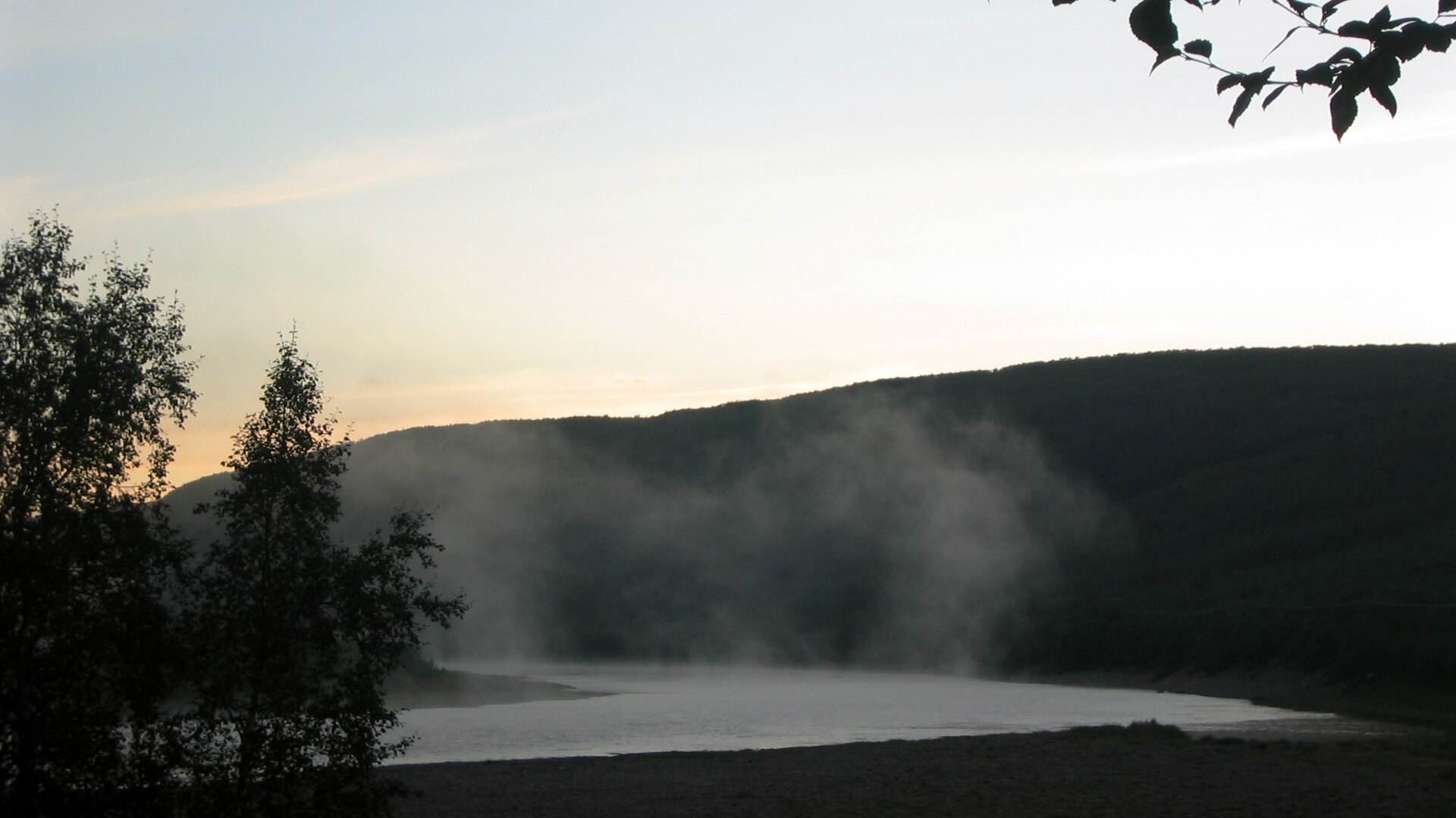
Barasoaindarra · Public domain · Wikimedia Commons
The white veil is not water vapour itself
Water vapour is water in its gaseous state. Visible fog consists mainly of tiny suspended liquid droplets, sometimes with minute ice particles. The World Meteorological Organization defines fog as reducing horizontal visibility at the surface to less than 1,000 m. A hazy-looking photograph is not a visibility measurement. [1] [9]
The key temperature is the dew point: the temperature at which cooling air, while keeping pressure and water-vapour content constant, brings relative humidity to 100%. The gap between air temperature and dew point indicates proximity to saturation. That number alone does not tell us fog depth or visibility. [2]
Route one: cooling begins at the ground
In radiation fog, radiation refers to heat transfer by electromagnetic waves. On a clear night, the ground loses energy through thermal radiation and cools the air just above it. If a sufficiently moist layer reaches saturation, fog can form near the surface. [3] [6]
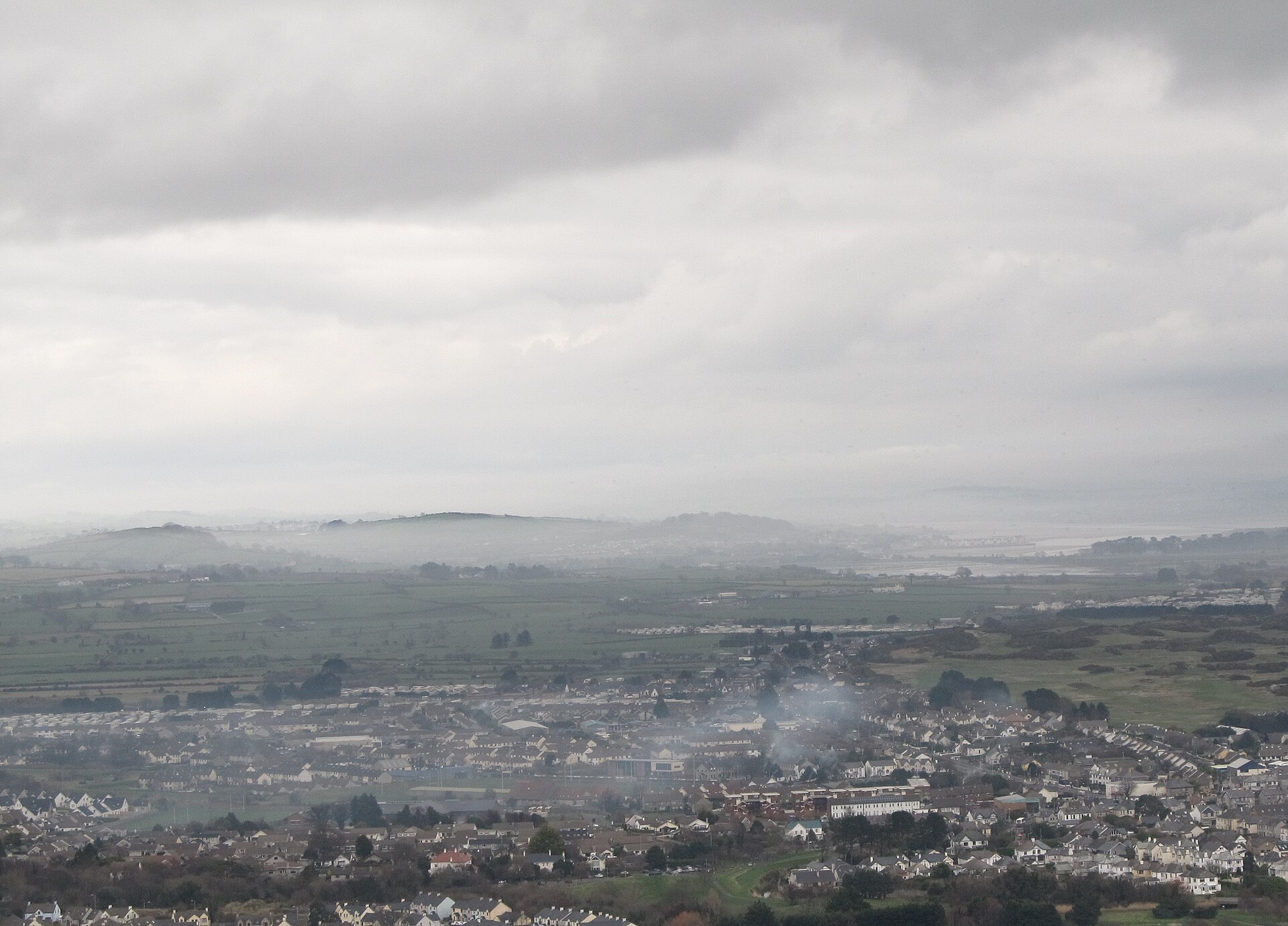
Eric Jones · CC BY-SA 2.0 · Banks of radiation fog in the Shimna and Carrigs Valleys (Wikimedia Commons) · License
Low-lying, moist terrain with light winds favours this fog. Complete calm is not necessarily better: gentle mixing of near-surface air also matters. Sunshine often disperses radiation fog by warming the ground, but sunrise does not guarantee that it will quickly disappear. [3] [6]
Route two: moist air crosses a colder surface
Advection fog begins with horizontal air movement. Relatively warm, moist air crosses colder water or land and cools from below until saturation can occur. The surface need not first cool overnight at that location. [4]

© Frank Schulenburg · CC BY-SA 3.0 · Fog rolling over Arched Rock (Wikimedia Commons) · License
This is why wind does not rule out fog. Advection fog can form under cloudy skies and in windy conditions, and move with the wind once formed. When fog reaches a coast, the origin of the air matters as well as the time of day. [4]
Route three: the water is warmer than the air
Fog over water can also have the opposite temperature arrangement. Steam fog can form when cold air crosses relatively warm water. Evaporation supplies water vapour, and the warm, moist air near the water mixes with colder air, allowing condensation. [5]
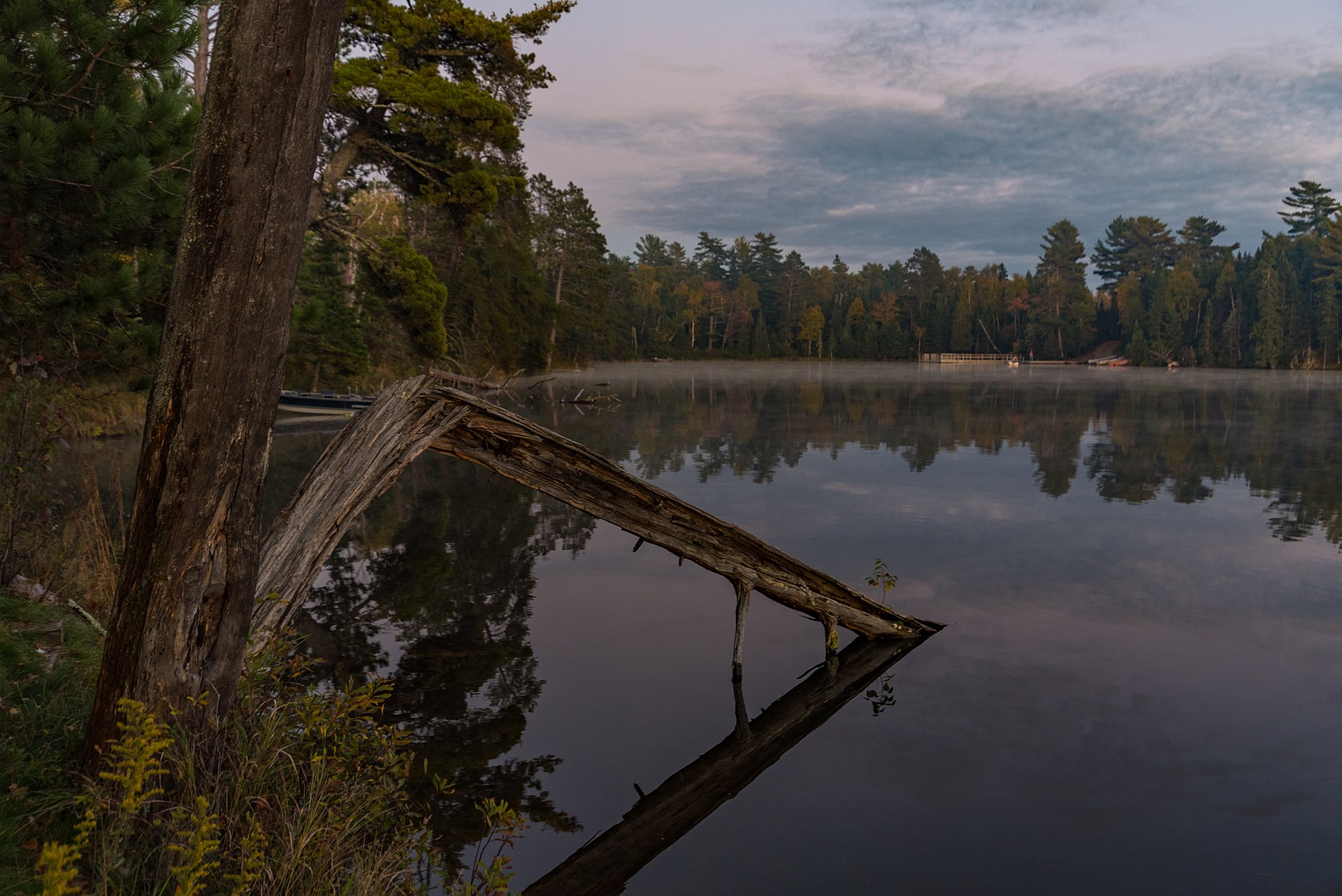
Tony Webster · CC BY-SA 2.0 · Bear Head Lake Steam Fog (Wikimedia Commons) · License
The smoke-like white wisps are already condensed droplets. “Steam” in the name does not mean that the visible material is gaseous water vapour. To distinguish the mechanism from advection fog, ask which side is warmer and where additional water vapour comes from. [5] [9]
Three questions for reading a white landscape
The table compares the mechanisms above; it cannot identify a fog type from a single photograph. Establishing the cause requires air and surface temperatures, moisture, wind, and changes over time.
| Type | First question | Main route to saturation |
|---|---|---|
| Radiation fog | Did the ground cool overnight? | Air cooling as the surface cools |
| Advection fog | Did moist air arrive over a colder surface? | Moving air cooling from below |
| Steam fog | Is the air crossing the water colder than the water? | Vapour supplied by evaporation; mixing of air at different temperatures |
A comparison of mechanisms based on the NWS and Met Office explanations above.
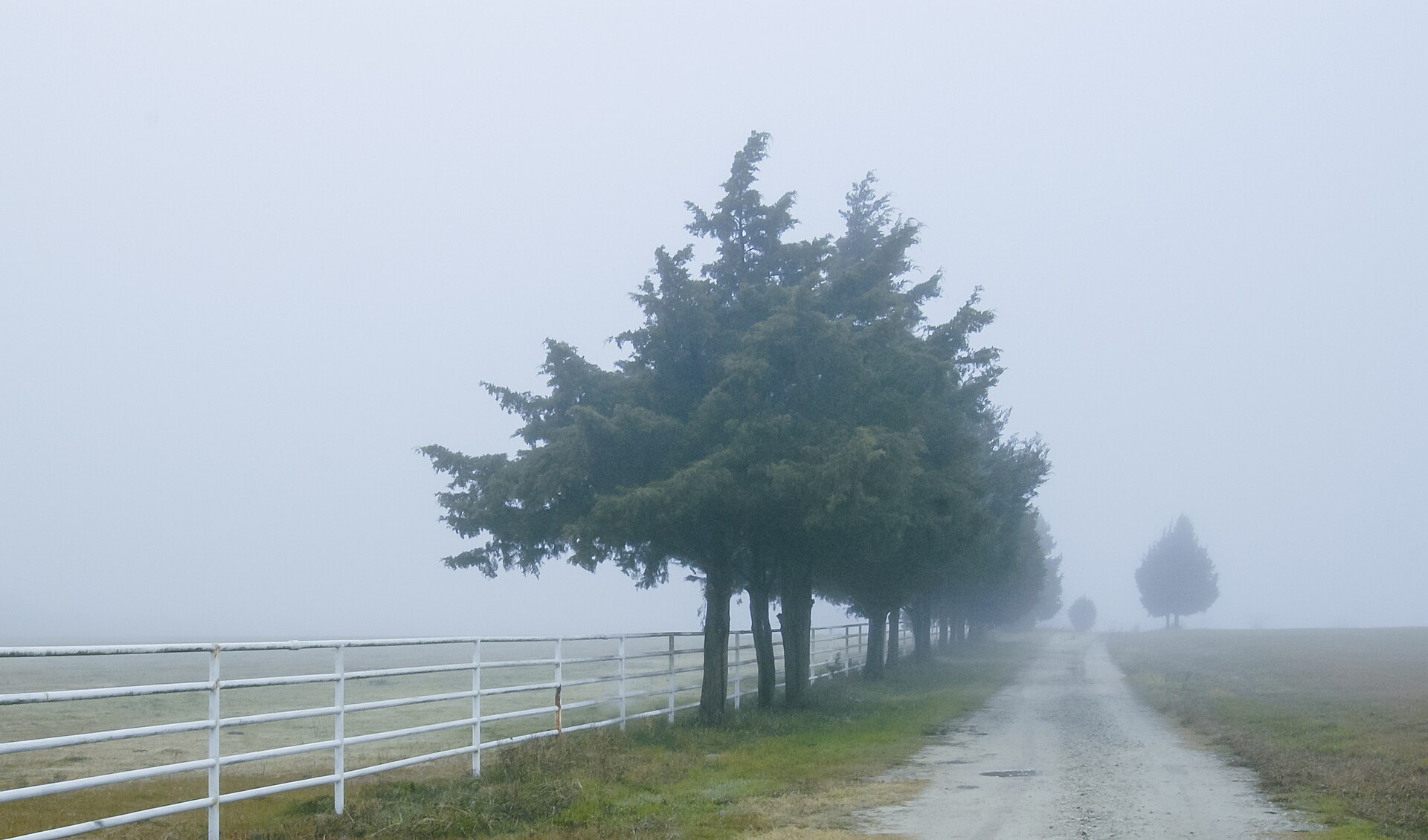
Matthew T Rader · CC BY-SA 4.0 · Wikimedia Commons · License
These are not the only routes. Upslope fog can form as moist air rises along terrain and cools. The history of the air is therefore more useful than a place name alone. Fog persisting in daylight need not simply be leftover night-time fog. [6]
Are wet leaves in fog always covered in dew?
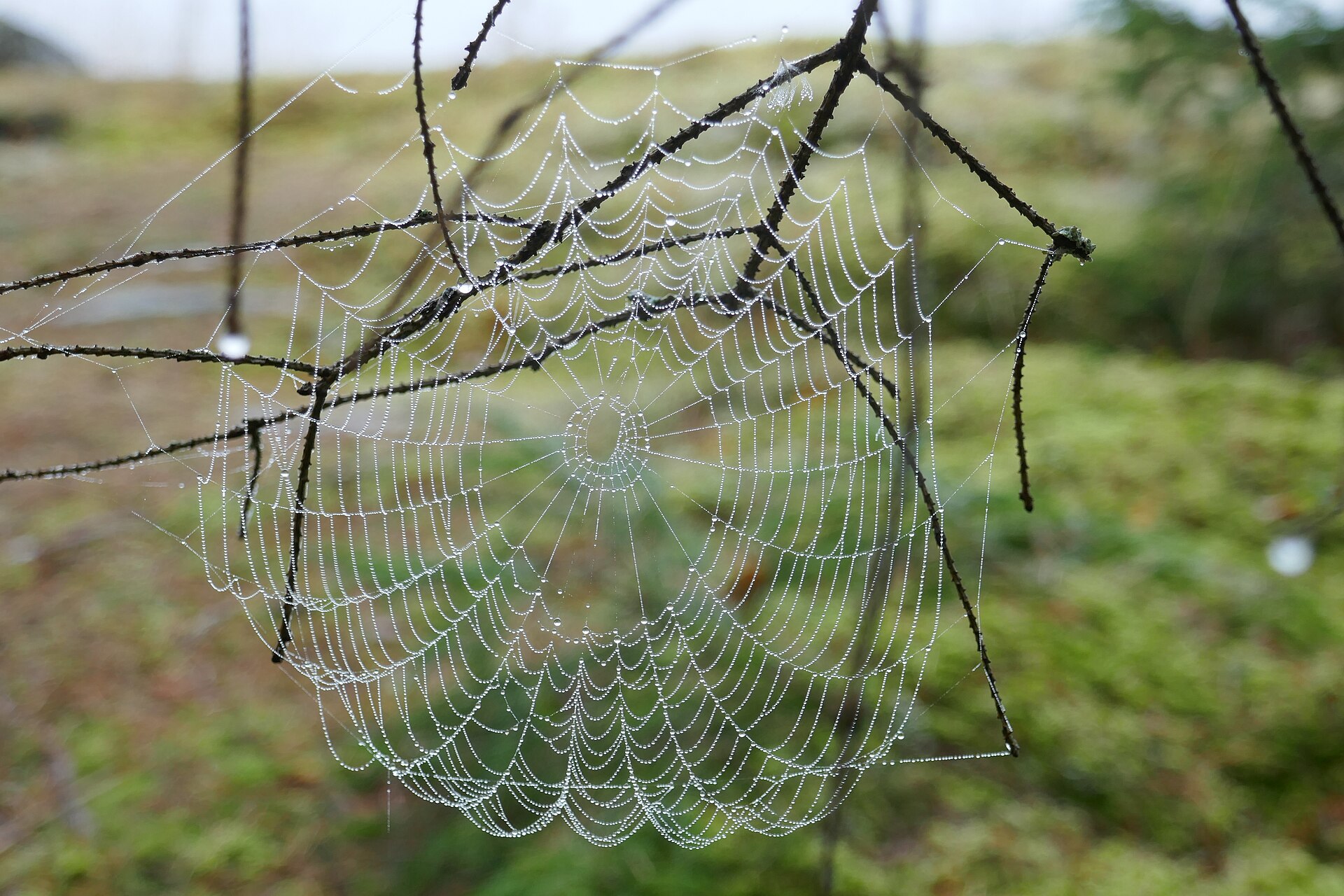
It is tempting to call every bead on a leaf dew after walking through fog. But dew forms when a surface cools to the dew point of the adjacent air and water vapour condenses directly onto it. That differs from pre-existing fog droplets striking and collecting on a leaf. [7] [8]
Dr Kimmo · CC BY 4.0 · Wikimedia Commons · License
The WMO describes the deposition of fog droplets on objects as a separate phenomenon. Droplets collecting on leaves can merge and drip to the ground. Wetness without rain therefore does not establish whether the water came from dew or deposited fog droplets. [8]
Michal Klajban · CC BY-SA 4.0 · Wikimedia Commons · License
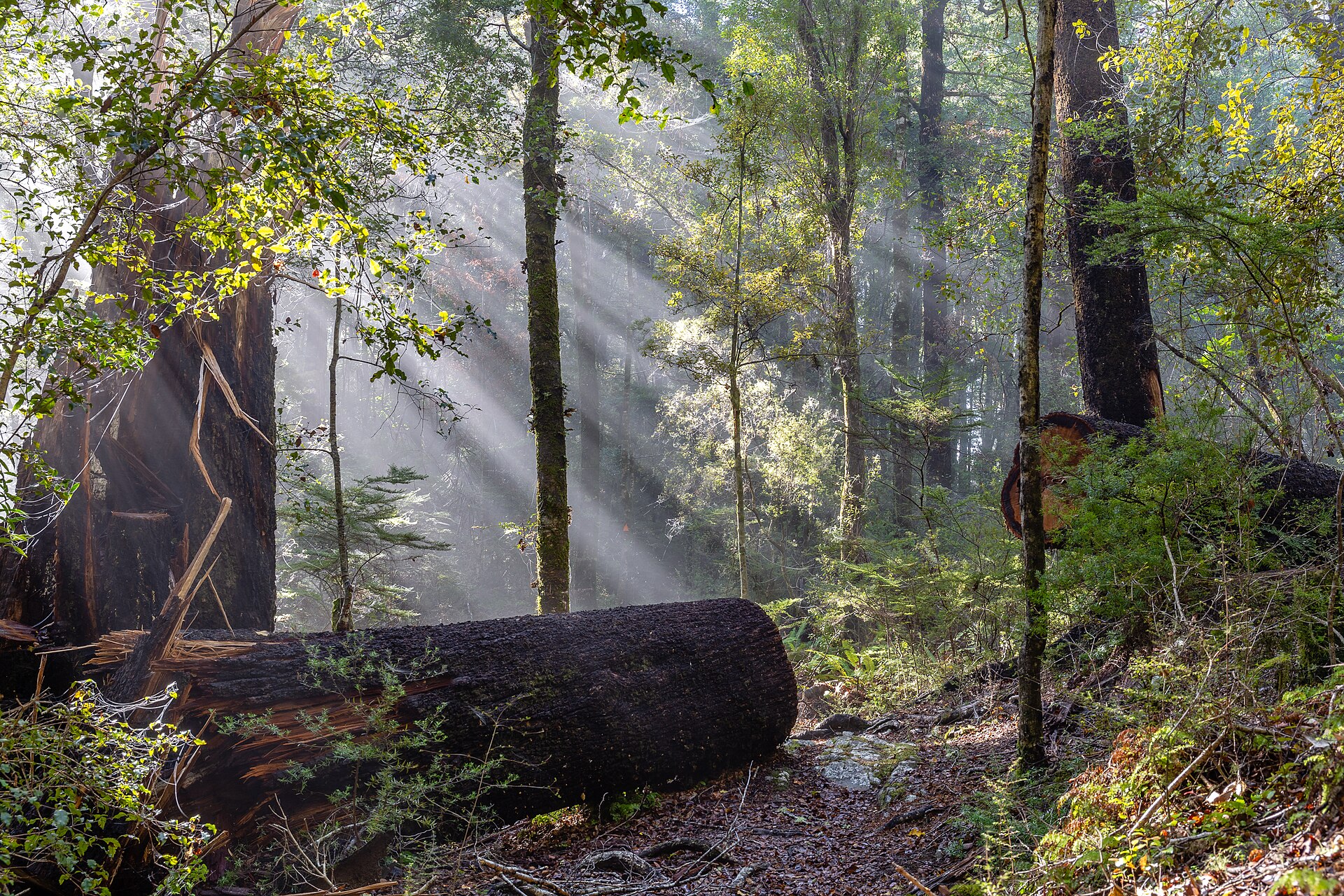
The wonder of fog lies in the different movements of heat and water behind a similar white veil. Next time, look beyond “it is cold.” Ask whether the ground cooled, air crossed a cold surface, or warmer water supplied moisture. Those questions reveal intricate order within an everyday part of creation.