
If you watch a rose of Sharon shrub from the same spot for several days, you may keep seeing similar flowers. But is today’s blossom the one you saw yesterday? To answer that question, separate how long one flower remains open from how long a shrub continues to flower. The short life of a blossom and the Korean name mugunghwa, associated with endless flowering, describe different scales.
An individual flower commonly lasts about a day, but cultivars do not all finish flowering at the same time. Here we compare measurements from a Korean cultivation study and explain how to investigate the distinction without picking a flower.
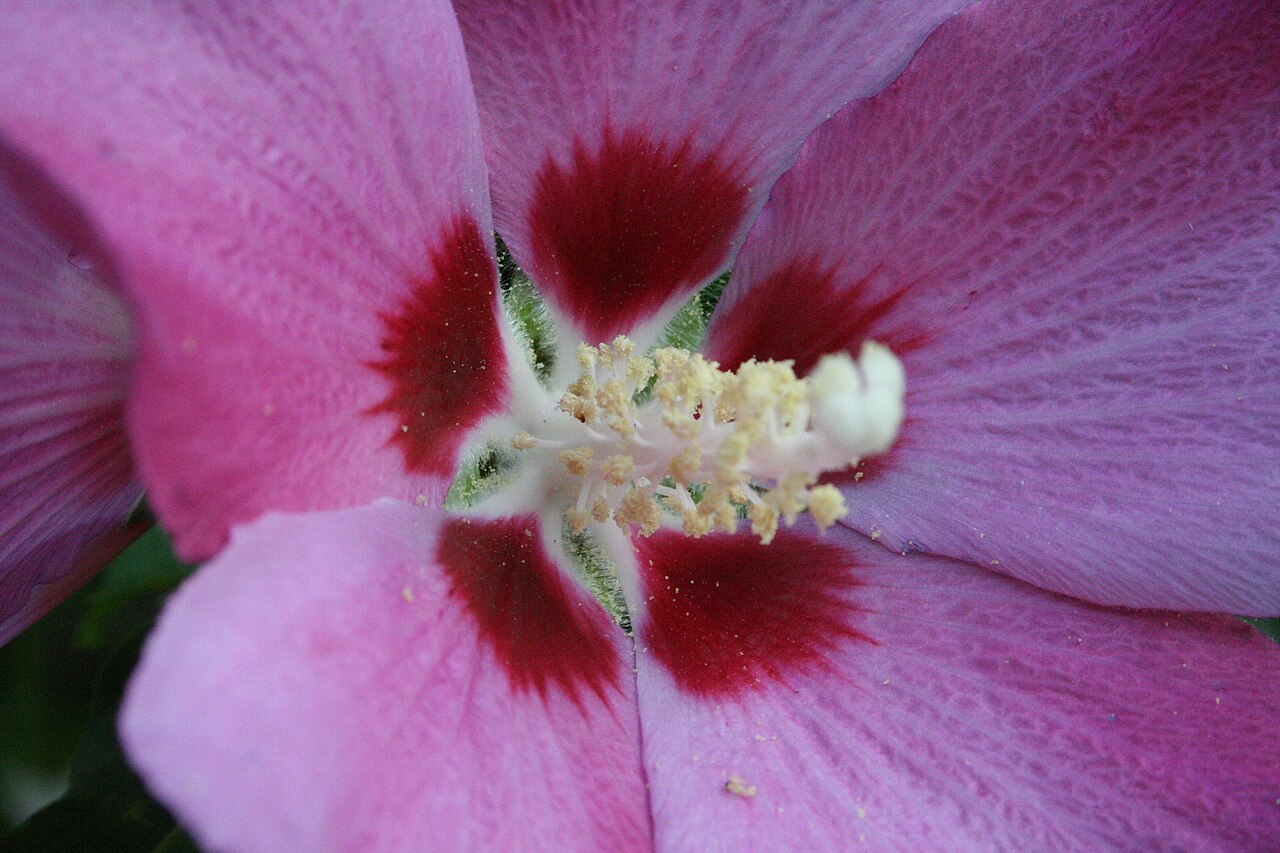
What do “one day” and “100 days” actually measure?
North Carolina State University’s plant guide describes individual flowers of Hibiscus syriacus as lasting about a day. Korea’s Ministry of the Interior and Safety describes a flowering season from early July to mid-October. The first description concerns one blossom; the second concerns the season when flowers can be seen on the shrub. Neither implies that a single blossom stays open for months. [1] [2]
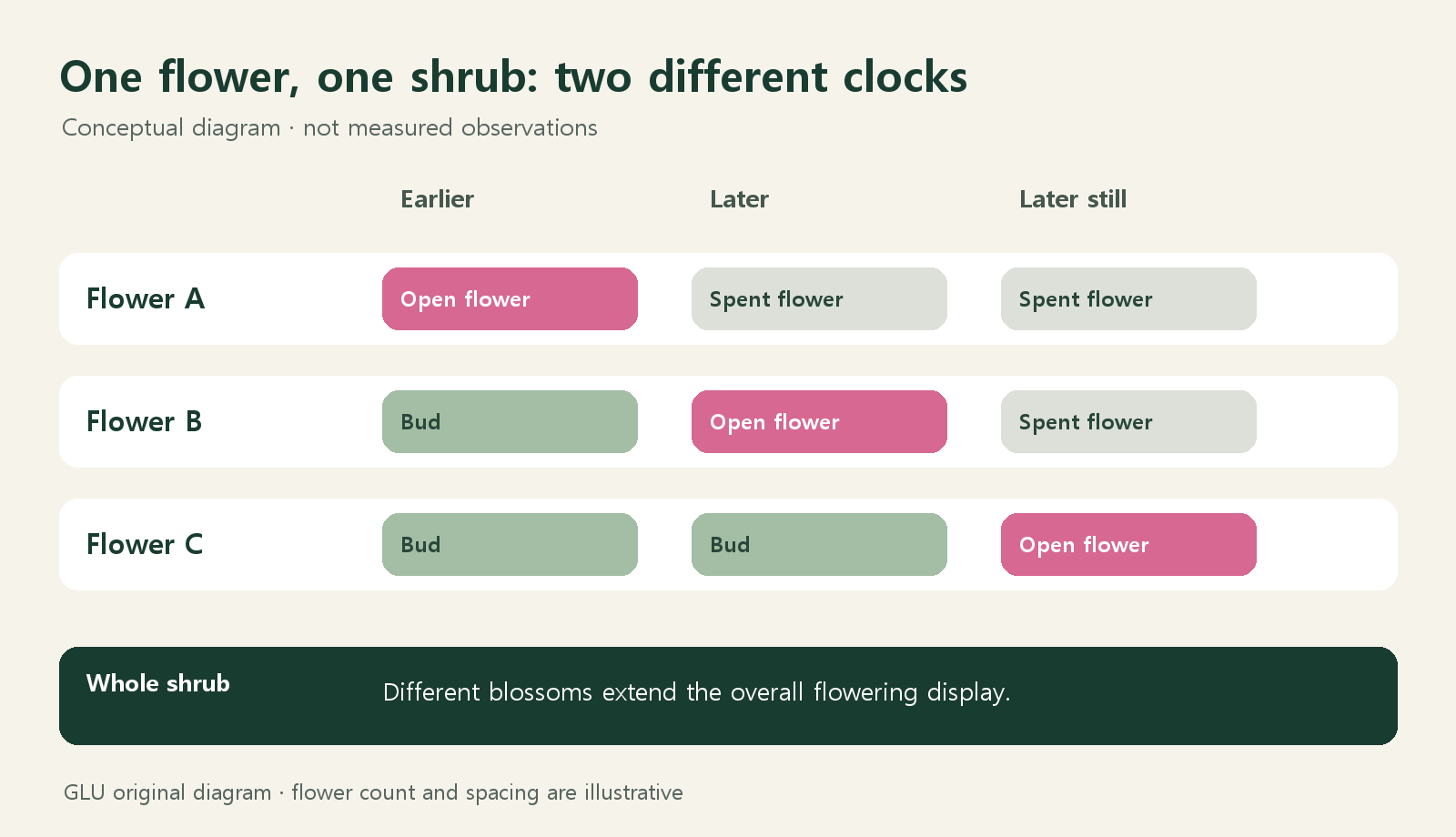
A shrub can appear to be constantly in bloom because the flowering of different blossoms follows in succession. The diagram below simplifies that distinction. The number of flowers and the intervals shown are illustrative, not measurements of an actual shrub.
A cultivation study makes the distinction concrete. In a table of flowering characteristics recorded in Cheonan in 2012, Korean researchers reported the same range of individual flower longevity for rose of Sharon ‘Samchully’ and the interspecific hybrid ‘Daewangchun’, but different seasonal blooming durations. [3]
| Plant studied | Individual flower longevity | Seasonal blooming duration |
|---|---|---|
| Rose of Sharon ‘Samchully’ | 13–15 hours | 75 days |
| Interspecific hybrid ‘Daewangchun’ | 13–15 hours | 102 days |
Selected values reorganized from Table 5 of Ha, Lim and Shim (2015). These results apply to the cultivation conditions in Cheonan. ‘Daewangchun’ is a hybrid of H. syriacus and H. sinosyriacus; its values should not be generalized to all rose of Sharon plants.
The practical conclusion is straightforward: choosing a cultivar for long-lasting individual flowers is different from choosing one for a long flowering season. If you want prolonged garden color, check both traits in the cultivar description.
A flower closing and a flower falling are different events
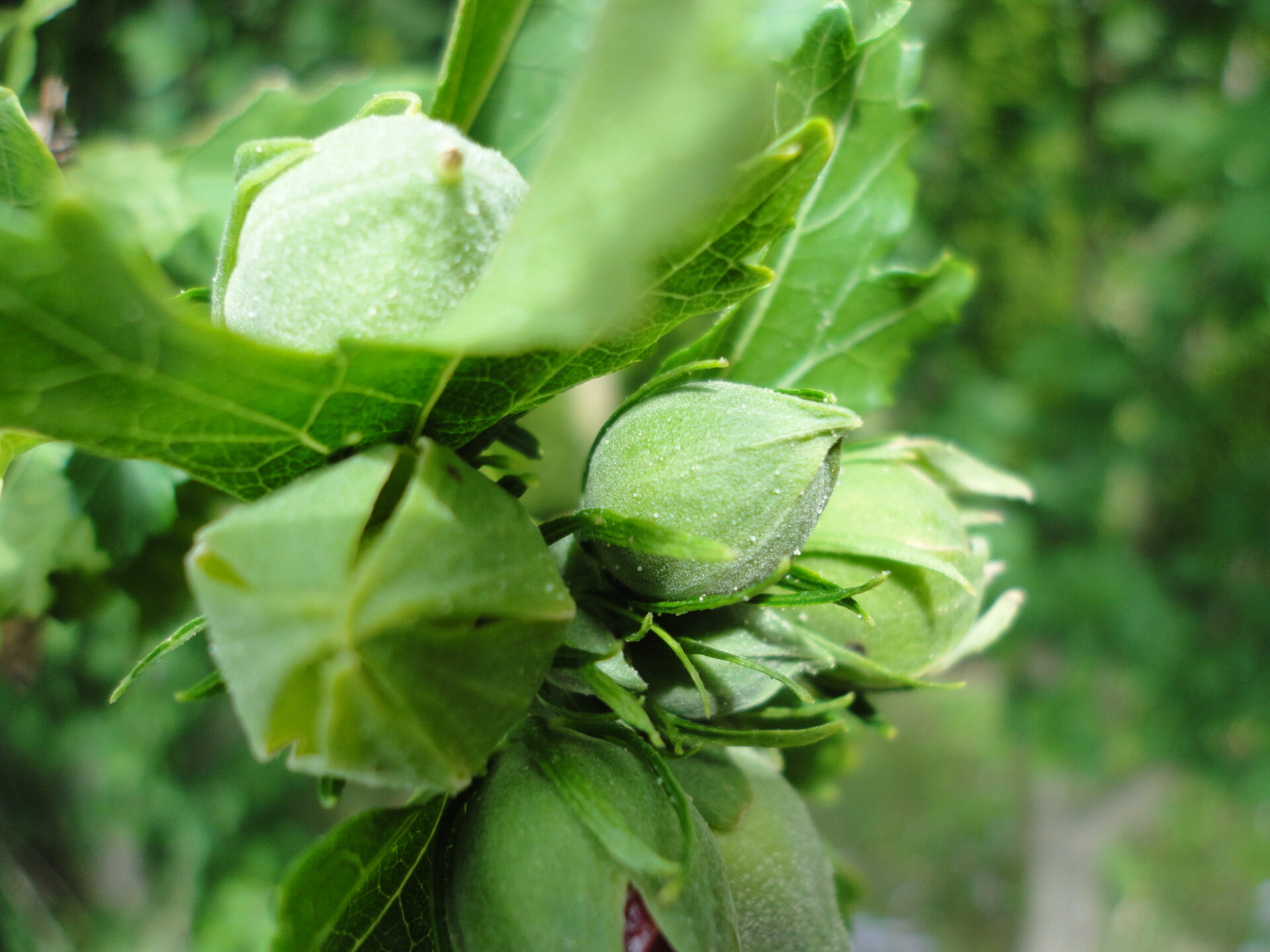
Petals opening, folding or wilting, and eventually falling are stages worth recording separately. If petals close in the afternoon, that does not establish that the whole flower and its stalk detached at that moment. In particular, claiming that a plant sheds fresh flowers to prevent disease requires evidence comparing senescence and disease occurrence.
A 2009 study of floral senescence in H. syriacus examined the relationship between ethylene production before full bloom and the timing of senescence. Findings including accelerated senescence after ethylene treatment led the researchers to propose an important role for ethylene produced during flower opening. It is better supported to describe short flower life as a physiological process involving changes in petal tissues than as a simple housekeeping strategy. [4]
Nor is it accurate to assume that flowers of every single-flowered cultivar last one day and those of every double-flowered cultivar last three. A 2026 study of ‘Samilhong’ reports differences in longevity between single-flowered cultivars. Petal arrangement alone is insufficient to assign a lifespan without checking the cultivar and measurement conditions. [5]
Some rose of Sharon flowers have no red center
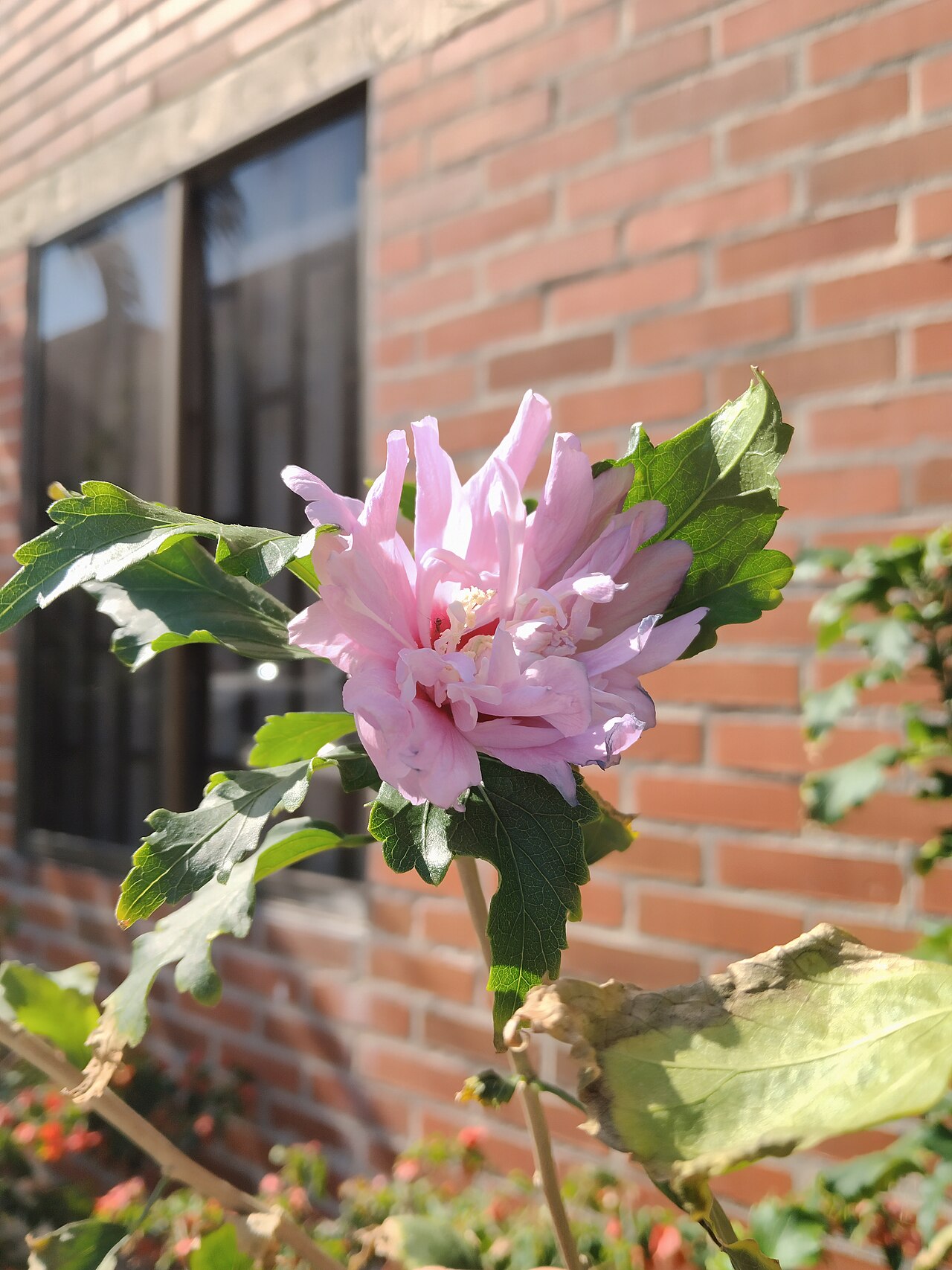
The red central marking is commonly called dansim in Korean. But it is not present in every rose of Sharon. The Korean ministry distinguishes groups including those with a red center and the Baedal group, while the Royal Horticultural Society describes ‘Diana’ as having pure white single flowers. [2] [6]
At the center of a flower you can also see a column-like structure carrying anthers. Try locating the red marking and the pollen-bearing parts separately in the photograph. Distinguishing color from structure helps you examine flowers without red markings, too. A single photograph, however, cannot reveal which color an insect followed.
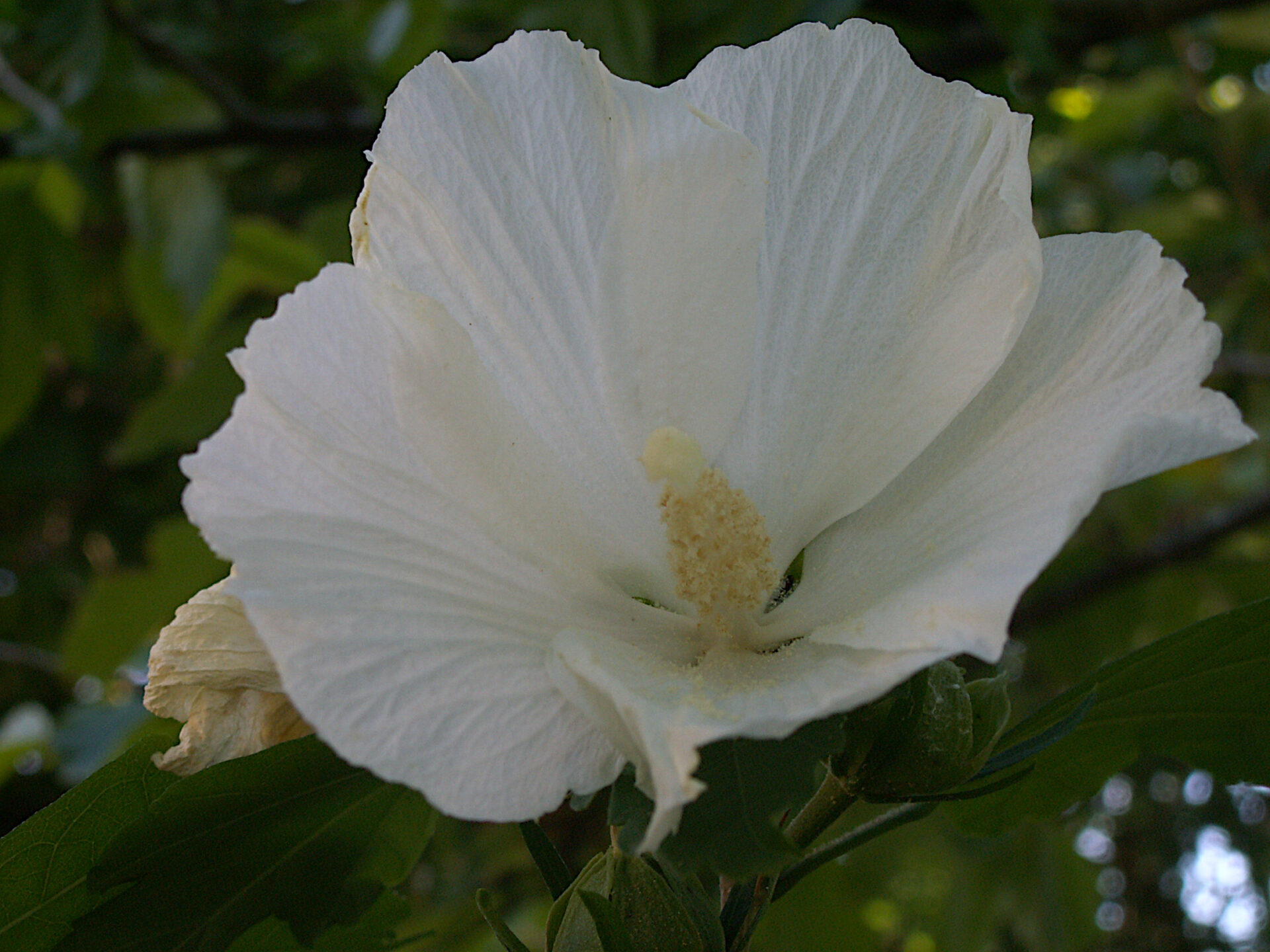
When watching insects, distinguish a flower visit from successful pollination. An insect landing on a flower does not by itself prove that pollen reached a stigma. Record whether the visitor touches the center and which parts make contact during its stay; those details make an observation more informative.
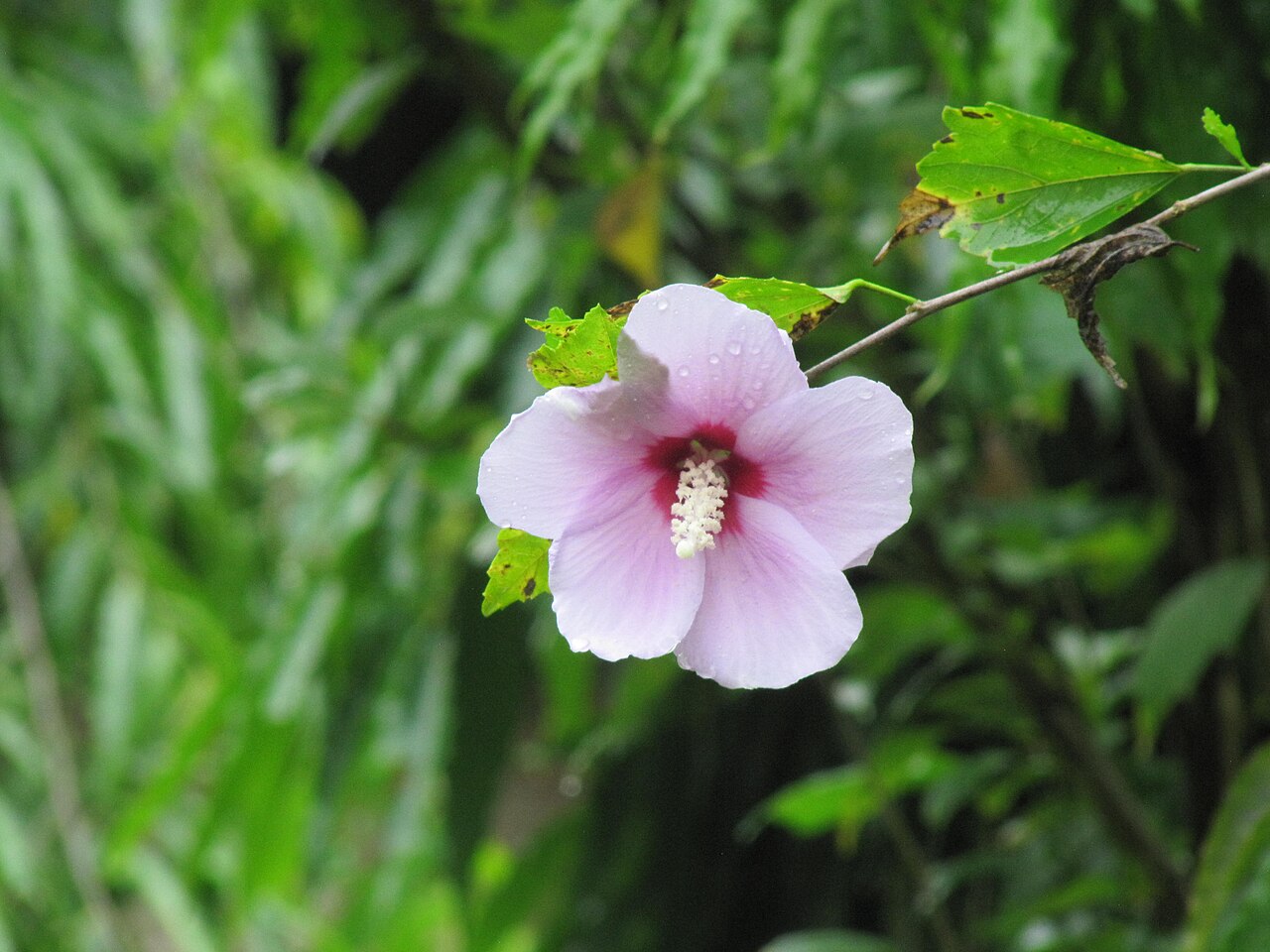
Three visits to check whether it is yesterday’s flower
The procedure below is a recording method readers can try, not a report of field measurements made by GLU. It is designed to distinguish individual blossoms from flowering across a shrub. Photographs allow the comparison without picking flowers or attaching markers to branches.
- First morning: Choose a branch at eye level and photograph it with the branch junction and leaves visible. Mark flowers and buds A, B and C on a copy of the photograph. Record the cultivar if known.
- Late afternoon the same day: Photograph from the same direction. Record separately whether A’s petals are open or folded and whether they remain attached. The change happened between the last observation of an open flower and the first observation of a folded one.
- The next morning: Locate A again using branch junctions and leaf positions. The key is not to mistake newly opened B for A. If A is still open, continue observing rather than assuming the cultivar must follow a one-day schedule.
| Observation | State of flower A | State of bud B | Weather and notes |
|---|---|---|---|
| First morning | Record your observation | Record your observation | Record your observation |
| First late afternoon | Record your observation | Record your observation | Record your observation |
| Next morning | Record your observation | Record your observation | Record your observation |
Do not calculate an exact lifespan in hours from one or two visits. If a flower folded between visits, you know only that the change happened within that interval. A short observation also cannot reveal the total number of flowers produced in a season or the length of the entire season. Those questions require tracking the same shrub for longer.
National symbolism and native range answer different questions
Being Korea’s representative flower and being native to a particular place are different matters. The Royal Botanic Gardens, Kew’s Plants of the World Online currently lists southern China and Taiwan as the native range of H. syriacus and Korea among the areas where it has been introduced. That is the botanical checklist’s assessment of distribution. It does not negate the plant’s long cultural significance in Korea. [7]
Korea’s Ministry of the Interior and Safety describes how the mugunghwa became established as the national flower through the anthem and modern history. The epithet syriacus alone should therefore not be treated as proof of a Syrian origin, nor should national-flower status be taken to mean that it is a species endemic to Korea. [2] [7]
The Korea Forest Service’s planting and management guide also addresses plant form with regard to branch development and flower-bud production. It offers a practical reason to look beyond a single blossom to the whole shrub. For actual pruning, consult guidance appropriate to the planting purpose and the plant’s condition. [8]
If you remember one distinction when standing beside a mugunghwa, make it the time of one flower versus the time of the whole shrub. Looking closely enough to tell yesterday’s flower from today’s is a small beginning in learning the intricate arrangement of a familiar part of God’s creation.
References
- NC State Extension: Hibiscus syriacus — Individual flowers, form and fruit.
- Ministry of the Interior and Safety: Mugunghwa — Korean flowering season, flower groups and symbolism.
- Ha, Lim & Shim (2015): Development of a New Hibiscus Cultivar ‘Daewangchun’ — Table 5: Cheonan observations in 2012.
- Seo et al. (2009): Effects of various chemical agents and early ethylene production on floral senescence — Research abstract on ethylene and floral senescence.
- Ha et al. (2026): Hibiscus syriacus ‘Samilhong’ — Longevity differences between single-flowered cultivars.
- Royal Horticultural Society: Hibiscus syriacus ‘Diana’ — Description of a pure-white, single-flowered cultivar.
- Royal Botanic Gardens, Kew: Plants of the World Online — Accepted name and native versus introduced distribution.
- Korea Forest Service: Mugunghwa Planting and Management Guide — Page 52: plant form, branch development and flower buds.