
The word “atom” comes from the Greek “atomos” — “that which cannot be cut.” Yet even into the early 20th century, more than two thousand years after that name was coined, whether atoms actually existed remained a serious dispute within physics. No one had ever seen one directly. When their reality was finally proven, an even more disconcerting fact emerged: despite a name that means “indivisible,” the atom turned out to contain further structure inside it. Coming to believe that something never seen is real, and then finding structure inside something supposedly uncuttable — these two reversals are at the heart of the atom’s scientific history.

How Did We Come to Believe in Something We’d Never Seen?
One of the earliest records concerning atoms goes back to ancient Greece. Leucippus, thought to have been active around the 5th century BCE, is identified by Aristotle and others as the founder of atomism, with his student Democritus usually credited with systematizing and expanding the theory. Leucippus’s life, however, is so poorly documented that his very existence has at times been disputed. Independently, Kanada of the Nyaya-Vaisheshika school of Indian philosophy put forward his own concept of an indivisible particle, the “paramāṇu.” Both traditions, though, were philosophies rooted in logical speculation rather than scientific theories tested by experiment.
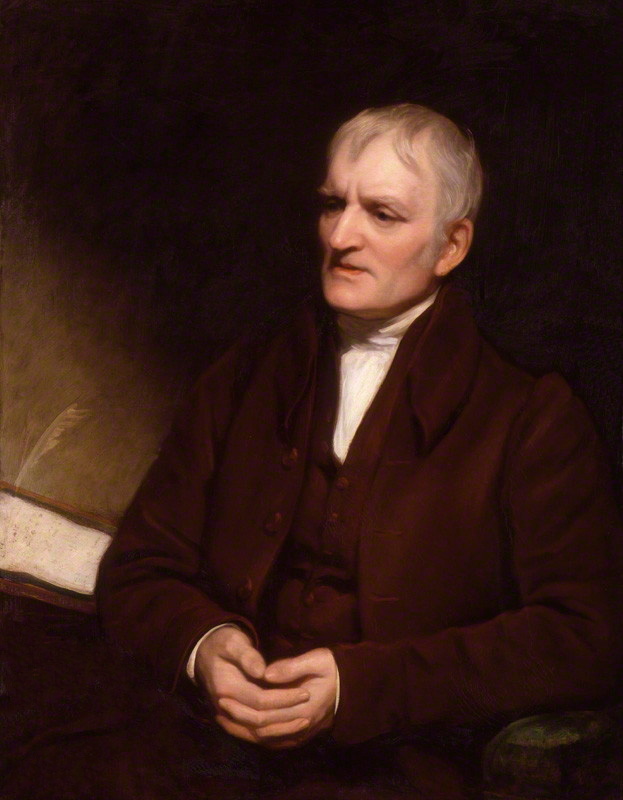
It was the early-19th-century British chemist John Dalton who put the atom on an experimental footing. The theory he published in his 1808 book “A New System of Chemical Philosophy” is more accurately described as the first quantitative, scientific atomic theory than as a “discovery of the atom.” Drawing on the law of multiple proportions — the observation that when two elements form more than one compound, the mass ratios between them always reduce to simple whole numbers — he proposed that each element consists of identical particles of a characteristic weight, and that compounds form when atoms of different elements combine in whole-number ratios. Because it rested on chemical data measured on a balance rather than on philosophical intuition, it started from a wholly different place than ancient atomism.
It Was a Tremor That Ended the Skepticism
For nearly a century after Dalton, doubts about the atom’s reality did not go away. In the late 19th century, the Austrian physicist and philosopher Ernst Mach, from a positivist standpoint, regarded atoms — which could not be confirmed by the senses — as little more than a convenient calculating device. Several scholarly sources recount that, right after Boltzmann’s lecture at the Vienna Academy of Sciences in 1897, Mach said, “I don’t believe that atoms exist.” The chemist Wilhelm Ostwald, arguing from the standpoint of energetics, likewise treated atoms, molecules, and ions as “mathematical fictions” useful only for describing energy processes.
The decisive blow to this dispute came from Albert Einstein. In a 1905 paper, he quantitatively explained Brownian motion — the irregular jittering of tiny particles suspended in water — as the result of random thermal collisions with water molecules. It was the French physicist Jean Perrin who actually put this prediction to the test. Tracking the movement of tiny particles under a microscope from 1908 to 1913, he confirmed that Einstein’s prediction held exactly, and in the process independently measured Avogadro’s number at about 6.8×10^23. Perrin received the 1926 Nobel Prize in Physics for this work. Ostwald, once the leading voice of skepticism, was persuaded by the result and changed his position, later writing that he now had experimental evidence for the particulate nature of matter. The decisive evidence that made people believe something never seen was real turned out to be, in the end, the tremor of particles too small to see.
When It Was Cracked Open, the Mass Was Concentrated in One Spot — Not Mostly Empty Space
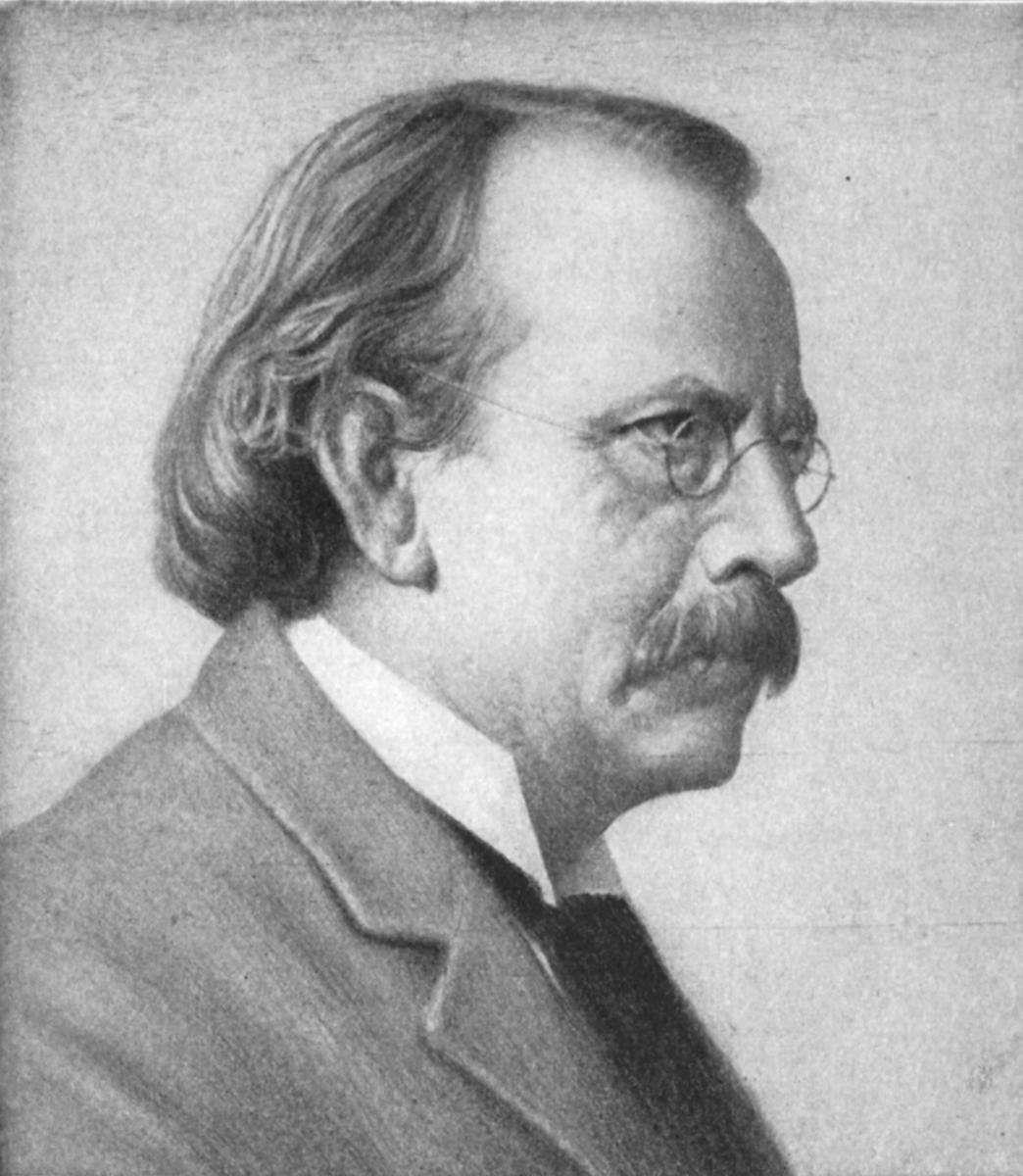
No sooner was the atom’s reality proven than an even more disconcerting question followed. Clues emerged that the atom, supposedly “no longer divisible,” contained something else within it. In 1897, Joseph John Thomson, by bending cathode rays with electric and magnetic fields, found that the particle’s charge-to-mass ratio was far greater than that of a hydrogen ion — meaning the particle was far lighter than an atom. It was the first experimental evidence that a particle far lighter than the atom and carrying negative charge, the electron, existed inside the atom.
It is commonly said that “Rutherford performed the gold foil experiment,” but that is not accurate. The experiment — firing alpha particles at thin gold foil and measuring their scattering angles — was carried out directly by Hans Geiger and Ernest Marsden at the University of Manchester between 1908 and 1913, under Ernest Rutherford’s direction. Most alpha particles passed straight through the foil, but some were deflected by more than 45 degrees or bounced back entirely — a result the then-dominant “plum pudding” model proposed by Thomson could not explain. Rutherford’s real contribution was not the experiment but its interpretation. In a 1911 paper, he proposed a model in which most of the atom’s mass and positive charge are concentrated in a central region far smaller than the volume of the atom. The experiment was carried out by Geiger and Marsden; the interpretation and the proposal of the nuclear model were Rutherford’s.
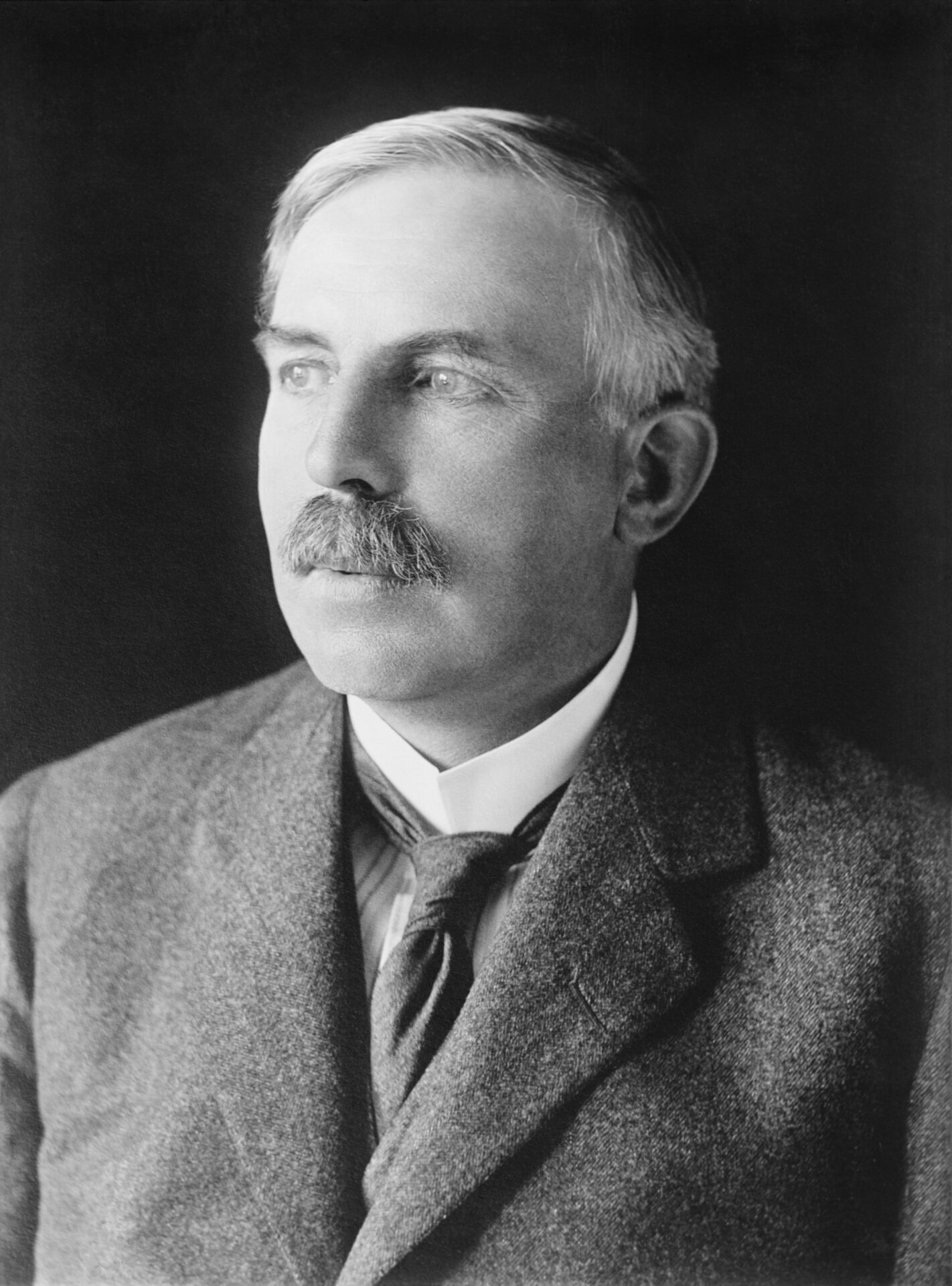
Just how small this nucleus is can be gauged by order of magnitude. The nucleus’s radius is roughly 10^-15 meters (a femtometer), while the whole atom’s radius is roughly 10^-10 meters (an angstrom) — a ratio of about a hundred thousand to one. And yet more than 99.9% of the atom’s mass is concentrated in this nucleus, because a single electron’s mass is only about 1/1836 that of a proton. The atom is often described as “mostly empty space,” but that is not accurate. What it really means is that almost all of the atom’s mass is concentrated in a nucleus that, by radius, is only one hundred-thousandth of the atom itself. As quantum mechanics developed, it became clear that electrons are not particles circling in fixed orbits but instead fill that space as a cloud-like probability distribution spread around the nucleus. Rutherford’s original, classical picture of the nucleus was thus supplemented by this quantum-mechanical account.

Bohr’s Picture Made History
In 1913, just two years after Rutherford’s nuclear model, the Danish physicist Niels Bohr proposed a model in which electrons orbit the nucleus in fixed paths, like planets. By assuming that an electron’s angular momentum could only take integer multiples of a specific value, the model exactly reproduced the hydrogen atom’s spectral lines, which had until then gone unexplained. This orbital model remains the most common symbolic image of the atom even today. But it is, strictly speaking, a historical model from 1913. As quantum mechanics took hold, it became clear that an electron’s position is described not by a definite orbit but by a cloud-shaped probability distribution around the nucleus. In principle, exactly where an electron is at a given instant cannot be known — only the probability of finding it can be calculated. Bohr’s model was an important stepping stone toward understanding atomic structure, but what science now says the atom actually looks like is closer to a cloud than to orbits.

The nucleus, too, has structure inside it. James Chadwick discovered the neutron in 1932 by analyzing the neutral radiation produced when alpha particles struck beryllium, and earlier, in 1920, Rutherford had already raised the possibility of an uncharged particle on the grounds that nuclear mass could not be accounted for by protons alone. Later, it was proposed in 1964 and supported by experiment in 1968 that protons and neutrons are themselves made of still smaller particles called quarks — but quarks, owing to a property called color confinement, can never be isolated on their own. Rather than saying the nucleus can be split indefinitely, it is more accurate to say it has internal structure that can no longer be separated into individual free particles.
Now We Actually See the Atom
For more than half a century after the atom’s existence was proven and its internal structure worked out, humanity had never actually “seen” an atom directly. This final barrier fell in 1981. Gerd Binnig and Heinrich Rohrer, at IBM’s Zurich Research Laboratory in Switzerland, invented the scanning tunneling microscope (STM). The device exploits the quantum-mechanical tunneling effect: when a sharp tip is brought very close to a sample’s surface, a tiny current flows between them even though they never actually touch, and the strength of that current responds with extreme sensitivity to the distance between tip and surface. By scanning the tip across the surface and recording how that current changes, researchers can map the surface’s contours down to the level of individual atoms. Binnig and Rohrer received the 1986 Nobel Prize in Physics for this invention.
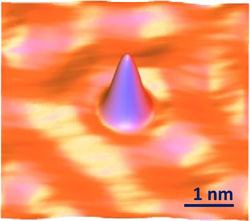
The atom that Leucippus and Democritus once imagined through speculation, that Dalton estimated with a balance, and that Einstein and Perrin proved through a tremor, can now be met face to face as individual dots on a screen. It took humanity more than a century of debate and experiment to accept that something unseen was real — and once its reality was confirmed, we then had to face yet another, more intricate order within it. That each layer of this nested structure — electron and nucleus, the protons and neutrons within it, and quarks within those — follows precise order rather than accidental jumble invites us to reconsider the sophistication built into creation. An unseen, intricate order has, step by step, revealed itself before human observation and reasoning in just this way.
References
- Britannica: Leucippus
- Britannica: Vaisheshika
- Science History Institute Digital Collections: A New System of Chemical Philosophy (Dalton, 1808)
- Journal of Chemical Education (ACS): Perrin's Experiment Handed Ostwald 'Avogadro's Constant'
- NobelPrize.org: The Nobel Prize in Physics 1926 (Jean Perrin)
- Science History Institute: Joseph John (J.J.) Thomson
- Live Science: Gold Foil Experiment
- APS Physics: This Month in Physics History — Rutherford and the Discovery of the Atomic Nucleus
- Royal Society: Bakerian Lecture — Nuclear Constitution of Atoms (Rutherford, 1920)
- NobelPrize.org: The Nobel Prize in Physics 1986 (Binnig & Rohrer, STM)