
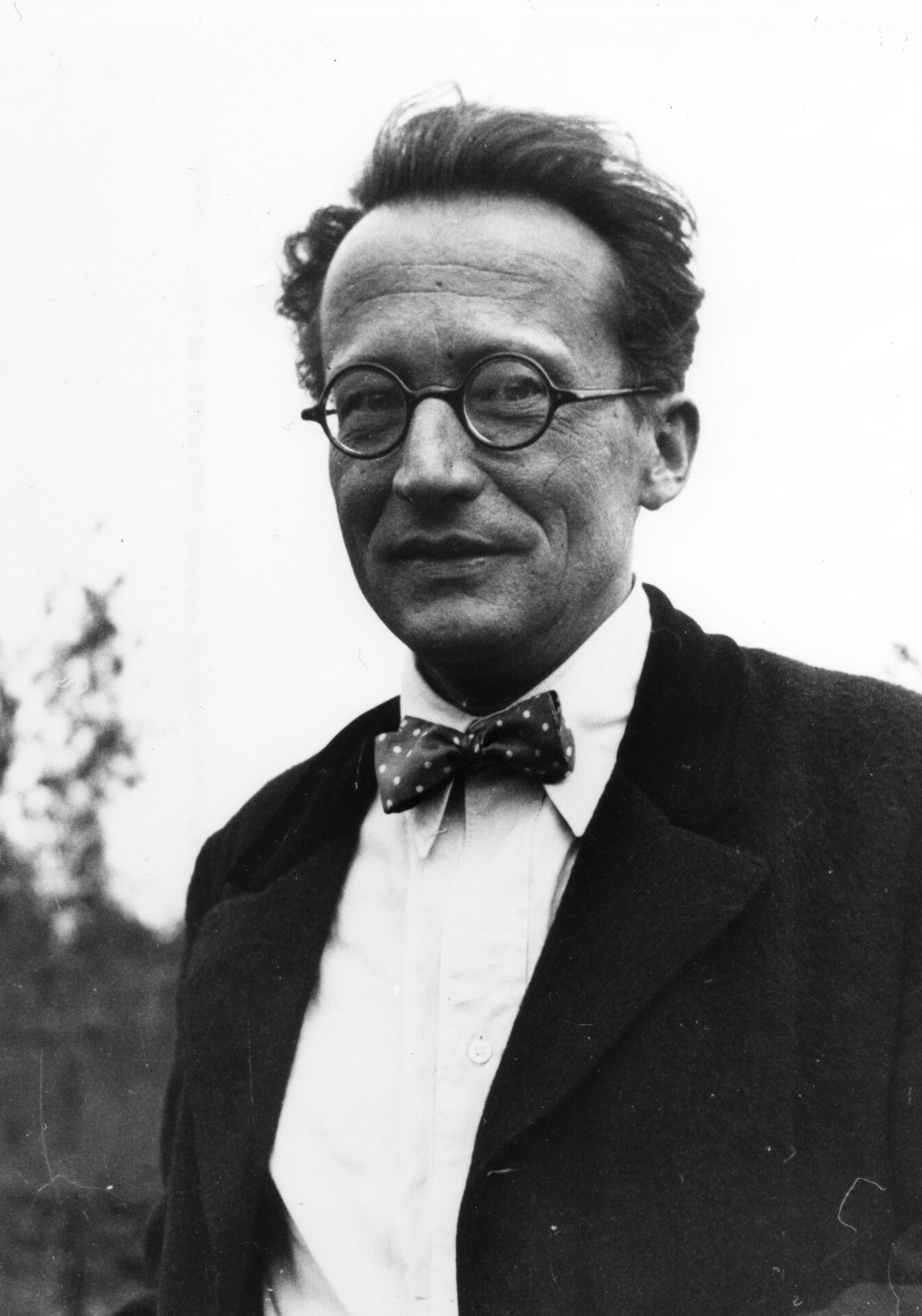
“There is a cat inside a box. Until the box is opened, this cat is both alive and dead at the same time.” It may be the most widely known — and most widely misunderstood — sentence in the entire history of science. “Schrödinger’s cat” appears in almost every popular book, documentary, and internet meme that introduces quantum mechanics. Yet the Austrian physicist Erwin Schrödinger, who devised the thought experiment, never presented it as an example of quantum mechanics’ mysterious wonder. Instead, he designed it as a sharp rebuttal aimed at the Copenhagen interpretation, which was the mainstream view at the time.
In quantum mechanics, “superposition” describes a phenomenon in which a system is described as existing in several possible states at once, until it is observed. In the world of very small particles — electrons, photons — this superposition is a well-verified phenomenon, confirmed repeatedly by experiment. The question was whether this same superposition could be applied, unchanged, to something as large and complex as a cat, and that is precisely the question Schrödinger put the cat in the box to ask. This thought experiment has survived for more than ninety years, most likely because it keeps reminding us, again and again, just how strange and intricate the rules governing our physical world are at its smallest scales. Let’s go back to the original 1935 paper to see what Schrödinger actually intended to say, and what the more than ninety years of experiments and debate that followed have revealed — and what they still have not resolved.
What Schrödinger Actually Meant to Say
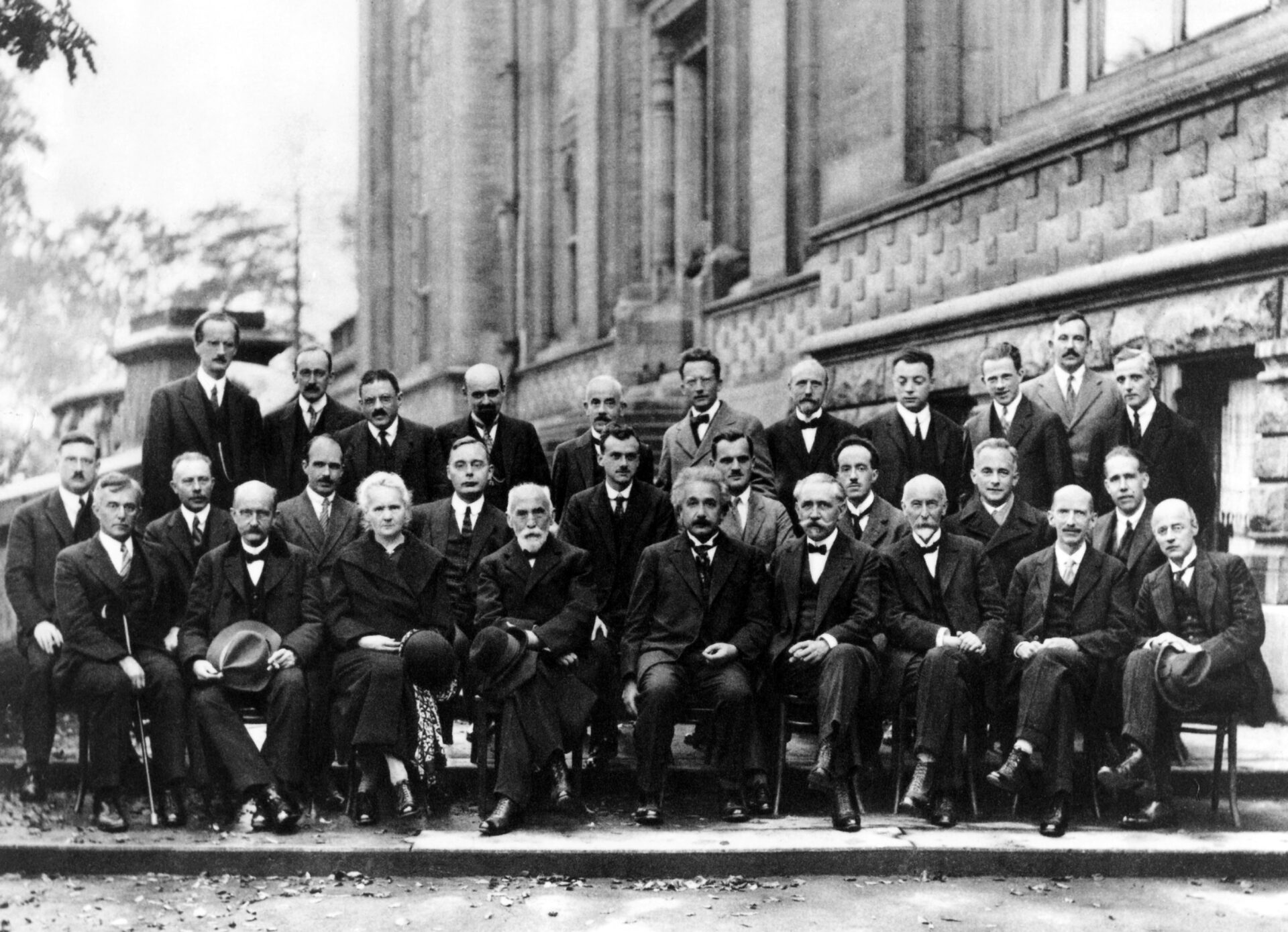
In 1935, Schrödinger published a three-part paper titled “The Present Situation in Quantum Mechanics” (Die gegenwärtige Situation in der Quantenmechanik) in the German journal Naturwissenschaften, issue 23. The paper’s original intent can still be traced today through J.D. Trimmer’s authoritative 1980 English translation, published in the Proceedings of the American Philosophical Society. In the passage where the cat thought experiment appears, Schrödinger opens with the line “one can even set up quite ridiculous cases” (burleske, meaning farcical or burlesque), and immediately introduces the apparatus made up of a box, a Geiger counter, radioactive material, and a cat.
The key here is Schrödinger’s choice of the word “burleske” (farcical, satirical). He did not present this case as a serious physical prediction; rather, he devised it as a rebuttal, to show just how absurd a conclusion you reach if you push the wave-function superposition that holds in the microscopic world, without any restriction, all the way into the macroscopic world. The Copenhagen interpretation holds that, before measurement, a quantum system exists in a superposition of several possibilities, and that measurement settles it into a single outcome; Schrödinger used the cat to show just how strange a conclusion results from applying that rule, unmodified, to a macroscopic object.
The thought experiment grew out of a correspondence with Einstein in the summer of 1935. On August 8 of that year, Einstein wrote to Schrödinger citing a keg of gunpowder in a chemically unstable equilibrium as an example, pointing out the problem that the quantum-mechanical wave function ends up describing “a mixture of not-yet-exploded and already-exploded states.” About ten days later, around August 19, Schrödinger replied with a version that swapped the gunpowder for a cat, uranium decay, and prussic acid, and in early September Einstein welcomed it, saying he was in complete agreement with the analogy. Einstein repeated the same analogy in a later 1950 letter, writing that the system’s wave function contains both a living cat and a shredded cat — but this, too, was written as a rebuttal to the Copenhagen interpretation, not as a claim that such a cat actually exists. For both Schrödinger and Einstein, this thought experiment was a tool for criticizing quantum mechanics, not for explaining it.

The Myth That “The Cat Is Half Alive and Half Dead”
And yet popular culture consumes it in exactly the opposite way. The sentence “the cat is really, literally alive and dead at the same time” is not what Schrödinger was trying to say. His argument was closer to a reductio ad absurdum: “If you apply the Copenhagen interpretation’s probability rules unchanged to a macroscopic object, you arrive at the absurd conclusion that it is in a mixed state of aliveness and deadness — therefore, this rule should not be applied to the macroscopic world as it stands.”
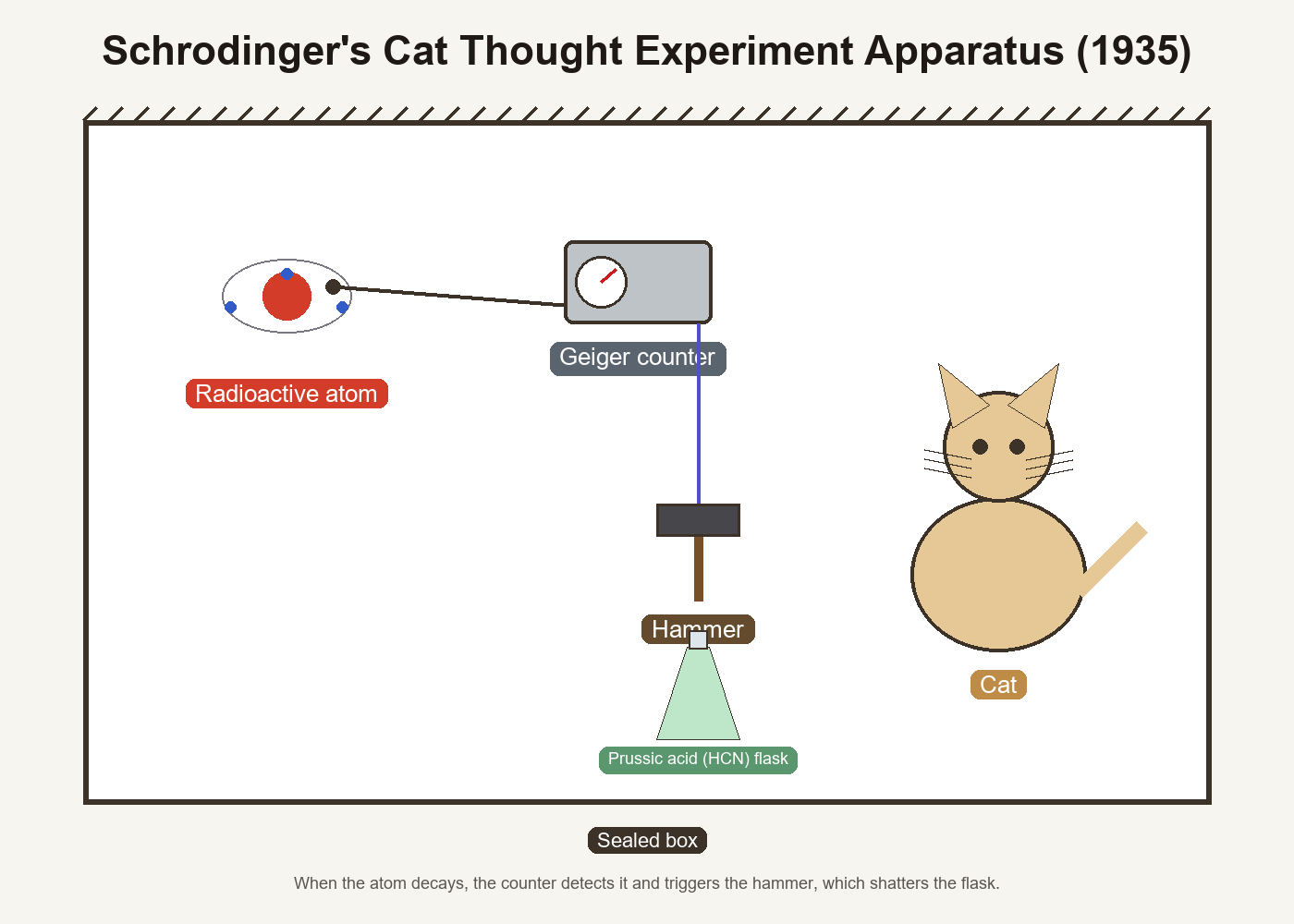
The specific setup of the thought experiment has also been popularly misreported. The apparatus in the original paper consists of a sealed box containing a minute amount of radioactive material, a Geiger counter to detect it, a relay that triggers a hammer when the counter detects a radioactive decay, and a flask of hydrocyanic acid (prussic acid, HCN) positioned to be shattered by the hammer. The probability that a single atom decays within one hour, and the probability that it does not, are each set at 50%. Yet quite a few Korean-language accounts describe the contents of this flask as “cheongsan-gari” (potassium cyanide, KCN). Potassium cyanide is a salt that is solid at room temperature, while the hydrocyanic acid specified in the original paper is an entirely different compound, existing as a liquid or gas. It may look like a trivial difference, but it is also the kind of detail that reveals how carefully the original source was checked. This matters because, apart from the thought experiment’s core message (“applying the Copenhagen interpretation unchanged to a macroscopic system leads to absurdity”), small details that drift further from the original with each repeated citation make it easy to lose the precise thread of the argument Schrödinger was actually making.

Decoherence — The Real Reason Superposition Disappears
That said, it is also not accurate to oversimplify this as “quantum superposition only happens in the microscopic world and cannot exist in principle in the macroscopic world.” The mathematics of quantum mechanics itself applies identically regardless of size, whether to a single atom or to a cat. What explains why macroscopic superposition vanishes almost instantly is not a prohibition written into the laws of nature, but a physical process called decoherence.
According to a review article physicist Wolfgang Zurek published in Physics Today in 1991, the surrounding environment has the effect of, in practice, continuously “monitoring” certain physical quantities of a quantum system, and as a result the superposition of that quantity collapses within an extremely short time and starts behaving like a classical (non-superposed) state. The larger an object is, the more the pathways for interacting with surrounding particles, light, and heat grow exponentially, so the superposition of a macroscopic object like a cat collapses so fast that it is effectively unobservable. In other words, there is no impassable, law-mandated boundary drawn between the microscopic and macroscopic worlds — there is only a “matter of degree”: how quickly decoherence happens.
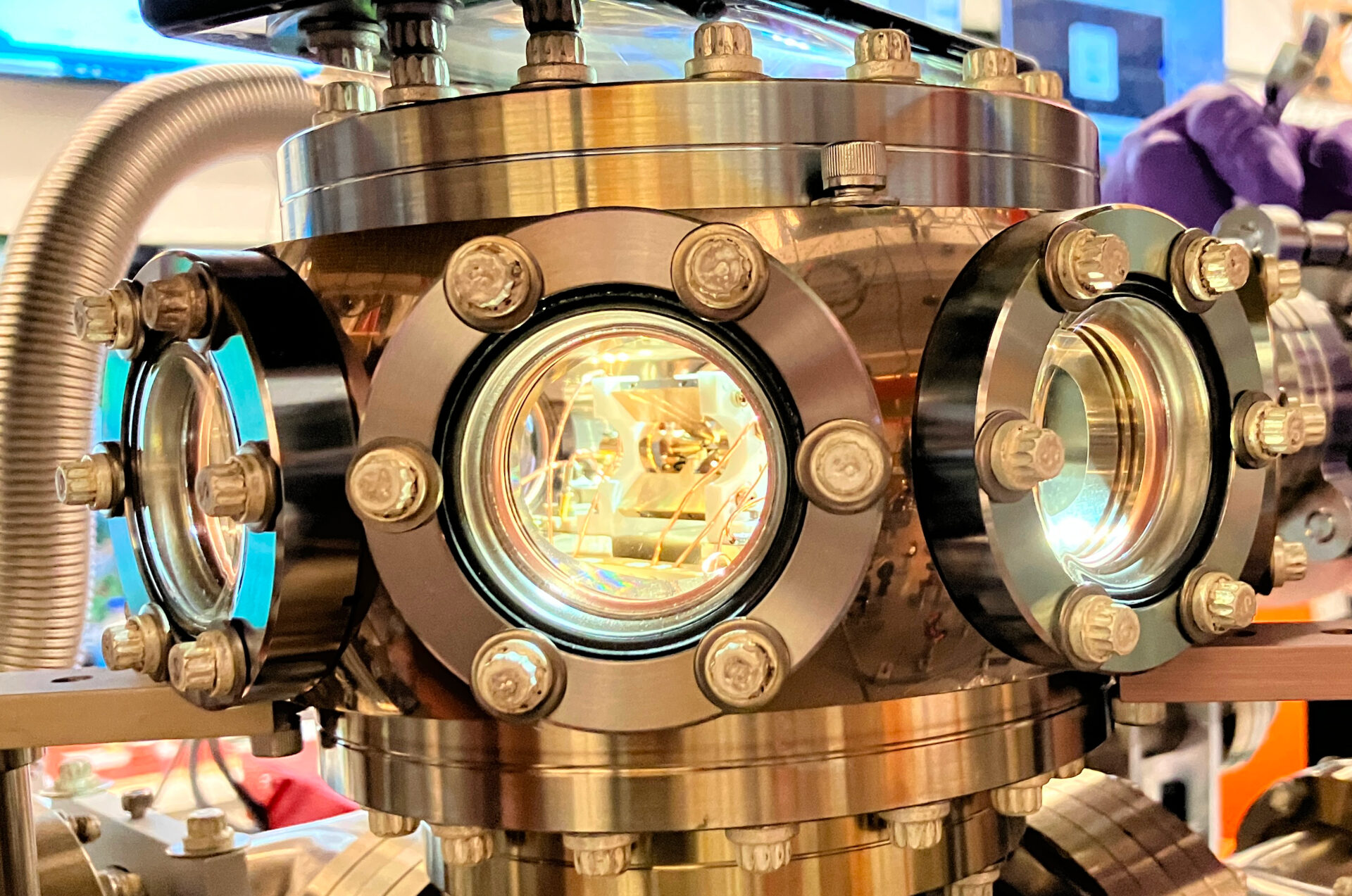
Experiments backing this up have kept pushing this boundary further over the past several decades. In 1996, a team led by David Wineland at the U.S. National Institute of Standards and Technology (NIST) laser-cooled a single trapped beryllium ion (⁹Be⁺) and created a superposition state in which the ion existed simultaneously at two positions separated by more than 80 nanometers — 11 times the ion’s own size — verifying this through interference. NIST’s announcement explicitly links this result to decoherence: any interaction with the surroundings breaks the superposition and collapses the ion into a single state, and the larger the separation, the more fragile the superposition becomes. The researchers interpreted this as exactly what explains why such superpositions are not observed in macroscopic objects. The fact that even a system as simple as a single ion becomes fragile in superposition from a separation of just a few tens of nanometers gives a sense of just how practically difficult it would be for something like a cat, made up of thousands of trillions of atoms, to sustain a superposition.
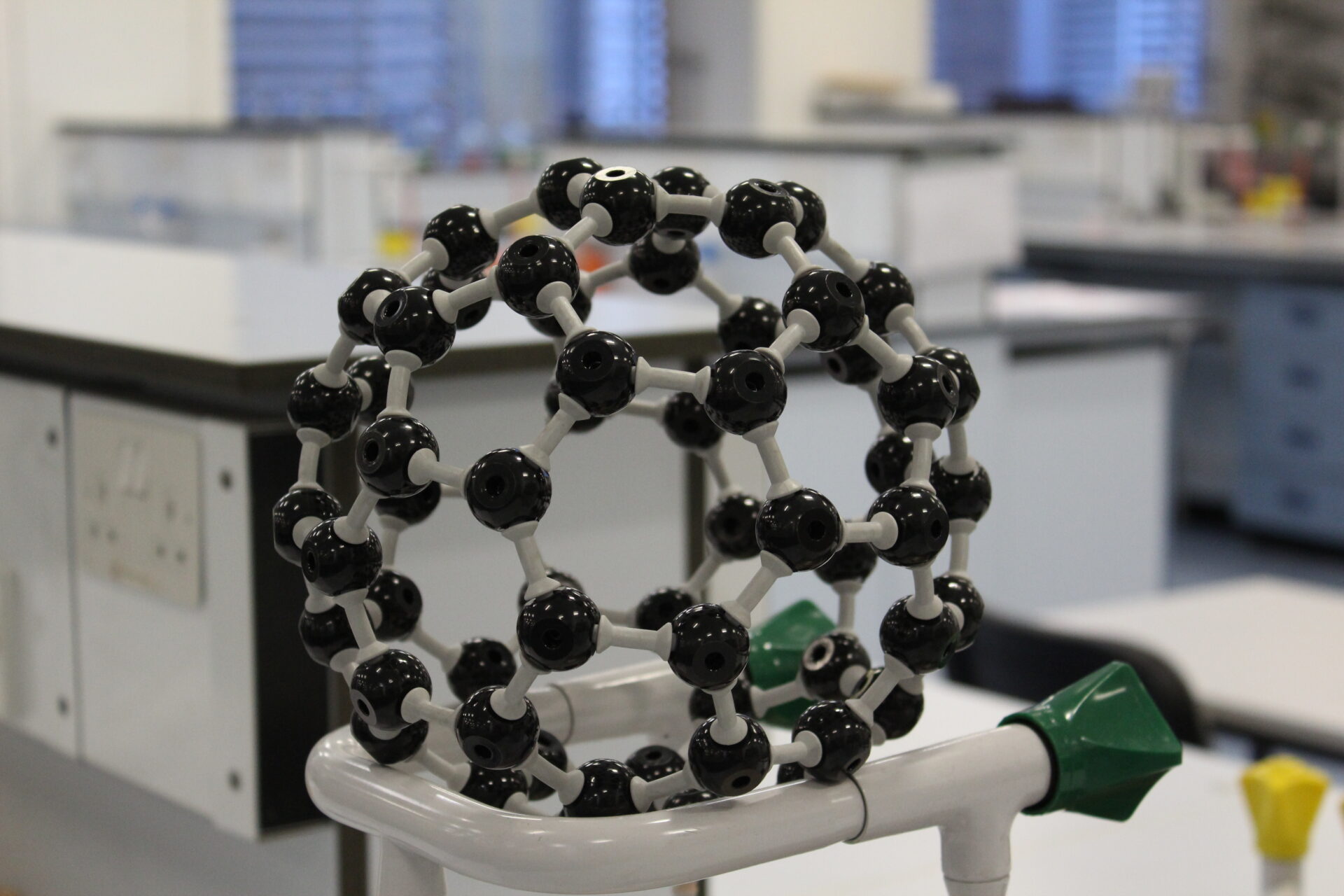
Three years later, in 1999, a team led by Anton Zeilinger at the University of Vienna in Austria published a matter-wave interference experiment using buckminsterfullerene (C60), a soccer-ball-shaped molecule made of 60 carbon atoms. Passing this molecule, with a mass of about 720 atomic mass units (amu), through a grating produced a diffraction pattern characteristic of a wave. Quantum wave behavior was confirmed not just for a single atom but for a molecule made of hundreds of atoms. Later, in 2019, the same University of Vienna team reported observing matter-wave interference in oligoporphyrin molecules with a mass exceeding 25 kilodaltons (equivalent to roughly 2,000 atoms). At the time, this was recorded as the heaviest object for which quantum superposition had been experimentally confirmed. It’s not as heavy as a cat, but the significance of these results is not small, given that quantum properties have been experimentally confirmed across a range starting from a single atom all the way up to molecular assemblies made of thousands of atoms.
What these experiments show is clear: there is no separate physical law that blocks superposition itself; rather, the heavier and more complex an object becomes, the more explosively its interactions with the environment increase, and decoherence speeds up correspondingly. In theory, even a cat-sized object could sustain a superposition state briefly if isolated and cooled sufficiently, but in practice, achieving that kind of isolation is essentially impossible with current technology.
The Measurement Problem — and Another Myth
One question remains: what exactly happens at the moment we open the box and “measure” it? According to the Schrödinger equation, an isolated quantum system should evolve smoothly while remaining in a superposition of multiple states, yet whenever we actually measure something, we only ever observe a single, definite outcome. How to bridge this gap is the heart of the measurement problem, and it remains unresolved even now, ninety years after Schrödinger’s paper was published. According to the Stanford Encyclopedia of Philosophy’s summary, physicists are broadly divided among several competing positions — Copenhagen-style collapse interpretations, the many-worlds (Everettian) interpretation, which holds that the wave function never collapses at all, and objective-collapse theories (such as GRW) that posit a spontaneous physical collapse process — but none of these has been established as the field’s agreed-upon consensus. The tension between the smoothly, linearly evolving Schrödinger equation and the collapse postulate, under which the state resolves to one outcome at the moment of measurement, remains unresolved.
There’s one popular misconception at this point that absolutely needs correcting: the claim that “the observer’s consciousness collapses the wave function.” This is not accurate physics. According to an analysis physicists R.H.S. Carpenter and A.J. Anderson published in the Annales de la Fondation Louis de Broglie in 2006, a physical interaction alone — such as a Geiger counter detecting a radioactive decay — is sufficient by itself to collapse the wave function, and no additional step of someone consciously observing the result is required. A 2010 paper by S. Yu and D. Nikolić likewise concludes that the link that has been proposed between human consciousness and wave-function collapse does not appear to be workable. In other words, it is far better supported to say that what “decides” the cat’s fate inside the box is not the moment we lift the lid, but the physical interaction that already occurred the instant the Geiger counter detected the radioactive decay.
Conclusion: What the Thought Experiment Left Behind
Schrödinger’s cat was a thought experiment born as a question, not an answer. Schrödinger devised this fable to expose a weakness in the Copenhagen interpretation, and that question still has not been fully closed, ninety years later. In the meantime, though, physics has clearly established at least two things: that the reason superposition is not seen in the macroscopic world is a physical process called decoherence, not a prohibition written into the laws of nature; and that what collapses the wave function is physical interaction with the environment, not our consciousness. The very fact that, in the face of physical laws that mesh together this precisely — from a single atom all the way to a 25-kilodalton molecule — there is still a question left unresolved shows just how deep and tightly ordered the nature we stand on truly is.
The cat is not really half alive and half dead until the box is opened. We simply don’t know, until we open the box, the outcome of a physical event that has already happened inside it.
References
- Trimmer, J.D. (1980), “The Present Situation in Quantum Mechanics: A Translation of the Schrödinger Cat Paradox Paper”, Proceedings of the American Philosophical Society 124(5)
- Wikipedia, “Schrödinger’s cat”
- Nautilus, “How Einstein and Schrödinger Conspired to Kill a Cat”
- Korean Wikipedia, “Schrödinger’s cat”
- LiveCatDeadCat, “Einstein-Schrödinger, Summer of 1935”
- NIST, “Schroedinger’s Cat in an Atomic Cage” (1996)
- University of Vienna, Quantum Nanophysics Group — “Wave-particle duality of C60 molecules”
- Fein, Y.Y. et al. (2019), “Quantum superposition of molecules beyond 25 kDa”, Nature Physics 15(12)
- Zurek, W.H., “Decoherence and the transition from quantum to classical — REVISITED”
- Stanford Encyclopedia of Philosophy, “Measurement in Quantum Theory”
- Carpenter, R.H.S. & Anderson, A.J. (2006), “The death of Schrödinger’s cat and of consciousness-based wave-function collapse”, Annales de la Fondation Louis de Broglie 31(1)
- Yu, S. & Nikolić, D. (2010), “Quantum mechanics needs no consciousness (and the other way around)”