
On a winter evening, you feed a few logs into the agungi (firebox) and keep a fire going for an hour or two. Yet deep into the night, long after the fire has died down — even toward dawn — the floor stays gently warm. You are no longer tending the fire, so why doesn’t the warmth fade? The answer to this question lies not in romance but in heat engineering. The ondol is not a device that “heats the room with fire,” but one that “stores the fire’s heat in stone and slowly gives it back.”
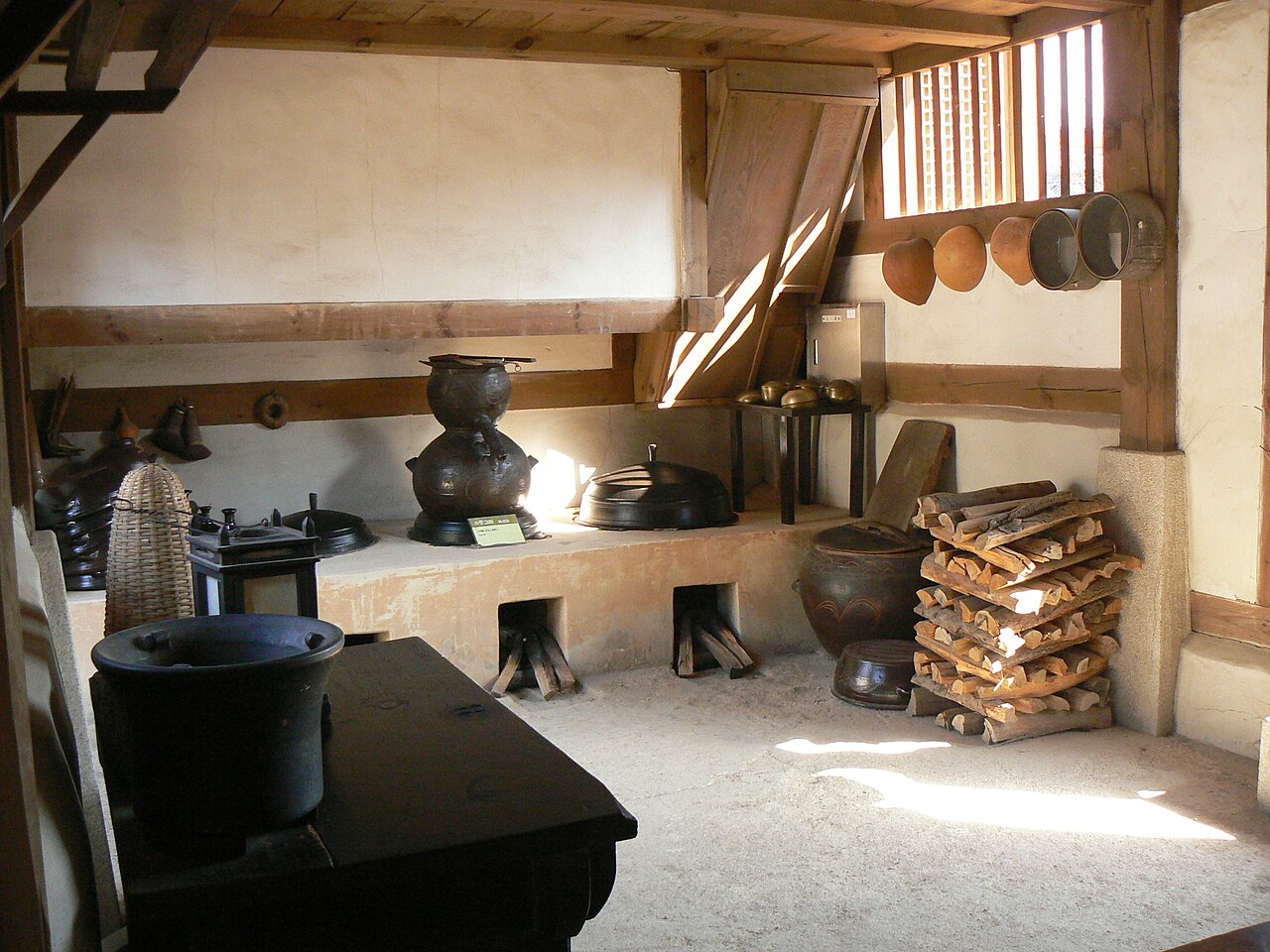
Photo · hangidan, CC BY-SA 2.0, Wikimedia Commons
The heart of this heating method designed by Korea’s ancestors can be put in a single sentence: instead of sending the hot gases straight up the chimney, hold them under the floor as long as possible and store their heat in stone. That stored heat warms the room even after the fire goes out. In this article we follow the path the heat takes from the firebox to the chimney, opening up the ingenious design hidden along the way, one part at a time.
Six stops on the heat’s journey
An ondol is made up of the agungi (firebox), the buneomgi (throat), the gorae (flues), the gudeuljang (floor slabs), the gaejari (heat trap), and the gulttuk (chimney). When a fire is lit, the heat passes through them in this order. Each part has its own job, and leave out any single one and the “floor that stays warm all night” simply does not work.
The agungi is where the fire is lit. As firewood burns here, hot exhaust gas and smoke are produced. Where this heat heads next is the buneomgi (also called bulmok), the throat. The buneomgi is a ridge at the mouth where the firebox meets the passages beneath the floor, made by piling earth into a triangular bank that blocks about half of the flue. It looks like a simple mound of earth, but it does two things at once. One is to guide the flow so the firebox’s heat spreads evenly beneath the floor; the other is to filter out the ash and sparks from the firebox so they cannot pass inward and clog the passages.
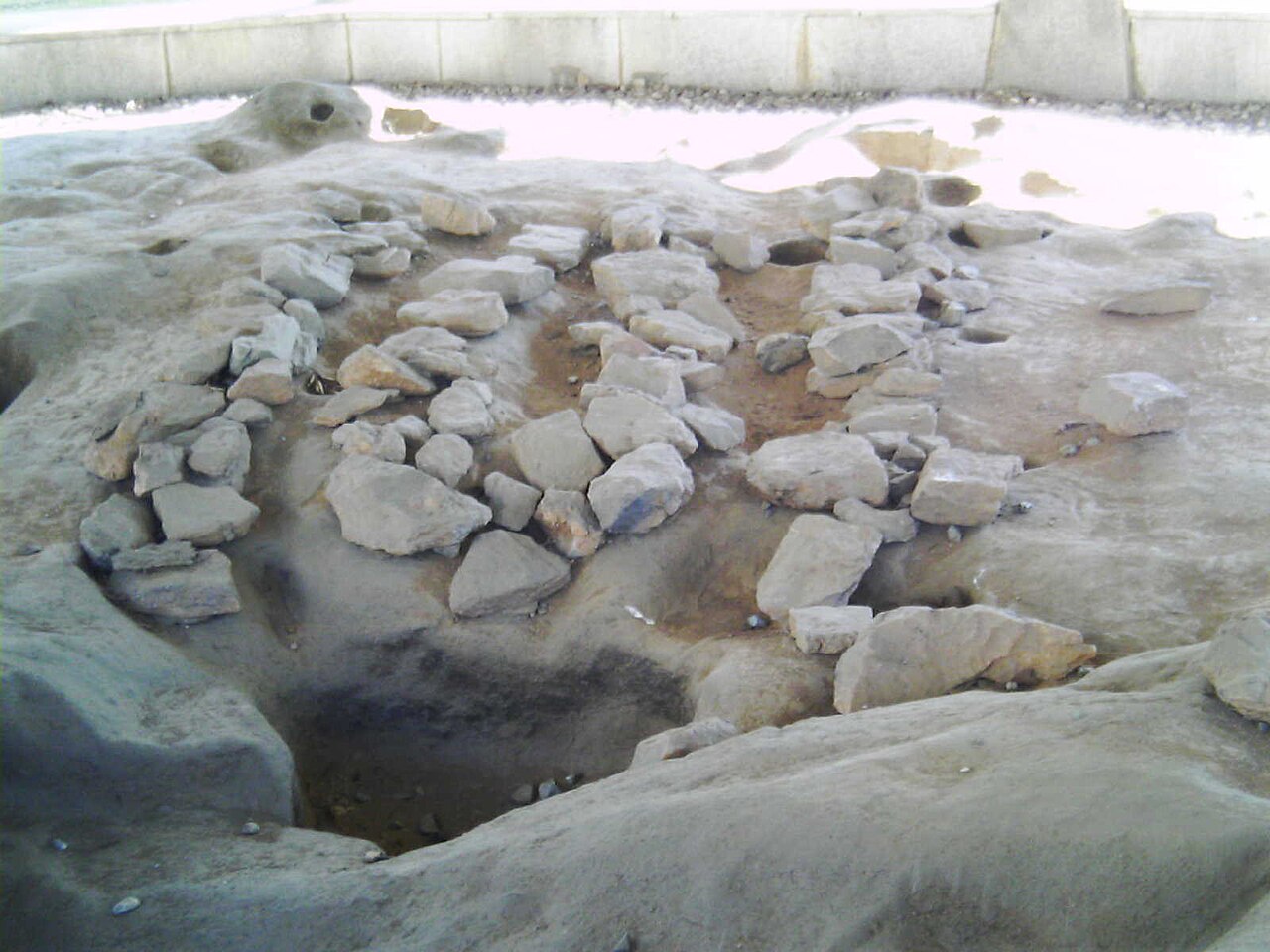
Photo · Puzzlet Chung, Public Domain, Wikimedia Commons
The passages the heat flows into after crossing the buneomgi are the gorae. The gorae are flues cut just beneath the broad, flat stone slabs that form the floor — the channels along which smoke and heat travel. And the broad slabs laid over them are the gudeuljang. The floor we step and sit on is the upper surface of these very slabs. “Gudeul” is a native Korean word for the stone structure that heats a floor, its origin traced to “baked stone / warmed stone.” That names like gaejari, gorae, and buneomgi are all native Korean rather than Sino-Korean also shows how long this technology was refined in everyday life.
Why doesn’t the heat leave directly, but take a detour?
Here comes the first masterstroke of ondol design. The gorae are not built so that heat passes “by the shortest route” beneath the floor. Quite the opposite. It is said to be advantageous to lay out the passages so the hot exhaust winds on a long detour through the gudeul. The reason is clear: the longer the heat lingers beneath the stone slabs, the more of that heat transfers into the stone.
This is the essence of ondol efficiency — the principle of heat storage (chukyeol), that is, storing heat in a material with a large heat capacity (thermal mass). Broad, thick stone absorbs heat quickly and releases it slowly. As the hot exhaust from the firebox passes through the long, winding gorae, its heat crosses bit by bit into the gudeuljang above and is stored, layer upon layer, within the stone. The floor warms even while the fire blazes, but the true purpose of the design lies in what comes next: after the fire goes out.

Diagram · Created by glu.kr
Once the fire dies down, the warmed gudeuljang now becomes the heat source. The heat stored in the stone seeps slowly upward through the floor by radiation and conduction, keeping the room warm for the several hours when there is no fire. The secret of an evening’s brief fire carrying its warmth through to dawn lies precisely in this time lag between “store and release.” The ondol does not use the fire’s heat in real time; it is a device designed to store the heat and give it back.
Radiation and conduction lead, convection assists
We tend to picture heating as hot air warming a room, but the ondol’s main heat carrier is not air — it is the stone floor. The radiation and conduction that the warmed gudeuljang sends upward through the floor are the core of the heating, while convection, the movement of air, plays only a supporting role. The ondol uses conduction, radiation, and convection together, but its distinctive trait is the use of the “indirect radiant heat” coming from the warmed gudeuljang.
Because the warmth rises gently from the floor upward, the temperature difference between the top and bottom of the room is smaller than with convection heating, which directly warms hot air and lets it rise. It naturally creates something close to the ideal of a cool head and warm feet — warm underfoot and cool overhead. This method, warming slowly at a low temperature, is more comfortable than one that hurriedly heats the air by switching the heat source on and off.
The trap hidden at the end of the gorae — the gaejari
When the heat finishes passing through the gorae, it meets the gaejari. The gaejari is a groove dug at the end of the gorae, deeper than the floor of the gorae itself. Why deliberately dig a deep trap at this point, which seems as though it should lead straight to the chimney? Here lies the second masterstroke of ondol design.
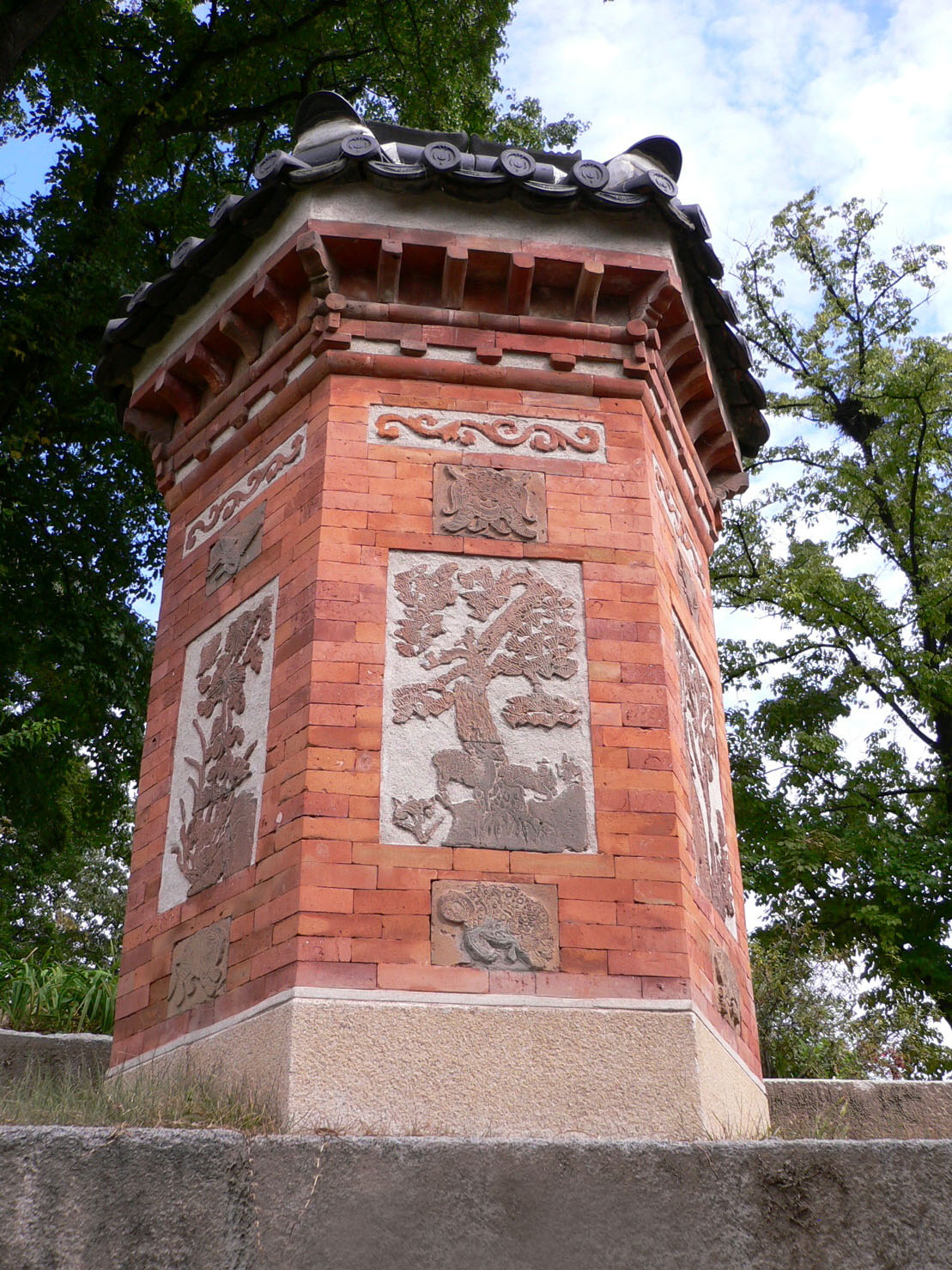
Photo · abex, CC BY-SA 2.0, Wikimedia Commons
The gaejari does three things. First, it slows the fast-flowing heat so the hot air is held to linger a little longer in the gorae and the gudeul. Second, it lets the soot and ash carried along by the heat settle and collect at the bottom of the deep groove, which makes it easier to clear the ash and clean later. Third, it regulates the cold air flowing back in from the chimney side beneath the floor while maintaining the draft that keeps the fire burning well. The gaejari fine-tunes this delicate balance of holding heat in while letting smoke out. Finally the heat passes out through the gulttuk (chimney), completing the heat’s journey.

Diagram · Created by glu.kr
Similar but different neighbors — the kang and the hypocaust
Heating by warming the floor or the space beneath it is not unique to the ondol. What sets the ondol’s design apart becomes clearer when it is placed side by side with neighboring technologies.
In northern China there is the kang. Made of brick or fired earth and more than 2 meters long, it is a heated platform that doubles as a bed, usually taking up about one-third to one-half of the floor area. It heats not the whole room but mainly the platform where people sit and lie (a variant that covers the entire floor is called a dikang). The ondol, by contrast, heats the entire floor surface. The Encyclopedia of Korean Culture notes that “although northern China also has the kang, which heats the floor of part of a space, the ondol that heats the entire floor surface is a way unique to Korea.” The ondol’s distinctiveness lies not in being “the first” but in this very design of a full-floor, heat-storing gudeul.
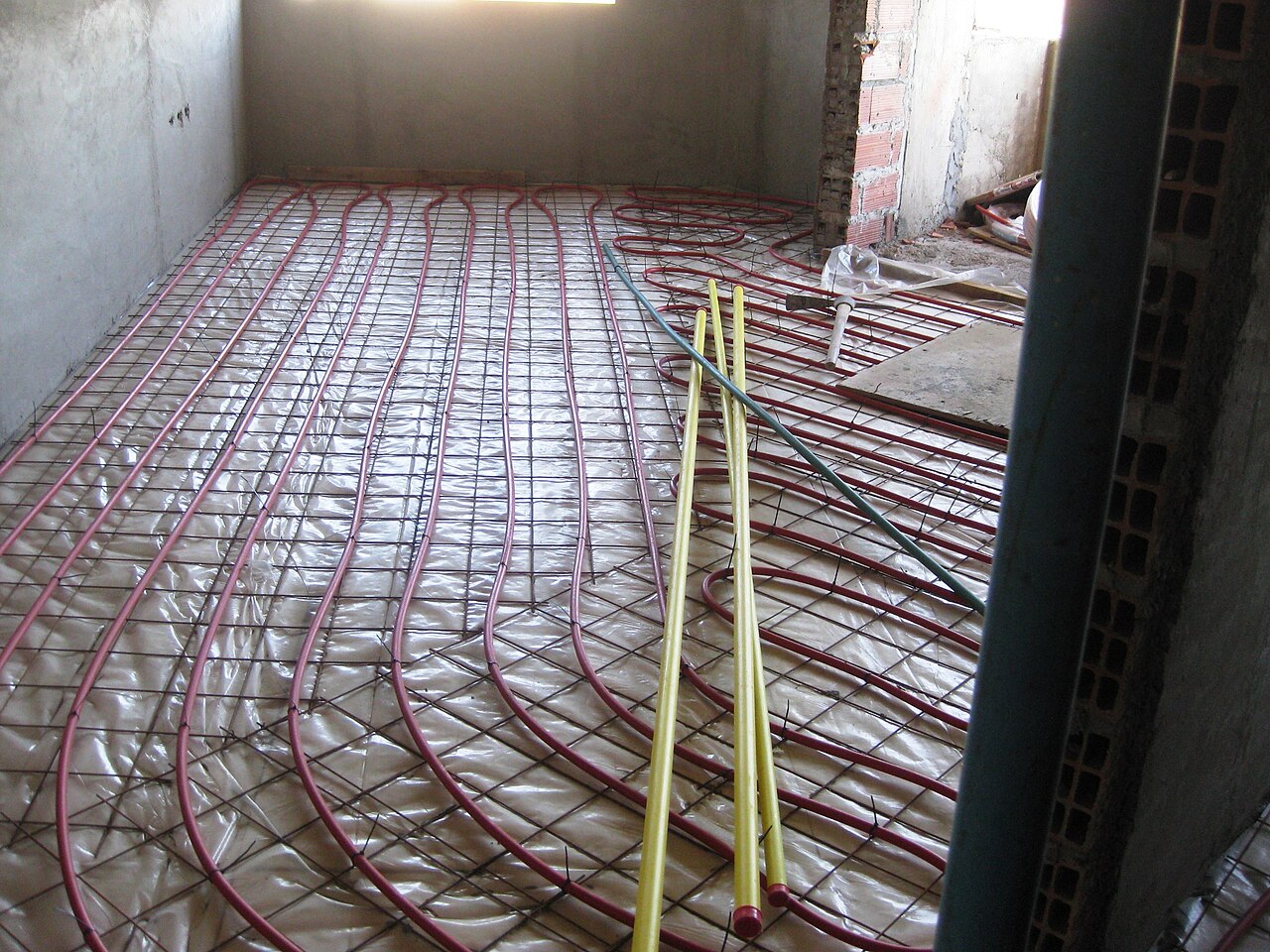
Photo · Maisire, CC BY-SA 4.0, Wikimedia Commons
Ancient Rome had the hypocaust. It was a system that circulated the hot exhaust and smoke of a furnace beneath a floor raised on pillars, and passed it through pipes in the walls as well, to heat the floor, the walls, and the air — used mainly in bathhouses. This method, however, required keeping the fire going constantly and consumed a great deal of fuel. Rather than a heat-storing type that stores heat and releases it through the night, it was closer to one that circulates heat while it is being heated. The decisive difference is structural. The space beneath a hypocaust floor is an “open chamber” that holds hot air but does not guide its direction, whereas the ondol makes the heat flow along a specific route through the long, winding gorae, handing its heat to the stone slabs and regulating the exhaust. The kang and the ondol are still carried on today, but the hypocaust has vanished into history.
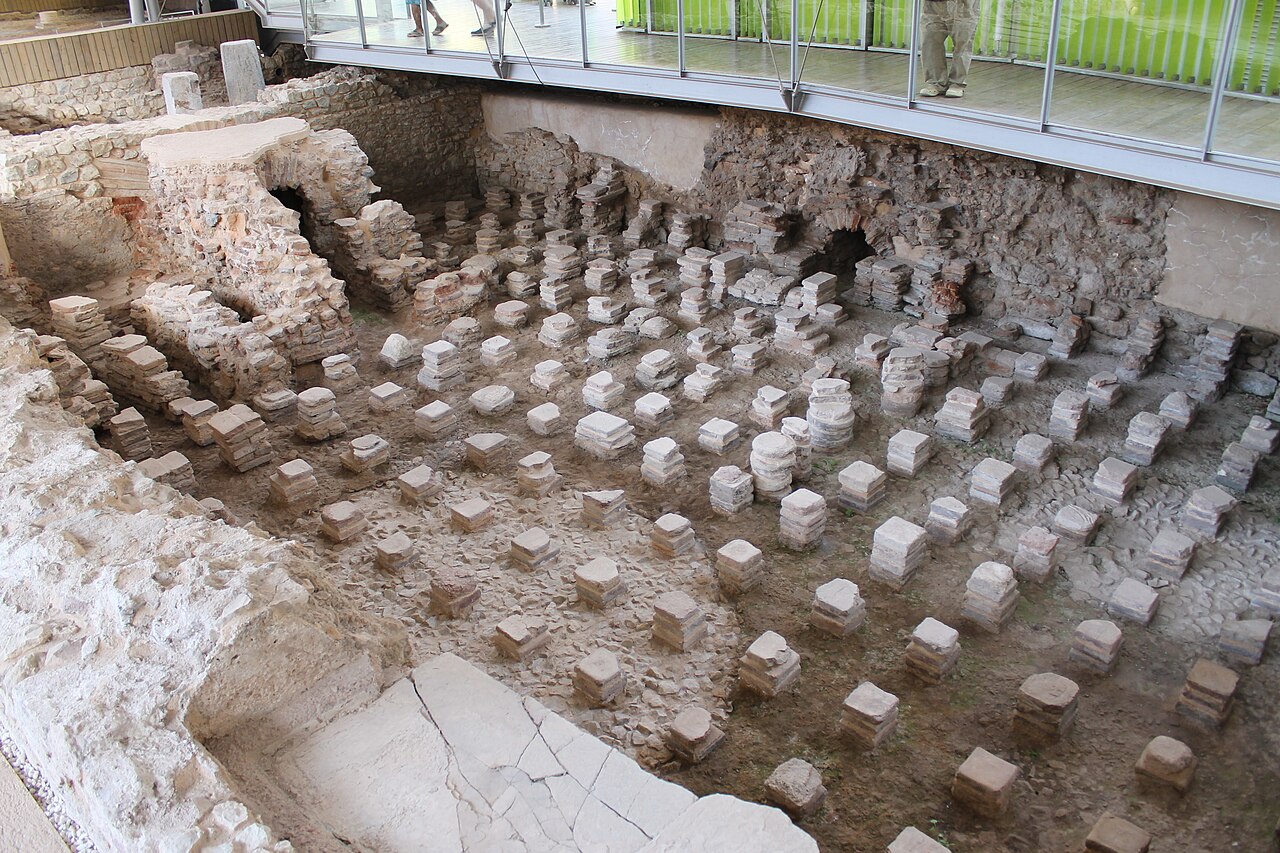
Photo · VIATOR IMPERI, CC BY-SA 2.0, Wikimedia Commons
A principle that survived into the age of boilers
The ondol’s heat design is no museum relic. The floor heating used in most Korean apartments today is a direct descendant of the ondol. From around 1962, in place of the firebox and fire a boiler, and in place of the gorae and gudeuljang hot-water pipes embedded in the floor, began to replace the traditional ondol by circulating heated water.
The heat source and the medium changed from firewood to hot water, but the very principle — radiant heating that rises gently from the floor upward — carried straight on. That is why English-language academic and architectural literature does not lump this method together as mere “radiant floor heating” but calls it by the proper name “Ondol.” Ondol culture, recognized as one that embodies the ingenuity of Koreans who adapted wisely to a bitterly cold climate, was designated a National Intangible Cultural Heritage (Ondol Culture) in 2018.
In closing — heating that designs time
Where the ondol is truly ingenious is not in “making” heat. Lighting a fire existed in every culture. What sets the ondol apart is that it designed when the heat would be used. Deliberately sending the hot exhaust on a winding detour through the gorae to store it in stone, holding and tuning it with the gaejari, and after the fire goes out returning that stored heat to the room slowly over several hours — this is a technology for handling heat, and at the same time a design for handling time. Within that time lag, where an evening’s fire becomes dawn’s warmth, lies the full heat-engineering wisdom that Korea’s ancestors refined.
References
- Korean Wikipedia — Ondol
- English Wikipedia — Ondol
- Encyclopedia of Korean Culture (encykorea) — Gudeul
- Encyclopedia of Korean Culture (encykorea) — Ondol Culture
- Korea Heritage Service Portal — National Intangible Cultural Heritage, Ondol Culture
- English Wikipedia — Kang (heated platform)
- English Wikipedia — Hypocaust
- LOW-TECH MAGAZINE — Heat Storage Hypocausts
- MDPI Energies — Thermal and Energy Performance of the Prefab Electric Ondol System
- English Wikipedia — Radiant heating and cooling