
At a summer fruit stand, peaches and nectarines often sit side by side. One is covered in a soft, downy fuzz that feels velvety to the touch; the other is smooth and glossy like an apple. Many people believe the nectarine is a separate kind of fruit, a cross between a peach and a plum, but the two are in fact the same species. What separates them is a single gene, and what that gene produces is nothing other than the fuzz on a peach’s skin. Within that thin layer of hair, and within the five petals that open before the leaves, lies a design more intricate than one might expect.
A Tree Misnamed From the Start
The peach’s scientific name is Prunus persica (L.) Batsch, and it belongs to the rose family (Rosaceae). The species epithet ‘persica’ means ‘of Persia,’ but it does not mean the peach originated there. Its native range is northwestern China; the fruit was carried along the Silk Road through Persia and on to Europe, so Westerners mistakenly took it to be a Persian fruit and named it accordingly (Britannica).
The history of peach cultivation is remarkably long. English Wikipedia states that peaches were domesticated in the region of Zhejiang Province, China, as early as around 6000 BCE, and it cites peach stones from the Kuahuqiao site near Hangzhou as the oldest archaeological evidence (Wikipedia). Still, claims that the peach was ‘the first fruit humankind ever cultivated’ or ‘the finest fruit since antiquity’ are not clearly supported, so it is more accurate to understand it simply as a fruit that has kept company with people from very early times.
The tree itself is a small deciduous tree. It usually grows 3 to 4 meters tall, occasionally exceeding 6.5 meters or reaching 10 meters, though in orchards it is pruned to around 3 to 4 meters to make care and harvesting easier (Britannica, Wikipedia). The leaves are glossy and lance-shaped, and near the leaf stalk there is a small nectar gland that secretes a sweet fluid to attract insects such as ants (Britannica).
Pink Flowers That Open Before the Leaves, a Design in Fives
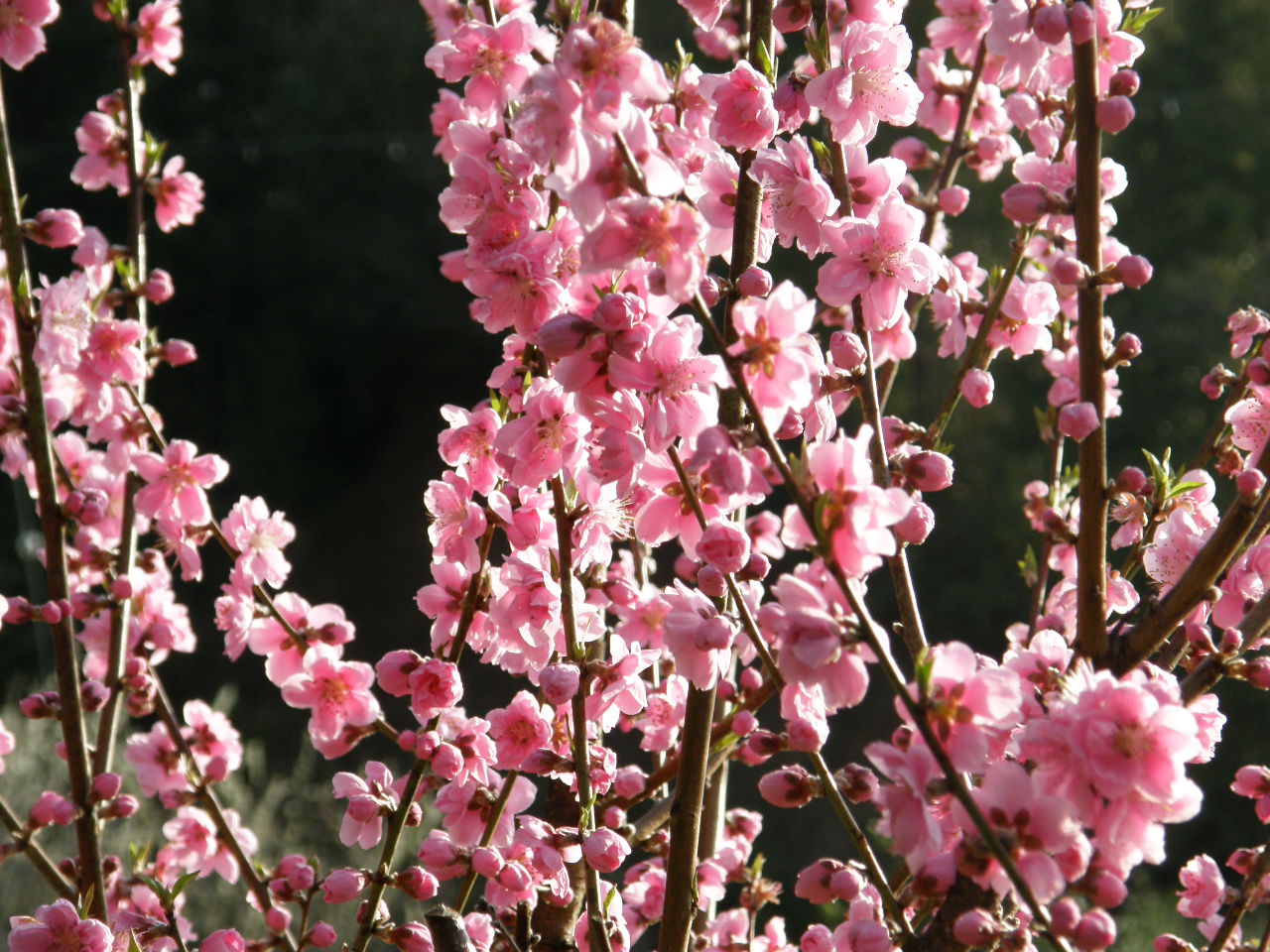
The most striking feature of the peach flower is that it opens in early spring before the leaves emerge (Wikipedia). By flowering before the foliage fills in, the blossoms are far easier for bees and butterflies to find. The flowers are about 2 to 3.5 centimeters across, usually pink, and rarely white or red (Wikipedia).
Look closely at a single flower and order appears. There are five petals and five sepals, and roughly 20 to 30 stamens arranged in three whorls. These petals and stamens are attached to the rim of a short, cup-like structure called the hypanthium (Britannica, Wikipedia). Within this one small flower that God made, the parts that shed pollen and the parts that receive it, the color and scent that call insects, and the ovary that will become the fruit are all set in place without omission.
People often say that ‘a peach will not set fruit without bees,’ but this is an exaggeration. The peach is self-fertile, able to pollinate itself, and the rate of cross-pollination from another tree is only about 5 percent (Wikipedia). Once fertilization is complete, a single ovary swells into the fruit. The peach is a drupe: the flesh surrounds a hard stone, the tough shell enclosing the seed, and the seed sits within that stone (Britannica).
What the Fuzz on the Skin Really Is: Trichomes
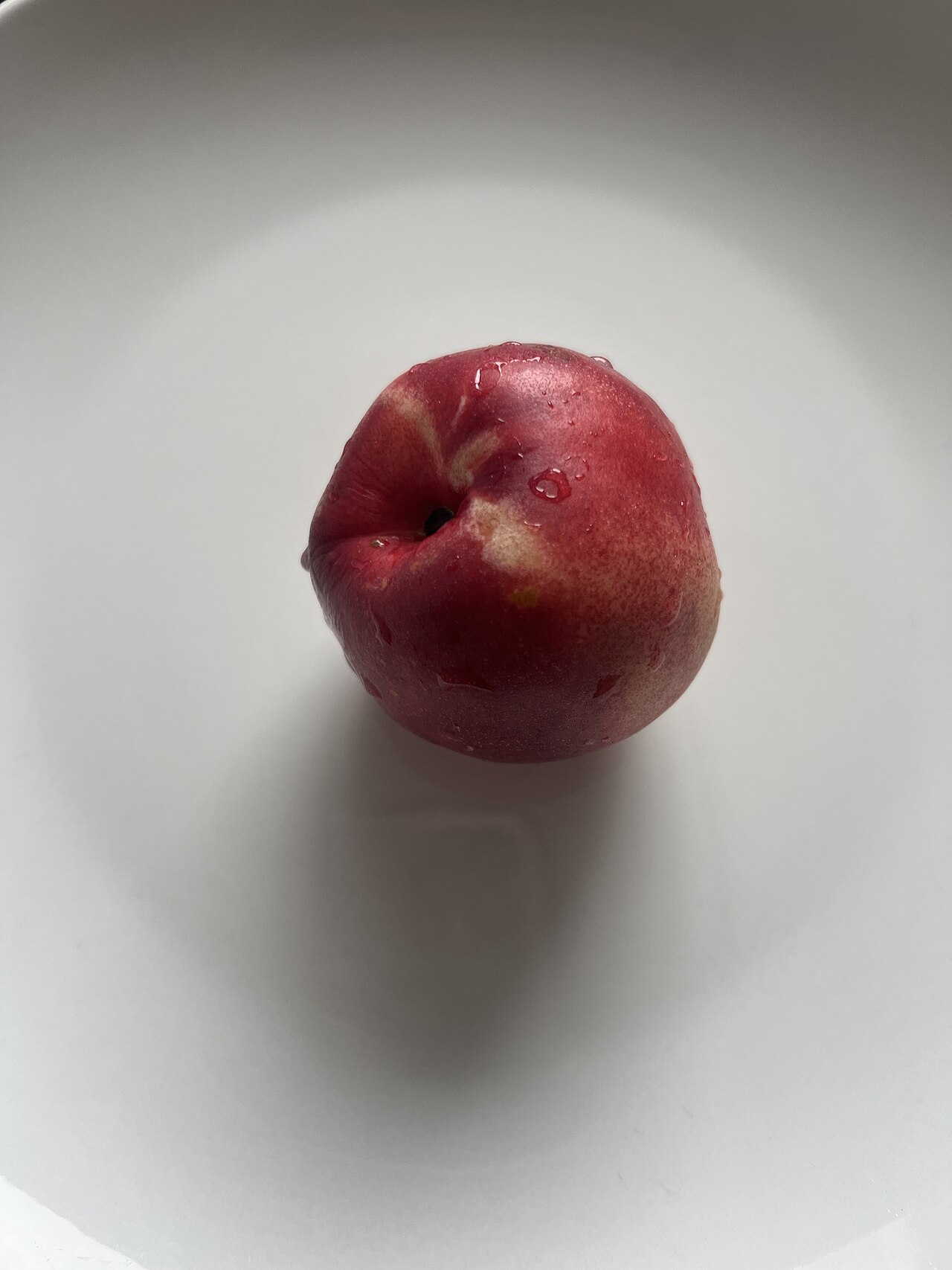
The soft down that rubs off on your fingertips when you handle a peach is what botanists call a trichome, an outgrowth of the epidermis. The trichomes on peach skin are non-glandular, meaning they secrete nothing, and each is a single-celled structure. Their inner cavity is thin and their cell wall is thick, making them structurally similar to the leaf hairs of Arabidopsis, the well-known model plant (Molecular Horticulture review).
This fuzz is no mere decoration; it plays several roles. First, it relates to water. The denser the trichomes, the less moisture tends to be lost after harvest, and when the hairs break during handling, tiny pores on the surface are exposed and water evaporation increases. Second, the hairs act as a shade, physically screening the fruit surface from ultraviolet light, drying winds, and high temperatures. Third, they make it harder for insects to crawl across the surface or lay eggs, hindering the approach of herbivorous insects. Fourth, together with the cuticle layer they protect the epidermis from friction and injury (Molecular Horticulture review).
That said, it is inaccurate to declare that ‘the fuzz blocks all pathogens.’ There is a contrary side. One study reported that when peach trichomes were removed, the incidence of post-harvest brown rot, a disease caused by the Monilinia fungus, dropped noticeably, and the composition of the surface microbial community changed (Postharvest Biology and Technology). In other words, the fuzz is both a protective layer and, at the same time, a hiding place where certain pathogenic microbes settle in. That one structure can act differently depending on circumstances shows well how hard it is to judge nature by simple black-and-white logic.
The Nectarine Twist: A Difference of a Single Gene
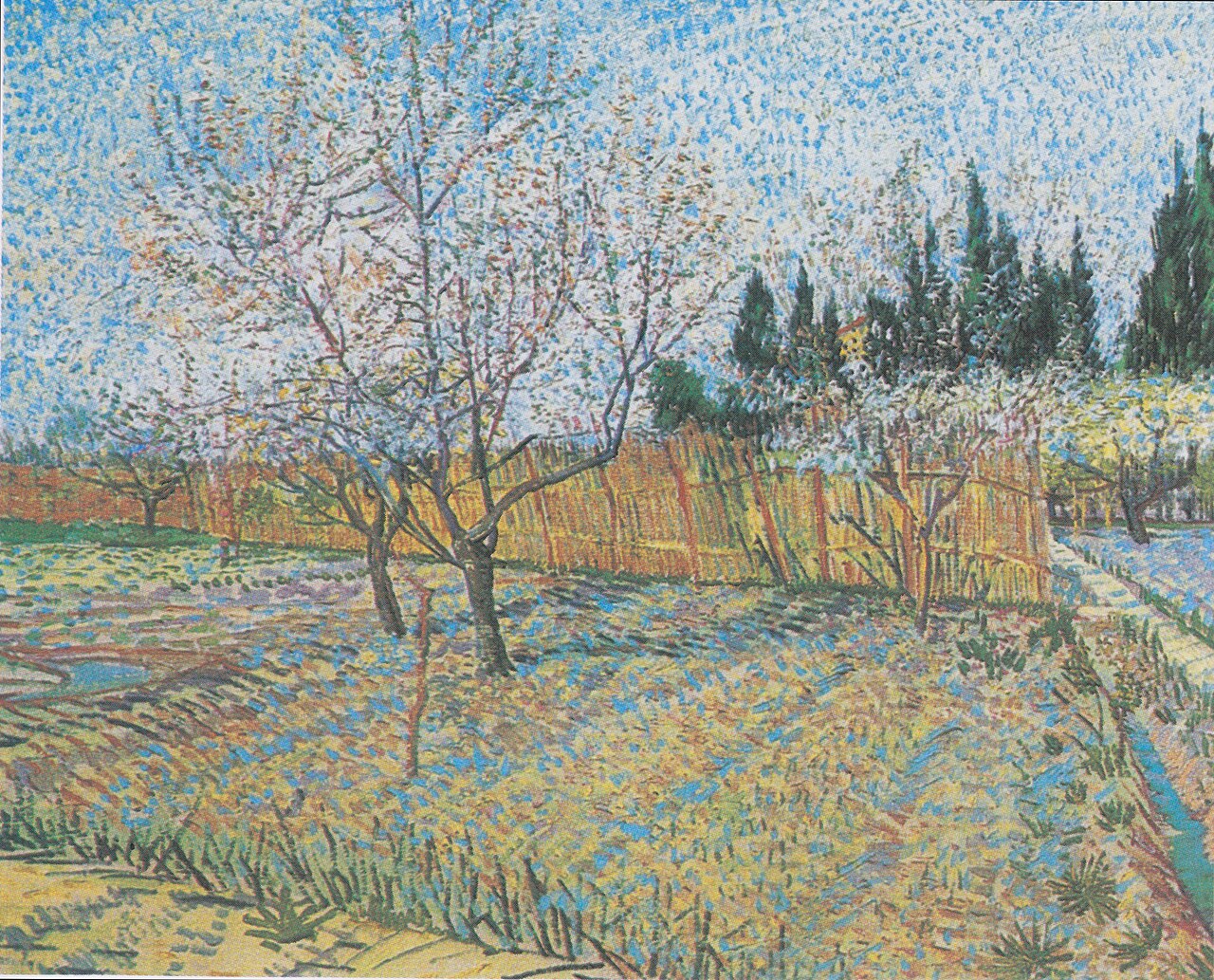
Now let us return to the opening misconception. The nectarine is neither a hybrid of peach and plum nor a fruit engineered by altering its genes. The nectarine is exactly the same species as the peach (Prunus persica), and their only difference is whether or not the skin bears hairs (Wikipedia).
This difference is decided by a single gene. The hairy, fuzzy peach trait is dominant, and the smooth nectarine trait is recessive. The gene responsible is PpeMYB25, which produces an R2R3-MYB family transcription factor that regulates hair formation in plants. This gene sits at the so-called G locus on peach chromosome 5, and researchers narrowed it down to a region of about 1.1 centimorgans, or roughly 635,000 base pairs on the genome (PLoS ONE, Vendramin et al.).
In the nectarine, a Ty1-copia type ‘jumping gene’ (an LTR retrotransposon) has inserted itself into the third exon of this gene. As a result, one amino acid is changed and a stop signal appears immediately after, so the protein is cut short at a length of 112 amino acids. The truncated protein cannot do its job, and the fruit ends up smooth with no hair. Indeed, in the fuzzy cultivar ‘Contender,’ this gene is expressed from about 5 weeks before flowering, when fuzz differentiation begins, whereas in the flower buds of the nectarine cultivar ‘Ambra,’ no expression of the gene was observed at all (PLoS ONE). The nectarine, then, is not a new variety made in a laboratory but a mutation that can arise naturally on a peach tree. In fact, a bud mutation on a peach branch can produce smooth fruit. The word ‘nectarine’ first appears in print in English in 1611, but in its native Asia it likely existed long before that (Wikipedia).
Another Story Hidden in Skin and Fuzz: Allergy
Peach fuzz carries one more unexpected story. Some people feel a tickle in the throat or itching around the mouth when they eat or handle peaches, and the main cause is a protein called Pru p 3. It is a 9-kilodalton non-specific lipid transfer protein (nsLTP), and especially in the Mediterranean region it is the main allergen to which more than 80 percent of peach-allergic patients react (ThermoFisher).
What matters is that this protein is concentrated far more in the skin than in the flesh. According to one study, the concentration of lipid transfer protein in the skin is about 7 times higher than in the flesh (Carnés et al., Allergy 2002). Moreover, the peach fuzz itself is rich in this protein, so it is implicated not only in sensitization through the skin but also in inhalation allergy caused by breathing in the hairs while handling peaches (Molecular Horticulture review). Pru p 3 is heat-stable and does not readily disappear even when cooked (ThermoFisher).
Even so, to say that ‘peach fuzz exists in order to torment people’ is a backwards reading. The function of the trichome is, above all, to regulate moisture and to protect against friction, pests, and ultraviolet light; the fact that allergenic protein happens to be concentrated in the skin and fuzz is an incidental observation separate from that. Peeling the skin often eases the symptoms, but it is hard to declare that ‘simply washing makes the allergy disappear.’
A single peach holds, layer upon layer, the order of five petals that open before the leaves, the several functions of the single-celled fuzz that covers the skin, and the story of one gene that decides whether that fuzz is present. The fact that the nectarine is not a separate kind but another face of the same tree reminds us that a large difference in appearance can sometimes spring from a very small cause. The more closely we look into the world God created, the more we find such fine-woven structure hidden even in an ordinary summer fruit.
References
- Encyclopaedia Britannica — Peach
- Wikipedia — Peach (Prunus persica)
- Wikipedia — Nectarine
- Vendramin et al., PLoS ONE (2014) — PpeMYB25 and the nectarine phenotype
- Molecular Horticulture (2025) — review of fruit trichomes
- Postharvest Biology and Technology (2023) — trichome removal and brown rot
- ThermoFisher Allergen Encyclopedia — Pru p 3 (f420)
- Carnés et al., Allergy (2002) — Pru p 3 (LTP) content in peach extracts